In modern homes, geometric patterns inspired by Art Deco create a sleek, sophisticated vibe. You’ll see bold shapes, sharp lines, and symmetrical motifs in furniture, lighting, and decor. These elements add visual interest and harmony, making your space feel both contemporary and timeless. Incorporating angular shapes and repetitive designs can evoke elegance and order. Keep exploring to discover how these patterns can transform your interior into a stylish, cohesive haven.
Key Takeaways
- Art Deco’s bold geometric shapes inspire modern home decor, adding a sense of luxury and sophistication.
- Geometric lighting fixtures, like angular pendant lights and sculptural chandeliers, emphasize Art Deco aesthetics.
- Incorporating geometric motifs in furniture and decor creates cohesion and enhances the timeless elegance of modern interiors.
- Repetitive patterns and angular designs evoke order and harmony, characteristic of Art Deco influence.
- Combining geometric patterns with luxe materials results in a contemporary yet vintage-inspired interior style.
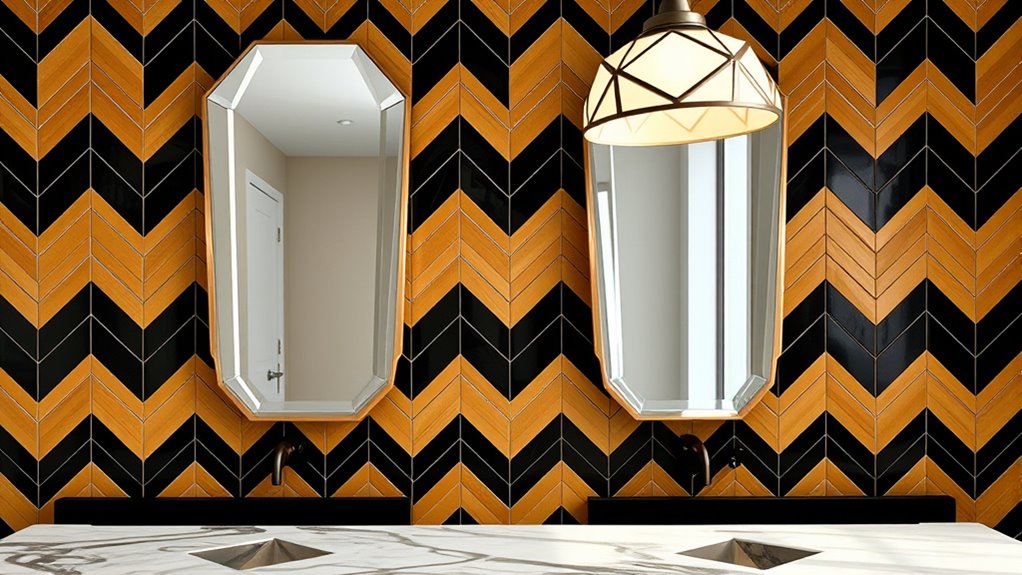
In modern homes, geometric patterns have become a popular way to add visual interest and structure to interior design. These bold shapes and lines can transform a space, making it feel both contemporary and timeless. When you incorporate geometric patterns, you’re not just adding decoration—you’re creating a sense of rhythm and balance that guides the eye throughout the room. One way to enhance this effect is through carefully chosen lighting fixtures. Think about pendant lights with angular frames or chandeliers featuring geometric silhouettes; they emphasize the pattern and add a sculptural element to the space. These fixtures don’t just illuminate—they serve as statement pieces that complement the overall design. The interplay between light and pattern can highlight the shapes on your walls or floors, casting interesting shadows and enhancing the visual complexity. Integrating geometric motifs in your decor helps establish a cohesive and striking aesthetic. Furniture design is another vital aspect when working with geometric motifs. Opt for pieces with clean lines, sharp angles, and symmetrical forms to echo the patterns on your walls or floors. For example, a coffee table with a hexagonal top or a sofa with geometric stitching can reinforce the theme without overwhelming the room. The key is to strike a balance—using furniture that complements the patterns rather than competes with them. Geometric-shaped side tables, armchairs with angular backrests, or modular seating arrangements with bold lines can all contribute to a cohesive look. These choices help create a unified visual language that feels intentional and sophisticated. Incorporating geometric patterns through lighting fixtures and furniture design allows you to craft a space that feels both modern and inspired by the luxe elegance of Art Deco influences. The angular shapes and repetitive patterns evoke a sense of order and harmony, grounding your interior while adding a layer of visual intrigue. When you select lighting fixtures with geometric elements, you’re highlighting the patterns in your design, creating focal points that draw attention and add depth. Similarly, choosing furniture with geometric details reinforces the theme and guarantees your space feels cohesive. By thoughtfully integrating these elements, you can achieve an interior that’s dynamic yet balanced, reflecting a sophisticated taste rooted in geometric art deco inspiration.

ateasehomelife Modern Geometric Chandelier – Milk Glass Pendant Light with Brushed Brass Rod, Vintage Pendant Light for Dining Room, Living Room, Bedroom(16" D × 8.5" H)
Dimensions and Specifications: The milk glass chandelier 16" D × 8.5" H, This product includes an adjustable rod,…
As an affiliate, we earn on qualifying purchases.
As an affiliate, we earn on qualifying purchases.
Frequently Asked Questions
How Can I Incorporate Art Deco Patterns Into Small Spaces?
To incorporate Art Deco patterns into small spaces, start with wall-mounted art featuring bold geometric designs to create focal points without overwhelming. Use decorative textiles like cushions or curtains with classic Art Deco motifs to add style and texture. Keep the color palette sleek and limited for a sophisticated look, and balance pattern with solid colors. This approach maximizes visual impact while maintaining a cozy, stylish environment.
Are Geometric Patterns Suitable for Minimalist Home Designs?
Yes, geometric patterns suit minimalist home designs because they add visual interest without overwhelming the space. You can incorporate them through furniture choices, like sleek, angular pieces, or lighting fixtures with bold shapes. Keep the color palette simple to maintain the minimalist aesthetic, while the geometric patterns provide a striking focal point. Balance is key—use patterns sparingly to enhance your clean, modern look without cluttering your space.
Which Color Schemes Best Complement Art Deco-Inspired Patterns?
You should choose color schemes that create striking color contrast, like black and gold or navy and silver, to highlight your Art Deco-inspired patterns. Incorporate metallic accents to add a touch of luxury and sophistication, which perfectly complement the bold geometric designs. Bright, jewel-tone hues such as emerald or ruby also work well, making your space feel vibrant and stylish while emphasizing the glamor and elegance typical of Art Deco aesthetics.
How Do Geometric Patterns Affect Room Ambiance and Mood?
Geometric patterns influence your room’s ambiance by creating a dynamic and energetic atmosphere. They impact your psychological state by stimulating visual perception, making the space feel lively or sophisticated depending on the design. When you choose bold patterns, they can evoke excitement or elegance, while subtle ones promote calmness. You can manipulate these effects by balancing patterns with colors and lighting, shaping the mood you want to experience in your home.
Can Vintage Art Deco Elements Blend With Contemporary Decor?
Think of vintage art deco elements as the original influencers, blending seamlessly with your contemporary decor. You can mix vintage furniture with modern pieces and add decorative accents like geometric lamps or mirrors for a stylish contrast. This blend creates a unique, timeless look that’s both nostalgic and fresh. Just like upgrading your smartphone, integrating these elements keeps your space feeling current while honoring classic design roots.

LUGSHIREE Hexagonal Modular Coffee Table, Gold Plated Frame, Tempered Glass Top, Geometric Accent Side Table, Multi-Purpose Nesting Table for Living Room Bedroom, Set of 1
【Freely Combinable Hexagonal Modular Design】Featured with independent hexagonal units, you can freely match and increase or decrease the…
As an affiliate, we earn on qualifying purchases.
As an affiliate, we earn on qualifying purchases.
Conclusion
Incorporating enchanting geometric patterns can create a compelling, cohesive, and contemporary home. By blending bold shapes with beautiful balance, you bring a fresh flair inspired by Art Deco’s influence. Embrace the elegance of angular lines and intricate designs to infuse your space with style and sophistication. Let your love for patterns propel your project, making your modern home a masterpiece of mesmerizing motifs and memorable moments. Embrace the geometric glamour and make your space uniquely yours.

Capital Lighting 453861AB Enzo Modern Unique Angular Design Candle Sleeves Chandelier, 6-Light 360 Total Watts, 23" H x 33" W, Aged Brass and Black
ENZO CHANDELIER DIMENSIONS: 22.75" High (73.5" Max Adjustable Height) x 33" Wide x 33" Deep; Ceiling Canopy: 5"W…
As an affiliate, we earn on qualifying purchases.
As an affiliate, we earn on qualifying purchases.

3PCS Modern Geometric Wall Art Set Gold and Beige Abstract Canvas Prints with Solid for Living Room Bedroom Office Minimalist Circle Design Canvas Wall Decor Framed (12inx16in canvas)
Stylish Framed Canvas Art : This 3-piece wall art set features abstract geometric circles in elegant gold and…
As an affiliate, we earn on qualifying purchases.
As an affiliate, we earn on qualifying purchases.