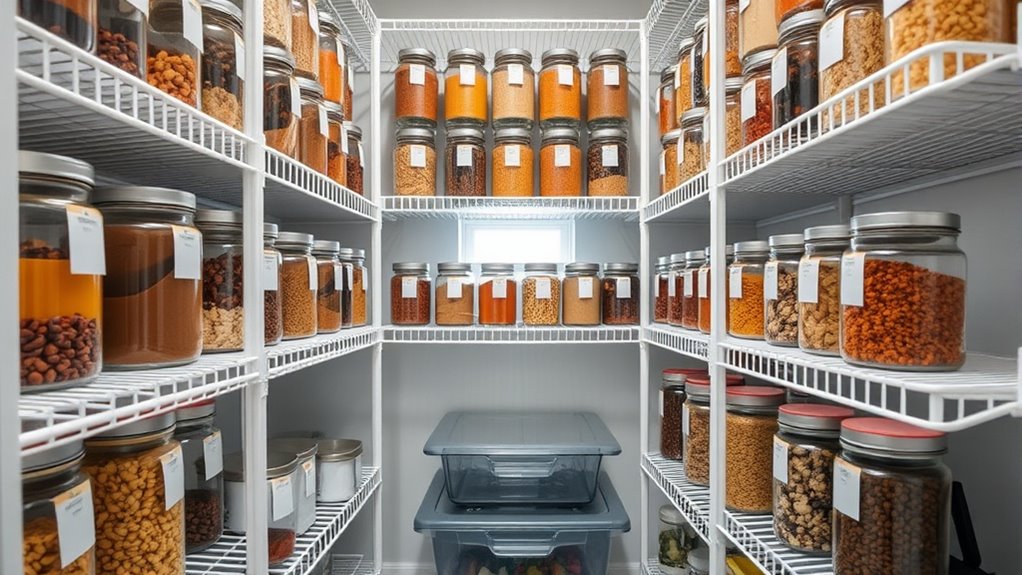

To organize your pantry effectively, use clear labels and uniform containers to keep items visible and accessible. Group similar items together and place frequently used ones at eye level for easy reach. Regularly review inventory, check expiration dates, and wipe down shelves to prevent clutter. Incorporate airtight containers for freshness and stackable bins for smaller items. Keeping your space tidy and well-maintained can simplify cooking and shopping—discover more tips to optimize your pantry beyond this overview.

Get the little things that make your day delivered free with Prime
- Fast, free delivery on millions of items
- Prime Video, Amazon Music and more included
- Member-only deals all year
Key Takeaways
- Use clear, labeled containers to organize similar items and easily identify contents.
- Group like items together (baking, canned goods, snacks) to reduce search time.
- Regularly review your pantry inventory, check expiration dates, and wipe shelves for cleanliness.
- Store frequently used items at eye level for quick access and less-used items higher or lower.
- Maintain a routine for reorganization and replace worn containers to keep your pantry tidy and functional.
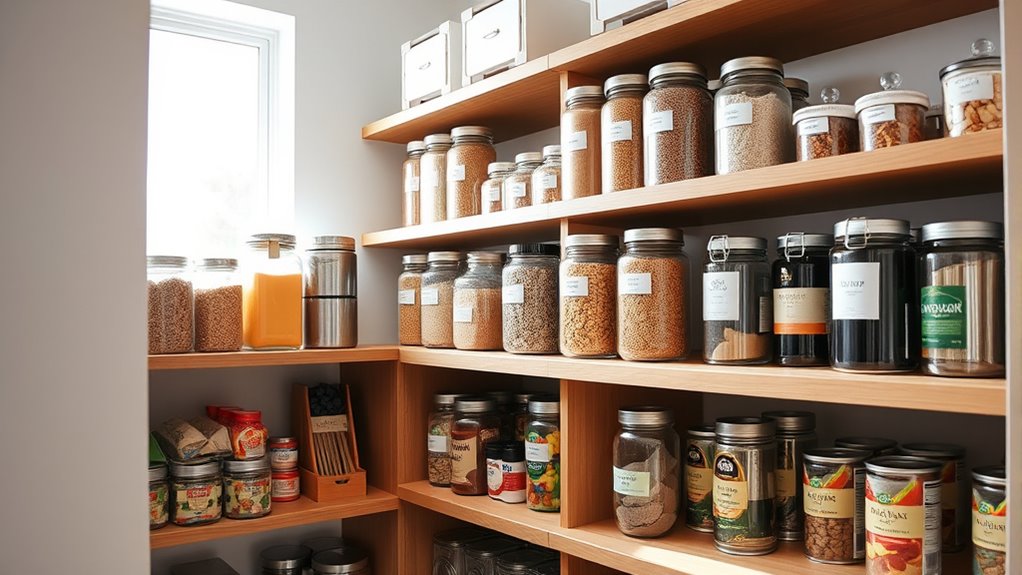
A well-organized pantry makes meal prep faster and reduces food waste. When your shelves are tidy and items are easy to find, you won’t waste time rummaging through clutter or forgetting about ingredients lurking at the back. To achieve this, start with shelf labeling. Clear, descriptive labels on each shelf or section can markedly improve your organization. They help you remember where specific items belong and encourage everyone in your household to put things back in the right place. Labeling also makes it easier to notice when supplies are running low, so you can restock before running out unexpectedly. Additionally, understanding your ex-relationships patterns can help you maintain healthier habits in your routine. Choosing the right container types is vital for keeping your pantry neat and accessible. Opt for airtight containers to preserve the freshness of dry goods like flour, sugar, and cereal. These containers not only keep pests out but also prevent spills and crumbs from spreading. Clear containers are especially helpful because you can see what’s inside at a glance, saving you time and avoiding unnecessary opening of multiple packages. Use uniform container sizes when possible, as they stack neatly and maximize shelf space. For smaller items like nuts, seeds, or snack bags, consider using small jars or stackable bins, which keep everything organized and prevent clutter from piling up. Grouping similar items together is another effective step. Place all baking supplies in one area, canned goods in another, and snacks in a designated spot. This reduces the time spent searching for specific ingredients and helps you maintain a logical flow. When arranging your pantry, keep frequently used items at eye level or within easy reach. Less frequently used items can go on higher or lower shelves. This setup minimizes unnecessary bending or reaching, making your kitchen workflow smoother. To keep your organization lasting, regularly review your inventory. Pull everything out once a month, wipe down shelves, and check expiration dates. As you do this, update your shelf labels if needed and replace worn or mismatched containers. This habit prevents clutter from building up and ensures your pantry remains functional and visually appealing. Remember, the key to a successful pantry is consistency. When you invest in good container types, use clear labeling, and maintain a routine, your pantry will stay organized with minimal effort, simplifying your cooking and grocery shopping routines.
airtight food storage containers
As an affiliate, we earn on qualifying purchases.
As an affiliate, we earn on qualifying purchases.
Frequently Asked Questions
How Often Should I Update My Pantry Inventory?
You should update your pantry inventory at least once a month to stay on top of your meal planning and budgeting tips. Regular checks help you identify what’s running low, prevent overbuying, and guarantee freshness. By keeping your inventory current, you make smarter shopping choices, save money, and streamline meal prep. Set a recurring reminder to review and refresh your pantry, so it always supports your goals efficiently.
What Are Eco-Friendly Storage Options for Pantry Items?
You can choose eco-friendly storage options like biodegradable containers and reusable storage jars to keep your pantry sustainable. Biodegradable containers break down naturally, reducing environmental impact, while reusable jars made of glass or durable plastic help cut down on waste. These options not only protect your food but also support eco-conscious living. Incorporate them into your pantry to stay organized and environmentally responsible at the same time.
How Can I Prevent Pests in My Pantry?
Think of your pantry as a fortress against pests. To keep it secure, use airtight containers to seal in your food and prevent intruders. Incorporate natural repellents like bay leaves or dried lavender to deter bugs without chemicals. Regularly clean shelves, discard expired items, and check for signs of pests. Staying vigilant and maintaining a tidy pantry creates an environment pests can’t invade, keeping your food safe and pest-free.
What Is the Best Way to Categorize Pantry Items?
You should categorize your pantry items by grouping similar items together, like snacks, grains, and spices. Use label making to clearly identify each category, making meal prep easier and faster. Store items in clear containers for visibility and consistency. Regularly reassess your categories to keep things organized. This system helps you find what you need quickly, reduces clutter, and keeps your pantry tidy and functional.
How Do I Handle Expired or Spoiled Food Properly?
When you find expired or spoiled food, prioritize food safety by disposing of it properly. Use disposal methods like sealing items in a bag before tossing them to prevent odors and contamination. Always wash your hands afterward. Regularly check your pantry and discard any items past their expiration dates or showing signs of spoilage to keep your food safe and prevent health risks. Proper disposal helps maintain a clean, safe pantry environment.
Conclusion
So, now that your pantry’s as organized as a Swiss watch, remember: all those neatly stacked cans and labeled jars are just a clever disguise. Beneath the perfection, chaos still lurks—waiting patiently until you forget where that obscure spice is hiding. But hey, at least you’ll look impressive when friends visit, proudly opening your perfectly curated shelves. Because nothing says “master chef” like a spotless pantry, even if your cooking skills are still a mystery.
Halloween Picks
halloween
As an affiliate, we earn on qualifying purchases.