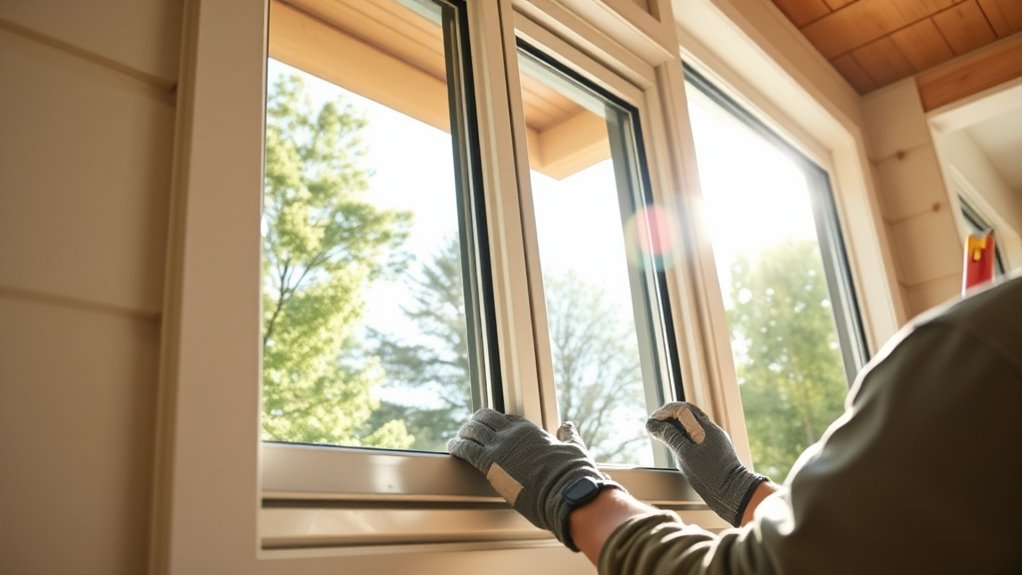

Installing energy-efficient windows can greatly boost your home’s insulation, cut energy bills, and keep you comfortable year-round. Choosing the right frame material—like vinyl, wood, or fiberglass—affects durability and insulation, while advanced glass coatings such as Low-E help reflect heat and improve efficiency. Multi-pane glass with inert gases offers even better performance. Considering your climate, budget, and style will help you select the best options. Keep exploring to discover how these upgrades can make a real difference in your home.
Key Takeaways
- Energy-efficient windows reduce heat transfer, lowering heating and cooling costs year-round.
- Choosing the right frame material (vinyl, wood, aluminum, fiberglass) impacts insulation and maintenance needs.
- Modern glass coatings, like Low-E, enhance insulation by reflecting or absorbing heat based on climate.
- Multi-pane glass and inert gas fills further improve window performance and energy savings.
- Properly selected windows increase home comfort, value, and promote sustainability through reduced energy consumption.
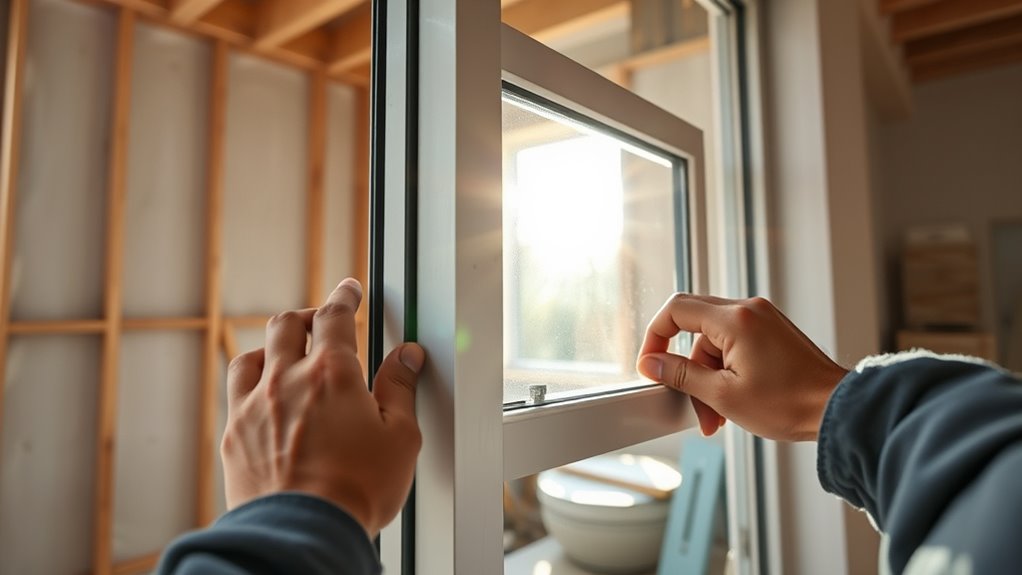
Upgrading to energy-efficient windows is one of the most effective ways to improve your home’s insulation and reduce energy bills. When selecting these windows, one of the key considerations is the type of window frame materials. Different materials, like vinyl, wood, aluminum, or fiberglass, offer various benefits in terms of durability, insulation, and maintenance. Vinyl frames are popular because they resist moisture and require little upkeep, plus they provide good insulation. Wood frames, while more traditional and aesthetically pleasing, tend to be more expensive and need regular maintenance but offer excellent thermal performance. Aluminum frames are strong and slim, allowing for larger glass areas, but they conduct heat more easily, so they often require thermal breaks or additional insulation to be energy-efficient. Fiberglass frames strike a balance, offering durability, low maintenance, and good insulation properties. Your choice of window frame material directly impacts how well your windows insulate your home, so consider your climate, budget, and aesthetic preferences carefully.
In addition to frame materials, glass coatings play an essential role in enhancing energy efficiency. Modern windows often feature advanced glass coatings designed to reflect or absorb certain wavelengths of sunlight, helping to keep your home cooler in the summer and warmer in the winter. Low-emissivity (Low-E) coatings are among the most common and effective, as they minimize heat transfer through the glass. These coatings can be tailored to your climate and specific needs. For example, in colder regions, coatings that reflect interior heat back inside can improve warmth, while in hot climates, coatings that reflect solar heat keep your space cooler. Double or triple-pane glass units are also common, with inert gases like argon or krypton between panes to further reduce heat transfer. When combined with specialized glass coatings, these units significantly boost your windows’ insulation capabilities, leading to lower energy bills and a more comfortable home year-round.
Furthermore, understanding personal finance management concepts can help homeowners plan and budget for such upgrades effectively, ensuring the investment aligns with their financial goals.
Ultimately, choosing the right window frame materials and glass coatings depends on your local climate, budget, and style preferences. Investing in high-quality, energy-efficient windows can seem costly upfront, but the long-term savings on energy bills, combined with increased comfort and reduced environmental impact, make it well worth the expense. Remember, the better your windows insulate and control heat transfer, the less you’ll rely on heating and cooling systems, which translates to substantial savings over time. By paying careful attention to both the frame materials and glass coatings, you set yourself up for a smarter, more sustainable upgrade that improves your home’s overall energy performance.
Frequently Asked Questions
How Long Does Installation Typically Take?
Installation typically takes one to two days, depending on your home’s size and window number. You should consider the installation timeline when scheduling, as weather and contractor availability can influence the process. It’s a good idea to plan ahead and coordinate with your installer to ensure smooth scheduling considerations. Being prepared and flexible helps minimize disruptions and guarantee your energy-efficient windows are installed promptly and correctly.
Are There Government Incentives for Energy-Efficient Windows?
Surprisingly, yes, government rebates and tax credits make upgrading to energy-efficient windows quite appealing. You can cut costs markedly by taking advantage of these incentives, which are designed to reward eco-friendly choices. While it might feel like a small consolation for the expense, these programs help ease the investment, making your home more comfortable and reducing energy bills—proof that even government support can be a bright spot in home upgrades.
Can I Replace Windows Myself or Need a Professional?
You can replace windows yourself, but be aware of DIY challenges like precise measurements and proper sealing. If you’re inexperienced, mistakes could lead to leaks or reduced efficiency. Hiring a professional ensures proper installation, reducing potential issues and often justifies the higher costs through better performance. Consider your skill level and the complexity of the job to decide whether to tackle it yourself or hire experts for a smooth, energy-efficient upgrade.
What Maintenance Is Required for Energy-Efficient Windows?
Think of your energy-efficient windows like a well-tuned guitar; they need regular care to stay in harmony. You should clean the glass with gentle routines and inspect the sealant annually to prevent drafts. Sometimes, you might notice fogging or drafts, which signals it’s time for resealing or maintenance. Regular upkeep keeps your windows performing efficiently and extends their lifespan, saving you energy and money over time.
How Do I Choose the Right Window Type for My Climate?
To choose the right window type for your climate, consider climate-specific framing and window material selection. For colder areas, opt for double or triple-pane windows with gas fills to improve insulation. In hot climates, select windows with low-emissivity coatings and reflective surfaces to reduce heat gain. Your choice should also account for humidity and wind conditions, ensuring durability and energy efficiency tailored to your environment.
Conclusion
By choosing energy-efficient windows, you improve comfort, lower energy bills, and reduce your environmental impact. You enhance your home’s value, increase your peace of mind, and enjoy long-term savings. You invest in durability, embrace sustainability, and prioritize your well-being. Ultimately, you create a more efficient, more comfortable, more responsible home—one that benefits you today and future generations tomorrow. Making this upgrade isn’t just a choice; it’s a smart step toward a better, brighter future.