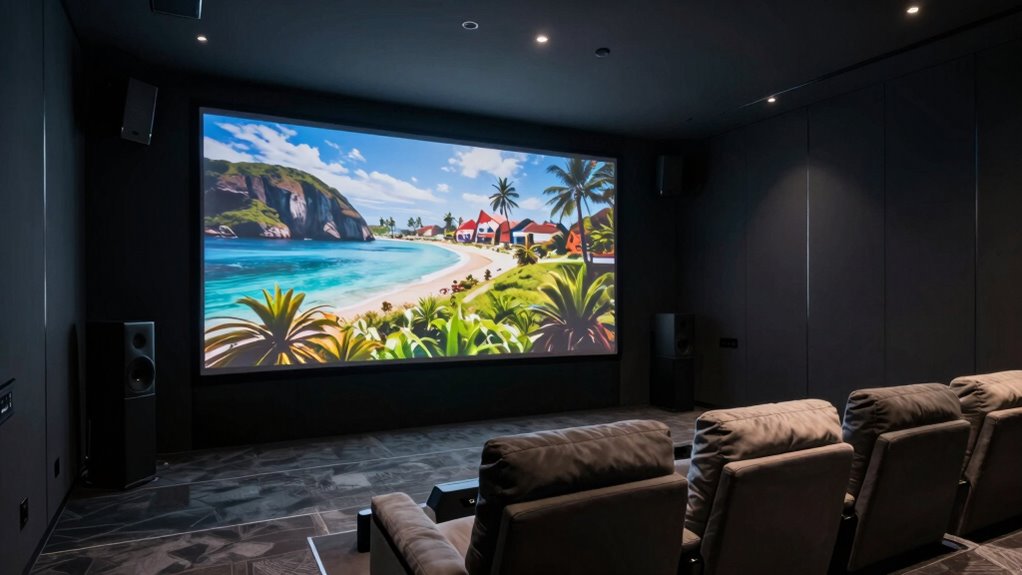
ALR screens are changing home theater design by allowing you to enjoy bright, vivid images even in well-lit rooms. They use special coatings and technologies to reduce glare, boost contrast, and keep colors sharp, regardless of ambient light. Smart features like adaptive brightness and contrast enhancements make your viewing experience more immersive without needing a dark room. Keep exploring, and you’ll discover how to turn any space into a high-quality cinematic environment.
Key Takeaways
- Advanced ALR screens significantly reduce glare and ambient light reflections, improving image clarity in bright room environments.
- Modern home theater designs incorporate ambient light management and adaptive technologies for optimal viewing regardless of lighting.
- Higher gain ALR screens enhance brightness and contrast, making immersive viewing possible even with ambient illumination.
- Integration of intelligent lighting controls and screen calibration ensures consistent picture quality in changing room conditions.
- Innovations in screen materials and ambient light adaptation point to smarter, more versatile home theater setups for bright spaces.
How ALR Screens Improve Bright Room Home Theaters
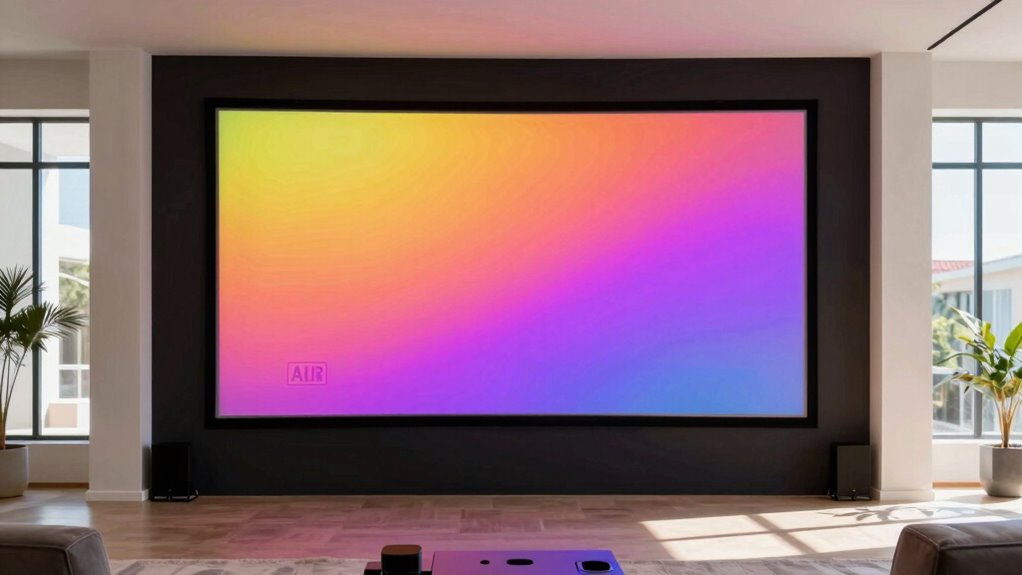
Have you ever struggled to enjoy your home theater during the daytime or in a bright room? Ambient lighting can wash out traditional screens, making it hard to see details clearly. That’s where ALR (Ambient Light Rejection) screens come in. These screens are designed to reduce screen glare caused by ambient lighting, so your picture stays vibrant and sharp even in well-lit rooms. They use special optical coatings that reflect projector light directly to your eyes while absorbing ambient light from other directions. This innovative design enhances visual contrast and color accuracy, giving you a better viewing experience without compromising brightness or clarity, regardless of how bright your room gets. The use of special optical coatings allows ALR screens to outperform traditional surfaces in challenging lighting conditions. Additionally, their ability to maintain image quality in bright room environments makes them an essential upgrade for modern home theaters.
Key Technologies That Boost Bright Room Projector Performance

To effectively enhance projector performance in bright rooms, several key technologies have been developed. One essential innovation is ambient lighting adaptation, which adjusts brightness levels to counteract room light and improve image visibility. Contrast enhancement technologies also play a crucial role, increasing the difference between dark and light areas to produce clearer images despite ambient light interference. High dynamic range (HDR) processing further boosts contrast, making details stand out even in well-lit environments. Additionally, laser light sources deliver higher brightness levels and better color accuracy, ensuring vivid images without washing out. Incorporating advanced image processing techniques can further optimize image quality in challenging lighting conditions. Moreover, ambient light management systems are increasingly integrated to dynamically respond to changing room lighting, providing a more consistent viewing experience. Technologies like automatic brightness adjustment are increasingly integrated to provide seamless performance improvements. These technologies work together to optimize projector performance, allowing you to enjoy sharp, vibrant visuals even when ambient lighting conditions are less than ideal.
How to Choose the Best ALR Screen for Your Home Theater
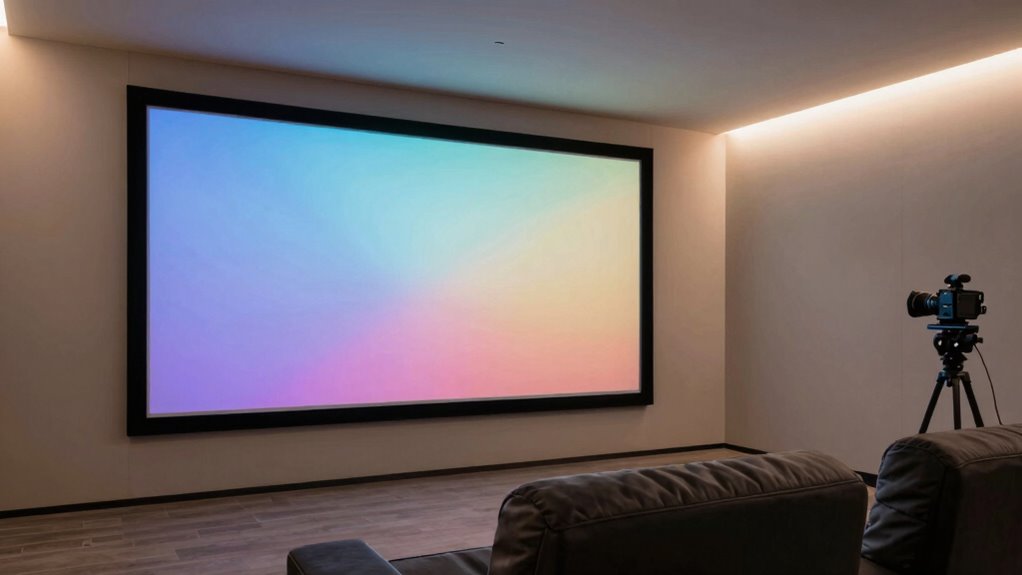
Choosing the right ALR (Ambient Light Rejection) screen is essential for getting the best picture quality in your home theater, especially if your space has a lot of ambient lighting. When selecting an ALR screen, consider its screen gain—higher gain screens reflect more light, making images brighter, but may reduce viewing angles. If your room has significant ambient lighting, opt for a screen with a higher gain to improve contrast and visibility. Conversely, if your space is darker or you prefer wider viewing angles, a lower gain screen might be better. Also, check how well the screen resists ambient light; quality ALR screens are designed to minimize reflections and enhance contrast even with bright lights on. This balance ensures you enjoy sharp, vibrant images regardless of your lighting conditions.
Design Tips for a Cinematic Experience in Well-Lit Spaces
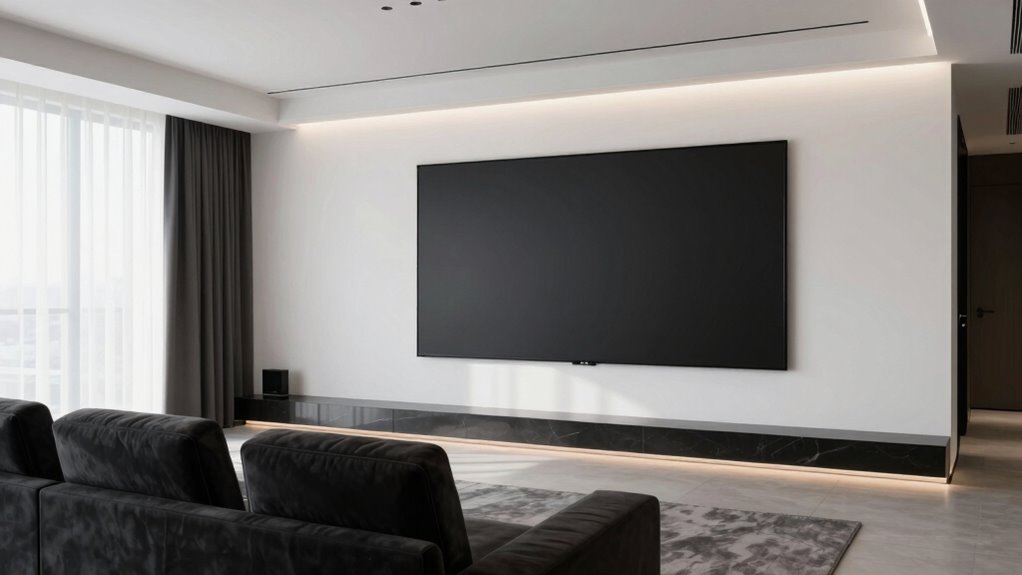
Creating a cinematic experience in a well-lit space requires strategic design choices that optimize image quality despite ambient lighting. To do this, control the ambient lighting as much as possible—use dimmable lights or indirect sources that don’t reflect off the screen. Proper screen calibration is essential; adjust brightness, contrast, and color settings to compensate for ambient light, ensuring your image remains sharp and vibrant. Consider using an ALR screen designed for bright rooms, which helps reject ambient light and improves contrast. Position your seating to minimize glare and reflections, and opt for matte or low-glare finishes on walls and ceilings. These steps help you maximize picture quality, creating an immersive cinematic experience even in spaces with abundant ambient lighting.
Future Trends in Bright Room Home Theater Screens and Lighting
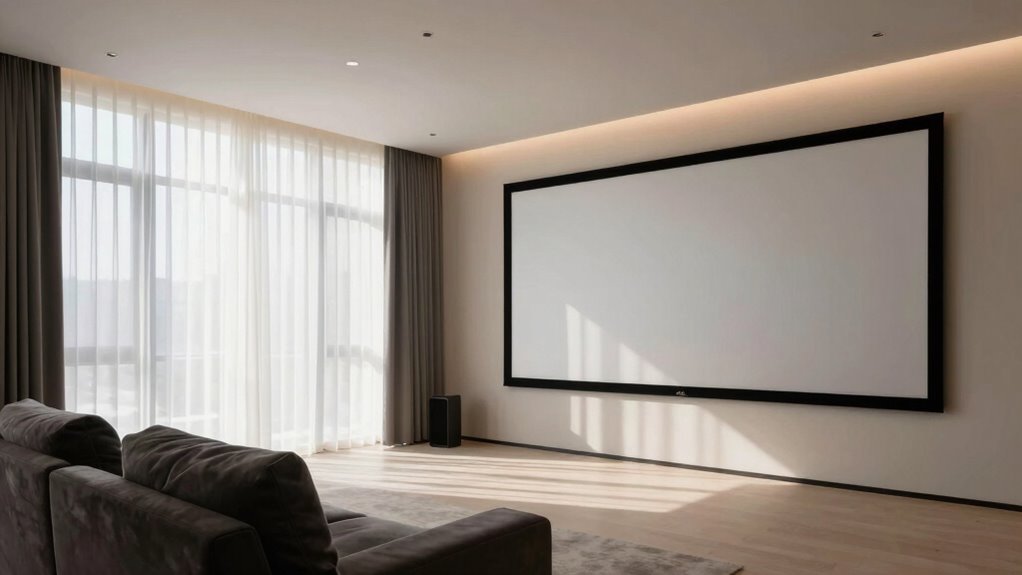
Advancements in display technology and lighting solutions are rapidly transforming how home theaters perform in bright rooms. Future trends focus on optimizing ambient lighting to reduce glare and enhance contrast without sacrificing brightness. New screen materials, such as ambient light rejecting (ALR) surfaces, are becoming more sophisticated, offering better reflectivity and color accuracy even with substantial ambient light. These screens can adapt to varying lighting conditions, allowing you to enjoy vivid images without dimming your room lights. Additionally, integrated lighting systems that sync with your display are gaining popularity, providing seamless control over ambient lighting to minimize reflections and improve image clarity. Ambient light management solutions are also evolving to better suit different viewing environments, ensuring consistent picture quality regardless of room brightness. As technology advances, your home theater experience will become more immersive and adaptable to bright environments, making bright room viewing more practical and enjoyable. Innovations in display technology are paving the way for screens that maintain high performance even in challenging lighting conditions, further enhancing the viewing experience. Furthermore, improvements in screen materials are enabling higher contrast ratios and better color fidelity under ambient light, ensuring vivid images in various settings. Understanding dream symbolism related to clocks and time can also inspire innovative concepts in visual technology, emphasizing the importance of clarity and perception in both dreams and real-world displays.
Frequently Asked Questions
How Do Ambient Light Conditions Influence Screen Selection?
Ambient light conditions greatly influence your screen choice. In bright rooms, effective ambient light management is essential; you’ll want a screen with high gain or an ambient light rejecting (ALR) material to reduce glare and enhance contrast. Conversely, in darker spaces, standard screens work fine, allowing you to prioritize image quality and color accuracy. Selecting the right screen material guarantees you get the best viewing experience, regardless of how much ambient light there is.
What Maintenance Is Required for ALR Screens?
Did you know that properly maintained ALR screens can last over 10 years? To keep yours in top shape, you should regularly clean the screen with a soft cloth and mild cleaning solution, avoiding harsh chemicals. Also, check the motor for smooth operation and lubricate it if needed. Proper screen cleaning and motor maintenance guarantee your ALR screen stays vibrant and functions flawlessly for years to come.
Can Existing Projectors Be Upgraded for Bright Room Use?
Yes, you can upgrade your existing projector for bright room use by opting for projector lamp upgrades to boost brightness and screen material enhancement for better reflectivity. These improvements allow your current setup to handle more ambient light while maintaining picture quality. Consult a professional to guarantee compatibility and ideal results, enabling you to enjoy a brighter, clearer image even in well-lit rooms without investing in a new projector.
Are There Cost Differences Between Various ALR Screen Types?
Think of ALR screen types like vintage watches—they vary in cost based on features and quality. You’ll find a clear cost comparison between fixed, motorized, and portable options, with budget options available for those on a tighter budget. Generally, fixed screens cost less, while motorized or custom setups can be pricier. Decide what fits your space and budget, and you’ll get the best bang for your buck without sacrificing performance.
How Do Screen Size and Room Dimensions Impact Performance?
You’ll notice that larger screens can enhance your projection quality, but they also require ample room dimensions to maintain ideal viewing angles. If your room is too small, you might experience distorted images or limited viewing angles, reducing overall performance. To get the best experience, choose a screen size that fits your room, ensuring clear projection quality and wide viewing angles for everyone.
Conclusion
As you embrace smarter home theater design, remember that a well-chosen ALR screen and smart lighting can turn any bright room into a cinematic haven. Technology continues to evolve, making brighter, clearer images possible even in well-lit spaces. Keep in mind, “a picture is worth a thousand words,” so invest in the right setup to bring your movies to life. With the right tools, your home theater will always be a showstopper.