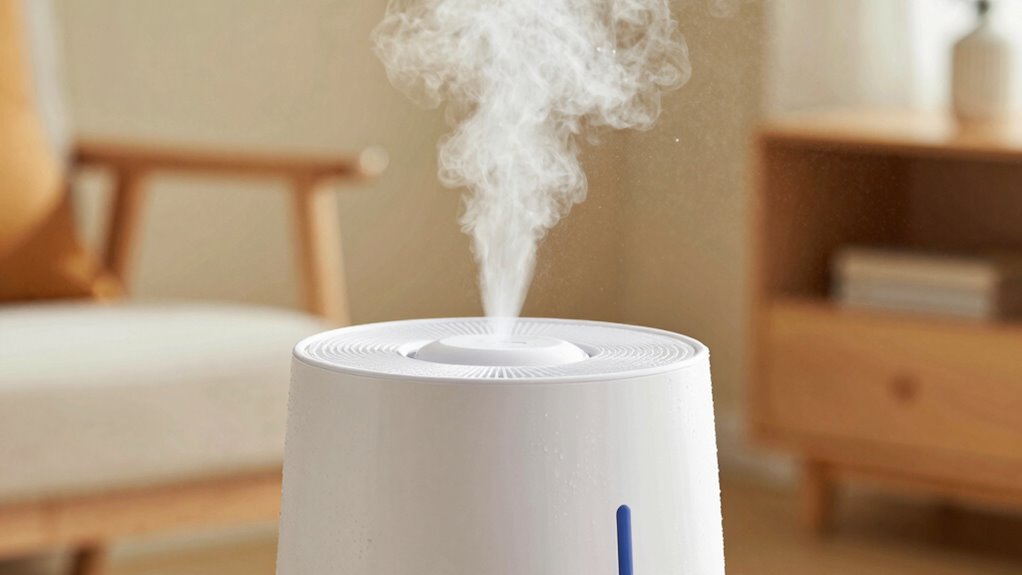

To prevent white dust and funky odors from your humidifier, you need to clean it regularly. This stops mineral deposits and microbial growth that cause buildup, odors, and dust particles. Use gentle cleaners like vinegar, brush out hard-to-reach areas, and always dry components thoroughly. Using distilled water also helps reduce mineral deposits. Staying consistent with cleaning guarantees your device performs well and keeps the air healthy—if you’d like detailed steps, keep going.
Key Takeaways
- Regularly clean the humidifier weekly to prevent mineral buildup, mold, and bacterial growth.
- Use vinegar solutions and soft brushes to thoroughly disinfect all parts and eliminate mold and bacteria.
- Replace filters regularly and opt for distilled or demineralized water to reduce mineral deposits and white dust.
- Dry all components completely after cleaning to prevent mold and microbial proliferation.
- Address persistent issues with professional help or advanced cleaning if white dust or odors persist.
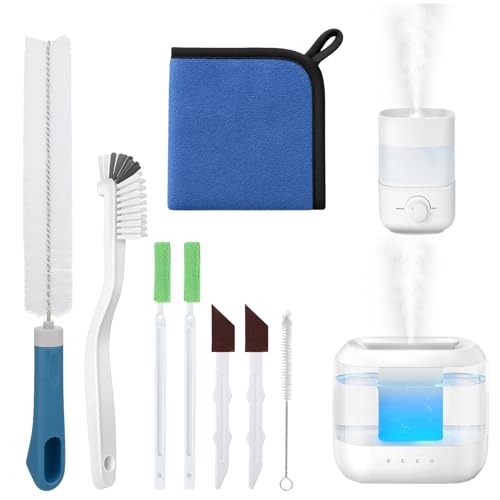
XANGNIER Humidifier Cleaner Brush Kits,8 Pcs
- Complete Cleaning Brush Set: Includes nylon, sandpaper, long, gap, straw brushes, and cloth
- Thorough Humidifier Cleaning: Cleans stains, scale, air outlets, and tanks
- Time-Saving and Efficient: All-in-one kit reduces cleaning time and effort
As an affiliate, we earn on qualifying purchases.
As an affiliate, we earn on qualifying purchases.
Why Regularly Cleaning Your Humidifier Prevents White Dust and Odors
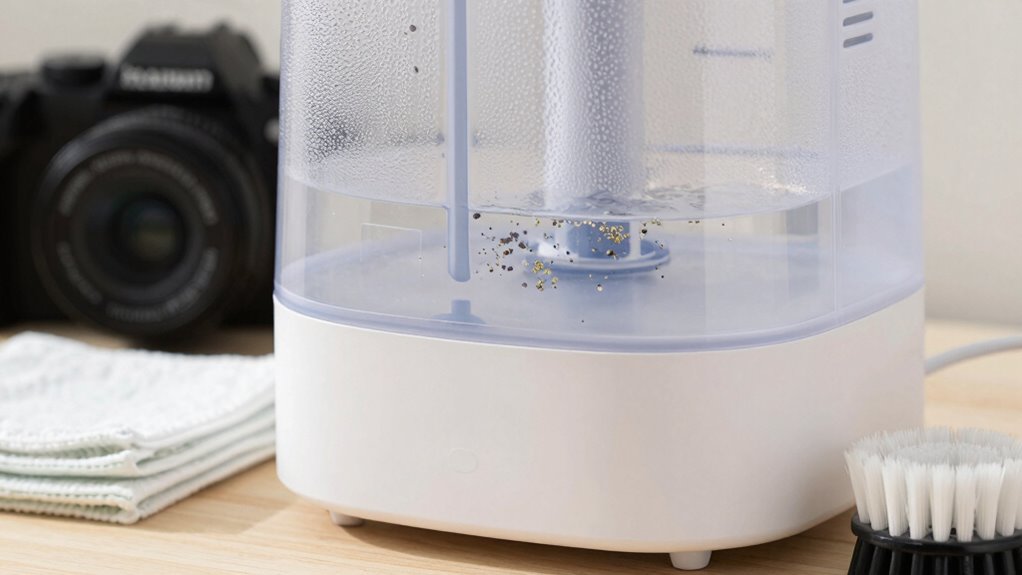
Regularly cleaning your humidifier is essential because it prevents the buildup of mineral deposits and mold that can cause white dust and unpleasant odors. When your humidifier isn’t cleaned often, these deposits can circulate in the air, negatively impacting air quality. Poor air quality can irritate your respiratory system, especially if you suffer from seasonal allergies. White dust, caused by mineral particles from tap water, can settle on surfaces and be inhaled, aggravating allergy symptoms. Additionally, mold growth from neglecting cleaning can release spores into the air, worsening allergy and asthma symptoms. Implementing natural filtration systems can help reduce mineral buildup and improve overall air quality. Incorporating proper cleaning techniques ensures your humidifier stays free of harmful deposits and mold. Keeping your humidifier clean minimizes these risks, ensuring healthier, clearer air in your home. Proper maintenance also supports the use of sustainable fabric care practices that contribute to healthier indoor environments. Regular maintenance helps you breathe easier and creates a more comfortable environment during seasonal allergy seasons, especially when combined with air quality improvements.
What Causes White Dust and Funky Smells in Humidifiers
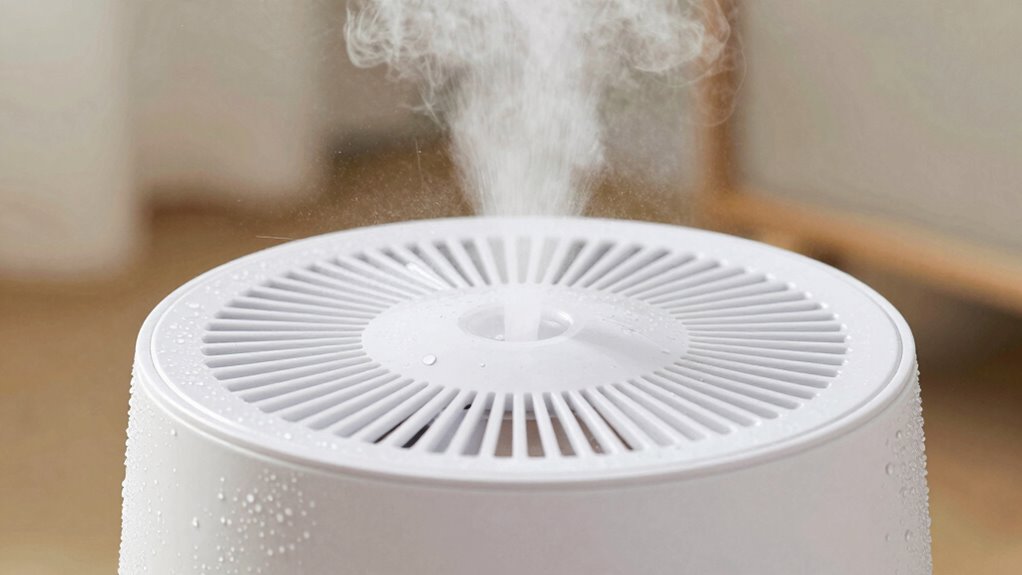
White dust and funky smells in your humidifier often come from mineral deposits, bacterial growth, or mold buildup. Poor water quality and infrequent cleaning can make these issues worse. Understanding these causes helps you keep your humidifier clean and safe to use. Regularly using distilled water can also significantly reduce mineral buildup and improve air quality. Using proper cleaning techniques is essential to prevent the buildup of bacteria and mold, ensuring the humidifier operates safely. Additionally, choosing appropriate water sources can help minimize contaminants and maintain the device’s performance. Being aware of water quality and how it affects your humidifier can further aid in preventing these issues from recurring. Implementing regular maintenance routines is crucial for long-term performance and safety.
Mineral Deposits Accumulation
Mineral deposits, often called scale, build up inside humidifiers when mineral-rich water evaporates. This mineral buildup forms stubborn crusts that clog the device and reduce efficiency. As the minerals accumulate, they can be released into the air as fine particles, contributing to white dust that settles on furniture and surfaces. Excessive mineral deposits also impact air quality by dispersing tiny particles that may irritate your respiratory system or worsen allergies. Regular cleaning helps prevent these deposits from becoming a problem, ensuring the humidifier operates smoothly and efficiently. Using distilled or filtered water minimizes mineral content, reducing scale formation. Proper cleaning techniques can help remove existing deposits and prevent future buildup, maintaining a healthier environment. Additionally, understanding the effects of mineral dust can motivate proper maintenance to protect your indoor air quality. Keep in mind that unchecked mineral buildup not only hampers your humidifier’s performance but also compromises the air you breathe, making regular maintenance essential.
Bacterial and Mold Growth
Bacterial and mold growth often occur when humidifiers are left uncleaned or unused for extended periods, creating a breeding ground for germs. Bacterial buildup can quickly develop in stagnant water, especially if you don’t regularly clean the device. Mold thrives in moist, warm environments, making uncleaned humidifiers perfect for its growth. To prevent mold and bacteria, it’s essential to clean your humidifier frequently, using disinfectants that target these microbes. Proper mold prevention involves thorough scrubbing and drying of all components after each use. If you neglect cleaning, these microbes can disperse into the air, causing unpleasant odors and potential health issues. Staying vigilant about your humidifier’s cleanliness helps keep bacteria and mold at bay, ensuring healthier, fresher air in your space. Regular maintenance also reduces the risk of white dust, which can accumulate from mineral deposits when water is evaporated repeatedly.
Water Quality and Usage
If your humidifier starts producing white dust or strange smells, the quality of the water you’re using is likely to blame. Hard water contains minerals like calcium and magnesium that can cause mineral buildup inside your device. When these minerals are heated or vaporized, they settle as white dust on nearby surfaces. Using water filtration systems, such as a demineralization cartridge or distilled water, can markedly reduce mineral content and prevent buildup. Regularly changing the water and cleaning your humidifier also helps minimize mineral deposits, which can lead to funky smells and reduce efficiency. Avoiding tap water with high mineral levels ensures your humidifier operates smoothly and keeps the air clean and dust-free. Proper water management is key to preventing white dust and funky odors. Additionally, understanding the regulatory standards and guidelines for water quality can help you choose the best water source for your humidifier and maintain optimal air quality.
How to Clean Your Humidifier Step-by-Step for Best Results

To guarantee your humidifier stays clean and free of white dust, start by gathering all the necessary cleaning supplies. Next, follow the proper cleaning steps carefully to remove buildup and bacteria. Doing this regularly will keep your humidifier functioning efficiently and improve the air quality in your home. Additionally, always refer to the manufacturer guidelines for specific cleaning instructions to prevent damage.
Gather Cleaning Supplies
Have you gathered all the cleaning supplies you’ll need? Start by collecting essential cleaning tools like soft brushes, microfiber cloths, and a sponge. These tools help you reach every nook and cranny without damaging your humidifier. Next, choose disinfectant solutions suitable for humidifier parts—white vinegar is a natural option, or select a gentle disinfectant recommended by the manufacturer. Having these supplies ready guarantees you can clean thoroughly without interruptions. Check your humidifier’s manual for any specific cleaning recommendations or restrictions. Preparing your cleaning tools and disinfectant solutions beforehand streamlines the process, making it easier to remove mineral buildup, mold, and bacteria. Proper supplies are key to effective cleaning, helping prevent white dust and funky odors down the line. Additionally, understanding indoor air quality best practices ensures your humidifier contributes to a healthier environment. Being aware of airborne contaminants can further help you maintain a clean and safe indoor space. Ensuring your humidifier is free from mineral deposits is also vital for optimal performance and indoor air health. Regular maintenance and proper cleaning techniques are essential to prevent issues like white dust and unpleasant odors, keeping your indoor air fresh and safe. To enhance your cleaning routine, consider using humidifier-specific cleaning products that are designed to break down mineral buildup more effectively.
Follow Proper Cleaning Steps
Once you have your supplies ready, start by unplugging the humidifier and emptying any remaining water. Remove the water tank and base, then wipe all surfaces with a soft cloth or sponge. Use a mixture of vinegar and water to disinfect parts, preventing mold and bacteria growth that can compromise air quality. Be sure to scrub hard-to-reach areas and rinse thoroughly. Dry all parts completely before reassembling. Regular cleaning is essential for proper appliance maintenance and maintaining ideal air quality. Incorporate preventative measures to avoid buildup and ensure your humidifier operates efficiently. Cleaning the water tank regularly helps prevent mineral deposits and bacterial growth that can lead to white dust and odors. Additionally, inspecting the filters periodically can help maintain optimal performance and air purity. Incorporating proper maintenance routines helps prolong the lifespan of your humidifier and keeps it functioning effectively. Avoid skipping steps or rushing, as buildup can lead to white dust or foul odors. Proper humidifier maintenance ensures your appliance stays in top condition, prolonging its lifespan and effectiveness. Following these proper cleaning steps helps ensure your humidifier functions efficiently, prevents funk, and keeps the air in your space fresh and healthy.
How Often Should You Clean Your Humidifier?
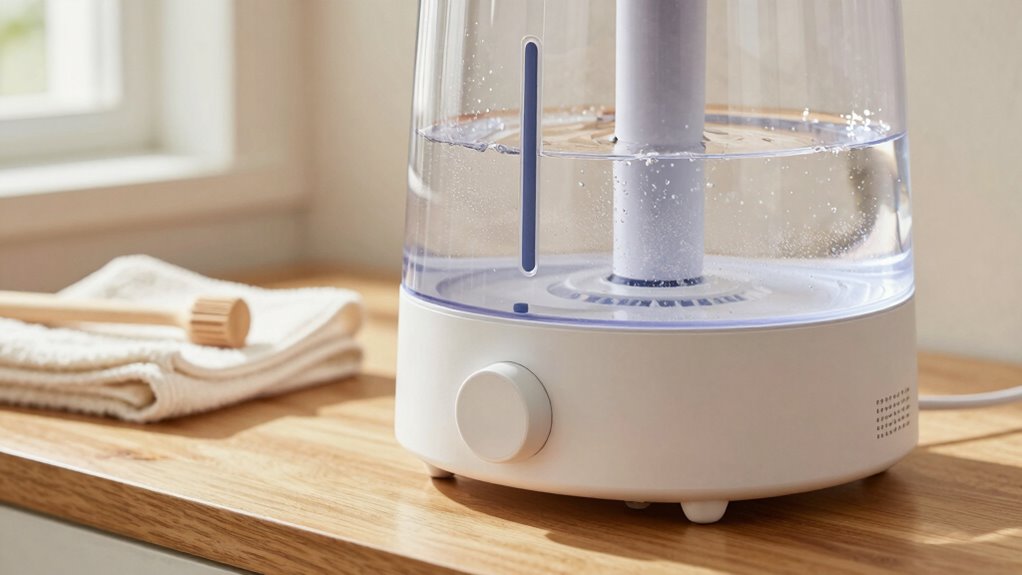
You should clean your humidifier at least once a week to prevent the buildup of mold, bacteria, and mineral deposits. Regular humidifier maintenance is essential for maintaining healthy air quality improvement in your home. If you neglect cleaning, harmful microorganisms and mineral deposits can develop, reducing the device’s efficiency and potentially causing respiratory issues. Frequent cleaning also helps prevent “white dust,” which occurs when mineral particles are dispersed into the air. Even if you use distilled water, regular cleaning is necessary to keep your humidifier functioning properly. Proper device maintenance is crucial for effective humidifier care and ensuring optimal performance. By sticking to a weekly cleaning schedule, you ensure your humidifier operates efficiently, promotes better air quality, and minimizes health risks associated with dirty units. Consistent maintenance ultimately keeps your environment safer and more comfortable.
Choosing the Right Supplies to Clean Your Humidifier Effectively
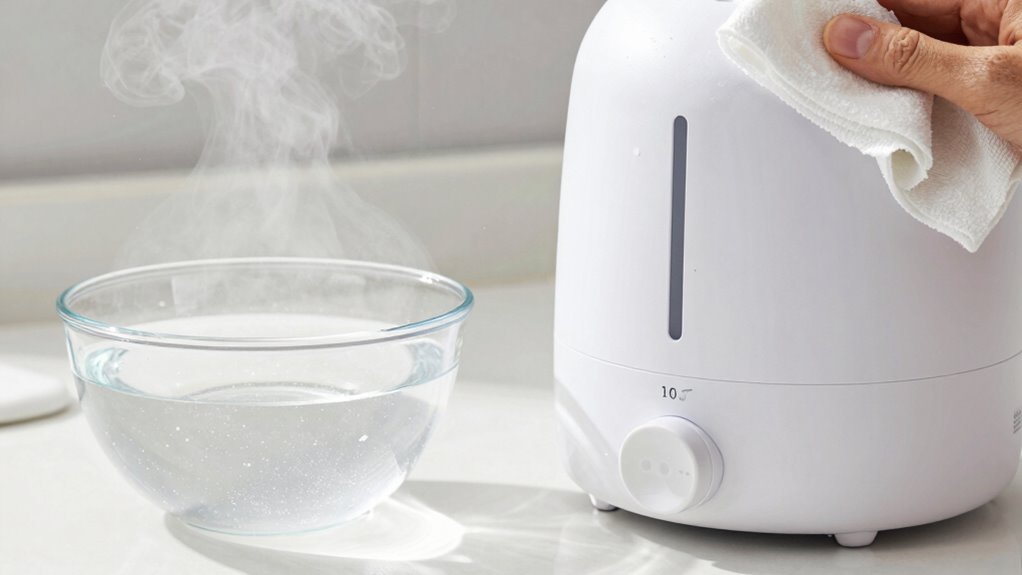
Choosing the right supplies is vital to cleaning your humidifier effectively and maintaining its performance. Start with a gentle, non-abrasive cleaner to avoid damaging components. Regular filter replacement is necessary, as old filters can harbor mold and bacteria, contributing to white dust and funk. When selecting filters, make sure they’re compatible with your humidifier model. Monitoring water pH is also essential; water that’s too acidic or alkaline can cause mineral buildup and scale, which worsens white dust. Use distilled or demineralized water whenever possible to minimize mineral deposits. Keep a soft brush or cloth handy for scrubbing hard-to-reach areas. Additionally, understanding mineral deposits can help you choose the best cleaning methods and supplies. Proper supplies will help you clean thoroughly, prevent mineral buildup, and keep your humidifier functioning efficiently and safely.
Common Mistakes to Avoid When Cleaning Your Humidifier
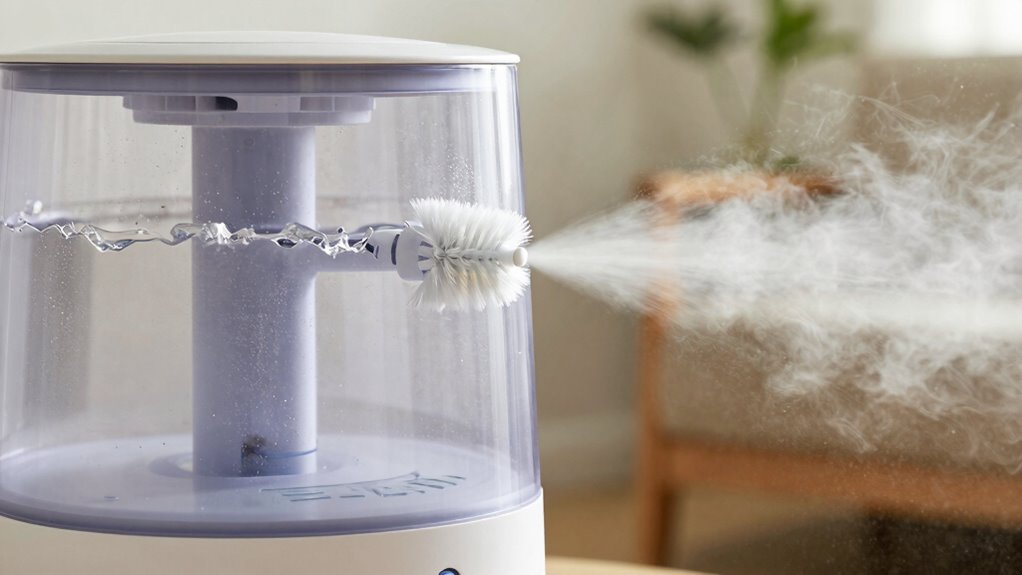
Failing to follow proper cleaning procedures can actually make your humidifier worse rather than better. One common mistake is neglecting seasonal maintenance, which leads to buildup of mold and bacteria. You should clean your humidifier regularly, following the recommended cleaning frequency—at least once a week during heavy use. Skipping or rushing through cleaning can leave residues that promote white dust and foul odors. Another mistake is using harsh chemicals or abrasive tools that damage components, making future cleaning harder. Additionally, not drying parts thoroughly after cleaning can encourage mold growth. Remember, consistent, thorough cleaning helps prevent mineral buildup and keeps your humidifier functioning properly, ensuring healthier air for your home. Incorporating urban greening initiatives can also improve indoor air quality and overall well-being. Avoid these mistakes to maintain prime performance and air quality.
Troubleshooting Persistent White Dust and Odors: When to Get Help
Persistent white dust and lingering odors can signal that your humidifier isn’t functioning properly, even after regular cleaning. If you’ve tried humidifier troubleshooting steps like thorough descaling and using distilled water but still notice white dust or strange smells, it’s time to seek professional help. Persistent issues might indicate a malfunctioning component or mold growth that simple cleaning can’t resolve. Proper odor elimination may require advanced cleaning or repairs. Don’t ignore these signs, as they can affect air quality and your health. Contact a professional or the manufacturer for guidance if your efforts aren’t resolving the problem. Getting expert assistance guarantees your humidifier operates safely and effectively, preventing ongoing white dust and odors from impacting your indoor environment.
Frequently Asked Questions
Can Using Distilled Water Prevent White Dust in Humidifiers?
Yes, using distilled water can prevent white dust in humidifiers. Since distilled water has fewer minerals, it reduces mineral buildup inside your device, which is often responsible for white dust. Poor water quality with minerals causes this residue, so switching to distilled water minimizes that issue. However, regular cleaning remains essential to keep your humidifier functioning properly and to prevent any funk or mold growth.
Are There Natural Cleaning Methods for Humidifiers?
Yes, you can use natural remedies and cleaning agents to clean your humidifier. Try mixing white vinegar with water to break down mineral deposits and mold. You can also use baking soda for scrubbing stubborn spots. These natural remedies are effective, eco-friendly, and safe for your device. Regularly cleaning with these agents helps prevent white dust buildup and keeps your humidifier fresh and functioning properly.
What Are the Health Risks of Neglecting Humidifier Cleaning?
Imagine breathing in damp, stale air filled with unseen microbial growth—neglecting humidifier cleaning harms your indoor air quality. This buildup can release bacteria and mold into your home, risking respiratory issues, allergies, and asthma flare-ups. Without proper maintenance, you expose yourself to these health hazards daily, making regular cleaning essential to keep your air fresh, safe, and free from harmful microorganisms.
How Do I Know if My Humidifier Needs Replacement Instead of Cleaning?
If your humidifier shows signs like persistent mold, a foul odor, or frequent breakdowns despite cleaning, it’s likely time for replacement. Typically, humidifier lifespan varies but usually lasts 6-12 months with proper care. Replacement indicators include cracked tanks, outdated technology, or reduced efficiency. When these issues arise, investing in a new unit guarantees ideal performance and healthier air quality, saving you from ongoing maintenance hassles.
Do Different Humidifier Types Require Different Cleaning Routines?
Different humidifier types do require different cleaning routines, much like how compatibility varies with devices. For example, ultrasonic models need more frequent cleaning to prevent mineral buildup, while evaporative units have simpler maintenance. You should consider each humidifier’s compatibility and recommended cleaning frequency to keep it running efficiently. Regularly following manufacturer instructions guarantees you’re cleaning the right way, no matter the type, preventing mold, bacteria, and dust issues.
Conclusion
Regular cleaning keeps your humidifier running smoothly, much like a well-oiled machine. By staying on top of maintenance, you prevent white dust and funky smells from taking over. Think of it as giving your device a quick spa day—refreshing and essential. Don’t skip the steps or rush through it, or you might end up battling stubborn buildup. Keep up with cleaning, and your humidifier will serve you well, providing clean, healthy moisture every time.