
📊 Full opportunity report: The Memento Constraint: Why Continual Learning Is the Trillion-Dollar Bottleneck Nobody Is Pricing on ThorstenMeyerAI.com — validation score, market gap, and execution plan.
TL;DR
Current AI models in 2026 are incapable of continual learning, resembling Leonard from Nolan’s Memento—able to reason within a scene but unable to remember past interactions. Solving this constraint could transform the trillion-dollar enterprise AI sector.
AI models in 2026 cannot learn from ongoing interactions, resembling the character Leonard in Nolan’s Memento—brilliant in the moment but unable to remember or build on past experiences. This fundamental constraint, known as the ‘Memento constraint,’ is shaping the strategic landscape of enterprise AI and could determine which labs and companies dominate the trillion-dollar sector in the coming years.
All leading AI systems today—such as Anthropic’s Claude, OpenAI’s GPT-5, Google’s Gemini, and others—operate within a static framework, unable to retain or integrate knowledge across different conversations or deployments. Instead, they retrieve information or respond based on fixed weights established during training, creating a persistent memory gap that limits their ability to adapt and improve over time.
This limitation is rooted in the training-deployment boundary, where models are trained to compress experience into weights but do not update these weights during deployment. Engineering solutions like retrieval-augmented generation (RAG), vector databases, and multi-agent architectures are attempts to work around this constraint, but none enable true continual learning.
Experts like Malika Aubakirova and Matt Bornstein have categorized the potential points where continual learning could occur into three layers: updating model weights, adding modular adapters, and external memory or context systems. Each approach has different technical and strategic challenges, but none currently provide a complete solution.
The core issue is that models cannot remember or learn from past interactions in real time, which severely limits their ability to adapt to individual users, evolving data, or complex tasks that require ongoing knowledge accumulation. Solving this problem would not only advance AI capabilities but could also reshape enterprise AI economics, giving an edge to the first lab that cracks continual learning.
The Memento constraint.
Why continual learning is the trillion-dollar bottleneck nobody is pricing.
Every frontier AI system in 2026 is Leonard. Brilliant within any single conversation. Cannot compound. The lab that cracks continual learning first does not just win a research milestone — it reshapes the trillion-dollar enterprise AI economy on a timeline that compresses every other capital allocation question in the sector.
Every experience remains external.
It’s that he can never compound.
Three layers. Three different competitive dynamics.
Continual learning could happen at three layers of the system, and the strategic implications differ by layer. Each has a different cost structure, a different failure mode, and — most strategically important — a different competitive moat. Most production “memory” sits at Layer 3. The asymmetric outcome lives at Layer 1.
Context
Modules
Weights
AI memory augmentation devices
As an affiliate, we earn on qualifying purchases.
As an affiliate, we earn on qualifying purchases.
The cost of working around the constraint.
Every memory layer in production right now exists because the model forgets. The vector database, the embedding compute, the retrieval orchestration, the engineering time spent debugging the gap between “the model knows this” and “we put it in the context window in a way the model used.” Conservatively for a Fortune 500: $3–8M/year per company.
The model can’t retain. The economy pays for it.
Vector databases at $5–50K/year per workload. Embedding compute on every query. Retrieval orchestration. Quality engineering. Workflow scaffolding. None of it is compounding learning. All of it is increasingly elaborate Polaroid-and-tattoo systems.
A continual-learning breakthrough does not improve enterprise AI margins by 5%. It eliminates a category of cost that compounds across every workflow at every customer. The company that produces this breakthrough captures economic surplus on a scale that none of the existing model-economics conversations are pricing.

Vector Databases: A Practical Introduction
As an affiliate, we earn on qualifying purchases.
As an affiliate, we earn on qualifying purchases.
Six labs racing. One probability distribution.
If the breakthrough is achievable on a 12–36 month horizon, the competitive question is which lab ships it first. Each has different strengths and constraints. The probability estimates below are judgment, not data — they reflect the strategic and research-bench positions visible in May 2026.

4 Pack Telescoping Magnet Pick-up Tool Set – Retrieving Pickup Tools,Extendable Pick Up Tools,Bendable Spring Magnet Stick,Flexible Extra Long Reach Bendable Curve Grabber with 4 Claws
【Quality material】These telescoping magnet sticks are made of telescopic stainless steel tubes, which are hard to break, and…
As an affiliate, we earn on qualifying purchases.
As an affiliate, we earn on qualifying purchases.
A fourth endstate the 2028 forecast didn’t price.
In the lab endgame piece I described three scenarios — Duopoly, Equilibrium, Stratification — for how six frontier labs become two, three, or twelve. Continual learning is the variable that does not appear in any of those scenarios but should. A Layer-1 breakthrough produces a fourth, asymmetric outcome.
One lab achieves a structural lead via a single capability breakthrough.
The lab that ships first does not just win a benchmark. It reshapes the architecture of every enterprise AI deployment in production. Within 60 days every CIO has to decide: stay with the current vendor and miss the capability, or migrate. Vendor switching costs are real but not infinite, and the productivity gain justifies migration cost for most workloads.
Migration decision wave
Enterprise CIOs forced to choose. Vendor lock-in calculus shifts overnight. Procurement cycles compress from 24–36 months to 6–12.
Market-share consolidation
First-mover captures 20–30 points of enterprise AI share that would have been distributed across the field. Closer to Scenario A duopoly — but compressed in time.
Capability propagates
Other labs implement their own versions. Open-weight catches up. Capability becomes table stakes. But the consolidation that happened in months 1–12 is durable.
Probability: 15–25%. Not a base case. Real enough that any portfolio with significant frontier-AI exposure should price it. The first-mover advantage compounds faster than any other lab can close it because the integration depth, workflow patterns, and customer-specific accumulated learning all sit with the lab that shipped first.
The lab that cracks continual learning first does not win a benchmark. It rewrites the AI economy. The race is on. It is mostly invisible from outside the labs.
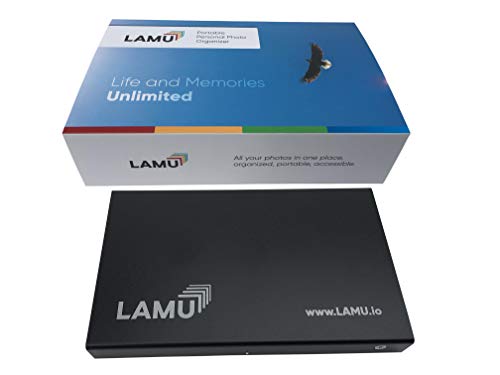
LAMU Portable Digital Photo Organizer – Digital Picture Manager for Windows – Software to Easily Organize Your Photos and Videos – Digital Photo Storage – 2 Terabytes (Charcoal Black)
MORE THAN A HARD DRIVE: Our unique software can automatically organize and find your photos/videos by timeline, place…
As an affiliate, we earn on qualifying purchases.
As an affiliate, we earn on qualifying purchases.
Three principles. By role.
Treat the memory layer as transitional infrastructure.
The vector database and retrieval orchestration you are building now is a substitute for continual learning. It will become less central when the breakthrough ships. Architect so the memory layer can be shrunk or replaced without re-architecting the workflow. Memory-layer contracts ≤24 months. No proprietary memory-orchestration platforms.
Capture validated experience now.
The most valuable input to a continual-learning model in 2027–2028 is a corpus of validated experience: tasks attempted, outcomes observed, corrections applied, customer-specific patterns. Build the corpus before you need it. Same dynamic as data lakes 2015–2018: the companies that built ahead ended up with structural advantage.
Maintain vendor optionality.
When continual learning ships, the first-mover has structural pricing power for 12–24 months. Enterprises locked into the wrong vendor pay a premium or accept missing the capability. Dual-vendor capability and portable workflow patterns are the negotiating leverage. The skills marketplace logic applies more strongly here.
Price Scenario D in your AI portfolio.
The probability is 15–25% on an 18-month horizon. Most public-equity AI exposure is priced for Scenarios A/B/C. The Scenario D upside is asymmetric — the lab that ships first sees compressed market-share consolidation that rewards the position 2–3× more than base-case scenarios. Cheap optionality, asymmetric payoff.
Strategic Impact of Solving Continual Learning
Overcoming the Memento constraint could lead to a paradigm shift where AI systems become truly adaptive, continuously learning and improving without external scaffolding. This would dramatically increase their value in enterprise applications, from customer service to complex decision-making, and could define the next era of AI dominance.
The first lab to develop reliable continual learning would gain a decisive competitive advantage, potentially reshaping the trillion-dollar enterprise AI market. This breakthrough could accelerate capital flows, influence industry consolidation, and set new standards for AI deployment and regulation.
Current State and Technical Landscape of Continual Learning
As of 2026, the AI field is still grappling with the fundamental limitation of static models. Leading labs and companies have developed various architectures—such as modular adapters, retrieval systems, and layered memory—to simulate learning, but none achieve true, ongoing knowledge integration across sessions.
Research efforts are intensively focused on overcoming catastrophic forgetting, data lineage issues, and regulatory constraints associated with weight updates during deployment. The debate remains whether the solution will come from direct weight updates, more sophisticated modular architectures, or external memory systems.
Historically, progress has been incremental, with breakthroughs like LoRA and other fine-tuning methods improving adaptability but not solving the core problem. The industry recognizes that a true solution could redefine the competitive landscape, making current approaches merely stopgap measures.
“Continual learning remains the central bottleneck; current architectures are fundamentally amnesiac, limiting AI’s potential to adapt over time.”
— Malika Aubakirova
“The lab that cracks continual learning does not just win a research milestone—it reshapes the trillion-dollar enterprise AI economy.”
— Thorsten Meyer
Unresolved Technical and Strategic Challenges
It is still unclear which architectural approach—weight updates, modular adapters, or external memory—will ultimately succeed in enabling true continual learning. The timeline for a breakthrough remains uncertain, with ongoing research through 2028.
Regulatory, technical, and economic factors could influence which solution emerges first, and whether it can be scaled reliably across enterprise applications.
Next Steps Toward Achieving True Continual Learning
Research labs and industry consortia will intensify efforts through 2028, focusing on overcoming catastrophic forgetting, data provenance, and deployment constraints. Breakthroughs in one or more of these areas could accelerate the development of fully adaptive AI systems.
Investors and industry leaders are closely monitoring these efforts, recognizing that the first successful solution could lead to a new wave of AI dominance and economic value.
Key Questions
Why is continual learning important for AI?
Continual learning allows AI systems to adapt, improve, and personalize over time, making them more effective in complex, evolving environments.
What are the main technical hurdles to achieving continual learning?
The key challenges include catastrophic forgetting, data lineage, regulatory constraints, and integrating knowledge without corrupting existing information.
Which approach is most likely to succeed?
It remains uncertain; research is exploring weight updates, modular adapters, and external memory systems, each with its own advantages and limitations.
When might we see a breakthrough?
Experts suggest significant progress could occur by 2028, but the timeline remains highly uncertain due to technical and regulatory complexities.
Source: ThorstenMeyerAI.com