
📊 Full opportunity report: Forward-Deployed: The Integration Wall, and the Role That Now Pays $700K to Climb It on ThorstenMeyerAI.com — validation score, market gap, and execution plan.
TL;DR
Forward-Deployed Engineers now constitute the highest-paid individual contributor role in tech, commanding up to $700K in total compensation. This shift reflects their essential role in integrating AI into complex enterprise environments, a task that traditional consulting firms cannot fulfill due to structural limitations.
Forward-Deployed Engineers now command total compensation exceeding $700,000, making them the highest-paid individual contributors in the tech industry, according to recent job listings and industry reports. This development underscores the critical importance of on-site integration work in deploying AI products within complex enterprise environments.
Recent data from industry sources shows that companies like Anthropic, Palantir, OpenAI, and others are actively hiring FDEs at top salaries, with some positions offering uncapped equity and total packages surpassing $700K. The role involves embedding engineers directly within client organizations to handle the complex, often manual, integration tasks that AI deployment requires—tasks that cannot be automated or outsourced to traditional consulting firms.
The role emerged from the historic Palantir model of deploying engineers on-site to customize analytics platforms for government and enterprise clients. Today, the same model is being scaled for AI, where the ‘integration wall’—the technical and political hurdles of connecting AI systems to legacy infrastructure—has grown significantly. FDEs are the specialists who walk into these environments, understand the existing stack, and ship production-ready code that meets security and compliance standards.
While consulting firms like McKinsey and BCG excel at strategic advice, they do not ship code into client systems due to liability and business model constraints. FDEs, by contrast, own the deployment outcome and are compensated accordingly, positioning them as the most valuable ICs in the software industry in 2026.
Forward-deployed.
The integration wall, and the role that now pays $700K to climb it.
The most valuable IC role in software in 2026 is not one most people would name. It is not a senior staff engineer at FAANG. It is not a frontier-lab research scientist. It is a job title that didn’t exist as a category five years ago and which, today, commands $300K base salaries and total compensation packages clearing $700K at the top end. It is the Forward-Deployed Engineer.
Most AI projects don’t fail at the model. They fail at the wall.
Getting the demo working in a sandbox is roughly 20% of the project. The other 80% is enterprise SSO, brittle ETL pipelines, regulatory constraints, data residency, and the politics of getting production credentials from a security team that has never heard of the vendor. No amount of prompt engineering fixes any of those problems.

Building Integrations with MuleSoft: Integrating Systems and Unifying Data in the Enterprise
As an affiliate, we earn on qualifying purchases.
As an affiliate, we earn on qualifying purchases.
The work that climbs the wall pays accordingly.
Levels.fyi and live job listings as of May 2026. The premium is real, persistent, and structural. Open-weight models commoditize the model layer; they do not commoditize the engineer who deployed it inside a Fortune 500 health-insurance back office.
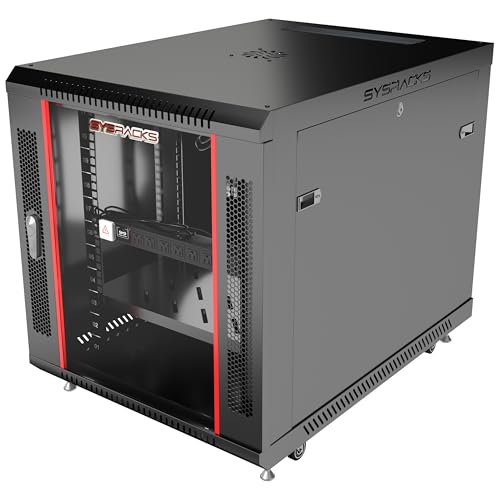
12U Server Rack Cabinet 35" Deep, Deployment-Ready Network Rack Enclosure with PDU, Fan & Shelf, Rolling IT Cabinet for Installers, AV Systems & Infrastructure
DEPLOYMENT-READY CONFIGURATION – Pre-configured rack cabinet with PDU, cooling fan, shelf and mounting hardware to reduce installation time…
As an affiliate, we earn on qualifying purchases.
As an affiliate, we earn on qualifying purchases.
The FDE role is the inverse of every other senior IC bucket mix.
Last week’s personal-audit dispatch introduced the four-bucket taxonomy: Theatre, Commodity, On-the-line, Durable. Most senior IC roles audit to ~25/30/25/20. The FDE role inverts almost completely. This is why the role pays what it pays.
Most weeks · 80% on thin ice.
- TTheatre · status · slide refresh~25%
- CCommodity · routine code · templates~30%
- LOn-the-line · contested judgment~25%
- DDurable · context · relationships~20%
The week, flipped.
- TThe customer needs results, not status<5%
- CBespoke integrations resist templating<10%
- LJudgment under enterprise ambiguity~25%
- DCustomer-specific · accumulating · yours~60%

Software Supply Chain Security: Securing the End-to-End Supply Chain for Software, Firmware, and Hardware
As an affiliate, we earn on qualifying purchases.
As an affiliate, we earn on qualifying purchases.
Three reasons the FDE premium does not mean-revert.
The wall doesn’t shrink as models improve.
Capability gains accrue at the model layer. They do not accrue at the customer’s 12-year-old SQL warehouse, OIDC federation trust, or data residency contract. The wall stays the same height regardless.
Labs cannot vertically integrate the function.
A model lab employs a few hundred FDEs before HR overhead breaks. The Anthropic × Wall Street $1.5B JV is the explicit acknowledgement: scale requires a separate organizational entity. Specialized firms compete for the same talent the labs draw from.
The credentials cannot be machine-generated.
A CIO putting production data through a Claude-based runtime wants a human in the room with personal accountability. The FDE is the insurance certificate. There is no version where the customer accepts an LLM doing the same job, regardless of capability.

NIMO 17.3" FHD Gaming Laptop, AMD Ryzen 5 6600H 16GB DDR5 RAM 512GB SSD (Beat i7-1165G7, 6-Core up to 4.5GHz) Radeon 660M Graphics Computer with 100W Fast PD Backlit Keyboard for Business & Student
【Next-Gen Performance: AMD Ryzen 5 6600H & Radeon 660M】Tackle demanding tasks with ease using the AMD Ryzen 5…
As an affiliate, we earn on qualifying purchases.
As an affiliate, we earn on qualifying purchases.
Eight major shops. One talent pool.
The same people are competing for the same 200 candidates.
The talent pool, in practice, comes from three sources: former technical founders, existing FDE-shop alumni (Palantir, Scale, Databricks), and senior engineers from consulting backgrounds. The standard university-to-FAANG-to-startup pipeline does not produce candidates for this role. The pipeline does not yet exist.
The work that cannot be standardized is the work that pays. The FDE is what that work looks like in 2026.
Four assignments. By role.
If your audit came back with D < 15%, this is the cleanest inversion.
Anthropic, OpenAI, Cohere, Databricks, Scale, Adobe, Ramp are all hiring. Read the listings before you decide it’s not for you — most are wider than the title suggests. Former technical founders explicitly encouraged.
If you don’t have an FDE function, the customer-shaped value is leaking elsewhere.
The competing model lab’s FDE is sitting in your customer’s office right now, learning your customer’s stack, and earning standing your engineers wish they had.
The FDE unit economic looks unusual on first inspection.
$700K total comp against $5M–$25M of customer expansion ARR is a different economic than a senior platform engineer. The ROI is legible only if it’s measured. Most finance teams have not yet built the model.
Your existing pipeline doesn’t produce this hire.
If your firm recruits seniors via the university-to-FAANG-to-startup track, you are not in this market. You will need to build a different pipeline — or pay the premium to recruit from the existing one.
Why FDEs Are the New Top-Tier Tech Roles
The rise of FDEs reflects a fundamental shift in how enterprise AI is deployed, emphasizing the importance of hands-on, embedded engineering work. Their high compensation underscores the value of their unique ability to resolve complex integration challenges that are critical for AI success and enterprise adoption. This trend also signals a broader redefinition of technical leadership and individual contributor value in the industry, with practical deployment skills now commanding premium pay.
The Evolution of Deployment Roles in Enterprise AI
Historically, enterprise deployment relied on consulting firms and system integrators, who provided strategic advice but did not handle production code. Palantir pioneered the FDE role in the late 2000s, embedding engineers within client organizations to solve unique, environment-specific challenges. As AI technology advanced rapidly in 2026, the complexity of integration increased, making FDEs indispensable. Job listings for FDEs have surged 800% over the past year, reflecting this growing demand and the structural shift in enterprise AI deployment.
This evolution is driven by the ‘integration wall’—the technical, security, and political hurdles that prevent simple plug-and-play AI solutions. FDEs are the specialists who bridge this gap, a task that traditional consultants cannot perform due to liability and business model restrictions.
Remaining Questions About FDE Market Dynamics
While salaries and roles are confirmed, it is unclear how sustainable these high compensation levels are long-term, especially as automation and AI tooling evolve. The full scope of FDE responsibilities across different industries and the potential for new entrants to challenge their dominance remain uncertain. Additionally, the precise impact on traditional engineering career paths and consulting firms is still developing.
Future Trends in Enterprise AI Deployment Roles
Expect continued growth in FDE hiring, with salaries possibly stabilizing or increasing as demand outpaces supply. Companies may also develop new tools to automate parts of the integration process, but the core need for embedded, hands-on engineers is likely to persist. Industry analysts will monitor how the role evolves, especially as AI systems become more standardized and automation reduces manual integration tasks.
Key Questions
Why are FDE salaries so high compared to traditional engineers?
FDEs perform critical, environment-specific integration work that cannot be automated or outsourced easily, making their skills highly valuable and scarce, which drives up compensation.
Can consulting firms like McKinsey or BCG replace FDEs?
No, because consulting firms do not ship production code or own deployment outcomes, which are core responsibilities of FDEs. Their business models and liability structures prevent this.
Is the FDE role likely to remain the highest-paid IC in tech?
While current demand is high, future developments in automation and tooling could impact salary levels. However, the necessity of embedded, hands-on deployment expertise suggests the role will remain highly valued for some time.
Source: ThorstenMeyerAI.com