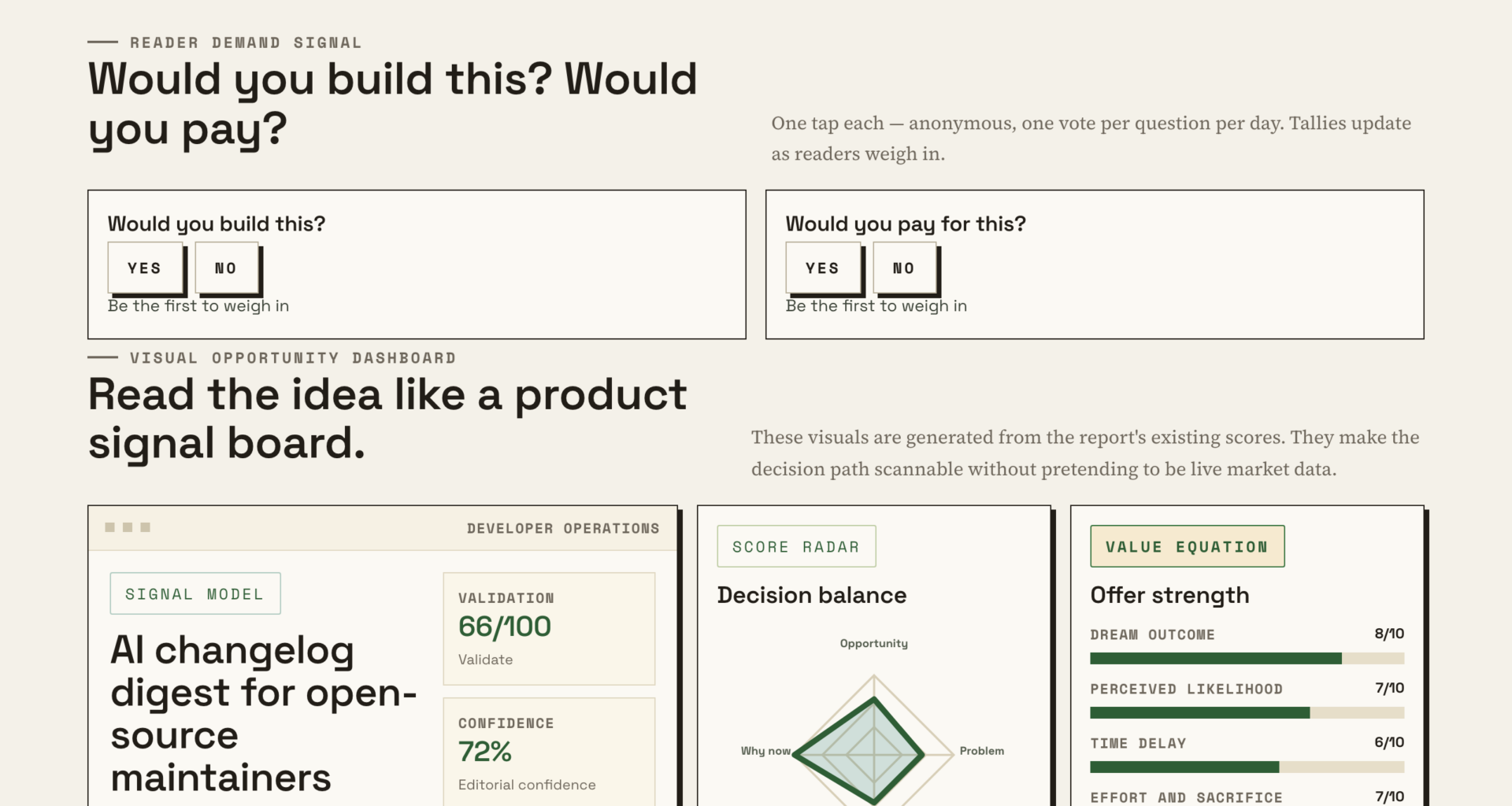

📊 Full opportunity report: AI Changelog Digest For Open-source Maintainers on IdeaNavigator AI — validation score, market gap, and execution plan.

Get the little things that make your day delivered free — and shop member deals
- Fast, free delivery on millions of items
- Access to Prime Big Deal Days deals on October 6–7
- Prime Video, Amazon Music and more included
TL;DR
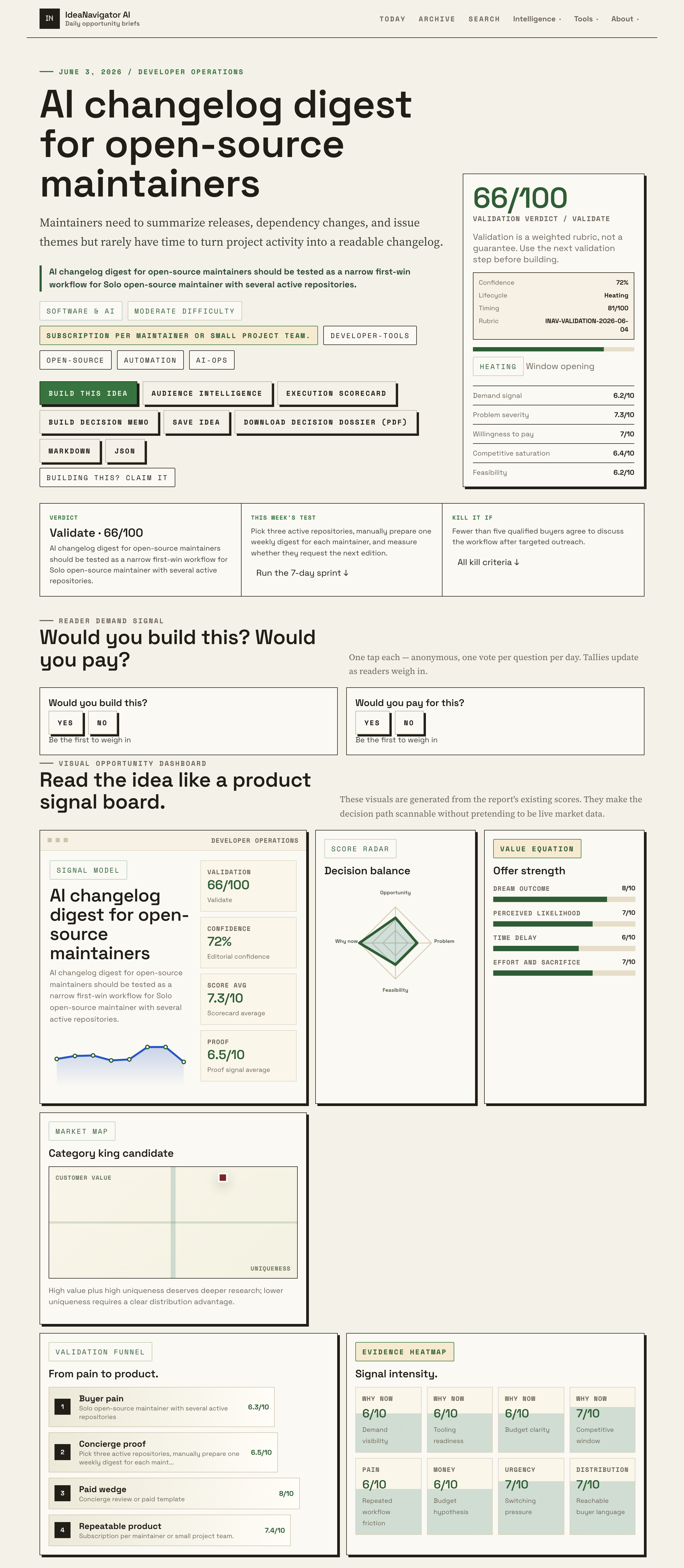
An AI-driven changelog digest for open-source projects is in testing, targeting solo maintainers managing multiple repositories. The tool automates release summaries, dependencies, and issues, promising to streamline project updates.
An AI-powered weekly changelog digest tool is being tested to assist solo open-source maintainers managing multiple repositories. This development aims to automate the summarization of releases, dependency changes, and top issues, addressing a common challenge faced by individual developers in maintaining clear project documentation and communication.
The proposed tool leverages AI summarization techniques to generate concise weekly updates from repository data, including release notes, merged pull requests, and issue discussions. It is designed as a narrow workflow for solo maintainers, allowing them to receive a digest that can be reviewed and approved before dissemination. The initial testing involves selecting three active repositories, with the goal of measuring whether maintainers request subsequent editions based on the usefulness of the summaries.
According to sources involved in the project, the approach does not require a full developer relations team or extensive manual effort. Instead, it uses repository metadata, release feeds, and AI algorithms to automate the digest creation process. The model aims to reduce the time and effort needed for maintainers to keep their project updates transparent and accessible to users and contributors.
The business model under consideration involves a subscription fee per maintainer or small project team, providing an affordable solution tailored to individual developers managing multiple repositories. The initiative is part of a broader trend toward developer operations tools that leverage AI to improve productivity and communication.
Implications for Solo Open-Source Maintainers
This development could significantly reduce the time and effort required for solo maintainers to produce comprehensive changelogs, which are often neglected due to resource constraints. Automating the process with AI could improve transparency, facilitate better user communication, and support more consistent project updates, ultimately benefiting open-source communities. If successful, this tool may become a standard part of the solo maintainer’s workflow, encouraging more regular and detailed project documentation.
AI-powered changelog generator for open-source projects
As an affiliate, we earn on qualifying purchases.
As an affiliate, we earn on qualifying purchases.
Growing Need for Automated Project Summaries
Many open-source projects, especially those managed by solo developers, struggle with maintaining detailed changelogs and release notes. Traditionally, creating these summaries involves manual effort, which can be time-consuming and often deprioritized. Recent advances in AI, combined with increased repository metadata, have opened the possibility of automating these tasks. The concept of an AI-generated digest aligns with broader trends in developer operations, where automation aims to streamline routine tasks and improve project visibility.
This initiative by IdeaNavigator AI builds on existing tools that analyze repository activity, but focuses specifically on delivering a weekly, digestible summary tailored for individual maintainers managing multiple projects. The approach is still in testing, with initial validation focused on measuring its practical value and adoption rate among targeted users.
“Automating changelog generation could free up valuable time for maintainers and improve project transparency.”
— an anonymous researcher
Uncertainties Surrounding Adoption and Accuracy
It is not yet clear how accurately the AI will summarize complex project activity or how willing maintainers will be to rely on automated summaries. The initial testing phase will determine whether the generated digests meet the quality standards required for official communication. Additionally, questions remain about the scalability of the tool, its integration with various hosting platforms, and the long-term business model viability.
Next Steps for Validation and Deployment
The immediate next step involves selecting three active repositories to generate and evaluate initial weekly digests. Feedback from maintainers will guide further refinements. If the results are positive, the team plans to expand testing, develop a user interface, and explore subscription-based models. Broader adoption will depend on demonstrated accuracy, ease of use, and perceived value among solo maintainers managing multiple projects.
Key Questions
How will the AI generate the changelog digest?
The AI will analyze repository metadata, release notes, merged pull requests, and top issues to produce a concise weekly summary, which can be reviewed and approved by the maintainer.
Is this tool meant for large teams or solo maintainers?
The initial focus is on solo maintainers managing several repositories, providing a lightweight, automated solution tailored to their workflow.
Will the summaries be accurate enough for official release notes?
The accuracy will depend on the quality of the AI algorithms and the data provided. Validation during testing will determine if the summaries meet the necessary standards.
How much will the subscription cost?
Pricing details are still under consideration, but the model aims to be affordable for individual developers, likely on a per-maintainer or small team basis.
When can I expect to see this tool available?
The project is currently in early testing; a wider rollout depends on initial validation results, with no specific release date announced yet.
Source: IdeaNavigator AI
Fall Picks
fall essentials
As an affiliate, we earn on qualifying purchases.