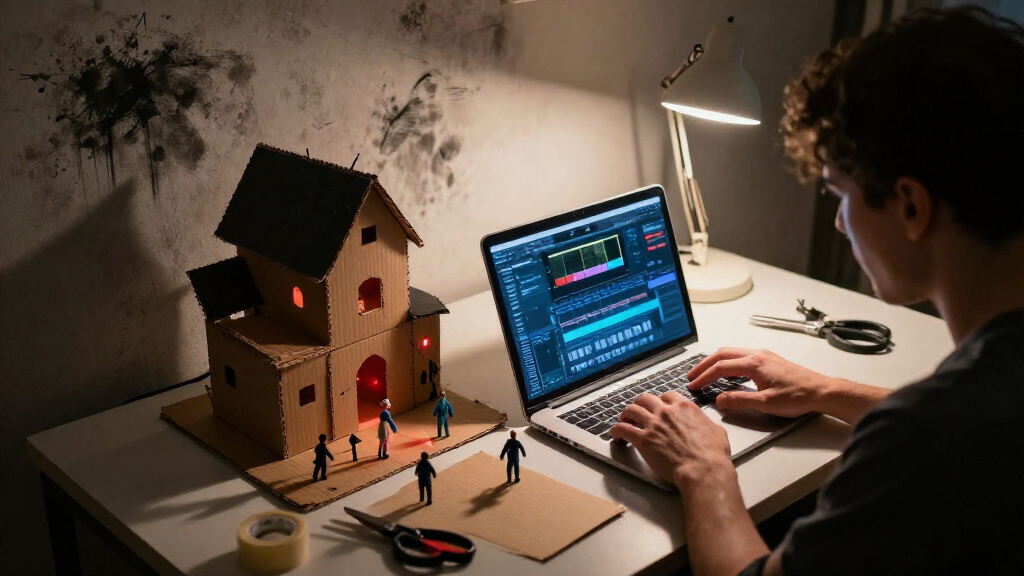

🔍 Read the full analysis: The Making Of Hollow House: AI, Horror-Comedy, And A Boring First Version on ThorstenMeyerAI.com

Get the little things that make your day delivered free with Prime
- Fast, free delivery on millions of items
- Prime Video, Amazon Music and more included
- Member-only deals all year
TL;DR
Thorsten Meyer says Hollow House, a 97-second horror-comedy made with AI-generated characters, voices and sets, was completed overnight after three versions. The first two cuts missed the intended pace; the final approach used one video model with the full cast as references. Meyer reports 2,220 Higgsfield credits spent across the versions, about $95 at his plan price.
Thorsten Meyer says he made the 97-second horror-comedy Hollow House overnight using AI-generated characters, voices and sets, revising the film three times after the first cut looked polished but felt boring. His account, published October 28 on ThorstenMeyerAI.com, describes how changes to the editing rhythm and video-generation workflow shaped the final version.
The short follows an extreme haunted attraction where a real ghost joins the scare crew and staff treat the situation as a workplace problem. In the premise, a guest says the safe word, “cotton candy,” but the frightening encounter does not stop. Shift lead Ray asks whether the newcomer signed a waiver, while a worker in a priest costume is pulled into an exorcism. Meyer says the script, characters and jokes are original, while the structure was inspired by an AI horror-comedy short shared on X.
Meyer describes three versions made between early evening October 27 and about 1:30 a.m. the next day. The first used 20 individually planned shots and ran 2 minutes 15 seconds; the second used 66 fast cuts and ran 2 minutes 21 seconds. The final version used three roughly 30-second segments generated with one model supplied with references for the full cast, resulting in a 1:37 film. Meyer says only the third version worked.
For the first version, Meyer generated eight character reference images with Google’s Nano Banana 2 through Higgsfield, then made shot start frames and animated them using Veo 3.1 Fast. He says all three versions used 2,220 Higgsfield credits, which cost about $95 under his plan, as well as about 2,100 ElevenLabs characters for music and sound effects. These figures are the creator’s account, not an independently audited production budget.
Behind the short · October 28, 2026
The Making of Hollow House: AI, Horror-Comedy, and a Boring First Version
A real ghost joins an extreme haunted attraction—and the staff treat it like a workplace problem. Thorsten Meyer’s 97-second short took three versions, a faster edit, and a new way to direct the video model.
Horror-comedy
Character sheets
Across all versions
Higgsfield plan price
01 / The edit changed everything
Three cuts to find the rhythm
Meyer says the first two versions looked polished but played slowly. The final version compressed the story and changed how the cast was supplied to the video model.
Polished, but slow
Twenty individually planned shots. Generated start frames were animated one by one; the result felt static and had no musical score.
More cuts, still not it
The second cut moved to a much quicker edit, but Meyer says it still missed the intended pace. He gives fewer details about what changed in this version.
Cast as references
Three roughly 30-second segments, using one video model supplied with references for the full cast. This was the version that worked for Meyer.
Average time per cut
Meyer counted 20 cuts in his first edit and about 74 in the 2:14 reference short. These figures compare two specific edits; they are not a general rule for comedy.
02 / Building the short
From character sheets to scenes
The production started with recognizable characters, then moved through generated frames, animated shots, and retakes guided by what Meyer saw and heard.
Design the cast
Eight full-length character references helped keep hair, clothes, and costumes consistent.
Frame the shots
The first workflow paired a 20-shot list with an individually generated start frame for each shot.
Generate motion
Veo 3.1 Fast animated the frames and generated dialogue and sound alongside the visuals.
Review and revise
Whisper transcripts helped identify dialogue mismatches and lines that needed retakes.
Reported tools: Nano Banana 2 through Higgsfield for character references · Veo 3.1 Fast for the first cut · one video model with full-cast references for the final approach · ElevenLabs for music and sound effects.
03 / What the first pass taught him
Image quality didn’t solve the comedy
The first version looked cohesive to Meyer, but visual consistency could not supply the pace or performance the jokes needed. He describes the work as directing, reviewing, and revising AI output.
Long, static shots
The 2:15 cut averaged 5.6 seconds per cut. The slow rhythm weakened the comic beats.
Shouting spelled out
Capitalized “HEY” was spoken letter by letter. Meyer found that shouting needed to be described in words.
Actions missed the mark
A 180-degree head turn failed; a backward bridge became a hunched crawl. A reworded floating prompt passed, but the feet barely lifted.
“Terribly boring and amateurish.”
Meyer’s description of his reaction to version one. His account places creative judgment—in the edit, the prompts, and the final colour grade—at the center of the process.
04 / A limited production ledger
What the numbers cover—and what they don’t
These are figures reported by the creator for the resources described in his account, not an independently audited production budget.
05 / The story, in one line
A ghost becomes a workplace issue
At an extreme haunted attraction, a real ghost joins the scare crew. A guest says the safe word “cotton candy,” but the encounter continues; shift lead Ray asks whether the newcomer signed a waiver, and a worker in a priest costume is pulled into an exorcism.
An extreme haunted house sets the scene.
The newcomer turns the staged scares real.
The guest says the stop word; the scare does not stop.
Staff handle the haunting like a shift problem.
06 / Reading the record
What the account establishes
Meyer’s October 28, 2026 making-of describes three overnight versions and the changes he says led to the finished 1:37 short.
What is Hollow House?
A horror-comedy short about a real ghost joining the staff of an extreme haunted attraction.
How was it made?
Meyer says the characters, voices, and sets were AI-generated, with reference images, generated scenes, sound work, and revisions.
Why did version one fall flat?
Meyer says it looked good but moved too slowly for the comedy; it had 20 cuts across 2:15.
What remains unknown?
The account does not provide independently verified costs, audience or reception figures, a complete final-edit record, or plans for another short.
Why the First Cut Fell Flat
The making-of account highlights a practical distinction in AI-assisted filmmaking: generating consistent-looking images did not, by itself, produce a successful comedy short. Meyer says the first cut’s average shot lasted 5.6 seconds, compared with about 1.8 seconds per cut in the short that inspired its structure. He counted 20 cuts in his version and about 74 in the reference film, which ran 2 minutes 14 seconds. Those are Meyer’s measurements, and they compare the two specific edits rather than establishing a general rule for comedy.
His central production lesson is that creative choices remained decisive even when the cast, locations, dialogue and sound were generated with AI tools. Meyer identifies three: recognizing that the first edit was boring, changing how the cast references were supplied to the video model, and applying the final colour grade. The account offers a concrete example of how people may need to direct, review and revise AI output rather than treating generation as a finished film-making process.
The cost breakdown also gives readers a limited, creator-reported view of the resources used. The roughly $95 figure applies to Higgsfield credits under Meyer’s subscription plan; it does not establish the full cost of making a comparable short, including time, software access or other expenses.
Products Worth Considering

Philips Hue Secure Wired Video Doorbell, 2K, Black

Sonos Era 100 SL Compact Microphone-Free Speaker, Black

Bose S1 Pro+ Portable PA Speaker
As an affiliate, we earn on qualifying purchases.
From Character Sheets to Three Cuts
Meyer says character design came before video generation. He created a full-length reference image for each of eight characters, using the sheets to help hold details such as hair, clothing and costume consistent across later images and clips. In his account, the reference sheets were made at 2K resolution, cost two credits apiece and took less than two minutes in total to generate. That speed is his reported experience, not a guaranteed result for other users or projects.
The first workflow paired a list of 20 shots with an individual generated start frame for each. Meyer says Veo 3.1 Fast then animated those frames and generated speech and sound alongside the visuals. The output looked visually cohesive to him, but long, mostly static shots and the absence of a musical score weakened the pace. A synthesized drone was the only score-like sound in that version.
Testing also exposed failures and workarounds. Meyer says Veo spelled out “HEY” letter by letter when the script used capital letters, so he concluded that shouting needed to be described in words. A full 180-degree head turn did not work as intended, and an attempted backward bridge pose became a hunched crawl. A scene of a guest being lifted was initially blocked; a reworded floating prompt passed, though the feet barely left the ground. Meyer says he checked generated dialogue with Whisper, a speech-recognition model, and used transcript mismatches to identify lines for retakes.
“terribly boring and amateurish”
— Thorsten Meyer, describing his reaction to the first version
What the Account Does Not Establish
The account is a creator’s behind-the-scenes description, and the production details, credit totals and cost estimate have not been independently verified. It does not provide a full accounting of labor, subscription costs beyond the cited plan price, or the time spent writing, prompting, reviewing and editing. Meyer also does not give a detailed comparison of the second version’s specific strengths and weaknesses beyond its runtime, cut count and the statement that only the third worked.
The supplied account ends while describing a retake start frame, so it does not document every step in the final edit or provide a complete technical record of the third workflow. The film’s release link is included, but the account does not report audience figures, reception or whether Meyer plans additional shorts using the same process.
The Film and Its Production Record
Hollow House is available as a 1:37 short on YouTube, and Meyer’s October 28 account presents the character sheets, start frames, failed attempts and a contact sheet from the final cut. The article does not announce a sequel, a new production schedule or a further technical update. For now, readers can compare the finished short with the documented first-version problems and the workflow Meyer says produced the final cut.
Key Questions
What is Hollow House?
Hollow House is a 97-second horror-comedy about a real ghost joining the staff of an extreme haunted attraction. Its workers respond to the ghost as if it were a workplace and safety issue.
How was the short made?
Meyer says the characters, voices and sets were AI-generated. He created reference images for eight characters, then used AI image and video tools to generate and revise the scenes, with additional sound and music work.
Why did the first version fail?
Meyer says the first cut looked good but moved too slowly for the comedy. It had 20 cuts across 2 minutes 15 seconds, or an average of 5.6 seconds per cut, according to his count.
How much did the AI generation cost?
Meyer reports using 2,220 Higgsfield credits across all three versions, costing about $95 at his plan price, plus roughly 2,100 ElevenLabs characters for music and sound effects. The figure is his estimate for those resources, not a complete production-cost audit.
What remains unknown about the project?
The account does not provide independently verified costs, audience or reception data, or a complete breakdown of the final edit. It also does not say whether Meyer plans another short or a follow-up production report.
Source: ThorstenMeyerAI.com