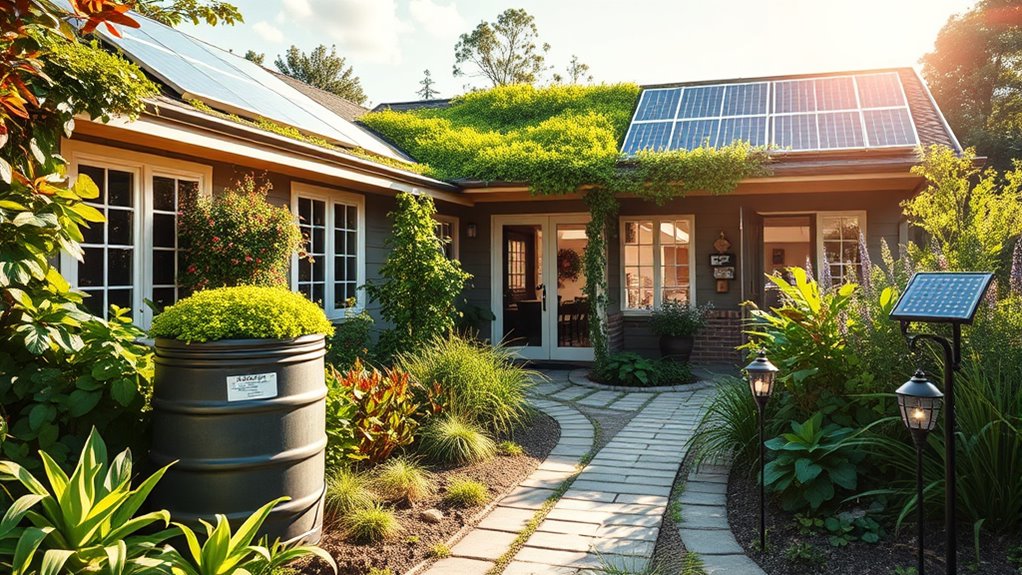

To make your home more eco-friendly, start by choosing sustainable materials like bamboo or reclaimed wood. Upgrade to energy-efficient appliances, such as ENERGY STAR models, and switch to LED lighting. Improve insulation with eco-friendly materials and use programmable thermostats to control energy use. Investing in renewable energy like solar panels can drastically cut your carbon footprint. These simple steps will guide you toward a greener home, and more smart solutions await as you explore further options.
Key Takeaways
- Use sustainable, eco-friendly building materials like bamboo, reclaimed wood, and recycled metals with proper certifications.
- Upgrade to ENERGY STAR-rated appliances and LED lighting to reduce energy and water consumption.
- Improve insulation with eco-friendly materials and install programmable thermostats for efficient climate control.
- Install solar panels and other renewable energy sources to decrease reliance on fossil fuels.
- Implement comprehensive eco-friendly strategies combining sustainable materials, energy efficiency, and renewable energy for a greener home.
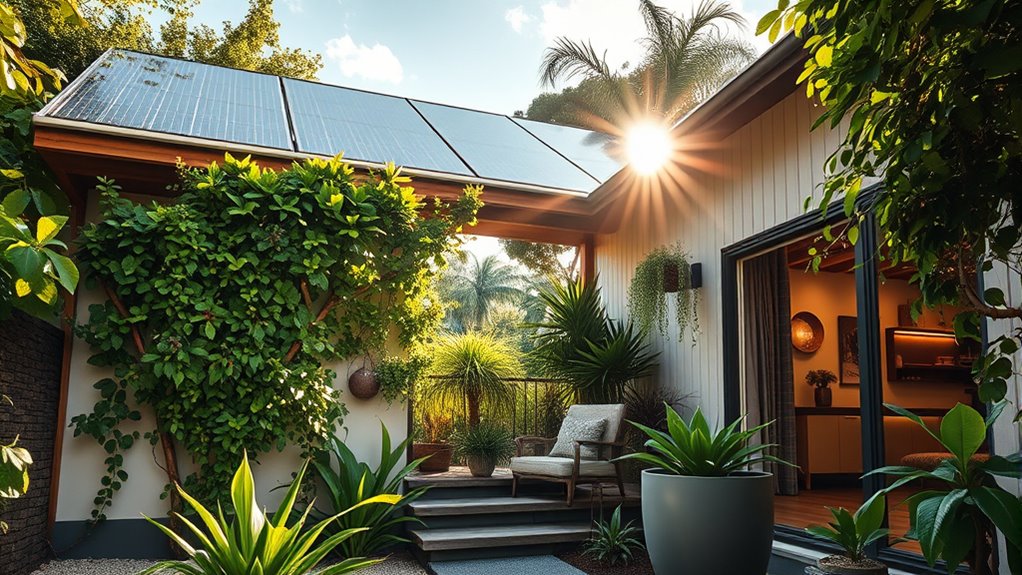
Are you looking for ways to reduce your environmental impact while making your home more comfortable? One of the best places to start is by focusing on sustainable materials and energy-efficient appliances. Using sustainable materials means choosing products that are environmentally friendly, renewable, and have minimal impact on the planet. For example, opt for bamboo flooring, reclaimed wood, or recycled metal fixtures instead of traditional options that deplete natural resources. These materials not only lower your home’s carbon footprint but also add a unique, stylish touch to your space. When selecting building supplies, look for certifications like FSC or Green Seal, which ensure that the materials meet strict environmental standards.
Incorporating energy-efficient appliances is another impactful step. These appliances consume less electricity and water, reducing your utility bills and greenhouse gas emissions. Swapping out old refrigerators, dishwashers, and washing machines for ENERGY STAR-rated models can make a significant difference. Modern appliances are designed to operate with ideal efficiency, often using advanced technology to minimize waste. For example, Energy Star refrigerators use less energy while maintaining the same level of performance as traditional models. Similarly, LED lighting fixtures replace incandescent bulbs, providing brighter illumination with a fraction of the energy consumption. Not only do these choices help conserve resources, but they also contribute to a healthier indoor environment by reducing the release of heat and toxins associated with less efficient lighting.
Another way to maximize sustainability is to evaluate your home’s layout and upgrade insulation. Proper insulation keeps your home warmer in winter and cooler in summer, reducing the need for excessive heating or cooling. This can be achieved with eco-friendly insulation materials like cellulose or sheep’s wool, which are both effective and sustainable. Alongside this, installing programmable thermostats allows you to better control your energy usage by adjusting temperatures when you’re away or asleep, further lowering your carbon footprint.
Finally, consider integrating renewable energy sources, such as solar panels. While the initial investment can be substantial, the long-term savings and environmental benefits are worth it. Solar energy reduces reliance on fossil fuels and can even generate excess power that feeds back into the grid. Coupling this with sustainable materials and energy-efficient appliances creates a truly green home that minimizes environmental impact while maximizing comfort and savings. By making these thoughtful upgrades, you’re not only creating a healthier living environment but also taking meaningful steps toward a more sustainable future.
Frequently Asked Questions
How Can I Reduce Water Consumption in My Household?
To reduce water consumption in your household, start by installing low flow fixtures on showers and faucets, which cut down water use considerably. You can also implement rainwater harvesting systems to collect and reuse water for gardening or flushing toilets. These simple steps help conserve water, lower your utility bills, and support environmental sustainability. Making these changes is easy and impactful, helping you create a more eco-friendly home.
What Are the Best Non-Toxic Cleaning Products?
You want to find the best non-toxic cleaning products, so look for those with eco-friendly ingredients like vinegar, baking soda, and lemon juice. These natural cleaning methods are safe, effective, and free from harsh chemicals. Always check labels for eco-friendly certifications, and avoid synthetic fragrances or dyes. Using these products helps keep your home healthy while reducing environmental impact, making your cleaning routine safer and greener.
How Do I Compost Effectively Indoors?
To compost effectively indoors, you should focus on proper indoor composting methods. Place your compost bin in a well-ventilated, discreet spot like a kitchen corner or pantry. Make sure to use a bin with a secure lid and added charcoal or vents to control odor. Regularly turn your compost and balance green and brown materials. This keeps composting manageable, odor-free, and eco-friendly right inside your home.
Can Solar Panels Be Installed on a Small Budget?
You can install solar panels on a small budget by exploring small-scale solar options, which are more affordable and easier to manage. Look into solar panel financing programs or incentives offered by local governments or utilities, as these can substantially reduce upfront costs. With careful planning and research, you can make solar energy a reality without overspending, helping you save money and reduce your carbon footprint.
What Are Affordable Ways to Improve Home Insulation?
Think of your home as a cozy sweater—you want it warm without breaking the bank. To do that, explore affordable insulation materials like foam or fiberglass batts, and master sealing techniques around doors and windows. These simple steps act like a snug hug, locking in warmth and cutting energy costs. You don’t need fancy upgrades—just strategic tweaks to make your home more energy-efficient and comfortable.
Conclusion
So, there you have it—your grand plan to turn your home into a green paradise. Soon, your neighbors will envy your solar panels, and your compost bin will be the envy of the block. Who knew saving the planet could look so stylish? Just imagine, sipping your organic tea in a house that’s basically a tree hugger’s dream. Congrats on going green—your carbon footprint will thank you, even if your ego gets a little bigger!