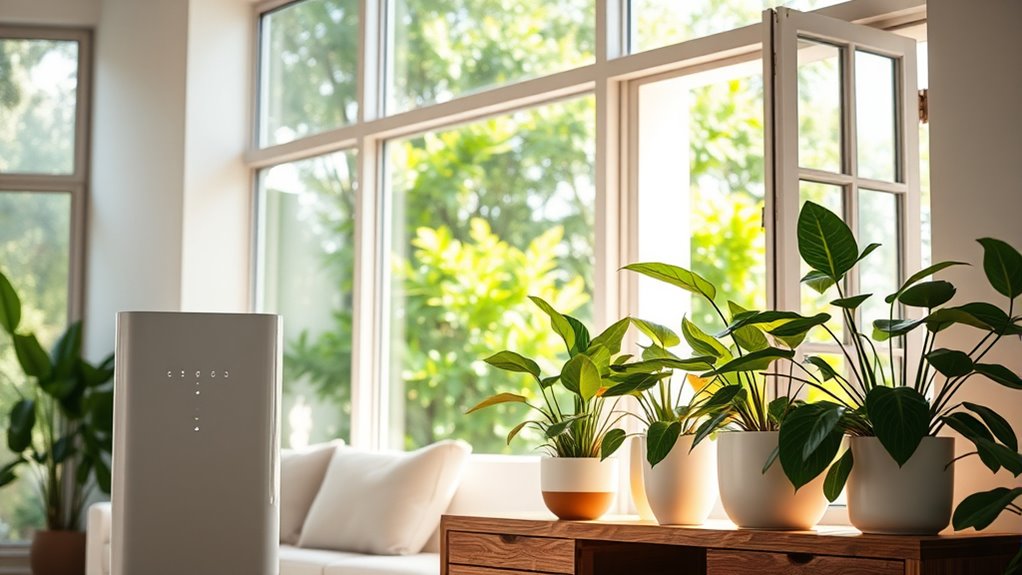

To improve indoor air quality, keep your home well-ventilated by opening windows daily for at least 15 minutes to exchange stale air with fresh outdoor air. Use air purifiers with HEPA filters and activated carbon to remove dust, allergens, and odors. Maintain cleanliness to reduce dust and mold, and avoid chemical fumes from household products. Regularly check and change HVAC filters and control humidity levels. If you want to discover more effective tips, you’ll find useful insights below.
Key Takeaways
- Use HEPA air purifiers and activated carbon filters to remove allergens, dust, VOCs, and odors from indoor air.
- Increase natural ventilation by regularly opening windows and doors for at least 15 minutes daily.
- Reduce indoor pollution sources by cleaning frequently, choosing eco-friendly products, and avoiding emissions from household chemicals.
- Maintain optimal indoor humidity levels to prevent mold growth and improve air quality.
- Perform regular HVAC maintenance and utilize data-driven insights to identify and address specific indoor air issues.
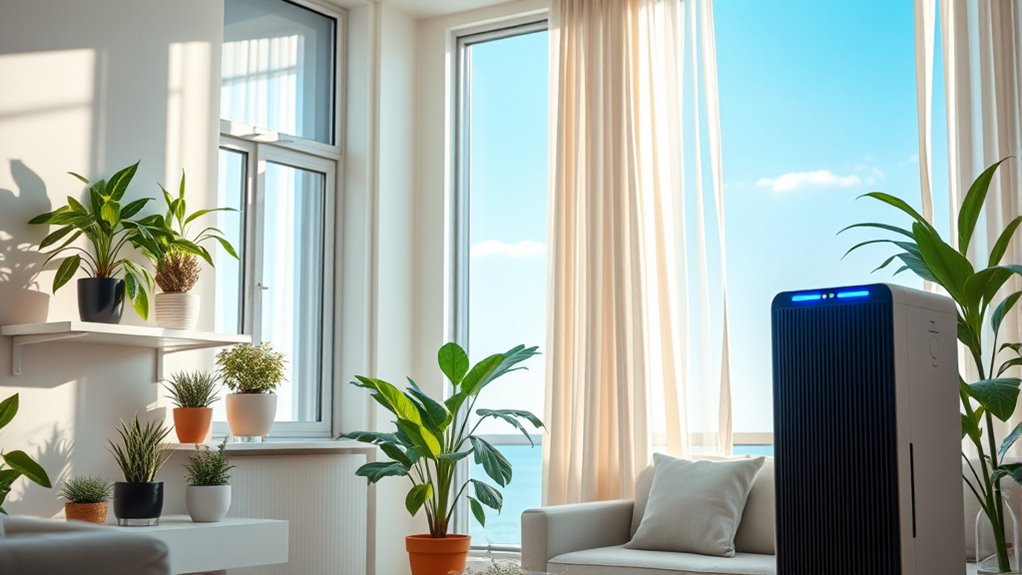
Have you ever wondered how the air inside your home or office affects your health? It’s easy to overlook, but poor indoor air quality can lead to allergies, respiratory issues, and even long-term health problems. Fortunately, there are practical steps you can take to improve the air you breathe every day. One effective way is to understand how air purifier technology can help remove pollutants, allergens, and airborne toxins. Modern air purifiers use HEPA filters, activated carbon, and sometimes UV light to capture dust, pet dander, mold spores, and volatile organic compounds (VOCs). When you run an air purifier regularly, it creates a cleaner environment, especially in rooms where you spend most of your time. But relying solely on technology isn’t enough. Incorporating natural ventilation into your daily routine profoundly boosts indoor air quality. Opening windows and doors allows fresh air to circulate, diluting indoor pollutants and reducing indoor humidity that can promote mold growth. Natural ventilation is a cost-effective, eco-friendly way to refresh your indoor environment, especially when combined with air purifier technology. When weather permits, make a habit of airing out your space for at least 15 minutes daily. This simple act helps eliminate stale air and brings in oxygen-rich outdoor air, which can markedly improve your indoor air quality. Additionally, avoiding common sources of indoor pollution is essential. Keep your home clean to reduce dust buildup, and consider using eco-friendly cleaning products that emit fewer VOCs. Be mindful of household items like paints, adhesives, and fragrances, which often release harmful fumes. Proper ventilation during and after their use minimizes exposure to these chemicals. Indoor plants can also contribute to cleaner air by absorbing certain toxins, but they shouldn’t be your sole solution. Relying on them without good airflow and filtration might not be enough. Regular maintenance of your heating, ventilation, and air conditioning (HVAC) system is also critical. Change filters as recommended and have your system checked periodically. This prevents the buildup of dust and mold within the ducts, ensuring cleaner air circulates through your home. Implementing AI-driven data analytics can further help identify specific indoor air quality issues based on sensor data, enabling more targeted improvements. Combining these strategies—using advanced air purifier technology, practicing natural ventilation, maintaining a clean environment, and caring for your HVAC system—creates a multi-layered defense against indoor air pollution. It’s about creating a balanced, healthy indoor environment where you feel comfortable and safe. Improving indoor air quality isn’t a one-time effort; it’s an ongoing process that requires attention and proactive habits. When you prioritize fresh, clean air, you’re investing in your long-term health and well-being.

LOXP Adjustable Laptop Stand for Desk, Portable Airflow Laptop Riser Holder
- Adjustable & Ergonomic: Customizable height and angle for comfort
- Sturdy & Protective: Supports up to 15.4 lbs with non-slip pads
- Scratch-resistant & Safe: Silicone pads prevent scratches and sliding
As an affiliate, we earn on qualifying purchases.
Frequently Asked Questions
How Often Should I Replace My HVAC Filters?
You should replace your HVAC filter based on its filter lifespan and recommended replacement frequency. Typically, filters need changing every 1 to 3 months, but this can vary depending on factors like household size, pets, and air quality. Check your filter regularly for dirt buildup, and don’t wait too long to substitute it. Staying on top of filter replacement ensures your system runs efficiently and maintains good indoor air quality.
Can Houseplants Improve Indoor Air Quality?
You might think houseplants won’t make a difference, but they can actually boost air purification and improve plant health simultaneously. While they aren’t a complete solution, plants like snake plants and pothos absorb toxins and add fresh oxygen. You’ll feel more energized knowing they’re actively helping purify your indoor air, creating a healthier, more vibrant environment. Just keep them healthy, and enjoy the natural benefits they offer.
What Are the Signs of Poor Indoor Air Quality?
You might notice signs of poor indoor air quality if you experience frequent headaches, sneezing, or respiratory issues. Air feels stuffy or you smell persistent odors. Airborne pollutants like dust, pet dander, or smoke may trigger allergies, and mold growth can cause musty smells and worsen asthma symptoms. Keep an eye out for these signs to identify potential problems and improve your home’s air quality.
Do Air Purifiers Really Reduce Allergens Effectively?
Did you know that HEPA filters can capture up to 99.97% of airborne allergens? Air purifiers with HEPA filters are highly effective at reducing allergens like pollen, pet dander, and dust mites. They work through air cleaning, trapping tiny particles before they circulate in your home. So, yes, air purifiers really do help, making your indoor environment healthier and more comfortable by markedly decreasing allergen levels.
How Does Humidity Affect Indoor Air Quality?
You might notice that humidity levels greatly impact indoor air quality. When humidity is too high, it encourages mold growth, which can worsen allergies and respiratory issues. On the other hand, low humidity can cause dry skin and irritate your throat. Maintaining balanced humidity levels helps control mold growth and keeps the air healthier to breathe, making your home more comfortable and reducing potential health problems.
Conclusion
Imagine walking into a home where the air feels invigorating and crisp, like a gentle breeze on a spring morning. By taking simple steps—ventilating regularly, using air purifiers, and keeping your space clean—you can breathe easier and turn your home into a sanctuary of clean, healthy air. Don’t let hidden pollutants linger—transform your living space into a rejuvenating oasis where every breath energizes and revitalizes you. Your healthier, happier home starts with the air you breathe.