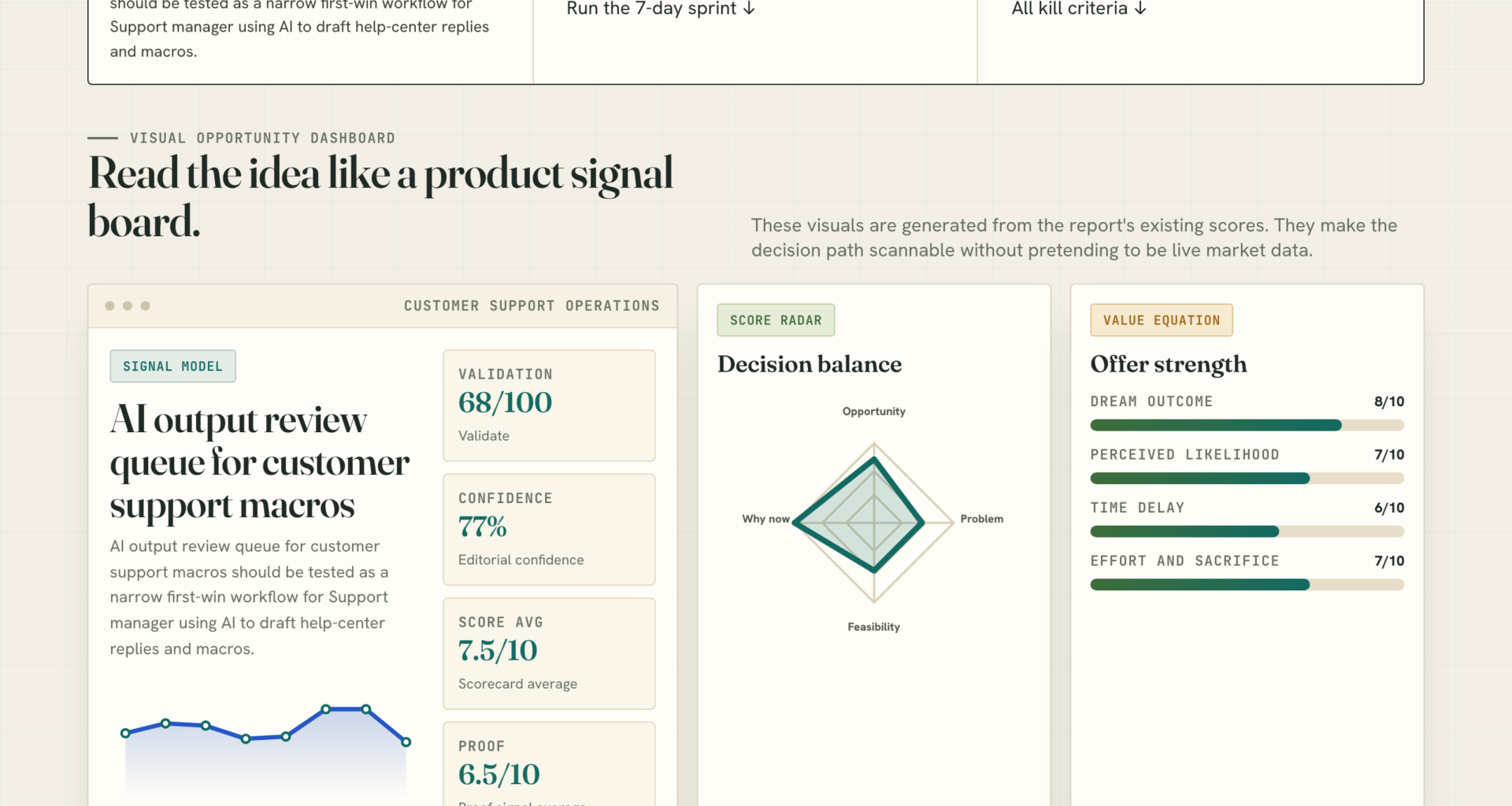
📊 Full opportunity report: AI output review queue for customer support macros on IdeaNavigator AI — validation score, market gap, and execution plan.

Get the little things that make your day delivered free — and shop member deals
- Fast, free delivery on millions of items
- Access to Prime Big Deal Days deals on October 6–7
- Prime Video, Amazon Music and more included
TL;DR
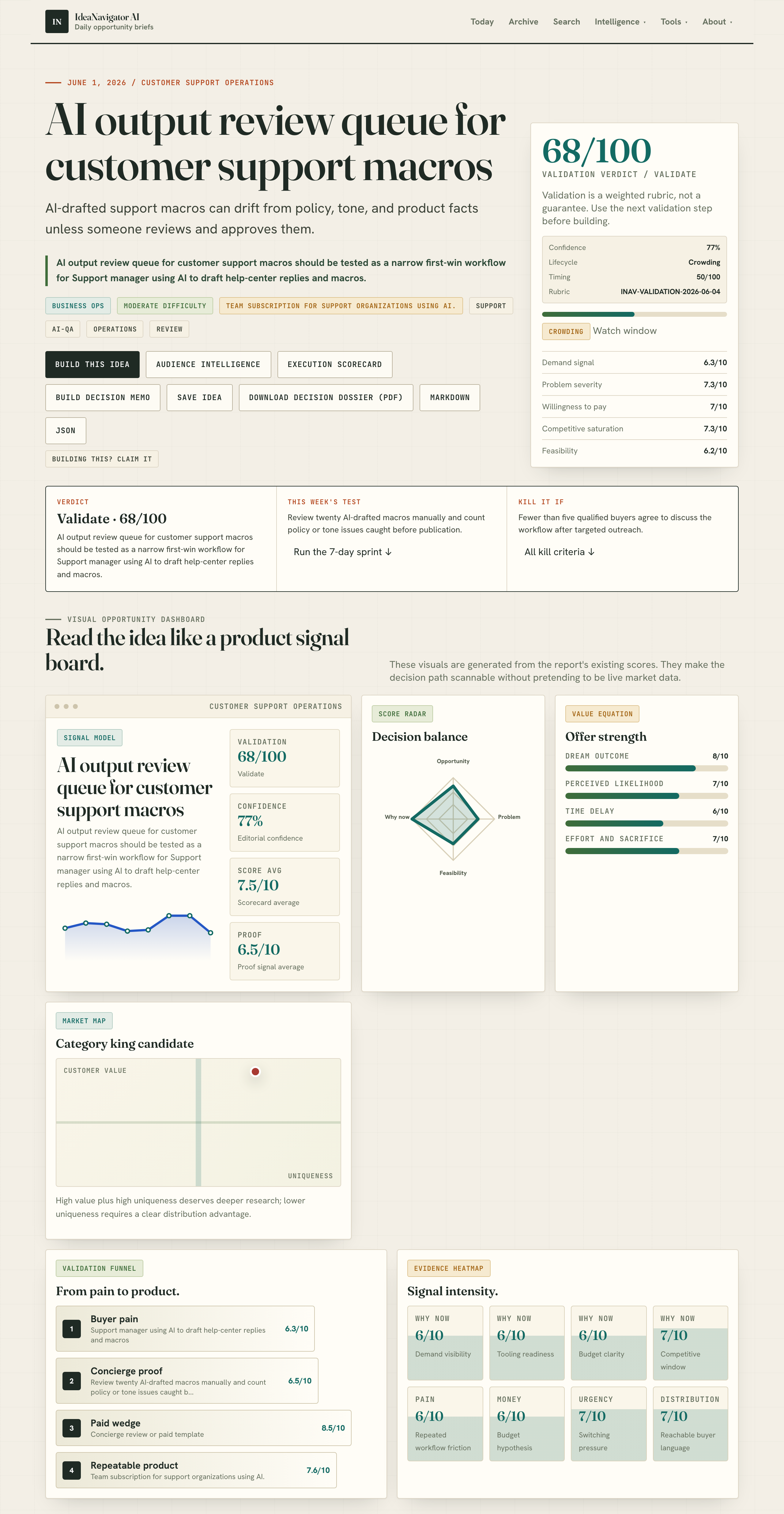
Support organizations are piloting a new AI output review queue for customer support macros. The system scores drafts for policy fit, tone, and accuracy, aiming to prevent errors before deployment. This development addresses the rapid adoption of AI in support workflows without formal approval processes.
Support organizations are beginning to test a new AI output review queue for customer support macros, aiming to address the risks of AI-generated responses drifting from company policies, tone, and factual accuracy. This initiative responds to the rapid adoption of AI tools in support workflows without established approval processes, seeking to improve quality control before macros are published.
The review queue is designed to evaluate AI-drafted support macros for several key criteria, including policy adherence, tone appropriateness, source support, and the presence of risky promises. It assigns scores to drafts, helping support managers identify issues before responses reach customers.
This system is currently in the testing phase, with support teams manually reviewing twenty AI-generated macros to measure how effectively the queue catches policy or tone issues. The goal is to validate the approach before wider deployment.
The initiative is part of a broader effort to formalize AI oversight in customer support, where rapid AI adoption has outpaced existing approval workflows. The subscription-based model targets organizations seeking to improve support quality and consistency through AI-assisted responses.
Why the AI Macro Review Queue Matters for Support Quality
This development is significant because it addresses a key challenge in AI-supported customer service: ensuring that automated responses do not violate company policies or mislead customers. By implementing a review queue, support teams can reduce errors, maintain brand tone, and enhance trust in AI tools.
It also signals a move toward more structured AI governance within support operations, which could influence industry standards and best practices. As AI adoption accelerates, formalized review processes become essential to prevent reputational damage and ensure compliance.
AI customer support macro review tool
As an affiliate, we earn on qualifying purchases.
As an affiliate, we earn on qualifying purchases.
Supporting the Shift Toward AI Oversight in Customer Support
Over the past year, many customer support teams have integrated AI to draft help-center replies and macros, aiming to improve efficiency and consistency. However, the lack of formal approval workflows has led to concerns about responses drifting from policies or containing inaccuracies.
This initiative by IdeaNavigator AI represents a response to these challenges, proposing a review queue that scores drafts based on compliance and tone. The concept is being tested with a small sample of macros, with plans to expand if successful.
“The review queue aims to catch policy violations and tone issues before macros are published, reducing the risk of customer dissatisfaction.”
— an anonymous researcher
What Aspects of the Review Queue Are Still Developing
It is not yet clear how effective the review queue will be in large-scale deployment, or how support teams will integrate it into their workflows. The sample size for testing remains limited, and the impact on response times and support efficiency has not been fully assessed.
Additionally, whether this approach will be adopted broadly across different support organizations or adapted for other AI-generated content remains uncertain.
Next Steps for Implementation and Validation
Support teams will continue testing the review queue with additional macros and gather data on its effectiveness in catching issues. If results are positive, wider rollout and integration into support workflows are expected within the coming months.
Further validation will involve assessing the impact on response quality, speed, and customer satisfaction, alongside refining the scoring criteria and automation features.
Key Questions
How will the review queue improve support macro quality?
The review queue scores AI-drafted macros for policy compliance, tone, and accuracy, helping support managers identify and fix issues before responses are sent to customers.
Is this system mandatory for all support teams?
Currently, it is in the testing phase and not yet mandatory. Broader adoption will depend on the success of initial trials and further validation.
Will the review process slow down support responses?
The goal is to automate the scoring and review process to minimize delays, but the actual impact on response times will be clearer after ongoing testing.
What specific issues will the review queue detect?
The system aims to identify policy violations, inappropriate tone, unsupported claims, and risky promises in AI-generated macros.
Could this approach be used for other AI content?
While currently focused on support macros, the concept could potentially be expanded to other AI-generated content, subject to further development and testing.
Source: IdeaNavigator AI
NFL season / tailgating Picks
team gear
As an affiliate, we earn on qualifying purchases.