
📊 Full opportunity report: Enhance Food Safety Oversight With Vision-Model Kitchen Walk-Throughs on IdeaNavigator AI — validation score, market gap, and execution plan.
TL;DR
A restaurant industry pilot tests an AI vision-model to verify kitchen safety inspections via photos. The system flags violations, providing verifiable data without new hardware. Results are pending validation.
A multi-unit restaurant group is piloting a new AI-powered system that verifies kitchen safety inspections through photographs, aiming to improve accuracy and accountability in food safety oversight. This development could transform routine walk-throughs into verifiable data, addressing longstanding issues with checklist-based inspections.
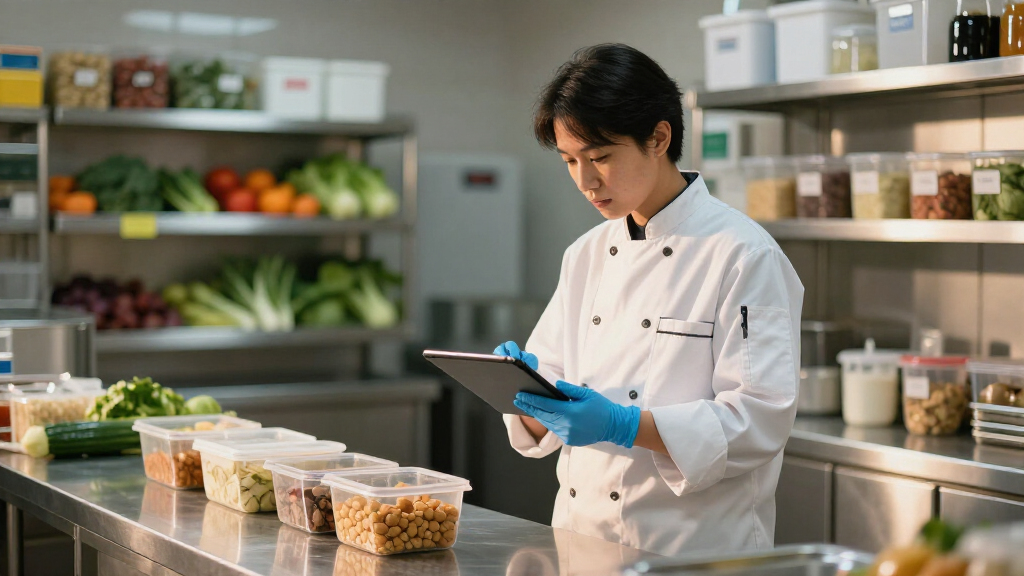
The system involves managers photographing key areas during morning kitchen inspections, including prep stations, walk-in coolers, sinks, and storage areas. An AI vision model then analyzes these photos to identify violations such as uncovered containers, propped cooler doors, and missing date labels. It assigns severity ratings and generates timestamped reports for each location, allowing for trend analysis across the restaurant group.
This approach offers a way to turn subjective checklist checks into objective, verifiable inspection data without requiring new hardware. The pilot is being tested over two weeks at five locations, with results compared against findings from a hired health-inspection consultant to validate the system’s accuracy.
Potential Impact on Food Safety Oversight
This innovation could significantly improve the reliability of food safety inspections in the restaurant industry. By providing verifiable, timestamped evidence of kitchen conditions, it reduces reliance on subjective checklists and mitigates the risk of overlooked violations. If validated, it could lead to widespread adoption, enhancing compliance and protecting consumer health.
As an affiliate, we earn on qualifying purchases.
Background on Inspection Challenges and AI Solutions
Traditional food safety inspections rely on manual checklists filled out by staff or inspectors, often subject to human error or oversight. These inspections typically occur at scheduled intervals, with limited verification of ongoing compliance. Recent advances in AI, especially vision models capable of analyzing phone photos, offer new opportunities to automate and verify routine checks. The concept of using AI to flag violations in real-time has gained interest as a way to improve accuracy and accountability in food safety management.
“Turning walk-through photos into verifiable inspection data can address longstanding issues with checklist reliability.”
— an anonymous researcher
Validation Results and System Accuracy Still Unclear
It is not yet confirmed how accurately the AI vision model will detect violations compared to traditional inspections. The pilot is ongoing, and results are expected after two weeks of testing. The effectiveness of the system across different restaurant layouts and lighting conditions remains to be seen.
Next Steps in Pilot Validation and Potential Rollout
Following the two-week testing period, the restaurant group will analyze the AI system’s flagged violations against expert assessments. If the results show high accuracy, plans may include broader deployment and integration into existing food safety management software. Further validation studies could also be conducted to refine the model.
Key Questions
How does the AI vision-model identify violations?
The system analyzes photos taken during inspections to detect issues like uncovered containers, propped cooler doors, and missing labels, assigning severity ratings based on the findings.
Will this replace human inspectors?
The AI system is designed to supplement human inspections by providing verifiable data, not to fully replace human judgment. It aims to improve accuracy and accountability.
What are the benefits of using phone photos for inspections?
Using phone photos allows for easy, real-time documentation without additional hardware, making inspections more consistent and verifiable across multiple locations.
When will the results of the pilot be available?
The pilot is ongoing, with initial results expected after two weeks of testing. Further analysis will determine the system’s accuracy and potential for wider adoption.
Could this system reduce food safety violations?
If validated, the system could help identify violations more reliably and promptly, potentially reducing the occurrence of overlooked safety issues.
Source: IdeaNavigator AI