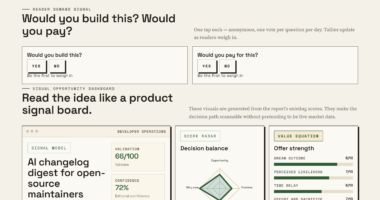

📊 Full opportunity report: Évian and the Fallout: What Europe Actually Wants From Amodei, Hassabis, and Altman on ThorstenMeyerAI.com — validation score, market gap, and execution plan.

Get the little things that make your day delivered free — and shop member deals
- Fast, free delivery on millions of items
- Access to Prime Big Deal Days deals on October 6–7
- Prime Video, Amazon Music and more included
TL;DR
At the June 17 G7 summit in Évian, European leaders outlined six key demands for U.S. AI firms, emphasizing sovereignty, access, and safety. The meeting highlighted tensions over US export controls and Europe’s desire for greater influence over AI development.
European leaders at the G7 summit in Évian on June 17 publicly articulated six specific demands to U.S. AI executives, including Dario Amodei, Demis Hassabis, and Sam Altman. These demands come in response to recent U.S. export controls that restricted access to advanced AI models for foreign nationals, raising concerns about digital sovereignty and operational security for European institutions.
The summit, held at a lakeside resort in France, was the first occasion where top AI executives sat alongside heads of state, emphasizing the geopolitical importance of AI technology. The U.S. government’s June 12 directive forced Anthropic to halt access to its most capable models globally, a move that alarmed European officials, who rely on these models for critical infrastructure and innovation. European leaders, including European Commission President Ursula von der Leyen and French President Emmanuel Macron, expressed concerns over the reliability of AI access and the risks of unilateral shutdowns.
During the summit, Amodei advocated for a U.S.-led coalition of democratic nations, emphasizing structured access to frontier models and excluding China from supply chains. Hassabis called for a Western coalition to manage AI risks collectively, framing the moment as a pivotal point in human history. Altman proposed establishing an international forum to develop globally accepted testing standards, stressing that decisions about AI deployment should involve democratic institutions, not just private companies.
Meanwhile, European representatives outlined six core demands: reliable and durable access to AI models; guarantees against future shutdowns; a trusted partners scheme for non-U.S. entities; technological sovereignty through European AI infrastructure; a say in the placement of AI infrastructure; and strict protections for children and youth. These points reflect Europe’s push for sovereignty and safety amid ongoing U.S. restrictions.
Évian and the fallout: what Europe actually wants
For the first time, Amodei, Hassabis, and Altman sat with heads of state — five days after Washington switched Anthropic’s models off worldwide. Europe’s question: can you rely on models a foreign cabinet can shut down by decree?
The dilemma: what Europe wants from the three CEOs, the three can’t deliver — because they don’t hold the switch, Washington does. Macron’s platform is the right answer, but no fix for a decade-old infrastructure gap. The only answer that doesn’t depend on someone else’s goodwill: your own models, your own compute, open weights you can self-host.
Why Europe’s AI Demands Signal a Shift in Global Power
This summit underscores Europe’s push to assert greater control over AI development and access, challenging U.S. dominance. The demands for sovereignty, reliable access, and safety standards indicate a move toward a more fragmented but regulated global AI landscape. The outcome could reshape international cooperation, influence AI regulation, and impact technological innovation across continents.
European AI infrastructure servers
As an affiliate, we earn on qualifying purchases.
As an affiliate, we earn on qualifying purchases.
European and U.S. AI Policy Tensions in 2024
Prior to the summit, the U.S. had implemented export controls targeting Anthropic’s models, citing national security concerns. Europe has been pushing for increased AI sovereignty, exemplified by its €420 billion Technological Sovereignty Package announced in June, which aims to reduce reliance on non-European providers for cloud, semiconductors, and AI. The summit reveals growing friction between U.S. and European approaches: the U.S. favors less regulation and more private sector freedom, while Europe emphasizes sovereignty, safety, and ethical standards.
This divergence reflects broader geopolitical tensions and the strategic importance of AI as a national security and economic asset. The summit’s discussions are part of an ongoing debate on how to balance innovation with regulation and control.
“It is a mutual interest that European citizens and companies can safely use the best models, and this requires reliable access.”
— Ursula von der Leyen
Unresolved Questions About Future AI Governance
It remains unclear how effectively the European demands will be integrated into international AI governance frameworks. The specifics of enforcement, the potential for new agreements, and the response from U.S. regulators are still developing. Additionally, whether the U.S. will modify its export policies to accommodate European concerns is uncertain.
Next Steps in Europe-U.S. AI Collaboration and Regulation
European leaders plan to establish a cooperation platform among Western democracies within a month, with a follow-up leaders’ meeting in September. Meanwhile, discussions are expected to continue on international AI standards, with the U.S. and Europe negotiating the balance between innovation, regulation, and sovereignty. The outcome will influence global AI development and regulatory approaches in the coming months.
Key Questions
What are Europe’s main demands for AI access?
Europe seeks reliable, durable access to AI models, guarantees against future shutdowns, trusted partner schemes, technological sovereignty, a voice in infrastructure placement, and protections for children and youth.
How did the U.S. export controls impact European AI models?
The controls forced Anthropic to halt access to its advanced models globally for foreign nationals, disrupting European institutions that rely on these models and raising concerns about operational security.
Will Europe and the U.S. reach an agreement on AI regulation?
It is uncertain. While European leaders are pushing for specific guarantees and sovereignty measures, negotiations are ongoing, and the U.S. has so far resisted comprehensive regulation, favoring private sector-led development.
What is the significance of the summit for global AI governance?
The summit highlights a shift toward more regionalized control and standards, with Europe asserting its interests and potentially reshaping international cooperation on AI safety, access, and regulation.
Could these demands lead to a fragmented global AI landscape?
Yes, if Europe’s push for sovereignty and independent infrastructure gains traction, it could result in more segmented markets and regulatory regimes, affecting innovation and cooperation worldwide.
Source: ThorstenMeyerAI.com
Fall Picks
fall essentials
As an affiliate, we earn on qualifying purchases.