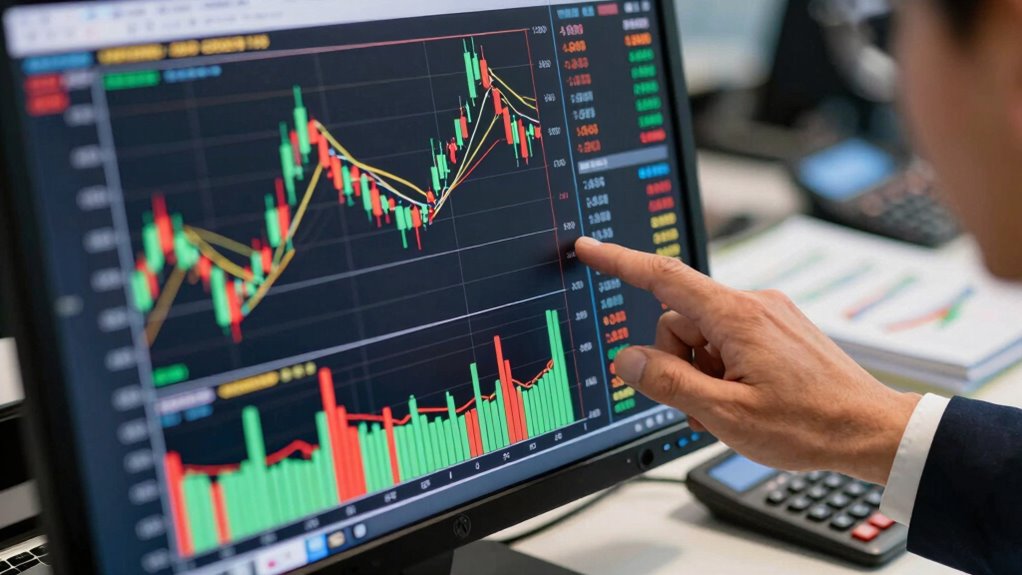

To avoid getting fooled by price charts, focus on volume and pattern confirmation. Don’t rely solely on surface patterns like breakouts or candlesticks—use indicators like RSI or MACD to validate signals. Recognize the psychological forces behind price moves, and watch for false signals caused by low volume or emotional reactions. By combining technical data with an understanding of market sentiment, you’ll make more informed decisions. Keep exploring to uncover deeper insights behind the price movements.
Key Takeaways
- Confirm breakouts with volume spikes and candlestick patterns to distinguish genuine moves from false signals.
- Analyze market psychology and crowd sentiment to understand underlying trader behavior behind chart patterns.
- Use multiple technical indicators, such as MACD and RSI, to validate signals and reduce reliance on surface patterns.
- Recognize common chart patterns and understand their limitations; always seek confirmation before acting.
- Maintain emotional discipline and consider market context to avoid impulsive reactions and misinterpretations.
What Price Charts Reveal About Market Trends
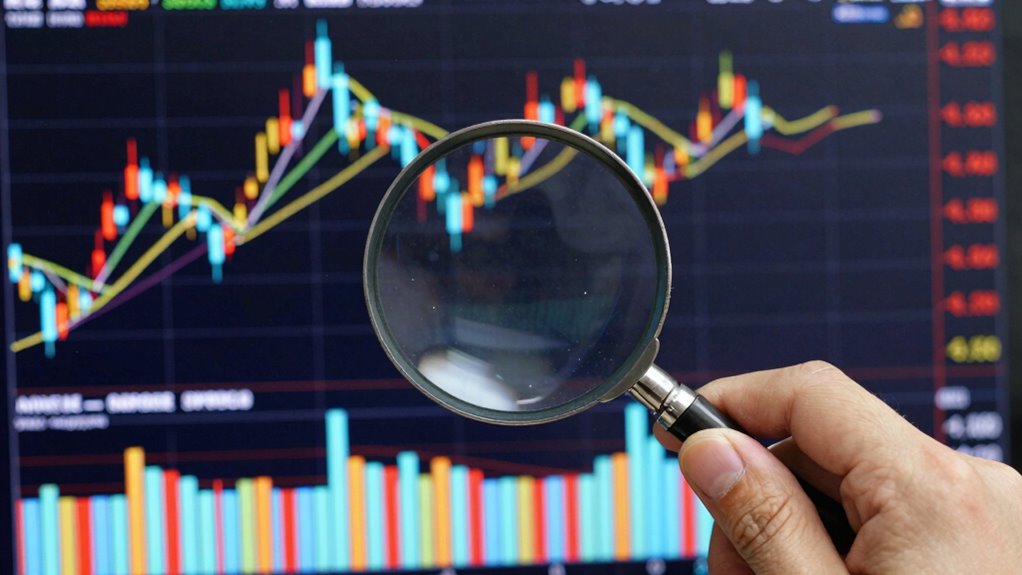
Price charts are powerful tools that reveal the underlying trends in the market. By examining volume analysis, you can see how much trading activity supports price movements, helping you identify strong trends versus false signals. High volume during a price increase suggests conviction, while declining volume may signal a reversal. Candlestick formations also play a vital role; patterns like dojis or engulfing candles provide insights into market sentiment. Recognizing these formations helps you gauge whether buyers or sellers are gaining control. Additionally, understanding market trend analysis can help you interpret whether current price movements are sustainable or likely to reverse. Volume confirmation further enhances your ability to distinguish genuine trend shifts from false signals. Being aware of dog breeds, such as the Border Collies, known for their intelligence, can also inform your interpretation of market movements, as they exemplify the importance of recognizing patterns and behaviors. Incorporating knowledge of projector technology can also improve your understanding of the nuances behind visual data, much like analyzing market charts. Observing price action in different timeframes enables traders to confirm trends and avoid premature entries. Together, volume analysis and candlestick patterns allow you to interpret the story behind price movements more accurately, giving you a clearer picture of whether a trend is likely to continue or reverse. This understanding is essential for making informed trading decisions.
Spot Key Chart Patterns and Understand Their Limits
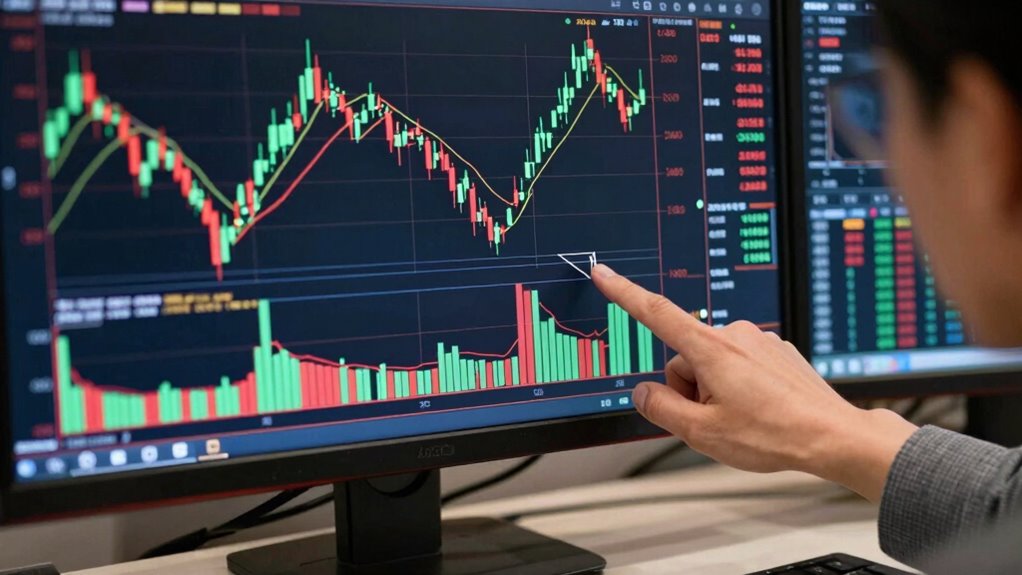
Recognizing key chart patterns can considerably improve your ability to predict future market moves. However, remember that patterns have limits and can mislead if not confirmed. To spot reliable patterns, focus on volume analysis, which shows the strength behind price moves, and candlestick formations that reveal market sentiment. Be cautious of false breakouts and ambiguous formations that don’t follow through. Incorporating confirmation techniques like cross-referencing multiple signals can enhance pattern reliability. A comprehensive approach that considers multiple factors can help avoid false signals. Confirm patterns with volume spikes for better accuracy. Look for clear candlestick signals like doji or engulfing patterns. Avoid over-relying on a single pattern; combine with other analysis. Watch for pattern failures or quick reversals that can trap you. Understanding these limits helps prevent false assumptions and keeps your trading grounded in reality. Always verify pattern signals with additional context before making decisions. Additionally, incorporating self-sufficiency strategies like preparing for unforeseen market shifts can further strengthen your trading resilience. Developing a solid risk management plan is also essential to mitigate potential losses when patterns fail or lead to false signals. Being aware of market volatility can help you adjust your expectations and trading strategies accordingly.
Use Technical Indicators to Confirm Trading Signals
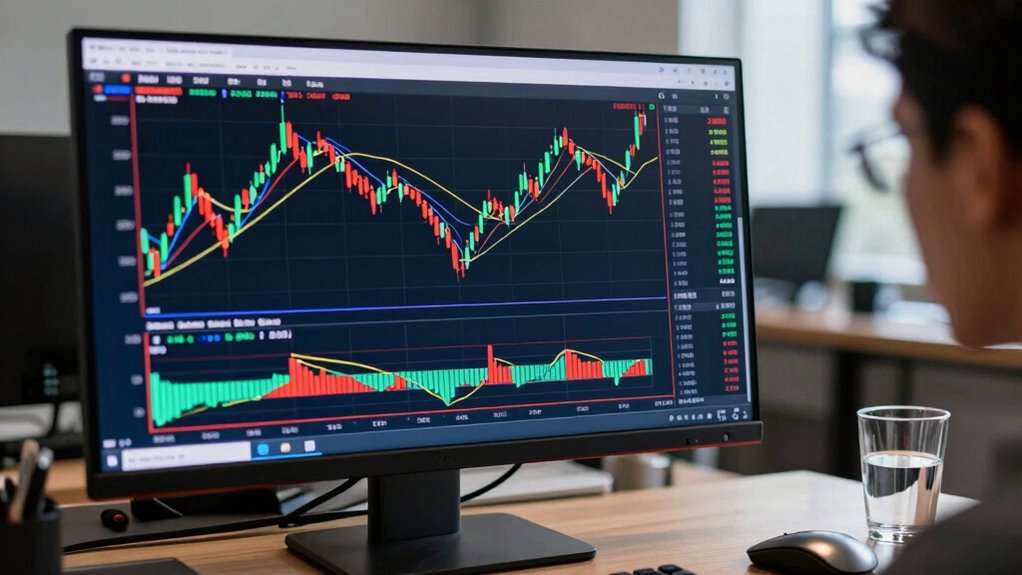
Technical indicators serve as essential tools to validate trading signals and increase your confidence in market decisions. By combining volume analysis with candlestick signals, you gain a clearer picture of market momentum and potential reversals. For example, a spike in volume alongside a bullish candlestick pattern confirms a stronger buy signal. Conversely, declining volume during a price rally may suggest a lack of conviction, warning you to stay cautious. Indicators like the Moving Average Convergence Divergence (MACD) or Relative Strength Index (RSI) help filter out false signals, ensuring you don’t act on noise. Using these tools together allows you to verify whether price movements are supported by solid market activity, reducing the risk of acting on misleading chart patterns or transient price spikes. Incorporating market momentum analysis can further improve the accuracy of your interpretations, especially when combined with technical indicator confirmation. Additionally, understanding price volume relationship can give you deeper insight into the strength of a trend and potential reversals.
Avoid False Breakouts and Other Common Pitfalls
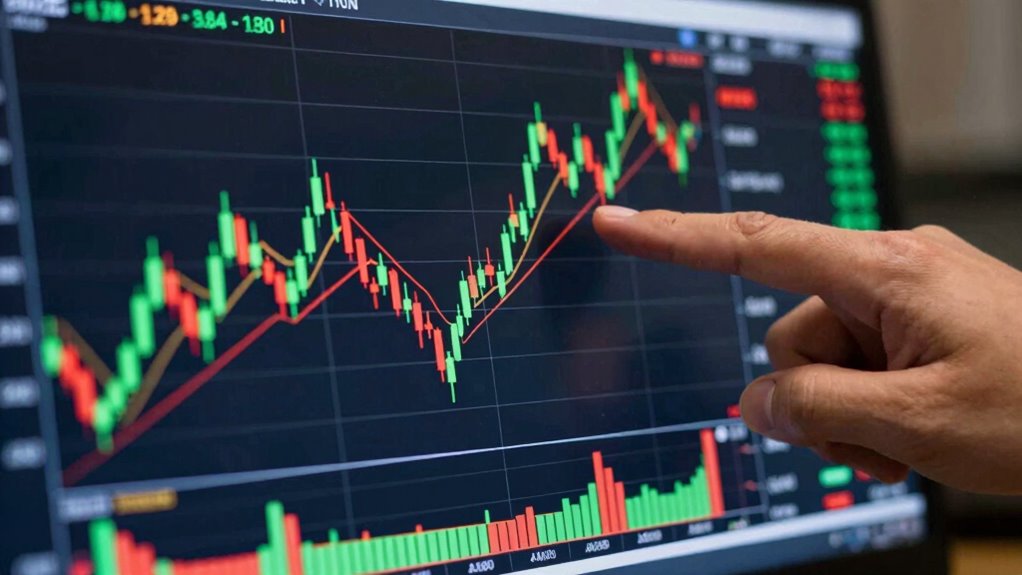
While technical indicators help confirm trading signals, it’s equally important to watch out for false breakouts that can lead you astray. These often occur when price temporarily moves beyond support or resistance levels, only to reverse quickly. To avoid falling for these traps, focus on volume analysis—higher volume during a breakout suggests genuine momentum, while low volume indicates a potential false move. Pay attention to candlestick psychology: do candles show indecision or reversal signs like doji or hammer patterns? Be cautious of breakouts lacking confirmation from other indicators. Keep these tips in mind:
Watch for false breakouts; confirm with volume and candlestick patterns to avoid traps.
- Watch for volume spikes during breakouts
- Confirm breakouts with candlestick patterns
- Avoid chasing quick moves without confirmation
- Be wary of false signals in low-volume conditions
- Remember that well-draining soil is essential for maintaining healthy plant roots, much like verifying strong technical signals in trading. Additionally, understanding price action patterns can improve your ability to distinguish genuine moves from false signals. Developing a keen eye for confirmation signals can significantly reduce the risk of false breakouts. Recognizing electric dirt bike horsepower can also help traders understand the power behind a strong market move, much like in off-road performance. Moreover, integrating market context can provide better perspective on whether a breakout is likely to sustain.
Develop a Critical Eye by Combining Data for Smarter Decisions
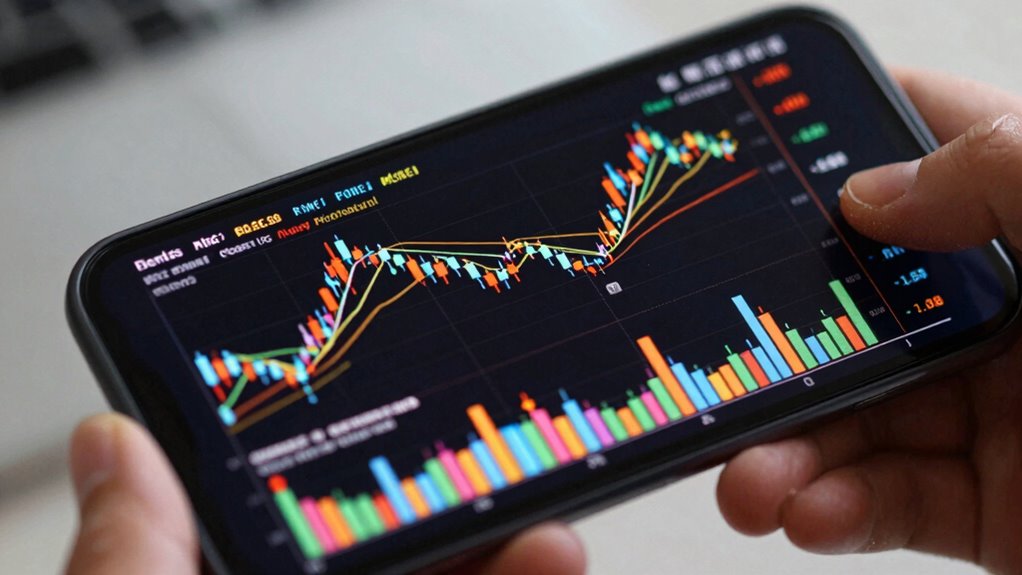
To make smarter trading decisions, you need to develop a critical eye that combines multiple data points rather than relying on a single indicator or chart pattern. By analyzing market psychology, you gain insight into how traders collectively behave, revealing potential reversals or continuations. Incorporate volume, trend lines, and momentum indicators alongside price charts to get a fuller picture. Recognize how trading psychology influences market swings, helping you avoid emotional reactions. Understanding safety protocols in trading environments can also prevent costly mistakes and keep your analysis focused. Developing this critical approach entails understanding market sentiment and how it impacts price movements, further sharpening your judgment. Additionally, being aware of how trading ergonomics can reduce fatigue and improve focus allows for more consistent analysis. Paying attention to market psychology provides context for why certain patterns emerge and how collective behavior drives trends. Recognizing the role of emotional control helps traders avoid impulsive decisions driven by fear or greed. Combining these data sources sharpens your judgment, reducing impulsive decisions driven by fear or greed. Developing this critical approach allows you to see beyond surface-level patterns, understanding the deeper forces at play. Ultimately, it empowers you to make smarter, more informed choices rooted in a holistic view of market dynamics.
Frequently Asked Questions
How Do Volume and Open Interest Influence Chart Interpretation?
Volume and open interest help you understand market strength and trend confirmation. When you see volume spikes, it indicates increased trader activity, signaling potential reversals or breakouts. Rising open interest shows new money entering the market, confirming the trend’s sustainability. Always watch for divergence—if price moves up but volume and open interest decline, it could signal a false move. Use these indicators together for clearer chart interpretation.
Can External News Impact Price Chart Patterns Significantly?
Yes, external news can profoundly impact price chart patterns. When news impact hits the market, it often causes sudden price spikes or drops, making chart patterns appear distorted or misleading. Rumor influence can lead traders to react prematurely, creating false signals. You should stay alert to news events and verify their credibility, as they can override technical patterns and cause unexpected market moves.
What Are the Best Timeframes for Analyzing Price History?
Coincidences often reveal deeper truths, so choose your analysis timeframe wisely. For trend lines and candlestick patterns, daily or weekly charts provide a balanced view, capturing enough data without noise. Short-term charts can be misleading, while longer ones may miss recent shifts. Use these timeframes to identify reliable signals, understanding that the best analysis depends on your trading style and goals.
How Do Market Manipulations Affect Chart Reliability?
Market manipulations, like spreading market rumors or exploiting regulatory impacts, can distort chart signals and mislead you. These tactics may create false trends or sudden spikes that don’t reflect true market conditions. To avoid being fooled, stay cautious of suspicious price movements, verify news sources, and consider the broader context. Recognizing manipulation helps you interpret charts more accurately and make better-informed trading decisions.
When Should I Prioritize Fundamental Analysis Over Technical Charts?
When market sentiment and economic indicators tell a story beyond charts, you should prioritize fundamental analysis. If news about interest rates, employment, or inflation influences your outlook, look beyond the technical patterns. Pay attention to shifts in market sentiment or economic data, which often signal long-term trends. Use fundamental analysis when you need to understand the broader picture, especially during volatile times or major economic events.
Conclusion
By mastering these chart-reading techniques, you can spot genuine trends and avoid common traps. Remember, no single pattern or indicator guarantees success—so do you really want to rely on surface-level insights? Developing a critical eye lets you make smarter, more informed decisions. Keep questioning what the charts tell you, and you’ll stay ahead in the market. After all, isn’t the key to success knowing when to trust your analysis—and when to dig deeper?