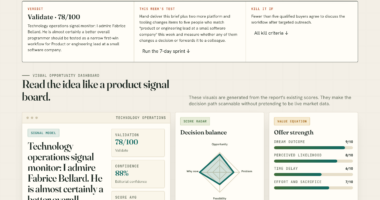

📊 Full opportunity report: The Compute Reckoning: Anthropic Finally Admits What Customers Suspected for Ten Months on ThorstenMeyerAI.com — validation score, market gap, and execution plan.

Get the little things that make your day delivered free — and shop member deals
- Fast, free delivery on millions of items
- Access to Prime Big Deal Days deals on October 6–7
- Prime Video, Amazon Music and more included
TL;DR
Anthropic has officially acknowledged that its recent customer experience degradation was driven by insufficient compute capacity. The company’s new deal with SpaceX and other infrastructure investments aim to resolve this issue. The move shifts Anthropic from a compute-constrained challenger to a well-resourced AI lab.
Anthropic has publicly confirmed that its recent customer experience issues, including rate limits and outages, were caused by a shortage of compute capacity, ending months of speculation and frustration among users.
On May 6, 2026, Anthropic announced a significant agreement with SpaceX to utilize the entire 300+ megawatt capacity of the Colossus 1 data center in Memphis, operated by Elon Musk’s xAI. This deal, involving over 220,000 NVIDIA GPUs, is expected to be online within the month and marks a major step in addressing the company’s longstanding compute constraints.
Prior to this, Anthropic experienced a series of customer-facing issues starting in July 2025, including weekly rate limits, peak-hour throttling, and rapid quota exhaustion for subscribers on its Claude platform. These issues were widely attributed to insufficient infrastructure, a claim now confirmed by the company’s own statement. Anthropic’s April disclosure to Fortune acknowledged that demand had stretched their infrastructure, especially during peak hours, leading to degraded user experiences.
OpenAI’s internal memo, leaked to CNBC, described Anthropic’s situation as a ‘strategic misstep’ in failing to secure adequate compute capacity, which put the company at a disadvantage relative to competitors. The recent deal with SpaceX, combined with existing commitments to Amazon, Google, Microsoft, and Fluidstack, positions Anthropic as a well-resourced player moving forward. The new capacity roughly equals the entire H100-equivalent inference fleet managed by a tier-2 hyperscaler in 2024, effectively closing the compute gap.
Ten months. One admission.
Anthropic finally got the compute. The customer-experience problem was scarcity all along.
May 6, 2026 — Anthropic announced SpaceX Colossus 1 deal · 300+ MW · 220,000+ NVIDIA GPUs · online within May. Effective immediately: Claude Code 5-hour rate limits doubled. Peak-hour throttling removed. API limits up 1,500% input / 900% output for Opus on Tier 1. Closes ten-month UX degradation arc. Compute risk in IPO disclosure framework materially de-risked.
multi-GW exploration
Nine moments. One constraint.
For ten months, Claude users experienced compute scarcity as broken product. Anthropic experienced it as the binding constraint on growth. May 6 closes the gap — at the announcement level. Verification follows.
Five partnerships. One arms race.
Anthropic now operates the second-largest publicly disclosed compute portfolio of any frontier lab — behind only Microsoft-OpenAI. Multi-vendor by design: Trainium + TPU + NVIDIA + custom · five major partners · multi-jurisdictional.
Three scenarios. Verification follows.
50/35/15 probability allocation. The May 6 announcement either delivers on customer experience improvements or doesn’t. Setup factors favor bullish: SpaceX execution capability, IPO incentive alignment.
- Online May 2026SpaceX capacity as announced.
- UX improvements stickDoubled limits, no peak throttle.
- Trust rebuilds Q3ARR growth continues.
- IPO Q4 2026 catalyzesPositive market response.
- Outcome: Compute reckoning is start of positive arc.
- Some delayCapacity partial through May.
- Mostly deliversSome peak-period gaps.
- Trust rebuild slowerThrough Q3-Q4.
- IPO early 2027Pushed if needed.
- Outcome: Continuation trajectory with friction.
- Capacity lateOr arrives in pieces.
- Partial improvementsIssues recur in different form.
- Competitive erosionOpenAI / Google gain share.
- IPO substantially delayedOr repriced.
- Outcome: Trust deficit compounds. Multi-quarter rebuild.
The era of “build your own compute” yields to “share compute across rival workloads when economics support it.” SpaceX/xAI’s flagship Memphis facility leases to a direct competitor — that’s how severe compute scarcity has become across the AI lab category.
Four assignments. By role.
Verify actual delivery vs announced.
Test the doubled rate limits in your workflow. Monitor performance through May-June. Consider whether to retain, upgrade, or cancel based on demonstrated improvement rather than announced improvement. The trust deficit from ten months of degradation requires sustained performance to repair. Anthropic has incentive to deliver — IPO timing depends on it.
Re-architect for new headroom.
1,500% input / 900% output Tier 1 increase is substantial. Scale rate-limit-bottlenecked applications. The structural implication: Anthropic now competitive with OpenAI on API capacity, narrowing what had been meaningful OpenAI advantage. Document delivered vs announced capacity in your monitoring.
Update models · compute risk de-risked.
The compute risk factor in the Anthropic IPO disclosure framework is materially de-risked. Q3-Q4 2026 IPO window becomes more credible. Valuation case strengthens — $30B ARR, $400-500B precedent from frontier-lab benchmarks, credible compute portfolio. Position based on demonstrated delivery through Q2-Q3 2026.
Direct demand validation for Q1 FY27 print.
220K+ GPUs from SpaceX deal alone. Aggregate NVIDIA-attributable demand from Anthropic’s compute portfolio plausibly $20-40B over 2026-2028. NVIDIA Q1 FY27 dispatch bull case gets concrete numbers. Hyperscaler capex thesis demand-pull validation gets specific evidence. Watch May 20 print for confirmation.
Implications of Confirmed Compute Shortage
This admission marks a pivotal shift for Anthropic, transforming its narrative from a ‘compute-constrained challenger’ to a ‘well-resourced frontier lab.’ It alleviates the risk factors that could have impacted its upcoming IPO and reassures investors and users that the company now has the infrastructure to support rapid growth and product development. The move also signals a broader industry trend toward securing massive compute resources, essential for advancing AI capabilities and maintaining competitiveness.
NVIDIA GPU server for AI workloads
As an affiliate, we earn on qualifying purchases.
As an affiliate, we earn on qualifying purchases.
Background of Compute Scarcity and User Frustration
Starting in July 2025, Anthropic introduced weekly rate limits for Claude Pro and Max subscribers, citing infrastructure constraints. Over the following months, user reports on Discord and other channels highlighted increasing frustration, with some subscribers hitting quotas within minutes and experiencing frequent outages. Anthropic’s public statements initially downplayed these issues, attributing them to normal demand fluctuations. However, internal memos and leaked documents revealed that the core problem was a lack of sufficient compute capacity, which hindered product performance and user experience.
This situation persisted despite the company’s rapid growth, with demand for Claude soaring at an unprecedented rate. Anthropic’s own disclosures in April 2026 confirmed that infrastructure strain was a primary factor behind the degradation, aligning with external industry assessments that the company had made a strategic misjudgment in securing enough compute resources.
“Demand for Claude has grown at an unprecedented rate, and our infrastructure has been stretched to meet it, particularly at peak hours.”
— Anthropic spokesperson
Remaining Uncertainties About Future Capacity and Performance
While the SpaceX deal and other infrastructure investments are substantial, it remains unclear how quickly these new capacities will fully integrate into Anthropic’s operations and how effectively they will resolve ongoing performance issues. Specific timelines for scaling, potential bottlenecks, and the impact on user experience are still to be confirmed. Additionally, the extent to which orbital compute ambitions will materialize remains speculative, with no firm timeline or technical details disclosed.
Next Steps for Infrastructure and Product Development
Anthropic is expected to begin integrating the new SpaceX capacity within the coming weeks, with immediate improvements in user-facing rate limits and outage frequency. The company will likely expand capacity further through existing commitments with Amazon, Google, and Microsoft, aiming to fully stabilize its infrastructure by late 2026. The impact on product performance, user satisfaction, and the upcoming IPO will be closely monitored. Additionally, the company may accelerate development of new features and models now that infrastructure constraints are being addressed.
Key Questions
What caused the recent user experience issues for Anthropic’s Claude platform?
The issues were caused by a lack of sufficient compute capacity, leading to rate limits, outages, and degraded performance, as confirmed by Anthropic’s recent statement.
How does the SpaceX deal change Anthropic’s infrastructure capabilities?
The deal provides over 300 MW and 220,000 NVIDIA GPUs, roughly equal to the entire inference fleet of a tier-2 hyperscaler in 2024, significantly boosting capacity and resolving prior shortages.
Will this resolve all performance issues immediately?
While capacity is increasing rapidly, the full integration and stabilization of infrastructure may take weeks to months, and some uncertainties remain about the speed and effectiveness of scaling.
What does this mean for Anthropic’s competitive position?
The move shifts Anthropic from a resource-constrained challenger to a well-funded, well-resourced player, reducing compute-related risks ahead of its potential IPO and strengthening its market position.
Are there broader industry implications from this development?
Yes, it signals a growing industry focus on securing massive compute resources, including orbital AI compute ambitions, as a critical factor for future AI development and competitiveness.
Source: ThorstenMeyerAI.com
NFL season / tailgating Picks
team gear
As an affiliate, we earn on qualifying purchases.