📊 Full opportunity report: Vocal-strain load tracking for working singers on IdeaNavigator AI — validation score, market gap, and execution plan.

Get the little things that make your day delivered free with Prime
- Fast, free delivery on millions of items
- Prime Video, Amazon Music and more included
- Member-only deals all year
TL;DR
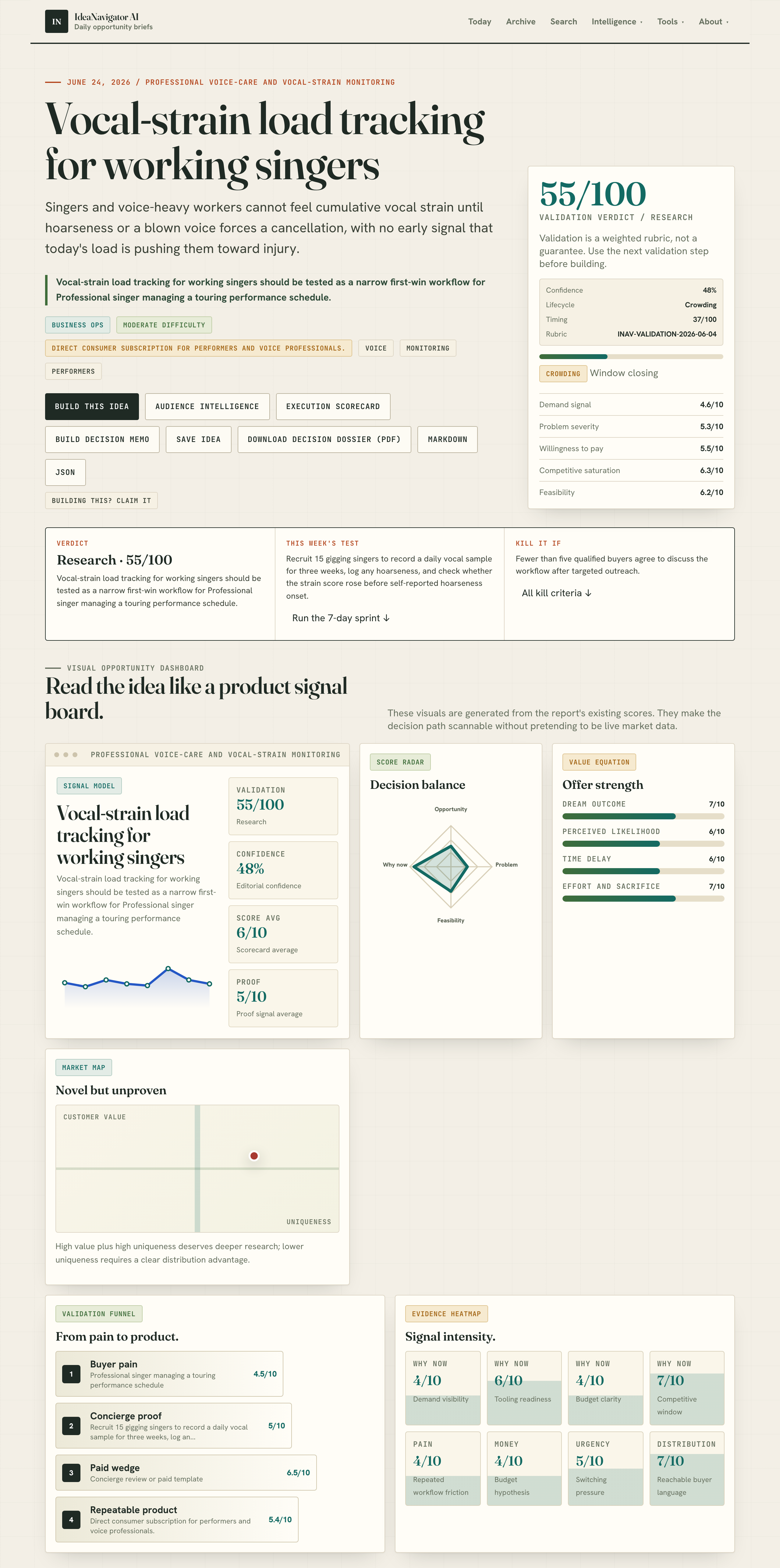
Researchers are developing an app that records brief vocal samples after each performance to assess cumulative vocal strain. The goal is to provide early warnings of potential vocal injury, especially for touring singers managing tight schedules. Validation is underway with a small group of gigging performers.
A new vocal-strain load tracking system for professional singers is in development, aiming to provide early warnings of vocal fatigue to prevent injuries during touring schedules. The system uses post-performance recordings to analyze vocal health and offers personalized feedback, addressing a critical gap in voice management for gigging performers.
The proposed system involves singers recording a short vocal sample after each performance. An app then analyzes these samples to score the singer’s cumulative vocal strain against their baseline, identifying tone shifts that have historically preceded hoarseness or vocal injury. This approach leverages recent advances in on-device audio analysis, enabling performers to self-monitor without constant access to a vocal coach. The initial validation plan includes recruiting 15 gigging singers to record daily samples over three weeks, tracking whether the system’s strain scores correlate with self-reported hoarseness or vocal issues. The goal is to create a practical, user-friendly tool for voice professionals managing demanding schedules, with potential subscription-based revenue models targeting voice-care markets.Potential Impact on Vocal Health Management
This development could significantly improve how professional singers prevent vocal injuries by providing real-time, personalized feedback on their vocal load. Early detection of strain may reduce cancellations and long-term damage, especially for performers who often self-manage without immediate access to voice specialists. If validated, this technology could become a standard tool in voice care, benefiting both individual performers and the broader music industry.vocal strain monitoring app for singers
As an affiliate, we earn on qualifying purchases.
As an affiliate, we earn on qualifying purchases.
Growing Need for Self-Managed Vocal Care Tools
Currently, singers and voice-heavy workers often discover vocal fatigue only after experiencing hoarseness or injury, which can lead to performance cancellations. While voice training and coaching exist, many gigging performers manage their schedules independently, lacking immediate feedback on their vocal health. Advances in audio analysis technology now enable on-device scoring of vocal characteristics, opening opportunities for self-monitoring solutions. The concept of vocal load tracking aligns with broader trends toward health self-management and digital health tools, especially in the gig economy where performers operate without direct supervision.“Using post-performance vocal samples to assess cumulative strain offers a promising way to prevent injuries before they occur.”
— an anonymous researcher
Validation and Effectiveness Still Under Evaluation
It is not yet confirmed whether the app’s strain scores will reliably predict vocal injury or hoarseness onset. The pilot study is ongoing, and results are expected in the coming months, but until then, the effectiveness of this approach remains unproven.Upcoming Validation Study and Potential Market Launch
The immediate next step is completing the pilot study with 15 gigging singers over a three-week period. Researchers aim to analyze whether the vocal strain scores correlate with self-reported vocal issues. Pending positive results, development will continue toward refining the app’s user interface and analysis algorithms. A commercial launch could follow within the next year, offering subscription plans for voice professionals seeking to safeguard their vocal health during demanding schedules.
Key Questions
How does the vocal strain tracking app work?
The app records a short vocal sample after each performance, then analyzes it to score the singer’s cumulative vocal strain. It compares current vocal characteristics to the performer’s baseline and flags tone shifts that may indicate fatigue or risk of injury.
Can this app prevent vocal injuries?
While it aims to provide early warnings, the app’s effectiveness in preventing injuries depends on validation results. It is designed to help singers identify when they need to rest or warm up more thoroughly, potentially reducing injury risk.
Who is the target user for this technology?
The primary users are professional singers managing touring schedules, voice coaches, and voice professionals seeking to monitor vocal health remotely.
When will this technology be available?
The pilot validation is ongoing, with a potential commercial release anticipated within the next 12 months if results are favorable.
Is this technology suitable for amateur singers?
Currently, the focus is on professional and gigging singers. However, similar technology could be adapted for amateur voice users in the future.
Source: IdeaNavigator AI
Fall Picks
fall essentials
As an affiliate, we earn on qualifying purchases.