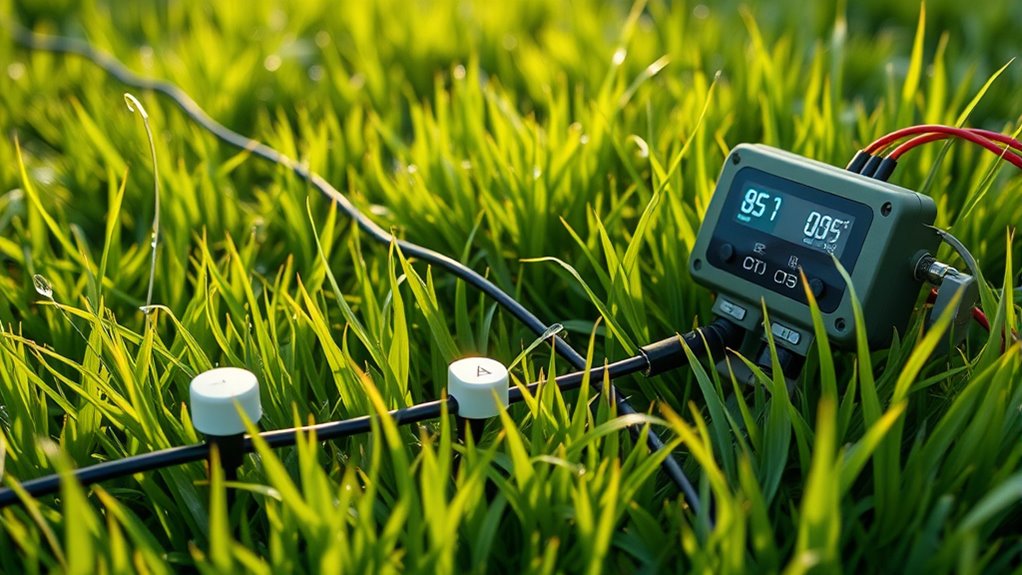

A DIY smart irrigation system uses weather sensors and soil moisture controls to water your lawn efficiently. It monitors rainfall, humidity, and soil moisture levels to skip unnecessary watering during rain or drought. By programming your system with weather forecasts and sensor data, you can keep your lawn healthy while conserving water and reducing costs. Want to discover how to set up and customize your system for ideal results? Continue exploring to learn more.
Key Takeaways
- Integrate soil moisture sensors with weather data to automate watering based on real-time conditions.
- Use programmable controllers to customize watering schedules and adapt to weather forecasts.
- Install sensors strategically in the garden to monitor moisture levels and prevent overwatering.
- Connect the system via Wi-Fi or Bluetooth for easy remote monitoring and adjustments.
- Benefit from water savings and healthier lawns through precise, environmentally-friendly irrigation control.
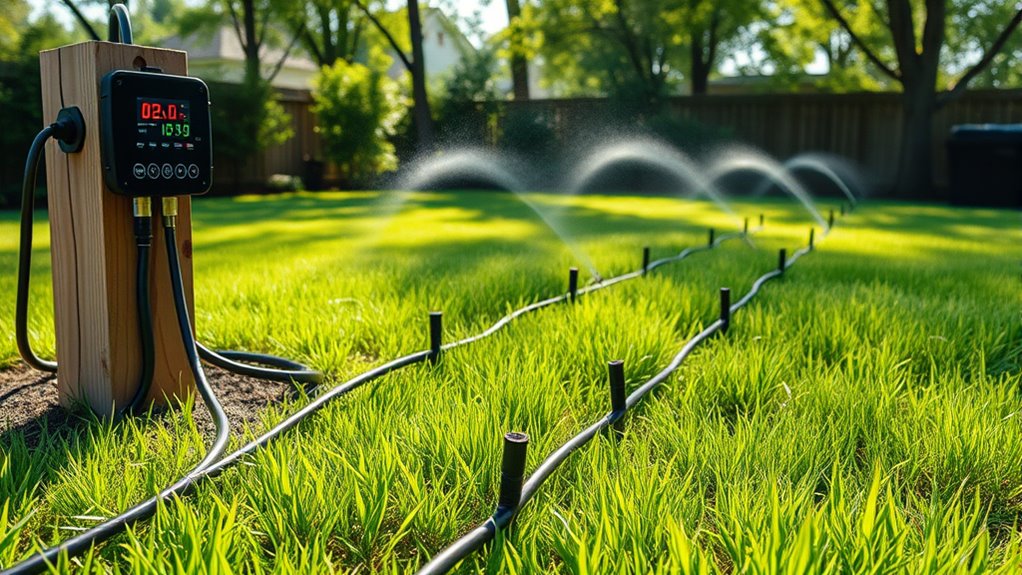
A DIY smart irrigation system allows you to automate watering your garden efficiently, saving water and time. By integrating weather sensors and moisture control features, you can guarantee your lawn receives the right amount of water without any guesswork. These systems are designed to adapt to changing weather conditions, preventing overwatering during rain or drought periods. When you install weather sensors, you gain real-time data about rainfall, humidity, and temperature, which your automation system uses to determine whether watering is necessary. This means your system won’t waste water on irrigation when Mother Nature is already doing the job, ultimately conserving resources and reducing your utility bills. Moisture control technology, on the other hand, focuses on monitoring soil moisture levels directly. Sensors placed in the ground transmit data to your controller, which then activates or pauses watering cycles based on pre-set thresholds. This guarantees your lawn stays consistently healthy without the risk of overwatering or underwatering. Combining weather sensors with moisture control creates a smart, responsive setup that adjusts watering schedules dynamically, providing your plants with ideal hydration. Setting up these sensors is straightforward—you simply position them in key areas of your garden or lawn to get representative readings. Most weather sensors connect via Wi-Fi or Bluetooth, allowing you to monitor conditions and make adjustments through a smartphone app or web interface. You’ll appreciate how seamlessly this technology integrates into your routine, giving you peace of mind that your garden is well cared for, even when you’re not around. The system can be programmed to factor in forecasts, so if rain is predicted, it will skip watering cycles altogether. Conversely, during hot, dry spells, it can increase watering frequency to prevent stress on your plants. This level of precision not only saves water but also promotes healthier, greener lawns. Additionally, many DIY kits come with user-friendly interfaces and customizable settings, so you can tailor watering schedules to match your specific landscape needs. Over time, you’ll notice improvements in your garden’s health and a significant reduction in water waste. The combination of weather sensors and moisture control makes your irrigation system more intelligent, adaptive, and environmentally friendly. Using juice cleanse and detox principles can also help your body recover from overexertion and promote overall wellness, similar to how a well-designed irrigation system promotes the health of your garden. With just a little effort upfront, you’ll enjoy a lush, well-maintained lawn that benefits from ideal watering—without the hassle and waste associated with traditional irrigation methods. Embracing these smart technologies empowers you to take control of your garden’s watering needs, ensuring efficiency, sustainability, and vibrant growth all season long.

VIVOSUN Automatic Drip Irrigation Kit, Smart Watering System
- Efficient Automatic Watering: Delivers water directly to roots, reduces waste
- Hydrates Up to 16 Plants: Includes 16 emitters for multiple pots
- Customizable Setup: Flexible tubing fits various spaces and plants
As an affiliate, we earn on qualifying purchases.
As an affiliate, we earn on qualifying purchases.
Frequently Asked Questions
How Much Does a DIY Smart Irrigation System Cost?
A DIY smart irrigation system typically costs between $100 and $300, depending on the complexity and the components you choose. You should do a cost analysis and budget planning to decide what features you want, like soil moisture sensors or Wi-Fi connectivity. By comparing prices of controllers, valves, and sensors, you can build an efficient system that fits your budget without sacrificing performance.
Can I Install It Without Professional Help?
You can definitely install a DIY smart irrigation system without professional help if you have basic DIY skills. Just pay attention to installation concerns like proper placement of sensors and secure connections. Take your time to read instructions carefully, and guarantee you understand the system’s wiring and app setup. With patience and some troubleshooting, you’ll successfully install your system and enjoy efficient watering without needing professional assistance.
What Maintenance Is Required for the System?
Imagine you’re the captain of your lawn’s health ship, steering clear of stormy overwatering. You need to regularly check the sensors and calibrate them for accuracy, ensuring your system’s decisions are spot-on. Don’t forget to clean the filters to prevent clogs and maintain efficient watering. With simple maintenance like these, your smart irrigation system stays in shipshape, saving water and keeping your lawn lush without much fuss.
Is the System Compatible With Existing Sprinkler Setups?
Yes, your DIY smart irrigation system is compatible with existing sprinkler setups. You’ll find that sprinkler compatibility is straightforward because the system integrates seamlessly with most standard sprinkler valves and controllers. To guarantee smooth system integration, double-check your current setup’s specifications and match them with the system’s requirements. This way, you avoid potential issues and enjoy efficient, automated watering without needing to replace your existing sprinklers.
How Secure Is the System Against Hacking or Data Breaches?
Did you know that cybersecurity risks affect over 60% of smart home devices? Your system’s security depends on strong passwords, regular updates, and encrypted data transmission. While it’s designed to protect your data privacy, no system is entirely immune to hacking. You should stay vigilant, use secure Wi-Fi, and enable multi-factor authentication to minimize risks. Regularly review security settings to keep your irrigation system safe from breaches.
Conclusion
By building your own smart irrigation system, you’re taking control like Da Vinci crafting his masterpieces—innovative and personalized. This project not only saves water and money but also guarantees your lawn remains lush and healthy. Remember, every great achievement starts with a simple idea, much like the first drop of water that sparks a mighty river. So go ahead, embrace this DIY journey, and watch your garden flourish with your clever, eco-friendly touch.