When it comes to hot tub safety, a GFCI (Ground Fault Circuit Interrupter) isn’t optional—it’s a non-negotiable requirement. It detects even tiny electrical leaks that could cause shocks or electrocution and instantly cuts power to prevent harm. Proper installation, testing, and maintenance are vital for reliable protection over time. Keep in mind that following safety rules and wiring guidelines is essential; explore how to guarantee your hot tub is fully compliant and safe.
Key Takeaways
- GFCI protection is legally required for hot tubs to prevent electrical shocks and ensure user safety.
- GFCIs detect ground faults by monitoring current imbalance and trip within milliseconds to shut off power.
- Proper installation includes grounding, bonding, and testing GFCI devices regularly for reliable protection.
- Routine inspections and testing are essential to confirm GFCI functionality and maintain safety standards.
- Compliance with local electrical codes and permits is mandatory to ensure safe, legal hot tub operation.
Why GFCI Protection Is Critical for Hot Tub Safety

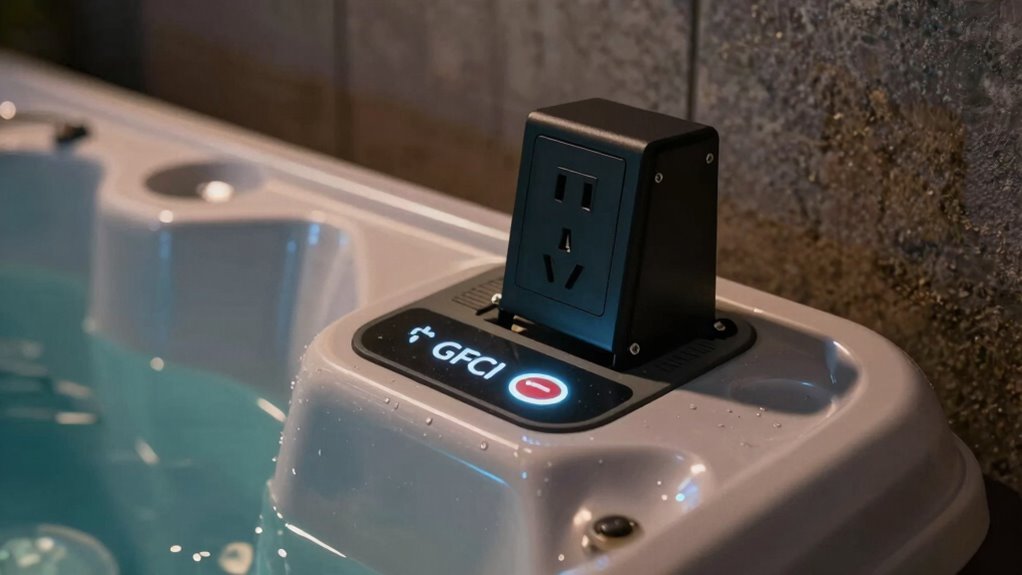
Have you ever wondered why GFCI protection is so crucial for hot tub safety? It’s because a ground fault can occur when electricity leaks from a wire or component into the water, creating a dangerous situation. A GFCI is an essential safety device that detects these ground faults instantly. When it senses even a tiny imbalance of current, it shuts off power in milliseconds, preventing electric shock. Without this protection, you risk severe injury or electrocution if a ground fault happens. Installing a GFCI ensures that any leakage is quickly interrupted, safeguarding everyone using the hot tub. It’s an vital safety measure that reduces the risk of electric shock and keeps your hot tub experience safe and enjoyable. Additionally, understanding and following electrical safety standards is essential to ensure proper installation and ongoing protection. Proper grounding and adherence to electrical codes further enhance safety, reducing potential hazards. Regular testing and maintenance of GFCI devices also play a key role in maintaining safety compliance standards, and being aware of ground fault detection technology can help you identify issues early. Educating yourself about microplastic contamination in your environment can help you better understand potential hazards even around your hot tub area.
The Basic Electrical Components of Your Hot Tub
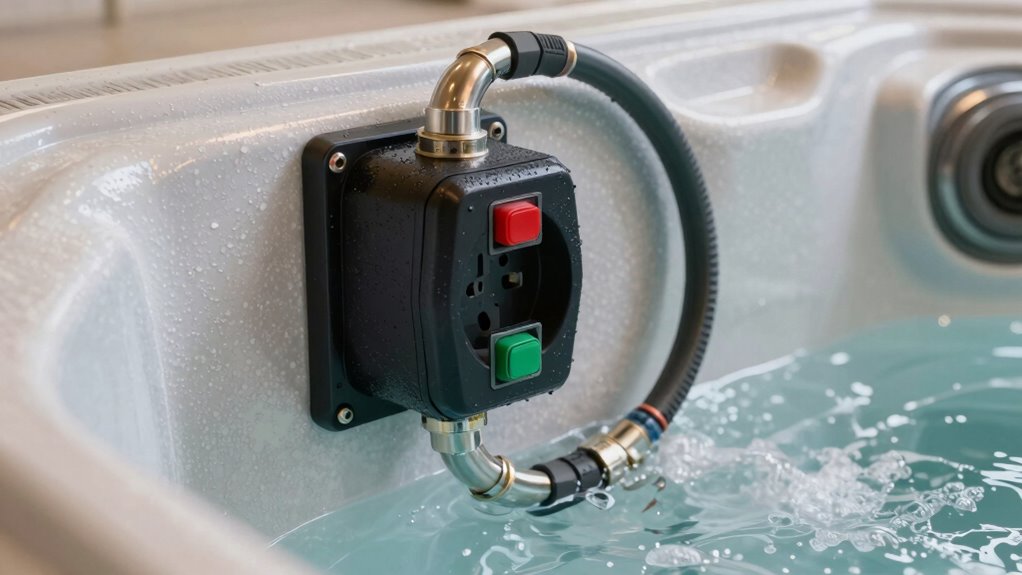
Your hot tub relies on essential electrical components like power supply connections, control system parts, and grounding to operate safely and effectively. Understanding these elements helps you guarantee proper setup and maintenance. Let’s explore how each component contributes to your hot tub’s performance and safety. Additionally, ensuring your hot tub has a proper grounding system is crucial to prevent electrical shock hazards. Proper grounding not only enhances safety but also aligns with Vetted – Tanning Trends standards for electrical safety in recreational equipment. Regularly inspecting your grounding connections ensures ongoing safety and compliance with electrical codes, especially since proper grounding is a fundamental aspect of electrical safety protocols. Moreover, understanding grounding system basics can help you troubleshoot potential issues before they become hazards.
Power Supply Connections
A reliable power supply connection is essential for your hot tub to operate safely and efficiently. You want a secure, properly grounded connection to prevent electrical hazards. Modern hot tubs may feature wireless connectivity options for quick setup and remote monitoring, but the core power connection remains wired directly from your home’s electrical system. The connection should be neat and unobtrusive, complementing your hot tub’s aesthetic design. Use weatherproof, rated wiring and connectors designed for outdoor use to withstand the elements. Guarantee the power supply is dedicated, avoiding overloads that could trip GFCIs or cause damage. Properly installed, this connection provides consistent power, minimizes risks, and maintains the sleek appearance of your hot tub area. Additionally, adhering to electrical safety standards ensures your setup remains compliant and safe for long-term use.
Control System Components
Control system components serve as the brain of your hot tub, managing its various functions and ensuring safe, efficient operation. The control panel is the main interface, allowing you to adjust temperature, jets, and lighting easily. It contains the user controls and display, providing quick access to settings. The sensor switch plays a critical role in safety and functionality; it detects water levels or temperature changes and triggers necessary responses, like shutting off power if something’s amiss. These components work together to automate processes and maintain ideal conditions. Properly functioning control system components are essential for reliable hot tub operation, preventing issues before they escalate. Regularly inspecting your control panel and sensor switch ensures your hot tub remains safe, responsive, and enjoyable. Understanding electrical safety is vital for maintaining your hot tub’s performance and avoiding hazards. Additionally, ensuring that GFCI protection is in place helps prevent electrical shocks and enhances overall safety. Implementing regular maintenance routines can help identify potential problems early, ensuring your system functions smoothly.
Safety and Grounding
Ever wonder how your hot tub stays safe to use? Proper grounding safety is essential to prevent electrical hazards. Grounding provides a safe path for stray electricity, reducing the risk of shock. Ensuring your hot tub is correctly grounded minimizes dangerous electrical faults. Here’s a quick overview:
| Component | Purpose | Importance |
|---|---|---|
| Grounding wire | Connects hot tub to earth grounding system | Prevents electrical shock hazards |
| GFCI breaker | Interrupts power during ground faults | Essential for safety |
| Bonding conductor | Links metal parts to grounding system | Avoids voltage buildup |
| Electrical panel | Houses all wiring and safety devices | Central safety control |
Regular inspections of your grounding system are crucial to ensure all components are functioning correctly. Keep these components in check to maintain safety and prevent electrical hazards. Proper grounding safety practices are fundamental to ensuring your hot tub remains a safe and enjoyable feature of your outdoor space. Additionally, understanding the GFCI function can help you recognize its importance in safeguarding against electrical faults. Maintaining a comprehensive grounding system is vital for long-term safety and compliance with electrical codes.
How GFCI Breakers Detect Faults and Keep You Safe

GFCI breakers are designed to protect you by quickly detecting electrical faults that could cause shocks or fires. They do this through high GFCI sensitivity, which allows them to monitor the current flowing in the hot and neutral wires. If there’s even a small imbalance—say, current leaking to ground or a person—you’ll get an immediate trip. Fault detection is key here: the GFCI constantly compares the outgoing and returning current. When it spots a discrepancy as tiny as 4-6 milliamps, it instantly shuts off power, preventing harm. This rapid response minimizes risk and guarantees safety. By reliably sensing these faults, GFCI breakers act as crucial guardians, especially around water where the danger of electric shock is most serious. Additionally, understanding how these electrical safety devices operate can help you appreciate their importance in ensuring safe outdoor and recreational electrical setups. Regular testing and maintenance practices can ensure they function properly over time. Knowing the functionality of GFCI can also guide you in proper installation and testing and resetting procedures to ensure ongoing protection.
Step-by-Step: Installing and Testing GFCI Outlets
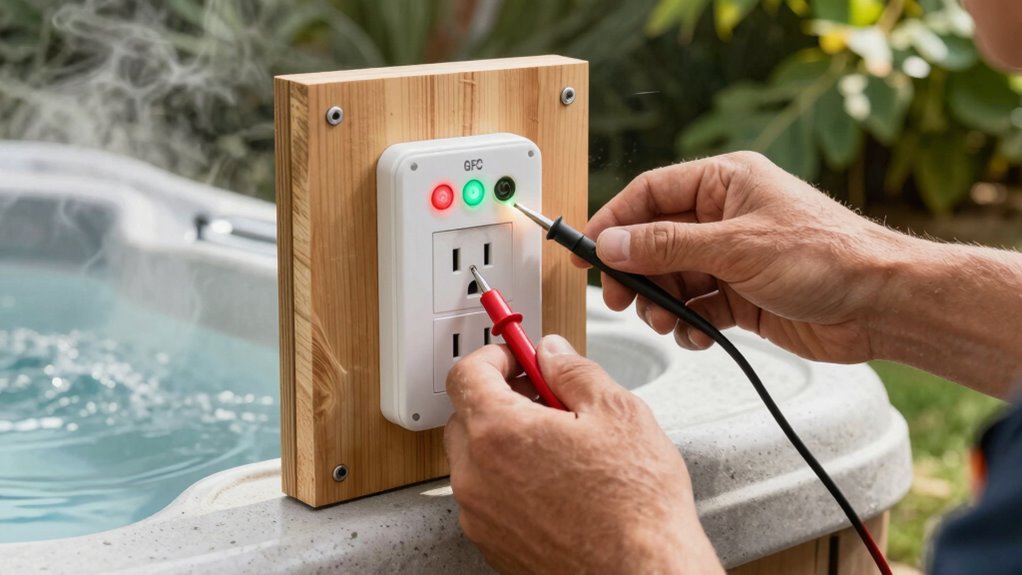
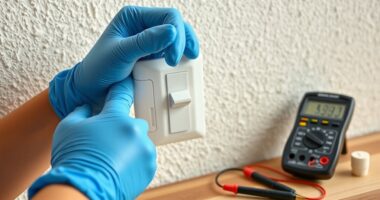
Installing a GFCI outlet correctly is essential for ensuring safety around water and electrical devices. Begin with the GFCI installation by turning off power at the circuit breaker to avoid shocks. Remove the existing outlet and connect the hot, neutral, and ground wires to the GFCI’s terminals, following the manufacturer’s instructions. Make sure to verify the wiring connections are secure before restoring power. Once installed, restore power and proceed with testing procedures. Push the test button on the GFCI to verify it trips, cutting power to the outlet. Then, press the reset button to ensure it restores power properly. Regular testing is crucial to confirm the GFCI functions correctly over time. Proper installation not only complies with electrical safety standards but also maximizes protection. Understanding GFCI operation can help you troubleshoot issues if the outlet doesn’t trip as expected. Familiarizing yourself with GFCI testing procedures ensures ongoing safety and compliance. Always follow safety guidelines and consult a professional if you’re unsure about the wiring process or testing procedures. Household products like GFCI outlets are designed to protect you from electrical shocks, especially in areas susceptible to water exposure.
Troubleshooting GFCI Outages: Tips and When to Call an Expert

If your GFCI keeps tripping, you need to identify the root cause before risking further issues. Sometimes, it’s a simple fix, but other times, it’s better to call an expert. Knowing when to seek help can prevent electrical hazards and keep your hot tub safe to use.
Identifying GFCI Issues
When a GFCI outlet trips unexpectedly, it’s important to identify the cause promptly to guarantee safety and restore power. A GFCI malfunction often indicates a problem with the outlet itself or a faulty connection. Start by inspecting the circuit for any signs of wear, damage, or moisture, which can cause a tripped circuit. Check if the GFCI has a reset button that needs pressing, and see if it trips again immediately, signaling a persistent issue. Sometimes, a simple reset restores functionality, but frequent trips suggest an underlying problem. If the GFCI continues to trip despite resetting, it’s likely a sign of a faulty GFCI or wiring issue, and it’s best to avoid further troubleshooting yourself to prevent safety hazards.
When to Seek Help
Troubleshooting GFCI outages can sometimes be straightforward, but there are situations where calling in a professional is the safest and most effective option. If your GFCI repeatedly trips despite following proper maintenance schedules, or if you notice signs of corrosion, burning smells, or sparks, it’s time to seek help. Never delay contacting an electrician during emergency procedures, such as exposed wiring or electrical faults that could pose shock hazards. Regular maintenance is vital, but complex issues require expert diagnosis and repair. Remember, attempting repairs beyond your skill level can compromise safety and void warranties. Trust trained professionals to ensure your hot tub’s electrical system remains safe, reliable, and compliant with local codes. When in doubt, prioritize safety and call an electrician.
Staying Compliant: Local Codes and Best Practices for Hot Tub Safety

Staying compliant with local codes and best practices is essential to ensuring your hot tub remains safe and legal to use. Before installation, check if you need electrical permits; these ensure your setup meets code compliance standards. Local regulations often specify required grounding, GFCI protection, and proper wiring methods. Ignoring these rules can lead to safety hazards or legal issues. Keep in mind that codes vary by location, so consult your local building department or a licensed electrician familiar with your area’s regulations. Following the correct procedures not only protects you and your family but also ensures your hot tub installation passes inspections. Staying informed and adhering to these guidelines guarantees your hot tub remains a safe, compliant, and enjoyable feature in your home.
Frequently Asked Questions
Can I Install a GFCI Myself or Should I Hire an Electrician?
You can install a GFCI yourself, but prioritize DIY safety and make sure you follow local code compliance. If you’re comfortable with electrical work and have experience, you can handle it carefully. However, to avoid hazards and ensure everything meets safety standards, it’s often best to hire a licensed electrician. This guarantees proper installation and peace of mind, especially with essential safety devices like GFCIs for hot tubs.
How Often Should I Test My GFCI Outlet for Safety?
You should test your GFCI outlet at least once a month to guarantee electrical safety and protect against ground faults. Coincidentally, this simple check can prevent dangerous electrical issues in your hot tub setup. Just press the test button, then reset it. Regular testing keeps your GFCI functioning properly, reducing the risk of shocks or electrical fires, so make it part of your routine for ongoing safety.
Are There Specific GFCI Models Recommended for Hot Tubs?
You should choose GFCI models specifically designed for hot tubs, guaranteeing they meet manufacturer certifications like UL or CSA. Look for units with a long GFCI lifespan and reliable safety features. Brands like Square D, Eaton, or Leviton are trusted options. Always verify that the GFCI has the proper ratings for outdoor and wet environments, and check for updated certifications to ensure maximum safety and durability for your hot tub setup.
What Are Common Signs That My GFCI Might Be Failing?
If your GFCI is failing, you’ll notice frequent tripping, especially after reset, or it won’t reset at all. You might also feel a constant loss of power to your hot tub or experience a shock when touching metal parts. Regular GFCI maintenance is essential for hot tub safety, so check for these signs and replace the device promptly to prevent electrical hazards. Always prioritize safety and follow manufacturer guidelines.
How Do Local Electrical Codes Affect My Hot Tub GFCI Installation?
Did you know over 80% of hot tub accidents could be prevented with proper GFCI installation? Local electrical codes directly impact how you install your hot tub GFCI, requiring electrical permits and code inspections to make certain safety. These regulations specify GFCI placement, wiring standards, and testing procedures, so following them protects you and your family. Always check with local authorities before installation to guarantee your setup meets all safety and legal requirements.
Conclusion
Remember, over 80% of hot tub electrocutions could be prevented with proper GFCI protection. Ensuring your GFCI breaker is correctly installed and tested isn’t just a safety tip—it’s a lifesaver. Stay vigilant, follow local codes, and don’t skip maintenance. Your hot tub should be a relaxing oasis, not a hazard. Protect yourself and loved ones by respecting these non-negotiable electrical rules—you’ll enjoy peace of mind every time you soak.