
Ignoring clearance rules for your patio heater can cause serious fire hazards and accidents. Make sure you keep at least 3 feet away from walls, furniture, and overhangs, and avoid placing the heater near combustible materials. Many people overlook these distances, putting themselves at risk. Proper placement, regular safety checks, and following manufacturer guidelines are essential. Keep safe and cozy outdoors—continue to discover essential tips that can help you prevent dangerous setup mistakes.
Key Takeaways
- Many people neglect manufacturer-recommended clearance distances, increasing fire and burn hazards.
- Proper placement, at least 3 feet from combustible materials, is often ignored, risking ignition.
- Regular safety checks and inspections are overlooked, leading to unnoticed damage or unsafe conditions.
- Ignoring clearance rules around low-hanging branches or overhangs can cause fire risks.
- Failing to keep airflow unobstructed and maintain safe buffer zones heightens accident and fire dangers.
Why Patio Heater Clearances Matter for Safety

Ensuring proper clearances around your patio heater is essential for safety because it helps prevent accidental fires and burns. When clearances are too tight, heat can cause nearby combustible materials to ignite, increasing the risk of fire spread. Additionally, maintaining adequate space reduces the chance of accidental contact with hot surfaces, preventing burns. Wind safety is also a critical factor; strong gusts can tip over the heater or cause flames to flicker unpredictably, potentially igniting surrounding objects. Proper clearances allow the heater to operate efficiently while minimizing these hazards. Always follow manufacturer recommendations for clearance distances to guarantee your setup remains safe during use, especially in windy conditions where safety risks are heightened. Protective gear like fire-resistant clothing can further enhance safety when operating patio heaters. Moreover, understanding clearance rules and adhering to them is vital because it ensures safe operation and compliance with safety standards. Knowing how to maintain proper distances from combustible materials can significantly reduce fire risks and improve overall safety. Proper ventilation is also crucial to prevent the buildup of dangerous fumes and ensure safe operation.
What Are the Proper Clearance Distances for Patio Heaters
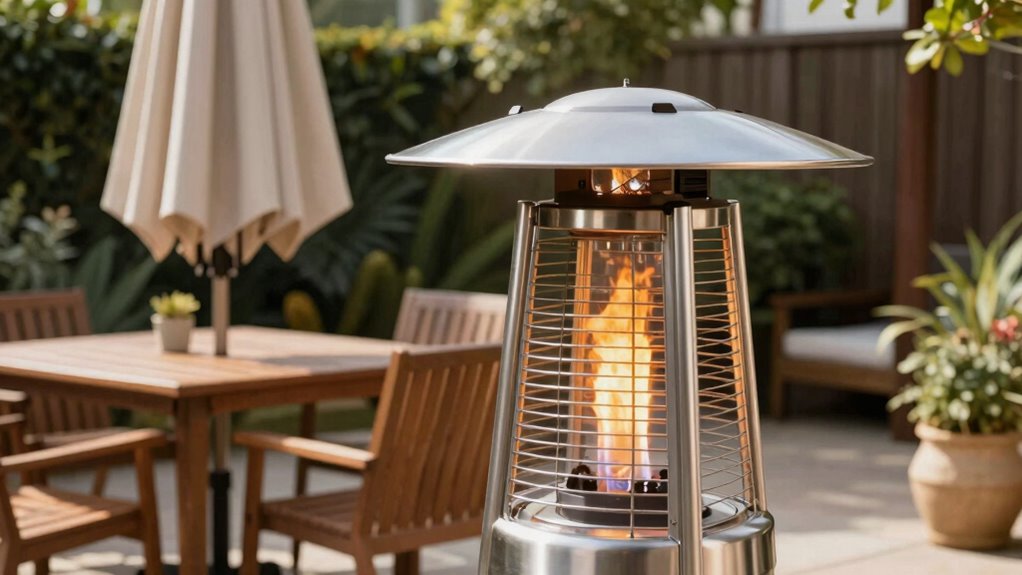
Proper clearance distances around your patio heater are essential to keep safety in check and guarantee efficient operation. Maintaining the right distances minimizes fire safety risks and ensures you enjoy outdoor comfort without hazards. Generally, a minimum of 3 feet of clearance is recommended from combustible materials, furniture, and overhangs. The table below outlines typical clearance requirements:
| Heater Type | Minimum Clearance Distance | Additional Notes |
|---|---|---|
| Gas Patio Heater | 3 feet | Keep away from curtains, foliage |
| Electric Heater | 2 feet | Avoid touching surface |
| Infrared Heater | 3 feet | Ensure unobstructed airflow |
| Portable Heater | 2-3 feet | Stable placement required |
Maintaining proper clearance is crucial for safe operation to prevent accidental fires and ensure optimal heating performance. Understanding heater types and their clearance needs can help you select the best setup for your outdoor space. Regularly inspecting your heater helps identify potential hazards early, ensuring continued safety. Additionally, knowing the proper clearance distances can prevent common installation mistakes and enhance overall safety. Sticking to these clearances guarantees fire safety and enhances outdoor comfort during chilly evenings.
Common Mistakes When Setting Up Your Patio Heater
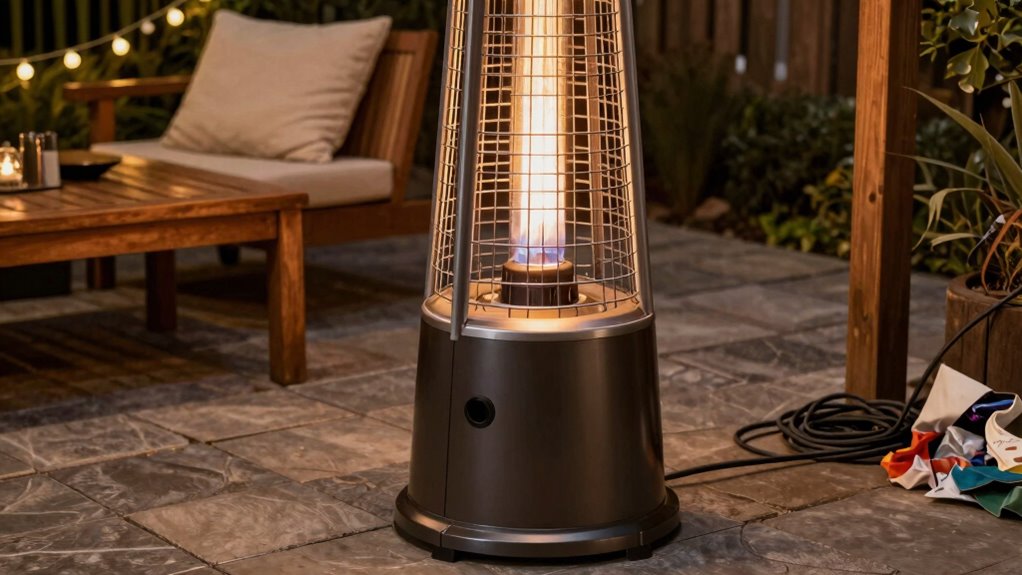
One common mistake is ignoring the proper clearance distances, which can lead to fire risks or damage. Overlooking fire hazards, like nearby combustible materials, also increases danger. To stay safe, make sure you set up your patio heater correctly and stay aware of potential hazards. Additionally, safety guidelines should always be followed to prevent accidents and ensure proper operation. Proper installation practices help maintain safe operation and prolong the life of your heater. Regularly inspecting your setup for hazardous conditions can further reduce the risk of accidents and improve safety. Being aware of clearance requirements is essential for a safe and effective setup. Understanding fire safety considerations is also vital for preventing dangerous situations during use.
Ignoring Clearance Distances
Ignoring clearance distances is a common mistake that can lead to serious safety hazards. When setting up your patio heater, you might overlook the importance of keeping flammable materials and outdoor furniture at a safe distance. Placing the heater too close to these items increases the risk of accidental fires, especially if the materials are easily ignited or heat-sensitive. Always follow the manufacturer’s guidelines for minimum clearance, and regularly check that nothing is blocking airflow or heat dispersion. By maintaining proper distances, you reduce the chance of heat buildup and accidental ignition. Additionally, proper tool use and safety precautions can further prevent setup errors that compromise safety. Remember, even small oversights can have big consequences—safety depends on respecting clearance rules and keeping your outdoor space secure. Ensuring that outdoor furniture is made from heat-resistant materials can also help mitigate some risks associated with heater placement, and choosing the right fire safety equipment provides an extra layer of protection.
Overlooking Fire Hazards
Have you considered the fire hazards that come with improper setup of your patio heater? Overlooking these risks can lead to dangerous situations. Make sure you keep a fire extinguisher nearby, properly positioned for quick access in case of emergency. Regular patio heater maintenance is vital to prevent malfunctions that could start fires. Avoid placing the heater near combustible materials like furniture, curtains, or stacked wood. Check for leaks or damaged parts that might pose a risk. Also, verify that the heater’s clearance distances are adequate, and never leave it unattended when hot. Proper clearance rules are essential to prevent fires and ensure safe operation. In addition, understanding fire safety guidelines can help you identify potential hazards before they become serious issues. Remember, neglecting these fire hazards can escalate minor issues into serious accidents. Staying informed about proper setup procedures and safety practices can help prevent such dangers. Always be aware of fire prevention measures to further safeguard your outdoor space. Regularly inspecting your heater for potential hazards can catch issues early and keep your setup safe. Stay vigilant, maintain your equipment, and always prioritize safety to enjoy your patio comfortably and securely.
Risks of Ignoring Clearance Guidelines and How to Prevent Them

When clearance guidelines are overlooked, the risk of fire and accidents considerably increases. Ignoring safety zones around your patio heater can lead to dangerous fire hazards, especially if combustible materials are nearby. This is why adhering to the recommended clearance distances is crucial for safety. It can also result in violations of consumer safety standards, increasing liability and potential harm. Without proper clearance, heat can build up, causing nearby objects to ignite unexpectedly. Ensuring proper heater placement and maintaining clear safety zones is essential for fire prevention. Not following manufacturer-recommended clearance distances and keeping a safe buffer zone around the heater can significantly reduce these risks. Regularly check that nothing obstructs airflow or encroaches on safety zones. Additionally, fire safety regulations often specify the minimum distances that must be maintained to prevent accidents. Maintaining a safe operating environment is essential for reducing hazards in outdoor spaces. By respecting these guidelines, you reduce the chances of a fire hazard, ensuring your outdoor space remains a safe and enjoyable environment. Proper placement is key to preventing accidents and maintaining safety.
How to Properly Place Your Patio Heater for Safety
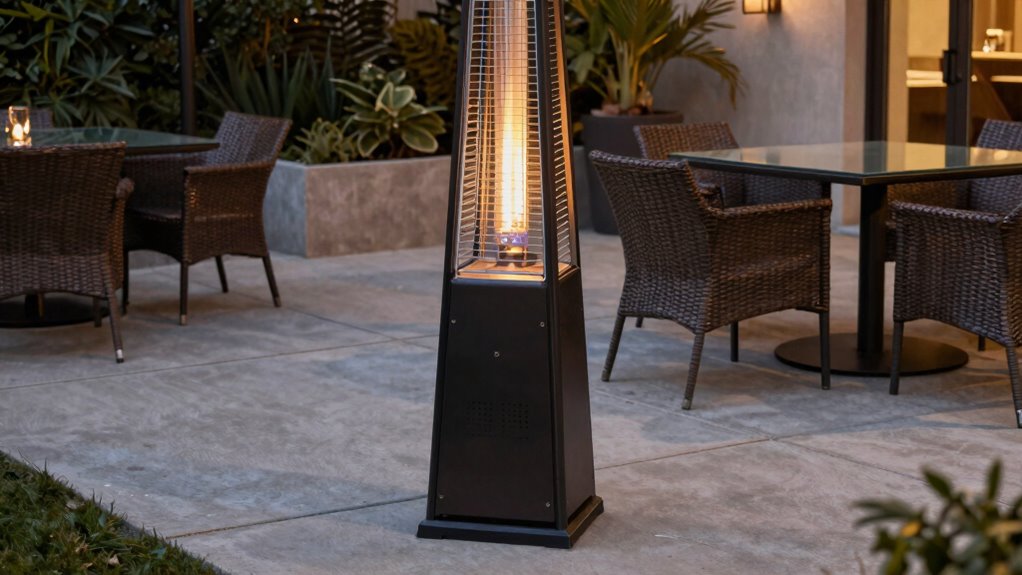
To guarantee your patio heater operates safely, you need to carefully choose its placement. Start by selecting a flat, stable surface away from combustible materials. Keep the heater clear of decorative accessories that could catch fire or obstruct airflow. Maintain the recommended clearance distances specified by the manufacturer, especially around seasonal adjustments like wind or rain. Consider these tips:
- Place the heater at least 3 feet from walls or furniture
- Avoid placing it near low-hanging branches or overhangs
- Ensure it’s on a level, non-flammable surface
- Keep the area free of clutter and decorations
- Adjust placement seasonally for wind or weather changes
Proper positioning not only enhances safety but also ensures even heat distribution. Always follow manufacturer guidelines and periodically reassess the setup for ongoing safety. Additionally, regularly inspecting your airless paint spraying gear can prevent malfunctions that might lead to unsafe conditions around your patio heater. Ensuring your clearance rules are followed can significantly reduce the risk of accidents and fire hazards.
What to Do If You Notice a Clearance or Safety Issue
If you notice any clearance or safety issues with your patio heater, it’s important to act immediately to prevent potential hazards. First, verify your fire extinguisher is nearby and ready to use in case of a fire. Check that the extinguisher is fully charged and accessible. Next, review your emergency contact planning—know who to call if a fire or safety concern escalates. If the heater is dangerously close to combustible materials or if a part seems damaged, turn it off and unplug it if possible. Do not attempt to fix serious issues yourself; instead, contact a professional for repairs. Taking quick, decisive action helps minimize risks and keeps your outdoor space safe for everyone.
Top Tips for Safe and Cozy Outdoor Heating
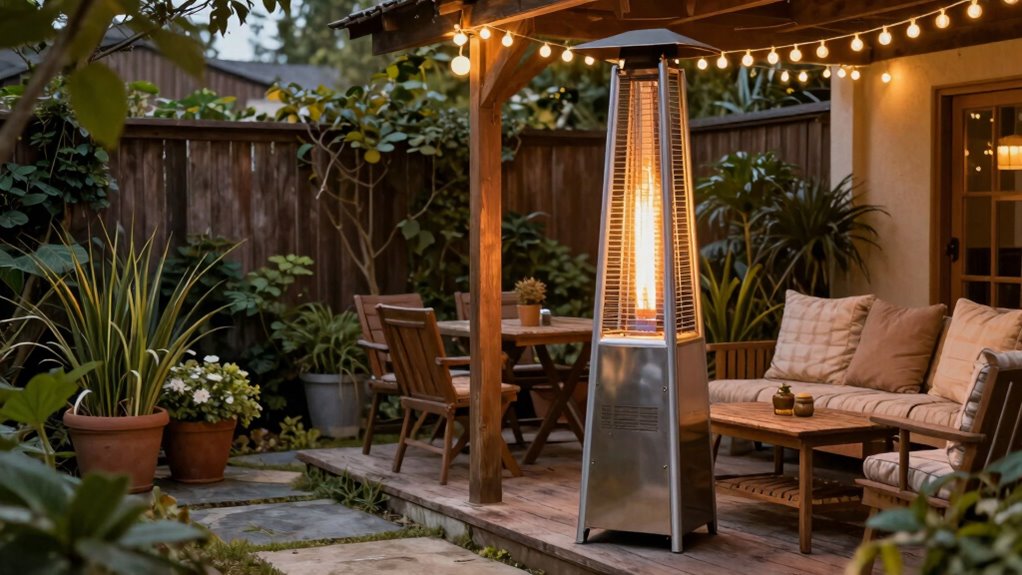
Ensuring your patio heater operates safely while keeping you warm involves following some simple, practical tips. First, choose a heater made from fireproof materials to reduce fire risks. Always position your heater on a stable, level surface away from overhanging branches or flammable objects. Consider weather conditions—avoid using heaters in high winds or rain, as these can cause safety hazards. Use a protective cover when not in use to shield against moisture and debris. Finally, keep a fire extinguisher nearby and regularly check for signs of wear or damage.
- Select fireproof materials for durability
- Position on a stable, level surface
- Avoid use in wind or rain
- Cover your heater during bad weather
- Keep safety equipment within reach
Frequently Asked Questions
Can I Use a Patio Heater Indoors Safely?
You shouldn’t use a patio heater indoors, as it’s unsafe. Indoor safety is vital because patio heaters are designed for outdoor use and produce carbon monoxide, which can be deadly inside. Always guarantee the heater is made from fire-resistant materials if you’re using it outdoors. Using it indoors risks fire and poisoning; stick to heaters specifically designed for indoor use to keep everyone safe.
How Often Should I Inspect My Patio Heater’s Clearance?
Think of your patio heater’s clearance as its safety shield—maintain it diligently. You should inspect your heater’s clearance every time you use it, especially after weather changes or if you notice any shifts. Regular heater maintenance and adherence to clearance guidelines keep your outdoor oasis safe and warm. Don’t let neglect turn your cozy space into a hazard; stay vigilant and guarantee your heater’s clearance is always spot-on.
Are There Specific Materials That Are More Fire-Resistant?
Certain fire-resistant materials, like stainless steel and ceramic, enhance patio heater safety because they withstand heat and reduce fire risk. When choosing a patio heater, look for models made from these fire-resistant materials to ensure better durability and safety. Always follow clearance rules and inspect your heater regularly, regardless of materials, to prevent accidents. Using fire-resistant materials is a smart step toward safer outdoor heating.
What Should I Do if My Patio Heater Tips Over?
If your patio heater tips over, you should immediately turn it off and unplug it if possible. Check the heater’s stability and verify it’s on a flat, stable surface to prevent further tipping. Use tipping prevention measures like securing the base or anchoring it to the ground. Keep a fire extinguisher nearby, and never attempt to move a hot or unstable heater. Safety first to prevent fire hazards.
Can Pets or Children Be Around Patio Heaters Safely?
You wonder if pets or children can be around patio heaters safely, but the answer isn’t straightforward. To guarantee pet safety and child protection, always keep kids and pets at a safe distance, ideally supervised and away from hot surfaces. Never leave them unattended near a heater, and install barriers if needed. Remember, even small accidents can cause serious burns or injuries, so stay vigilant and prioritize safety at all times.
Conclusion
By paying close attention to clearance rules, you create a cozy outdoor space that’s both inviting and safe. Think of it as giving your patio heater a gentle nudge in the right direction—ensuring it stays happy and your loved ones stay protected. When you respect these guidelines, you’re gently steering clear of potential mishaps, allowing you to enjoy your outdoor oasis worry-free. After all, a little care goes a long way in making every gathering warm and wonderful.