Upgrading your kitchen countertops with quartz is definitely doable as a DIY project if you have the right tools, careful planning, and patience. You’ll need materials like a wet saw, suction cups, and levelers, along with precise measurements to avoid mistakes. While it can save money on installation, complex cuts or large slabs may require professional help. Continue exploring to discover tips that can make your quartz upgrade smoother and more successful.

Get the little things that make your day delivered free with Prime
- Fast, free delivery on millions of items
- Prime Video, Amazon Music and more included
- Member-only deals all year
Key Takeaways
- Quartz countertops are durable and low-maintenance, making them suitable for DIY upgrades with proper tools.
- Accurate measurements, surface prep, and safety precautions are essential for a successful installation.
- Use suction cups, wet saw with diamond blade, and clamps to handle and secure heavy quartz slabs.
- On-site cutting is challenging; complex cuts may require professional assistance for precision.
- DIY installation can save costs but requires careful planning, proper tools, and attention to detail for a seamless finish.
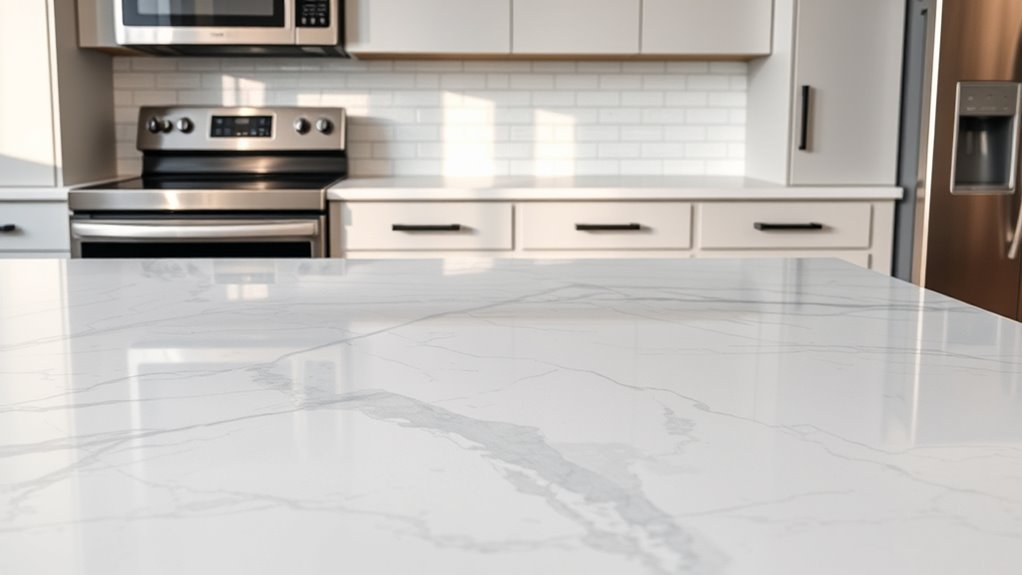
Upgrading your kitchen countertops with quartz is a smart choice that combines durability, style, and low maintenance. If you’re considering a DIY approach, it’s important to understand the installation tips to ensure a successful project. Quartz slabs are heavy and require precise handling, so you’ll need proper tools, such as suction cups, a wet saw with a diamond blade, and a level. Before starting, measure your space carefully, accounting for cutouts for sinks and cooktops. Preparing the surface is equally essential; your existing countertop must be clean, stable, and free of debris to prevent any issues with adhesion or stability.
When it comes to installation tips, it’s best to work with a helper, especially when lifting and positioning large slabs. Take your time to align the pieces correctly, checking for levelness and fit before securing them permanently. Apply a high-quality quartz adhesive, spreading it evenly to prevent air bubbles, and use clamps to hold the slabs in place as the adhesive cures. Seal all seams thoroughly with epoxy or resin to create a seamless look and prevent moisture infiltration. Keep in mind that cutting or customizing quartz on-site can be tricky, so if your project involves intricate cuts, you might want to consider professional help for those specific tasks.
Additionally, understanding control pet hair techniques can help if you have pets in your household, as hair and dander can settle on newly installed surfaces and be difficult to clean.
In terms of cost comparison, DIY installation of quartz countertops can be considerably cheaper than hiring professionals. While the material itself can range from $50 to $100 per square foot, doing it yourself might save you labor costs, which can easily add hundreds to thousands of dollars. However, you should factor in the expense of tools and any potential mistakes that could lead to additional repairs or replacements. Professional installers often include warranties and guarantee a perfect fit, which might justify their higher cost. But if you’re handy and willing to invest time, tackling this project yourself can be a rewarding experience and save you money.
wet saw with diamond blade for quartz
As an affiliate, we earn on qualifying purchases.
As an affiliate, we earn on qualifying purchases.
Frequently Asked Questions
Can I Install Quartz Countertops Over Existing Surfaces?
Yes, you can install quartz countertops over existing surfaces if you guarantee proper surface preparation. Start by cleaning and leveling the current surface for a seamless installation. It’s important to verify that the existing surface is stable and free of damage. By doing this prep work, you’ll achieve a smooth, durable look without the need for tearing out old countertops, making your DIY project more manageable and efficient.
What Are the Signs That Quartz Countertops Need Replacing?
Did you know that about 10% of homeowners replace their countertops within five years? If your quartz countertops show signs of persistent staining issues or significant countertop damage, it’s time to contemplate replacement. Cracks, chips, or dull spots can compromise durability and appearance. Stains that won’t come out, even after cleaning, indicate that your quartz may be past its prime, signaling it’s time for an upgrade.
How Do I Maintain the Shine of Quartz Countertops?
To maintain the shine of your quartz countertops, regularly clean them with gentle, non-abrasive cleaning products. Use polishing techniques like buffing with a soft cloth to restore their luster. Avoid harsh chemicals or abrasive pads, as they can dull the surface. Instead, opt for a quartz-specific cleaner or mild soap and water. Consistent care keeps your countertops looking vibrant and new, ensuring they stay gleaming for years.
Are There Eco-Friendly Quartz Options Available?
Yes, eco-friendly quartz options are available. Look for brands that use sustainable materials and environmentally responsible manufacturing processes. These options often incorporate recycled content and minimize harmful emissions. By choosing eco-friendly quartz, you reduce your environmental impact and support sustainable practices. Always check product labels and ask suppliers about their commitment to sustainability to guarantee you select the most eco-conscious choice for your kitchen upgrade.
What Tools Are Essential for a DIY Quartz Countertop Installation?
Imagine you’re stepping back into the 1920s with your DIY quartz countertop installation. Essential tools include a circular saw with a diamond blade, a jigsaw, and a drill for precise installation. You’ll also need measuring tape, a straightedge, and a level for accurate measuring techniques. Safety gear like goggles and gloves is vital. With these tools, you can cut, fit, and secure your quartz countertop confidently and efficiently.
Conclusion
So, go ahead and plunge into that quartz countertop project—because who doesn’t love spending their weekend wielding tools and risking spills? Just remember, while DIY might save you a few bucks, it’s also a surefire way to turn your kitchen into a modern art installation—of chaos. But hey, at least you’ll have a story to tell, right? Just don’t be surprised if your “upgrade” ends up looking more “abstract” than planned. Cheers to brave DIY adventures!
Halloween Picks
halloween
As an affiliate, we earn on qualifying purchases.