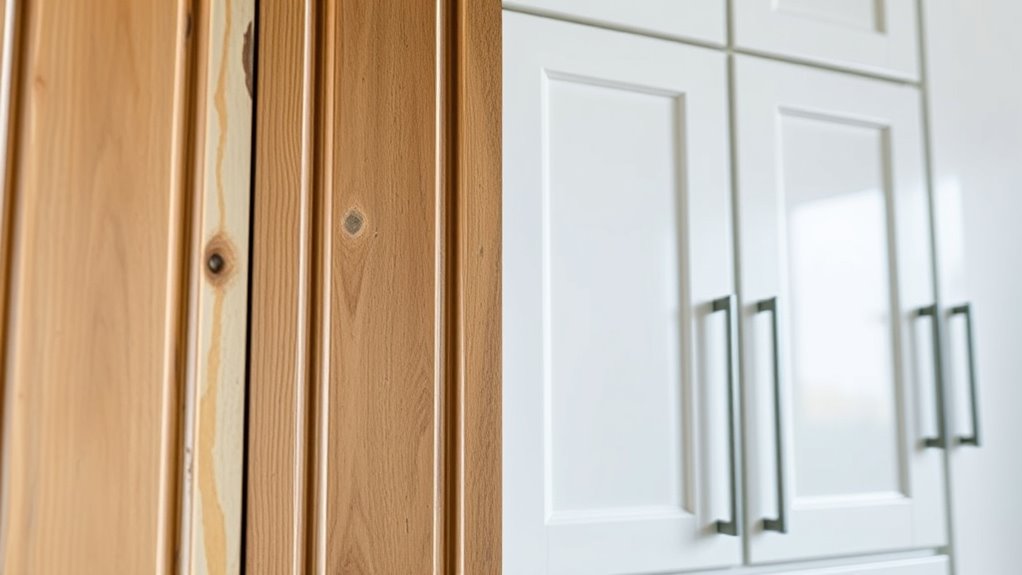

Choosing between refacing and replacing your cabinets depends on their condition and your goals. If your cabinets are sturdy but outdated, refacing offers a quick, budget-friendly refresh with new surface finishes. However, if your cabinets are damaged, poorly constructed, or you want a major makeover, replacing them provides better durability and customization. To determine which option suits your needs best and explore detailed advantages, consider the full comparison ahead.
Key Takeaways
- Refacing is cost-effective for updating appearance when cabinets are structurally sound; replacement offers full customization and durability.
- Choose refacing for a quick, budget-friendly refresh; opt for replacement when a major redesign or long-term durability is desired.
- Replacement cabinets typically use higher-quality materials, providing better resistance to wear and environmental damage.
- Refacing preserves existing cabinet boxes, limiting structural changes, while replacement allows for layout adjustments and size modifications.
- Consider cabinet condition, budget, and long-term goals to decide whether refacing or replacing best suits your kitchen renovation.
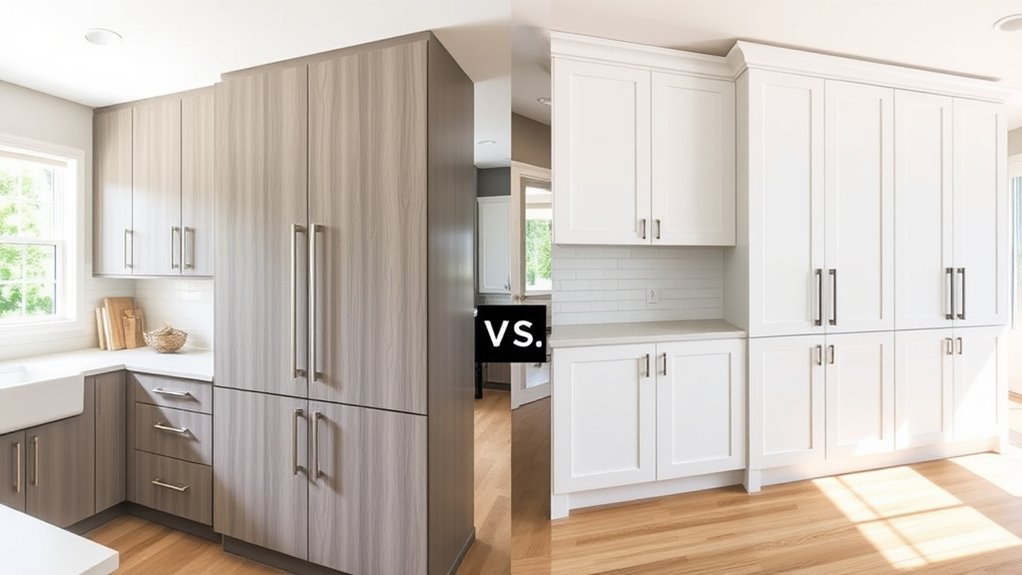
When deciding between refacing your cabinets or replacing them entirely, it’s important to understand the key differences and benefits of each option. Your choice can considerably impact the look, functionality, and overall value of your kitchen. One of the main considerations is cabinet durability. If you opt for replacing your cabinets, you’re investing in a complete overhaul with new materials, hardware, and design. This often results in cabinets that are more durable and resistant to wear over time, especially if you select high-quality materials like solid wood or custom finishes. Replacement cabinets tend to be sturdier, which means they can stand up better to daily use, spills, and temperature changes. On the other hand, refacing involves updating the exterior surfaces—like cabinet doors and drawer fronts—while keeping the existing box frames intact. This approach can still provide a durable finish, particularly if you choose high-quality veneer or laminate, but it might not match the longevity of a full replacement, especially if the underlying cabinet boxes are aging or damaged.
Cost efficiency is another critical factor. Refacing is generally more budget-friendly because it involves fewer materials and less labor. Since you’re only updating the visible surfaces, you avoid the costs associated with removing old cabinets, installing new boxes, and possibly changing plumbing or electrical components. This makes refacing an attractive option if your cabinets are structurally sound but look outdated. Replacing your cabinets, however, tends to be more expensive upfront, as it includes the cost of new cabinets, hardware, and installation. But, if your existing cabinets are severely damaged or poorly constructed, replacement might be more cost-effective in the long run, reducing maintenance or repair costs down the line. Additionally, replacing cabinets opens up more possibilities for customizing your space, such as adjusting sizes or layouts, which might not be feasible with refacing.
Ultimately, your decision hinges on the condition of your current cabinets, your budget, and your long-term goals for your kitchen. If your cabinets are still in good shape but need a fresh look, refacing offers a quick, cost-efficient way to upgrade. However, if you’re seeking enhanced durability and a more significant transformation, replacing your cabinets provides the opportunity for a more durable and lasting solution. Both options can improve your kitchen’s appearance and functionality, but understanding the differences in cabinet durability and cost efficiency helps you make an informed choice that aligns with your needs and budget.
Frequently Asked Questions
How Long Does Cabinet Refacing Typically Take?
Cabinet refacing typically takes about 2 to 5 days, depending on your kitchen’s size and complexity. You’ll find that the cost comparison favors refacing since it’s usually less expensive than replacement. The timeline estimates make refacing a quick project, so you can enjoy your refreshed kitchen sooner. You’ll appreciate the minimal disruption, and you’ll avoid a lengthy renovation process while still achieving a like-new look.
Can I Customize My Cabinet Refacing Options?
Yes, you can tailor your cabinet refacing options. You have a variety of cabinet styles to choose from, allowing you to match your kitchen’s aesthetic. Additionally, hardware options like knobs and pulls let you add a personal touch, enhancing the overall look. This customization ensures your kitchen reflects your unique style while upgrading its appearance without the need for full replacement.
What Are the Hidden Costs Involved in Replacing Cabinets?
Replacing cabinets might seem straightforward, but watch out for hidden costs like unforeseen damage or labor delays. These expenses often catch you off guard, especially when your initial cost estimation misses extra materials or adjustments. Material selection can considerably impact your budget—choosing high-end or custom options increases costs. Be prepared to budget beyond the initial quote to cover surprises, ensuring your project stays on track financially.
How Do I Choose Between Refacing and Replacing for Resale Value?
You should choose refacing if your goal is to boost resale value without overspending, as it offers a fresh look at a lower cost. Replacing cabinets can add more value if your current cabinetry is outdated or damaged, but it’s pricier. Consider your budget and desired return; refacing generally provides a good balance of cost-effectiveness and appeal, making it a smart choice for maximizing resale value.
Is Cabinet Refacing Environmentally Friendly?
They say “every little bit helps,” and cabinet refacing is quite eco-friendly. It uses sustainable materials and eco-friendly finishes, reducing waste and conserving resources compared to full replacement. By choosing refacing, you lower your environmental impact while giving your kitchen a fresh look. It’s a smart, sustainable way to update your space, aligning with eco-conscious values and helping protect the planet.
Conclusion
Ultimately, whether you choose to reface or replace your cabinets, think of it as choosing the right brushstroke for your kitchen masterpiece. Refacing offers a quick, cost-effective update that breathes new life into your space, while replacing provides a blank canvas for a complete transformation. Consider your budget, timeline, and style goals—because making the right choice will turn your kitchen into a symphony of beauty and function, perfectly tuned to your needs.