
TL;DR

Get the little things that make your day delivered free with Prime
- Fast, free delivery on millions of items
- Prime Video, Amazon Music and more included
- Member-only deals all year
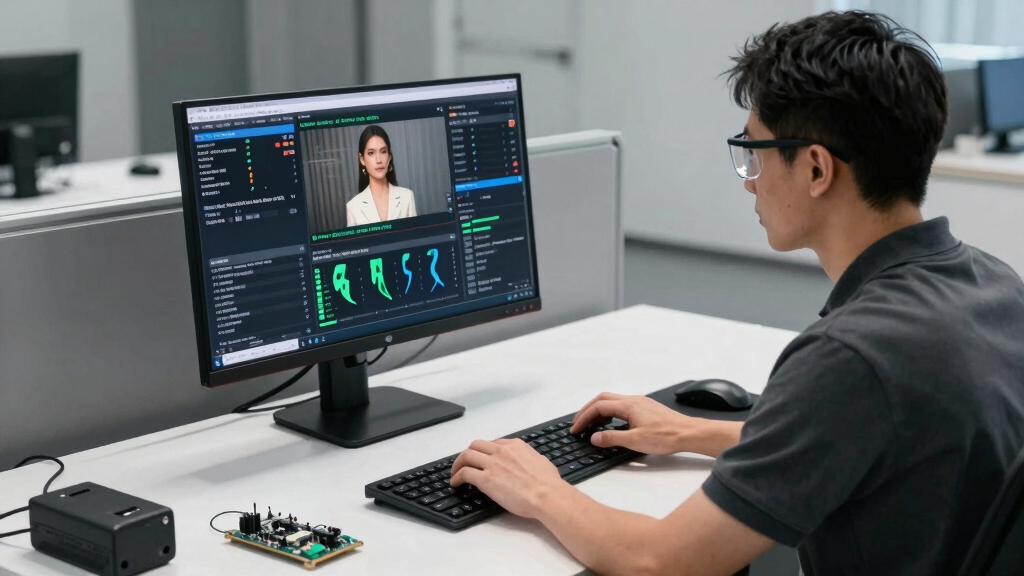
The latest version of CORVUS ISR’s AI tracker decreased identity switches by approximately 42% during public benchmarking. This marks a notable performance gain in synthetic motion tracking tests, with potential implications for real-world applications.
CORVUS ISR’s latest AI tracker model has achieved a 42% reduction in identity switches during public benchmarking using synthetic scenes, according to the company. This improvement highlights a significant step forward in multi-object tracking technology, which is critical for surveillance, defense, and autonomous systems.
The benchmark was conducted using a synthetic scene with perfect ground truth, ensuring precise measurement of tracker performance. The v2 model of CORVUS ISR, which incorporates advanced features like track confirmation, auction-based association, and velocity gating, reduced the number of identity switches from 1,183 to 680 in a dense scenario with 150 movers, and from 8,040 to 4,620 in a configuration with 400 movers. These results were confirmed during live public testing, with the benchmark publicly accessible for independent verification.
Thorsten Meyer, who oversees the benchmarking platform, emphasized that the results are measured against a stricter metric than traditional benchmarks, counting every change of track identity, including re-acquisitions and fragmentations. Despite the improvements, the models still commit thousands of identity errors under stress, but the reduction in switches demonstrates meaningful progress.
Impact of Reduced Identity Switches on Tracking Reliability
The 42% reduction in identity switches indicates a substantial enhancement in tracking stability, which is vital for applications requiring consistent object identification over time. Fewer switches mean more reliable data for surveillance, autonomous navigation, and defense systems, potentially reducing false alarms and improving decision-making accuracy. As synthetic benchmarks are designed to be highly controlled, these results suggest that the new AI model could translate into improved real-world performance, though further testing is needed to confirm this.
As an affiliate, we earn on qualifying purchases.
Background of CORVUS ISR and Benchmarking Efforts
CORVUS ISR is a synthetic demonstration platform designed to evaluate multi-object tracking algorithms using a fully simulated environment with perfect ground truth data. The platform has been used to publish a public benchmark comparing different tracker models, with the latest version (v2) introducing advanced features like auction-based association and velocity gating. Prior versions, including the baseline ‘greedy nearest-neighbour’ model, showed higher identity switch rates, emphasizing the significance of the recent improvements. The benchmark’s transparency and public accessibility aim to foster innovation and objective measurement in the field of motion tracking.
“The 42% reduction in identity switches demonstrates a meaningful step forward in synthetic scene tracking performance.”
— an anonymous researcher
Uncertainties About Real-World Applicability
It is not yet confirmed how well these synthetic scene improvements will translate to real-world scenarios, where variables such as occlusion, sensor noise, and environmental complexity are more challenging. Further testing in operational environments is required to validate the practical impact of the new AI model on live systems.
Next Steps for Benchmarking and Deployment
The developers plan to continue refining the AI tracker and extend testing to more complex and real-world datasets. Independent researchers and industry partners are encouraged to reproduce the benchmark results using the public demo. Future versions may incorporate additional features to further reduce identity errors, with deployment in operational systems contingent on real-world validation.
Key Questions
What does a 42% reduction in identity switches mean for tracking systems?
A 42% reduction indicates a significant improvement in the system’s ability to maintain consistent object identities over time, reducing errors and increasing reliability in surveillance and autonomous applications.
Are these results applicable outside synthetic testing environments?
While promising, the results are from synthetic scenes with perfect ground truth. Real-world conditions are more complex, and further testing is needed to confirm applicability in operational settings.
What are the key features of the v2 AI model that contributed to these improvements?
The v2 model includes track confirmation, three-tier auction association, velocity consistency gating, and confidence-decayed coasting, all designed to enhance tracking stability and reduce identity switches.
Will the benchmark results be available for independent verification?
Yes, the benchmark is publicly accessible; users can run the demo and reproduce the results without signup or NDA, fostering transparency and independent validation.
What are the limitations of the current AI tracker models?
Despite improvements, current models still commit thousands of identity errors under stress, indicating ongoing challenges in complex scenarios that require further development.
Source: ThorstenMeyerAI.com
NFL season / tailgating Picks
team gear
As an affiliate, we earn on qualifying purchases.