🔍 Read the full analysis: Transform Your Workday: 11 Top AI Productivity Tools For 2026 on ThorstenMeyerAI.com
Prime for Young Adults — start your free trial
Fast free delivery, streaming and member deals for eligible 18–24 year olds.
Try it freeAs an affiliate, we earn on qualifying purchases.
TL;DR
This article reviews the top 11 AI productivity tools for 2026, highlighting their features, benefits, and suitability for various users. The tools aim to automate tasks and optimize workflows, with Microsoft Copilot leading the list.
AI productivity software continues to evolve rapidly, with the release of 11 top tools for 2026 that promise to significantly enhance work efficiency. For a detailed overview, see the original analysis. These tools range from broad platforms like Microsoft Copilot to specialized solutions like Claude AI, catering to diverse user needs. Their adoption is expected to reshape daily workflows across industries, making understanding their features and differences essential for professionals seeking a competitive edge. You can explore how AI tools are transforming education in this article.
The list includes Microsoft Copilot as the overall leader for its comprehensive integration with Microsoft 365, enabling automation within familiar apps like Word, Excel, and Outlook. Claude AI is highlighted for its advanced prompt engineering capabilities, appealing to professionals requiring deep customization. Several tools focus on niche needs, such as ADHD management or beginner-friendly automation, demonstrating the growing diversity of AI solutions. Pricing varies widely, from free basic versions to enterprise-level subscriptions, with many products balancing ease of use against customization depth.
According to industry evaluations, the selection criteria for these tools included AI feature breadth, integration ease, user interface, automation flexibility, and overall value. Experts note that the most effective tools are those that seamlessly embed into existing workflows, especially within Microsoft environments, while also offering scalable options for different skill levels and budgets. Consider these top AI workflow tools for business automation. Some solutions are designed specifically for individual professionals, while others target large organizations with complex automation needs.
The 11 picks
- 1
 Claude AI for Microsoft 365 for Beginners: Practical Guide to Mastering Produ…View on Amazon →
 - 2
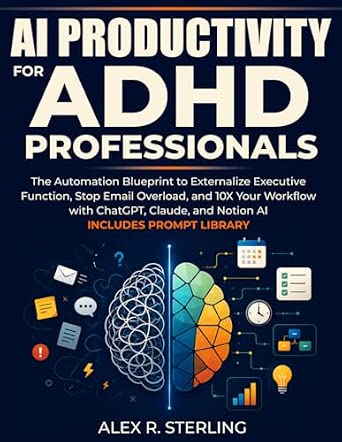 AI Productivity for ADHD Professionals: Automation Blueprint to Externalize E…View on Amazon →
 - 3
 Mastering Claude AI: The Complete Practical Guide to Prompt Engineering, Proj…View on Amazon →
 - 4
 AI Prompts for Productivity and Time Management: 500 Powerful Prompts to Work…View on Amazon →
 - 5
 Master AI for Beginners: Develop Artificial Intelligence Basics, Understand M…View on Amazon →
 - 6
 AI Tools for Everyone: Your Guide to Artificial IntelligenceView on Amazon →
 - 7
 AI-Powered Productivity & Prompt Engineering: A Practical System to Work Smar…View on Amazon →
 - 8
 Microsoft Copilot: A Practical Guide to Using AI in Word, Excel, PowerPoint,…View on Amazon →
 - 9
 AI Productivity Made Simple: How to Use ChatGPT, Automation Tools, Prompts, a…View on Amazon →
 - 10
 AI Tools for Productivity: Microsoft Copilot at Work for BeginnersView on Amazon →
 - 11
 How To Master Generative AI: Master AI Tools, Write Better Prompts, Boost Pro…View on Amazon →
Why These AI Tools Will Reshape Work in 2026
The adoption of these AI productivity tools is set to transform how work gets done, reducing manual effort, minimizing errors, and enabling faster decision-making. For businesses, this means increased efficiency and competitiveness; for individuals, it offers the potential to reclaim time and reduce stress. As AI becomes more embedded in daily workflows, understanding and leveraging these tools will be crucial for staying relevant in an increasingly digital workplace. However, the rapid pace of development also raises questions about data privacy, automation dependency, and skill adaptation, which organizations and users must carefully navigate.
Evolution of AI in Workplace Productivity
Over the past few years, AI-driven productivity tools have shifted from experimental features to essential components of modern work environments. Major tech companies like Microsoft, Google, and emerging startups have launched integrated AI solutions aimed at automating routine tasks, enhancing collaboration, and offering personalized assistance. The 2026 landscape reflects a maturing market, with a focus on user-friendly interfaces, deep integration, and niche applications tailored to specific workflows or needs. This evolution is driven by advances in natural language processing, automation, and user-centric design, making AI tools accessible to a broader range of users.
Earlier in the decade, AI tools faced criticism for complexity and cost, but recent developments have prioritized ease of use and affordability. The integration with existing ecosystems like Microsoft 365 remains a key factor, ensuring that AI tools complement rather than disrupt established workflows. As adoption grows, the emphasis on customization, automation, and support resources continues to expand, shaping a future where AI becomes a standard productivity partner.
Unresolved Questions About AI Tool Adoption and Impact
While these tools are promising, several uncertainties remain. It is not yet clear how widespread adoption will be across different industries and job roles, or how organizations will address concerns related to data privacy, automation dependency, and skill gaps. Additionally, the long-term impact of AI on employment and work dynamics continues to be debated, with some experts cautioning about over-reliance on automation and AI-driven decision-making. The pace of technological change also raises questions about future updates, interoperability, and the emergence of new competitors.
Next Steps for Users and Developers in AI Productivity
In the coming months, expect further enhancements in AI capabilities, especially around deeper integration, personalized automation, and user support. Organizations should evaluate their current workflows and identify areas where AI can deliver measurable improvements. Developers are likely to focus on refining user interfaces, expanding customization options, and addressing privacy concerns. For individual users, the priority should be testing different tools to find the best fit and investing in training to maximize benefits. Policymakers and industry leaders will also need to monitor the evolving landscape to develop standards and safeguards for responsible AI use.
Key Questions
How do I choose the right AI productivity tool for my needs?
Assess your work requirements, tech comfort level, and budget. Prioritize tools that integrate seamlessly with your existing apps, especially Microsoft 365 if you use it. Consider whether you need broad automation or niche features, and evaluate support options to ensure smooth onboarding.
Are free AI productivity tools sufficient for professional use?
Many free options handle basic automation and prompts, suitable for casual tasks. However, for complex workflows, enterprise support, and advanced features, investing in paid plans generally provides better reliability and scalability.
What should beginners focus on when starting with AI productivity tools?
Start with user-friendly, integrated solutions like Microsoft Copilot, and explore tutorials and community resources. Focus on automating routine tasks to build confidence and gradually experiment with more advanced features as you become comfortable.
Source: ThorstenMeyerAI.com
Fall yard work Picks
leaf blowers
As an affiliate, we earn on qualifying purchases.