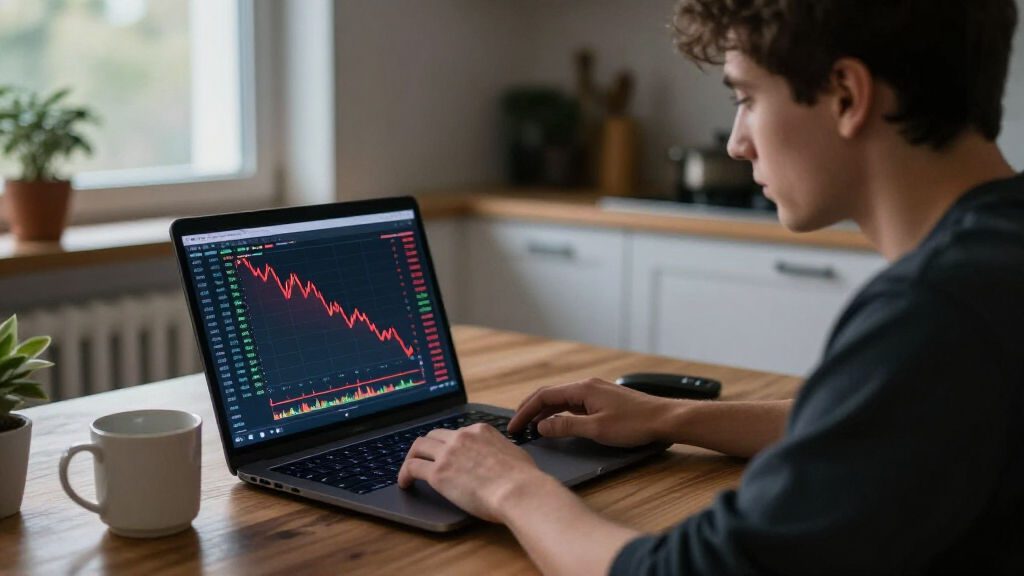

🔍 Read the full analysis: 13,000 Runs Of A Viral “100X Trade” Strategy, With A Losing Result on ThorstenMeyerAI.com

Get the little things that make your day delivered free with Prime
- Fast, free delivery on millions of items
- Prime Video, Amazon Music and more included
- Member-only deals all year
TL;DR
Thorsten Meyer AI says it tested two versions of a viral Polymarket 5-minute crypto trading strategy using simulated money across four coins and about 13,000 market windows. The paired-order version recorded just three double-fills in 9,486 attempts and a reported paper loss of $280; the post-close version also lost on its settled fills. The results are from the publication’s own simulation, not a guarantee of how live trading would perform.
Thorsten Meyer AI reports that a simulated test of a viral Polymarket “100x trade” strategy lost money across roughly 13,000 market windows on BTC, ETH, SOL and XRP. In the publication’s account, the strategy’s key paired-order event—getting both sides of a five-minute market filled at very low prices—occurred just three times in 9,486 attempts, while one tested variation based on buying the apparent winner after the close also lost on its settled fills.
The strategy was inspired by a YouTube video showing trades in Polymarket’s five-minute BTC Up/Down market that reportedly turned $1 into $50, with other examples described as 48x and 100x returns. The source says the transactions were verifiable on PolygonScan. The video’s creator reportedly said the unusual results were rare and that he did not yet have evidence showing whether the approach could be repeated.
For its paired-order test, Thorsten Meyer AI says it placed simulated bids of 2 cents on both Up and Down at the start of a market window. If both sides filled, the publication’s calculation was that the winning side would redeem for $1 per share, producing a profit regardless of the market’s direction. But the strategy depended on both orders filling; a fill on only the losing side could leave the simulated trader holding shares that settled at zero.
Across 9,486 paired attempts, the source reports three double-fills, 22 winner-only fills, 1,297 loser-only fills and 8,162 attempts with no fill. It reports a total paper-trading result of minus $280. In a second test, the system posted bids after the close on the side its price feed indicated had won. It recorded eight fills from 3,482 posts; four fills settled, and the source says all four lost.
13,000 Runs Of A Viral “100X Trade” Strategy, With a Losing Result
Thorsten Meyer AI simulated two versions of a five-minute crypto strategy across BTC, ETH, SOL and XRP. Both versions lost under the test conditions. No real funds were involved.
“The double-fill — the event the entire strategy depends on — happened 3 times in 9,486 attempts.”Thorsten Meyer AI · Reported simulation
Across four crypto assets
Paired-order attempts
From 3,482 posted bids
Settled fills reported as losses
Rare fills, frequent one-sided risk
The first version placed simulated bids of 2¢ on both Up and Down at the start of each five-minute window. The intended payoff required both orders to fill.
The strategy’s key event: both positions could capture the winning payout.
Only the winning side filled in the attempt.
Exposure could settle at zero when only the losing side filled.
Neither simulated order found a fill.
One key event in thousands of attempts
The reported paired-order outcomes show how much more common one-sided fills were than the double-fill the strategy relied on.
Bar lengths use a shared scale against 9,486 attempts. The smallest outcomes are shown with a minimum visible width.
From stale orders to a proposed edge
Five-minute Polymarket crypto markets resolve to Up or Down. The winning side pays $1 per share; the losing side pays nothing.
Bid both outcomes
Post a low-price bid on Up and Down.
Find stale liquidity
Orders left in the book may remain available near the close.
Get both filled
The proposed edge relies on matching both sides cheaply.
Redeem the winner
The winning shares pay $1 each; the losing shares pay zero.
Both tested versions finished negative
The publication says it rebuilt the viral idea in two forms inside Polybot and ran a two-day paper test against live order books.
Bid both sides at window start
2¢ bids on Up and Down. The reported double-fill occurred three times in 9,486 attempts; overall paper result was −$280.
Bid the apparent winner
After close, the system bid on the side its price feed indicated had won. Eight fills came from 3,482 posts.
Four settled fills, four losses
The source says all four settled fills lost. It does not explain the final outcomes of the other four fills.
A simulation is a bounded result
A viral payout can show that a particular trade happened. It does not show how often similar conditions occur or whether they can be captured repeatedly. The YouTube video reportedly showed a $1 trade turning into $50, with other examples described as 48× and 100×.
The creator reportedly said unusual results were rare and that he did not yet have evidence showing whether the approach could be repeated. Thorsten Meyer AI describes its test as a follow-up to that open question.
The result is specific: one publication’s two tested implementations were net-negative under the conditions it measured. It does not prove every version must fail in every market.
The source says its paper-fill model required a real taker to sell into a simulated bid. That attempts to account for available order flow, but it does not establish that all live execution conditions were reproduced.
The supplied account does not include raw trade logs, independent replication or a third-party audit. It also gives limited detail on latency, fees, order sizing, queue position and partial-fill handling.
The source says its price feed sometimes disagreed with Polymarket’s official resolution shortly after close. Without detailed timestamps or a full feed comparison, the precise cause of each post-close loss is difficult to verify.
What the report leaves open
These findings describe a simulation, not a verified live trading record or a guarantee of future performance.
The available material does not fully document latency, fees, order sizing, queue position or partial-fill assumptions.
The post-close test reports four settled losses but leaves the settlement outcomes of four other fills unexplained.
No independent replication or raw trade log is included in the supplied account. Further testing plans are unconfirmed.
From viral example to testable claim
Can a rare, high-return trade happen often enough to overcome the losses incurred while waiting?
- Viral example: a reported trade showed an unusually large multiple.
- Repeatability question: the video creator reportedly described the results as rare.
- Paper test: two strategy versions were simulated across four coins and roughly 13,000 windows.
- Reported outcome: both tested versions lost under the publication’s measured conditions.
What to take away
What was the viral “100x trade”?
A proposed strategy to buy both Up and Down shares cheaply in a five-minute market. Its intended payoff depended on both orders filling.
How often did both paired orders fill?
Three times across 9,486 attempts in the publication’s reported paper test.
Did the simulation use real funds?
No. Thorsten Meyer AI says no real funds were involved at any point.
Does this predict every live result?
No. It reports the outcome of specific simulated implementations and is not financial advice.
Why Rare Fills Matter
The results illustrate the difference between a memorable payout and a repeatable trading method. A trade that returns many times its cost can attract attention, but the outcome depends on how often comparable opportunities occur and on the losses incurred while waiting for them. In this test, the source says the paired strategy’s intended double-fill happened only three times, while loser-only fills were much more frequent.
The report also points to a risk in seemingly low-cost orders: a bid can fill precisely because another trader or automated system is selling into it, but the fill does not guarantee that both sides of a strategy will be matched. The source says its paper-fill model required a real taker to sell into a simulated bid. That approach attempts to account for available order flow, though it does not establish that every live trading condition or execution cost was reproduced.
For readers, the main takeaway is narrower than a claim that every similar trade must fail: one publication’s two-day simulation found these specific implementations unprofitable under its test conditions. It does not establish the strategy’s performance under every market, exchange setting or execution method. The findings do show why isolated screenshots are not enough to establish that a high-return trade can be repeated.
cryptocurrency trading strategy books
As an affiliate, we earn on qualifying purchases.
As an affiliate, we earn on qualifying purchases.
Polymarket’s five-minute crypto markets resolve to one of two outcomes: Up or Down. As described in the source, the winning side pays $1 per share and the losing side pays nothing. The viral trade appeared to exploit stale orders around the market’s close: if someone bought both outcomes cheaply and both orders filled, the winning shares could more than cover the cost of the pair.
The proposed edge rested on stale liquidity—orders left in the book after the outcome had become apparent, which another trader might still be able to buy. The article says the original trade was real, but a verified transaction shows only that a particular trade occurred; it does not by itself show how often the same conditions arise or whether they can be captured consistently.
Thorsten Meyer AI describes this as the fourth installment in an ongoing series and says it rebuilt the strategy in two forms inside Polybot. The paired-switch version placed bids on both sides at the window’s start. The post-close version tried to buy only the side its price feed identified as the winner after the market closed. Both were tested in paper trading, with no real funds involved, according to the publication.
“This is going to take time because this is a rare event… probably I didn’t have anything for you in this video about the results.”
— The YouTuber, as quoted by Thorsten Meyer AI
Limits of the Paper Test
The reported results come from Thorsten Meyer AI’s own simulation; the supplied material does not include independent replication, raw trade logs or a third-party audit of the method. The article says the test ran for two days against live order books, but it does not provide enough detail here to independently assess all assumptions, including latency, fees, order sizing, queue position or how the paper system handled partial fills.
The source also does not establish whether the YouTuber’s cited transactions used the same strategy settings as the reconstruction, or whether the tested conditions would produce the same results at another time. Its post-close test reports eight fills, with four settling and all four losing; the material does not explain the final settlement outcomes of the other four fills. The simulation’s results therefore should not be treated as proof that every version of the idea, in every market condition, will have the same outcome.
The report says its price feed sometimes disagreed with Polymarket’s official resolution when identifying a winner shortly after a market closed. It attributes the losses to settlement timing, but the supplied account does not provide detailed timestamps or a full comparison of the feed and oracle readings. That makes the precise cause of each post-close loss difficult to verify from the information provided.
Further Testing and Verification
Thorsten Meyer AI presents the two-day paper test as a follow-up to the video’s unresolved question about repeatability. The source material does not announce a specific next test date or say whether the publication plans to release raw data, broaden the sample or change the strategy. Those details remain unconfirmed.
Any stronger conclusion would require readers to see more about the test setup and its execution assumptions, as well as results that can be independently checked. The report’s immediate conclusion is that its two tested versions were net-negative under the conditions it measured. It also warns that the test used no real funds and says it is not financial advice; its figures describe a simulation, not a verified account of what a live trader would earn or lose.
Key Questions
What was the viral “100x trade” strategy?
It involved buying both Up and Down shares in a five-minute Polymarket crypto market at low prices. If both sides filled, the winning shares could pay $1 each while the total purchase cost remained low. The strategy depended on both orders filling, which the test says happened rarely.
How many times did the paired strategy succeed?
Thorsten Meyer AI reports three double-fills in 9,486 attempts. It also reports 1,297 loser-only fills, 22 winner-only fills and 8,162 attempts with no fill.
Did the test use real money?
No. The publication says the test used simulated money and that no real funds were involved. Its reported loss of $280 is a paper-trading result.
Why did the post-close version lose?
The source says the system chose a side using a price feed shortly after the market closed, before the final settlement price was locked in. It reports eight fills, four that settled, and losses on all four settled fills. The supplied material does not include enough timing data to independently verify each case.
Does this prove the strategy can never work?
No. The report describes two implementations tested over two days and roughly 13,000 market windows. It reports losses under those conditions, but does not establish results for every possible implementation, market period or execution setup.
Source: ThorstenMeyerAI.com
NFL season / tailgating Picks
team gear
As an affiliate, we earn on qualifying purchases.