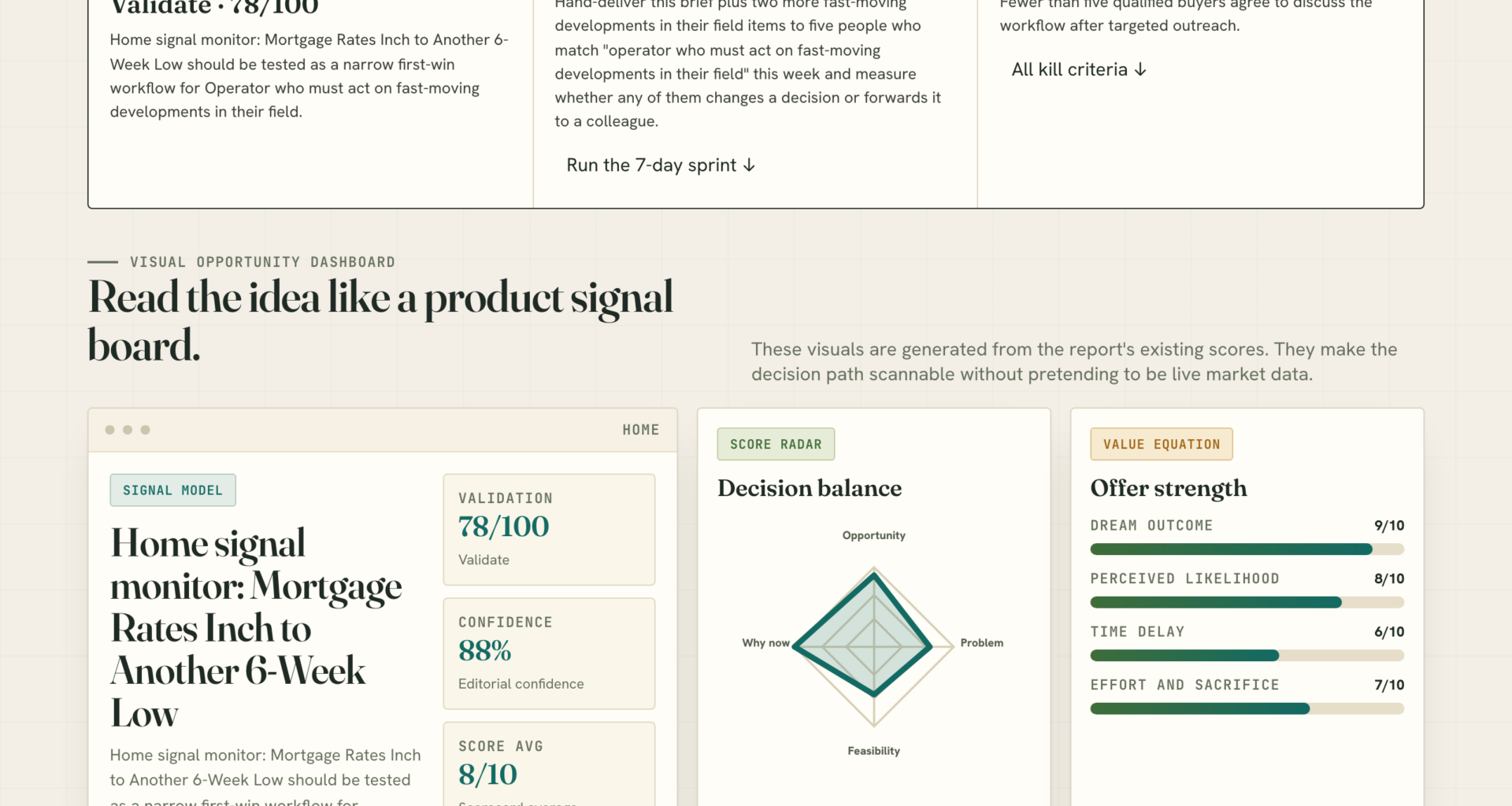

📊 Full opportunity report: Home signal monitor: Mortgage Rates Inch to Another 6-Week Low on IdeaNavigator AI — validation score, market gap, and execution plan.

Get the little things that make your day delivered free — and shop member deals
- Fast, free delivery on millions of items
- Access to Prime Big Deal Days deals on October 6–7
- Prime Video, Amazon Music and more included
TL;DR
Mortgage rates have declined to a new six-week low, reflecting a shift in financial conditions. This development could influence borrowing costs and housing market activity in the near term.
Mortgage rates have decreased to their lowest point in six weeks, according to recent market reports. This drop is significant for homebuyers, homeowners, and the broader housing market, as borrowing costs influence affordability and market activity. The decline comes amid broader economic signals and market adjustments, making it a key development for financial and real estate stakeholders.
Data from mortgage market trackers indicate that the average 30-year fixed mortgage rate has fallen to approximately 6.10%, marking the lowest level since early March. Experts attribute this decline to recent shifts in bond yields and monetary policy expectations, with some analysts noting a stabilization in long-term interest rates.
Market analysts from financial research firms confirm that the downward trend has been steady over the past week, with rates dropping incrementally. This development is being closely watched as it may signal a pause or reversal in the upward trend seen over the past several months, which has impacted home affordability and refinancing activity.
Mortgage lenders and brokers report increased interest from potential homebuyers and refinancers, as lower rates improve borrowing conditions. However, the overall housing market remains cautious amid broader economic uncertainties, including inflation and policy outlooks.
Implications for Borrowers and Housing Market Dynamics
This decline in mortgage rates is significant because it could lead to increased homebuyer activity and refinancing applications, potentially boosting housing market momentum. Lower borrowing costs can improve affordability for prospective buyers, especially in markets where high rates have suppressed demand. Additionally, it may influence future monetary policy decisions, as central banks monitor economic indicators.
For homeowners with variable-rate mortgages, the decrease could lead to lower monthly payments, providing financial relief. However, the overall impact depends on how long rates remain low and whether lenders adjust their terms accordingly. The development is also viewed as a possible signal of broader economic stabilization or a pause in rate hikes by the Federal Reserve.
As an affiliate, we earn on qualifying purchases.
Recent Trends and Market Factors Influencing Mortgage Rates
Over the past few months, mortgage rates have experienced volatility, driven by changes in bond yields, inflation expectations, and Federal Reserve policies. In early 2023, rates surged to levels above 7%, impacting housing affordability and slowing market activity. Recent economic data indicating easing inflation and a more cautious stance by the Fed have contributed to the recent decline in mortgage rates.
Market analysts note that the current rate level aligns with broader financial market trends, including declining Treasury yields and investor sentiment favoring stability. This pattern suggests that the recent rate decrease is part of a broader market adjustment rather than a sudden shift.
Prior to this decline, mortgage rates had been steadily climbing since late 2022, creating challenges for homebuyers and refinancing efforts. The current movement may signal a temporary pause or a turning point, but experts caution that rates could fluctuate further depending on economic developments.
“The decline to a six-week low indicates a potential stabilization in long-term interest rates, which could positively influence housing affordability in the near term.”
— Thorsten Meyer
Unconfirmed Factors and Future Rate Movements
It remains unclear how long mortgage rates will stay at this low level, as economic data and Federal Reserve policies continue to evolve. Analysts warn that external factors such as inflation trends, geopolitical developments, or unexpected economic shocks could reverse the current downward trend. Additionally, lender behavior and market expectations may influence future rate adjustments, making the trajectory uncertain.
Upcoming Data Releases and Market Monitoring
Financial markets will closely monitor upcoming economic indicators, including inflation reports, employment data, and Federal Reserve statements, which could influence mortgage rate directions. Industry experts expect rates to remain volatile in the short term, with potential for further declines or increases depending on macroeconomic developments. Homebuyers and lenders should stay alert to these signals to inform their decisions.
Key Questions
What caused mortgage rates to fall to a six-week low?
The decline is primarily attributed to recent stabilization in bond yields, easing inflation expectations, and shifts in Federal Reserve policy outlooks, which have collectively influenced mortgage lending rates.
How might this rate decrease affect homebuyers?
Lower mortgage rates can make borrowing cheaper, potentially increasing homebuying activity and refinancing. This may improve affordability for many prospective buyers, especially in markets where rates had previously been high.
Will mortgage rates stay low for long?
It is uncertain how long rates will remain at this level, as they depend on evolving economic data, inflation trends, and central bank policies. Market watchers advise staying informed about upcoming economic releases.
Could this trend reverse soon?
Yes, external factors or unexpected economic shifts could cause rates to rise again. Analysts recommend caution and continuous monitoring of market signals.
What should lenders and homeowners do now?
Lenders might consider adjusting their offerings, while homeowners with variable-rate mortgages could see potential savings. Both groups should stay updated on market trends to optimize their financial decisions.
Source: IdeaNavigator AI
Halloween Picks
halloween
As an affiliate, we earn on qualifying purchases.