
📊 Full opportunity report: A Practical Way For SMB Owners To Practice Speaking On Camera on IdeaNavigator AI — validation score, market gap, and execution plan.

Get the little things that make your day delivered free with Prime
- Fast, free delivery on millions of items
- Prime Video, Amazon Music and more included
- Member-only deals all year
TL;DR
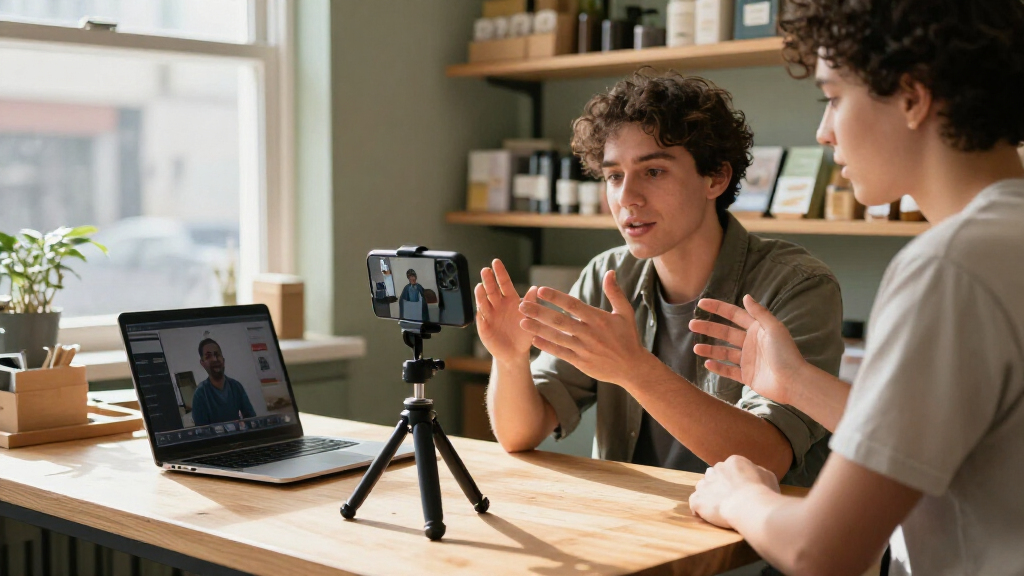
IdeaNavigator AI has outlined a proposed practice app for business owners who know video could help their marketing but feel stuck when recording. The concept includes two-minute exercises and feedback on delivery, but no product launch, trial results or evidence of effectiveness is reported.
IdeaNavigator AI has outlined a proposed app to help small-business owners practice speaking on camera through short, private exercises and feedback on delivery. The concept targets owners who want to use video but freeze or repeatedly retake recordings; it remains a proposal, with no reported launch, completed trial or outcome data.
The suggested product would begin with daily two-minute prompts, starting with reading prepared material and progressing toward speaking more freely. The app could assess pace, filler words, eye line and energy, then show users how their practice changes over time. The proposed end point is recording material for an actual business channel, supported by confidence streaks.
The concept focuses on a particular recording problem: owners may stumble, criticize their own performance or make repeated takes, then avoid publishing altogether. The proposal distinguishes this from general public-speaking instruction, arguing that solo recording is a different setting. That distinction is part of the product rationale, not a finding backed by reported user research in the material provided.
For validation, IdeaNavigator AI proposes a 30-day cohort of 100 business owners, with a waitlist control group. The stated measure would be how many participants publish their first real video by day 45. The proposal also identifies a consumer subscription as a possible revenue model, with a team tier for agencies coaching clients. No pricing, prototype availability or recruitment details are given.
A concept for small business video practice
A Practical Way for SMB Owners to Practice Speaking on Camera
IdeaNavigator AI outlined a proposed app built around short, private exercises and delivery feedback. The idea aims to help owners move from freezing or retaking recordings to publishing a first business video.
The proposed goal
Make the first real video feel like a next step, not a leap.
Practice workflow concept; effectiveness has not been established.Practice the moments that make recording hard
The concept targets owners who see a role for video in marketing but get stuck when recording alone.
01 / Starting point
Private, short repetitions
Daily two-minute prompts would let users rehearse without the pressure of publishing each attempt.
02 / Delivery feedback
Notice speaking habits
Potential feedback areas include pace, filler words, eye line and energy. Scoring accuracy is not yet reported.
03 / Intended outcome
Record real business content
The proposed progression ends with material for an actual business channel, supported by confidence streaks.
A gradual route from reading to recording
The product rationale centers on solo camera practice, which the proposal distinguishes from general public-speaking instruction.
Read a prompt
Start with prepared material for a low-friction first take.
Speak more freely
Progress toward riffing on an idea with less reliance on a script.
Practice delivery
Review suggested cues such as pace, eye line, fillers and energy.
Make a first video
Use the practice to record content for a real business channel.
Test behavior, not just confidence
The suggested validation plan uses a concrete publishing milestone. It is a proposal, with no timetable or commitment reported.
Proposed validation
First videoby day 45
Compare a 30-day practice cohort with a waitlist control and count how many participants publish their first real video.
100 business owners are proposed for the cohort.
A waitlist control group is suggested; recruitment and study procedures are not specified.
Whether participants publish a first business video by day 45.
Video quality, audience growth, sales, or broader marketing impact.
What remains unknown
The concept gives reasons to explore the idea, but it does not provide product or outcome evidence.
Not reported
- App launch, prototype availability or completed trial
- Participant recruitment details or test timetable
- Pricing, subscription terms or agency tier details
- Evidence that feedback improves delivery or publishing
Questions for a future test
- Would owners use the exercises consistently?
- Are pace, eye line and energy feedback accurate and useful?
- How are recordings and user data handled?
- Does practice outperform coaching, courses or solo rehearsal?
Key questions
What the available concept does—and does not—say.
Has the app launched?
No launch is reported. The material describes a proposed product and a possible validation plan.
Who is it for?
Business owners who believe video matters to their business but feel uncomfortable or get stuck recording.
What would users practice?
Two-minute prompts, progressing from prepared reading toward freer speaking, with proposed delivery feedback.
Does it promise better marketing results?
No. The proposed measure is publishing a first video, not views, sales or other business outcomes.
Testing a Route to First Videos
The idea addresses a practical barrier for small firms: a business owner may decide video is useful but still fail to make and publish a recording. If that pattern is common among the intended users, a private practice routine could offer a more focused first step than advice simply to post more often. The proposed outcome—publishing a first video—would measure behavior, not just whether users say they feel more confident.
That distinction matters to owners considering the time and cost of another marketing tool. Feedback on pace or filler words might help users identify habits, but the proposal does not establish that automated scoring improves delivery or leads to more publishing. A controlled test could offer an early indication of whether the workflow helps participants take that next step, while leaving broader business results such as audience growth or sales unaddressed.
Products Worth Considering

Ring Alarm 14-Piece Wireless Security System Kit

Ring Alarm 5-Piece Wireless Security System

Arlo Pro Wireless Security Camera, 2K HDR, 6th Generation, 4-Camera Kit
As an affiliate, we earn on qualifying purchases.
From Video Pressure to Practice
IdeaNavigator AI frames the opportunity around growing pressure on businesses of different sizes to use video in marketing. It also points to multimodal AI as a way to analyze aspects of a recording, including pace, filler words, eye contact and energy, and provide private feedback. These are the concept’s stated reasons for pursuing the product; no market-size figures, technical evaluation or independent evidence is included.
The proposed app sits in the communication-skills training market, but its initial audience is narrower than public-speaking learners generally: business owners who already see a reason to make videos and struggle with recording alone. The suggested progression—from reading a prompt to riffing and then recording real content—makes the first published video the central test of the product idea, rather than a broad promise to improve communication in every setting.
Evidence and Product Details Await
There is no reported app launch or test, so it is not yet known whether business owners would use the exercises regularly, find the feedback useful or publish more videos as a result. The proposal does not say how participants would be recruited, how a waitlist comparison would be run, or what counts as a published video.
It is also unclear how the app would score eye line and energy, how accurate or consistent its feedback would be, and how recordings or user data would be handled. No developer, company launch plan, subscription price or agency-tier terms are identified. The concept also supplies no comparison showing whether these exercises perform better than coaching, existing speaking courses or independent practice.
A Cohort Would Test the Idea
The next proposed step is a 30-day test with 100 owners and a waitlist control, followed by a check on who has published a first business video by day 45. That would provide an initial behavioral measure of the concept, but it would not by itself establish whether the app improves video quality or produces marketing results.
No timetable or commitment to run the cohort is provided. Until a test is conducted and results are reported, the app’s usefulness, demand and commercial prospects remain unverified.
Source: IdeaNavigator AI
Key Questions
Has the camera-practice app launched?
No launch is reported. The material describes a proposed product and a possible validation plan.
Who is the app intended for?
It is aimed at business owners who believe video matters for their business but feel uncomfortable or get stuck when recording.
What would users practice?
The proposed routine uses daily two-minute prompts, moving from reading prepared material toward speaking more freely. The app would offer feedback on pace, filler words, eye line and energy.
How would the idea be tested?
IdeaNavigator AI proposes a 30-day cohort of 100 owners and a waitlist control, measuring how many participants publish a first real video by day 45. No results are available.
Would the app guarantee better marketing results?
No such guarantee or evidence is provided. The proposed test focuses on whether participants publish a first video, not on views, sales or other business outcomes.
Source: IdeaNavigator AI