📊 Full opportunity report: GLP-1 Availability Tracker For Ozempic, Wegovy, And More on IdeaNavigator AI — validation score, market gap, and execution plan.

Get the little things that make your day delivered free — and shop member deals
- Fast, free delivery on millions of items
- Access to Prime Big Deal Days deals on October 6–7
- Prime Video, Amazon Music and more included
TL;DR
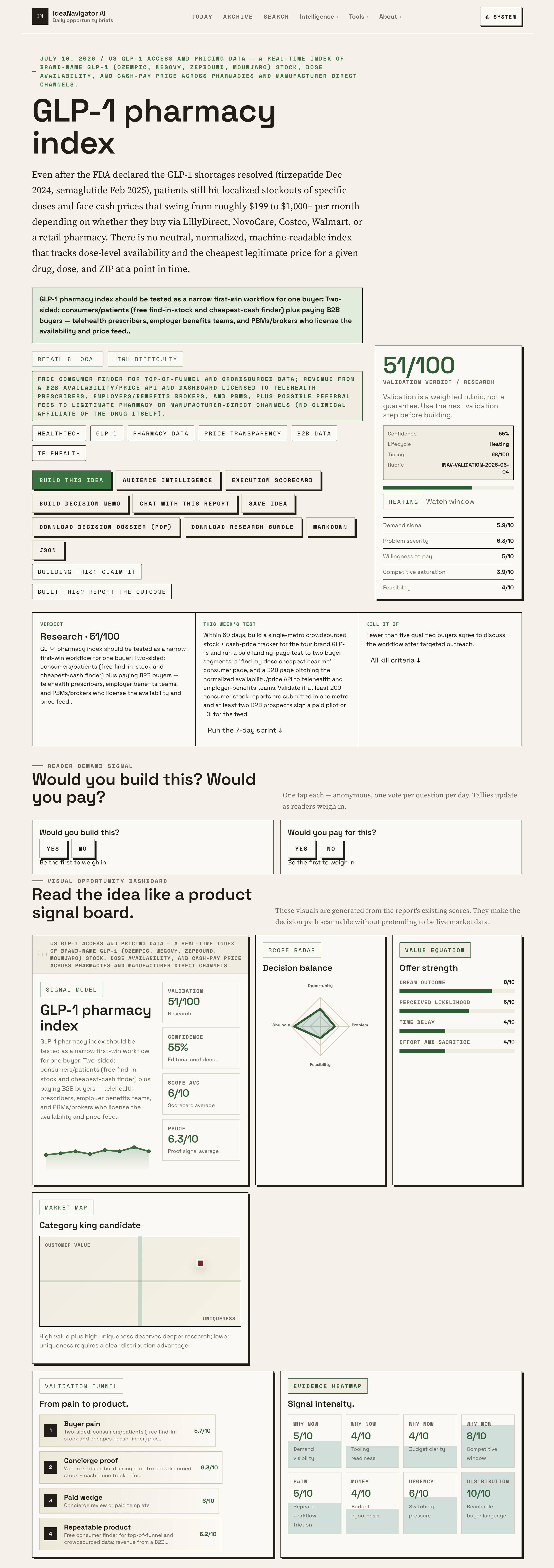
IdeaNavigator AI has outlined a proposed index to help patients find brand-name GLP-1 medicines by dose, location and cash price, with a paid data feed for health care and benefits organizations. The proposal describes a possible 60-day, single-metro test; it does not report that a tracker has launched or that buyers have signed up.
IdeaNavigator AI’s proposal for a GLP-1 pharmacy index describes a tool that would show patients dose-level availability and cash prices by ZIP code, while selling normalized data to health care and employer-benefits buyers. The proposal addresses fragmented prices and localized stock gaps, but reports neither an operating tracker nor a prospective buyer committed to a pilot.
According to IdeaNavigator AI’s proposal, the consumer tool would cover four brand-name medicines: Ozempic, Wegovy, Zepbound and Mounjaro. Users would search by drug, dose and ZIP code to find reported stock and compare cash prices. The proposal says the index could combine public pricing from manufacturer-direct channels such as LillyDirect and NovoCare, cash-pay programs at retailers including Costco and Walmart, and a discount-price layer modeled on services such as GoodRx. It also suggests alerts when a particular dose becomes available.
The proposal says availability reports would initially be crowdsourced, with a single-metro test. It envisions offering the same normalized availability and price data through an API or dashboard to telehealth prescribers, employers and benefits teams, pharmacy benefit managers, and brokers. Its proposed revenue model centers on business subscriptions, with possible referral fees for legitimate pharmacy or manufacturer-direct channels.
IdeaNavigator AI sets out a 60-day validation target: collect at least 200 consumer stock reports in one metro and secure a paid pilot or letter of intent from at least two business prospects. These are targets stated in the proposal, not reported results. The proposal does not identify a selected metro, a development team, signed partners, or a date when consumers could use a service.
Why Dose-Level Access Data Matters
Patients may need a particular strength or dose, so a broad listing that a pharmacy carries a medicine may not answer whether the prescribed dose is available nearby. A timely, dose-specific index could make local gaps easier to spot and help people compare cash-pay options across channels. Its practical value would depend on how often listings are updated and whether reported inventory matches what pharmacies can actually dispense.
IdeaNavigator AI’s proposal bases its business case on buyers needing a clearer view of access and costs. It says employers report GLP-1 medicines account for roughly 20% of pharmacy spending, but provides no survey, time period, or population behind that figure. If accurate for the relevant buyers, the share could make price and supply information useful for benefit planning. The proposal presents no evidence that organizations will pay for the feed or that it would reduce spending.
For patients, a price comparison would need to distinguish a genuine cash price from coverage-dependent costs and explain any eligibility conditions. A low listed price alone does not establish that a medicine is available, appropriate for a particular patient, or covered by insurance. The proposed index is an access and price tool, not a clinical service.
From Shortages to Fragmented Listings
IdeaNavigator AI’s proposal says the FDA declared shortages resolved for tirzepatide in December 2024 and semaglutide in February 2025. It argues that the end of listed shortages did not eliminate local gaps for specific doses. The proposal also points to multiple manufacturer and retail cash-pay channels, which it says can make prices difficult to compare in one place.
The plan describes a market shaped by changing access routes, including compounding deadlines and the launch of manufacturer-direct options. It also refers to the TrumpRx portal in February 2026 as part of the price-channel landscape. The proposal does not provide supporting records or explain how each channel’s prices and stock would be collected; these points are presented as rationale rather than independently documented information about current inventory.
Data Quality and Buyer Demand
IdeaNavigator AI’s proposal describes no live product, pharmacy agreements, price feed, or completed pilot. It remains unclear how frequently prices and inventory would be checked, whether pharmacies would report stock directly, and how the index would label user-submitted reports that may be outdated or incorrect. Dose-level stock can change quickly, so usefulness would depend on data freshness and clear timestamps.
The proposal does not specify which pharmacies or manufacturer programs would participate, how it would verify the cheapest listed option, or whether displayed prices include shipping, membership requirements, or other conditions. Its estimate that GLP-1 medicines represent roughly 20% of employer pharmacy spending is not accompanied by a measurement period or methodology. The proposed consumer reports and buyer commitments remain goals, not confirmed outcomes.
The Proposed 60-Day Test
IdeaNavigator AI describes a next step of testing a consumer finder in one metro while presenting a separate business offer for a normalized availability and price API. The proposal sets thresholds of 200 submitted stock reports and two paid pilots or letters of intent within 60 days. It does not state when the test will begin or name the metro.
If the test proceeds, its results would indicate whether consumers contribute enough reports and whether at least two organizations are willing to commit to the data feed. Until results or a product launch are reported, the index remains a business proposal rather than an available service.
Source: IdeaNavigator AI proposal
Key Questions
Is the GLP-1 availability tracker live?
No launch is reported. IdeaNavigator AI describes a proposed tool and a possible single-metro test.
Which medicines would the proposed tracker cover?
IdeaNavigator AI’s proposal names Ozempic, Wegovy, Zepbound and Mounjaro, with searches organized by medicine, dose and ZIP code.
How would the tracker gather availability and prices?
The proposal says it would combine crowdsourced stock reports with public cash-price information from manufacturer-direct and retail channels. It does not describe pharmacy agreements or a completed data collection system.
What would count as a successful test?
IdeaNavigator AI’s proposed 60-day targets are at least 200 consumer stock reports in one metro and paid pilots or letters of intent from at least two business prospects. These are goals, not achieved results.
Source: IdeaNavigator AI
NFL season / tailgating Picks
team gear
As an affiliate, we earn on qualifying purchases.