
🔍 Read the full analysis: Google’s Haiku-Writing Satellite: A Small Test With Big AI Questions on ThorstenMeyerAI.com

Get the little things that make your day delivered free with Prime
- Fast, free delivery on millions of items
- Prime Video, Amazon Music and more included
- Member-only deals all year
TL;DR
Google says a satellite carrying its TPU chip generated its first response in orbit this week: a haiku produced by the Gemma 4 model. The test is a small early step in Project Suncatcher, Google’s plan to study whether linked, solar-powered satellites could support AI computing; costs, heat, radiation and maintenance remain unresolved.
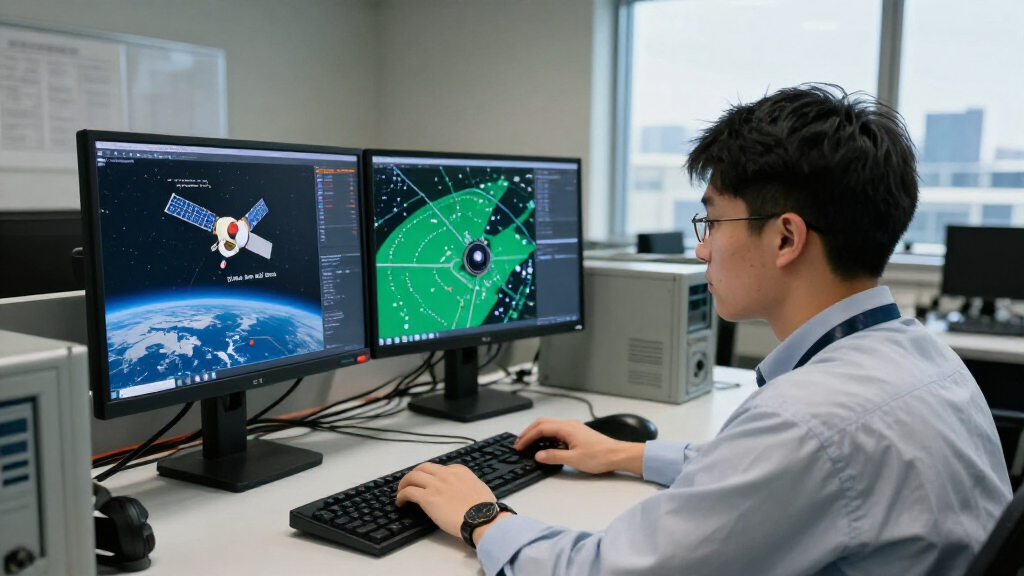
Google says a satellite carrying one of its data-center-class TPU chips generated its first AI response in orbit this week, producing a haiku with the Gemma 4 model as it passed over Svalbard, Norway. The test marks an early milestone for Project Suncatcher, Google’s research into whether solar-powered satellites linked together could one day handle AI computing in space.
The satellite was built with Planet and launched on October 1 aboard SpaceX’s Transporter-18 rideshare mission, according to Google’s account. After several weeks of checks, engineers sent a prompt during a ground-station pass. Google said the satellite returned: “Blue marble below / Data streams in silent grace / Starlight feeds my core.” The company described the exchange as its “Hello World” moment.
According to TechCrunch, the spacecraft carries four TPUs and can generate up to about 1 kilowatt of power. Power and heat limits mean it can operate one chip at a time, in short bursts. Google said engineers also tested space-themed limericks and asked the system to report its technical status. A Google spokesperson told TechCrunch that the satellite was “operating nominally.”
Google calls this the first AI response from a data-center-class TPU in orbit. That wording matters: it does not mean this was the first AI system or AI chip in space. A startup called Starcloud launched a satellite carrying an Nvidia H100 GPU in November 2025; CNBC later reported that it had run models, including Google’s Gemma, in orbit.
Infographic 01 · What flew and what it did
One satellite, four chips, one haiku
Google’s Project Suncatcher prototype is the first test of whether its AI data center chips can work in orbit. Here is what is on board and how it got there.
- 4 Nov 2025Project Suncatcher announcedResearch post and preprint; plan: two prototypes with Planet by early 2027
- 1 Oct 2026Prototype launchedSpaceX Transporter-18 rideshare, built with Planet; peer-reviewed paper in Joule
- Oct 2026About three weeks of commissioningHost and TPU trays powered up, early machine learning tests
- Week of 26 Oct“Hello World”First prompt to Gemma 4; the haiku came down during a pass over Svalbard, Norway
- NextHeat and radiation tests in orbitHow the TPUs behave under thermal stress and real space radiation
- 2027Twin interconnected satellitesMore power and laser links between satellites (Google, TechCrunch)
Scale check
The satellite vs. one power deal on Earth
890 MW = 890,000 kW, about 890,000 times the prototype (my arithmetic). The prototype bar is drawn at a visible minimum; to scale it would be invisible.
Not the first AI chip in orbit
Starcloud-1, launched November 2025 (CNBC)
- Carried one Nvidia H100, a data center GPU
- Trained a small language model in orbit
- Ran Google’s open model Gemma up there in December 2025
- Google’s claim is narrower: the first response from a data center class TPU in orbit
Sources: Google, 30 Oct 2026 · Google, 1 Oct 2026 · Google Research, 4 Nov 2025 · TechCrunch, 30 Oct 2026 · TechCrunch, 1 Oct 2026 · Google and Constellation, 6 Oct 2026 · CNBC, 10 Dec 2025.
Powered by Thorsten Meyer AI
Testing AI Beyond Earth
The immediate result is a modest demonstration: an AI model ran on a Google TPU in orbit and sent an answer back. Its broader importance is that Google is testing hardware and operating conditions for a possible space-based computing system, rather than showing that satellites can already replace terrestrial data centers.
Google’s stated motivation is access to solar energy. Its research says solar panels in a suitable orbit could be up to eight times more productive than on Earth. The company’s proposal would use many satellites connected by laser links so they could work as a coordinated computing cluster. If that approach became practical, it could offer another way to supply power for energy-intensive computing. That remains a possibility under study, not a demonstrated benefit of this prototype.
The scale gap is substantial. The satellite’s reported maximum output is about 1 kilowatt; a nuclear power agreement Google signed on Earth on October 6 adds 890 megawatts, roughly 890,000 times as much capacity. The comparison illustrates how far a small orbital test is from supplying power at data-center scale.
Products Worth Considering

Philips Hue Essential Starter Kit – Bridge and 4 E26 Smart Bulbs

Arlo Pro Wireless Security Camera, 2K HDR, 6th Generation, 4-Camera Kit

eufy Security SoloCam E42 4-Camera Kit, 4K Solar Security Cameras with HomeBase 3
As an affiliate, we earn on qualifying purchases.
From Suncatcher Plan to Orbit
Google introduced Project Suncatcher in a research post and preprint paper on November 4, 2025. The concept is a constellation of solar-powered satellites carrying TPUs and flying close enough to share data over high-speed laser links. Google initially described a learning mission with Planet involving two prototype satellites, then expected by early 2027.
The first prototype reached orbit on October 1, 2026. Google said it had confirmed contact and that the spacecraft was operating as expected; the company also published a peer-reviewed version of its research in the journal Joule that day. The October haiku test came after commissioning checks that included powering up the host computer and TPU trays and running early machine-learning tests.
Google’s research sketches a possible cluster of 81 satellites at about 650 kilometers altitude, flying within roughly one kilometer of one another. The paper reports a bench test of a single optical-link pair reaching 1.6 terabits per second. That laboratory result is not evidence that a full satellite network has yet achieved the same performance in orbit.
““Blue marble below / Data streams in silent grace / Starlight feeds my core.””
Costs and Operating Limits
The test does not answer whether orbital AI computing can compete economically with data centers on Earth. Google’s paper estimates that, at current launch prices, putting one kilowatt of computing capacity in orbit would cost about $14,700 a year in launch costs. It estimates about $810 per kilowatt-year if launch prices fall to $200 per kilogram. The lower figure depends on a future launch-cost assumption, not a price established by this mission; the paper estimates that reaching it would require roughly 1,800 Starship launches.
Important engineering challenges also remain. Heat is difficult to remove in a vacuum, electronics face radiation, and repairs in orbit are limited. Satellites would also need reliable links to one another and to ground stations. Google’s research discusses these issues, but the initial haiku test does not establish how a large constellation would handle them over time. The source material cites about 47,000 tracked objects in orbit; it does not specify the date or tracking basis for that count.
It is also unclear how much useful AI work the prototype can sustain. The source reports short operating bursts and one TPU active at a time, but gives no benchmark for performance against a terrestrial system, no long-duration reliability result and no operating-cost comparison that includes all mission expenses.
Tests Before Satellite Clusters
Google says it will test how the TPUs respond to thermal stress and radiation during continued orbital operations. The company’s next stated milestone is a pair of interconnected satellites in 2027. TechCrunch reported that the planned pair is intended to generate more power and test optical links between spacecraft.
Those tests would address a central part of Suncatcher’s proposal: whether separate satellites can exchange data quickly enough to operate together on computing tasks. Google has not established that the planned pair will achieve the performance needed for a large cluster. For now, the confirmed result is a short AI response from one chip in a small satellite; the cost, durability and network capabilities needed for larger-scale use remain open questions.
Key Questions
What did Google’s satellite do?
Google says the satellite ran its Gemma 4 model on a TPU and returned a haiku during a ground-station pass over Svalbard.
Was this the first AI system in orbit?
No. The source material reports that Starcloud launched a satellite carrying an Nvidia H100 GPU in 2025 and later ran AI models in orbit. Google’s claim is narrower: its satellite produced the first response from a data-center-class TPU in orbit.
Can the satellite run a full data center?
No. The prototype is a small test with up to about 1 kilowatt of power, and it can operate one TPU at a time in short bursts. Google’s proposed network of satellites has not been demonstrated.
Why put AI computing in space?
Google is studying whether satellites with solar panels could access more solar energy and link together for computing. The company’s research outlines the idea, but this test does not show that orbital computing is cheaper or more practical than data centers on Earth.
What happens next?
Google says it will test the chip’s performance under orbital heat and radiation conditions. The next stated milestone is two interconnected satellites in 2027, which are expected to test links between spacecraft.
Source: ThorstenMeyerAI.com