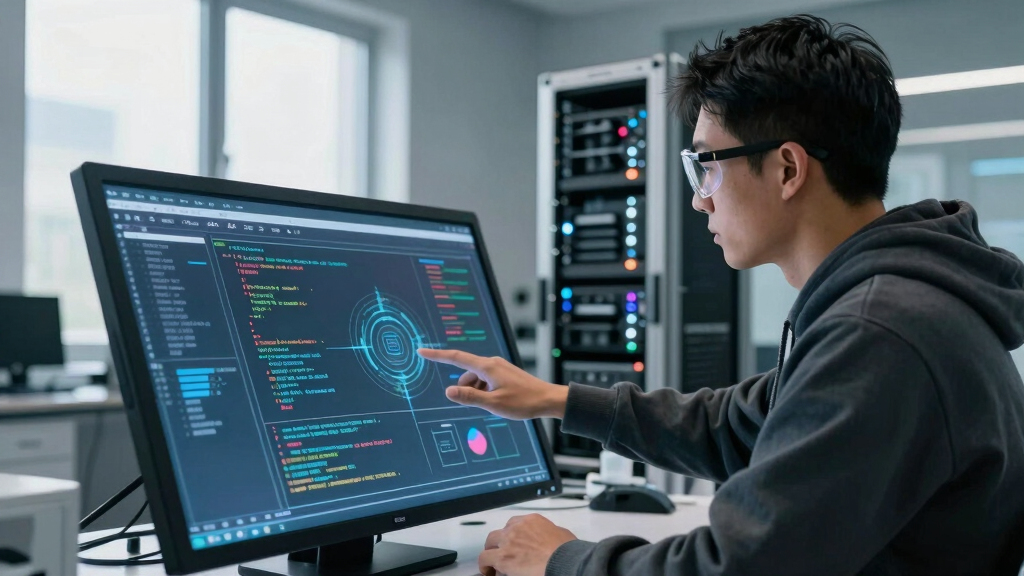

📊 Full opportunity report: Pentagon AI Goes Explicit: The Frontier Labs Move Inside the Classified Stack on ThorstenMeyerAI.com — validation score, market gap, and execution plan.

Get the little things that make your day delivered free — and shop member deals
- Fast, free delivery on millions of items
- Access to Prime Big Deal Days deals on October 6–7
- Prime Video, Amazon Music and more included
TL;DR
The Pentagon has formalized agreements with leading AI companies to deploy advanced AI capabilities within classified environments. This marks a significant step toward integrating general-purpose AI models into military decision-making and operations, raising questions about oversight and ethical boundaries.
The Pentagon has confirmed it is integrating advanced AI models into its classified networks, including Impact Level 6 and 7 environments, marking a decisive shift toward making AI a core part of military operations. This development involves agreements with leading technology firms to deploy general-purpose AI systems for decision support, intelligence analysis, and logistical efficiency, highlighting a move toward an “AI-first” military strategy that could reshape operational capabilities and escalation dynamics.
On May 1, 2026, the U.S. Department of Defense announced agreements with eight major technology companies—Google, Microsoft, Amazon Web Services, Nvidia, OpenAI, Reflection, SpaceX, and Oracle—to embed advanced AI capabilities into classified military environments. These agreements aim to bring large language models and other AI systems into Impact Level 6 and 7 networks, enabling faster data synthesis, situational awareness, and decision-making.
The Pentagon’s AI strategy, previously focused on research and narrow applications, now emphasizes operational deployment at scale. Official reports indicate that over 1.3 million personnel have already used the department’s AI platform, GenAI.mil, generating tens of millions of prompts in five months. Use cases include predictive maintenance, logistics optimization, surveillance analysis, and target identification, signaling a shift from experimental AI to integral operational tools.
Industry sources, including Reuters, report that the Pentagon is expediting vendor onboarding processes for classified environments, reducing approval times from over 18 months to less than three. The goal is decision superiority—accelerating intelligence, planning, and logistics to outpace adversaries. This approach raises concerns about the potential for escalation, as faster decision cycles could influence combat dynamics and risk unintended conflicts.
Implications of AI Integration in Military Operations
This development signifies a fundamental transformation in military capabilities, where general-purpose AI models become embedded in core decision-making processes. It enhances operational speed and efficiency but also raises critical questions about oversight, ethical use, and escalation risk. The move reflects a broader trend of militaries worldwide adopting AI at operational levels, potentially altering the nature of warfare and strategic stability.
AI-powered military decision support systems
As an affiliate, we earn on qualifying purchases.
As an affiliate, we earn on qualifying purchases.
Evolution of Military AI and Industry Shifts
Since 2018, when Google faced internal protests over its involvement in Project Maven, the integration of AI into military systems has been contentious. Google’s 2025 policy update removed explicit bans on weapons and surveillance, enabling deeper cooperation with the Pentagon, including classified agreements. Meanwhile, companies like Anthropic have publicly opposed fully autonomous weapons and mass surveillance, advocating for lawful and ethically constrained AI use, but facing resistance from defense clients.
The Pentagon’s recent move to embed AI models into classified networks marks a significant escalation, moving beyond experimental phases toward operational deployment at scale. Industry dynamics have shifted, with larger contracts and faster onboarding processes reflecting increased government demand for decision-enhancing AI technology.
“The integration of AI into our classified networks is a strategic priority to achieve decision superiority and operational agility.”
— Pentagon spokesperson
“Google’s agreements with the Pentagon include strict contractual and technical safeguards to ensure responsible use of AI in classified environments.”
— Google spokesperson
Unresolved Questions on Oversight and Escalation
It remains unclear how effectively oversight mechanisms will function once AI models operate within classified environments, especially regarding autonomous decision-making and escalation control. The extent to which contractual safeguards prevent misuse or unintended escalation is still being evaluated, and the long-term ethical implications are not fully understood.
Next Steps in Military AI Deployment and Oversight
The Pentagon is expected to continue expanding AI integration across various operational domains, with ongoing assessments of safety, oversight, and ethical compliance. Industry sources suggest that further contractual frameworks and technical safeguards will be developed to address concerns about autonomous decision-making and escalation risks. Public and congressional oversight may also increase as these systems become more operationally embedded.
Key Questions
What types of AI systems are being deployed in classified networks?
Large language models, data synthesis tools, and decision-support systems are being integrated into Impact Level 6 and 7 environments to enhance situational awareness and operational speed.
Are there safeguards to prevent autonomous weapons use?
Agreements include contractual and technical safeguards, but the effectiveness of oversight once systems are operational in classified settings remains uncertain.
How does this change the risk of escalation in conflicts?
Faster decision cycles enabled by AI could accelerate conflict escalation, raising concerns about the potential for misjudgments or unintended engagements.
Will other countries follow suit with similar AI deployments?
Many nations are investing in military AI; this move by the U.S. signals a broader trend toward operational AI integration, though details vary by country.
How might this affect civilian oversight or international norms?
The deployment of AI in classified military systems could complicate oversight and raise questions about compliance with international law and norms on autonomous weapons and surveillance.
Source: ThorstenMeyerAI.com
NFL season / tailgating Picks
team gear
As an affiliate, we earn on qualifying purchases.