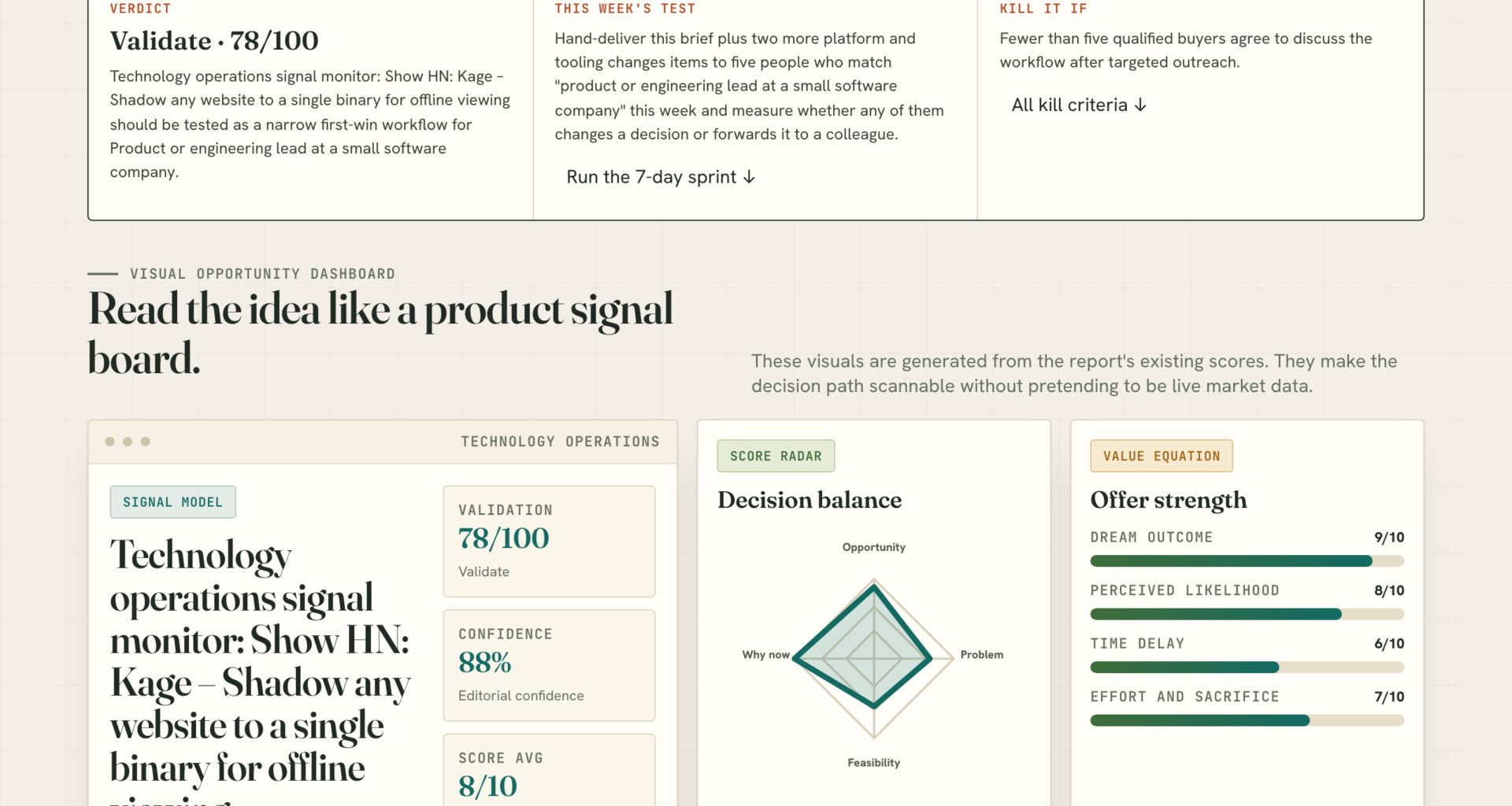

📊 Full opportunity report: Technology operations signal monitor: Show HN: Kage – Shadow any website to a single binary for offline viewing on IdeaNavigator AI — validation score, market gap, and execution plan.

Get the little things that make your day delivered free — and shop member deals
- Fast, free delivery on millions of items
- Access to Prime Big Deal Days deals on October 6–7
- Prime Video, Amazon Music and more included
TL;DR
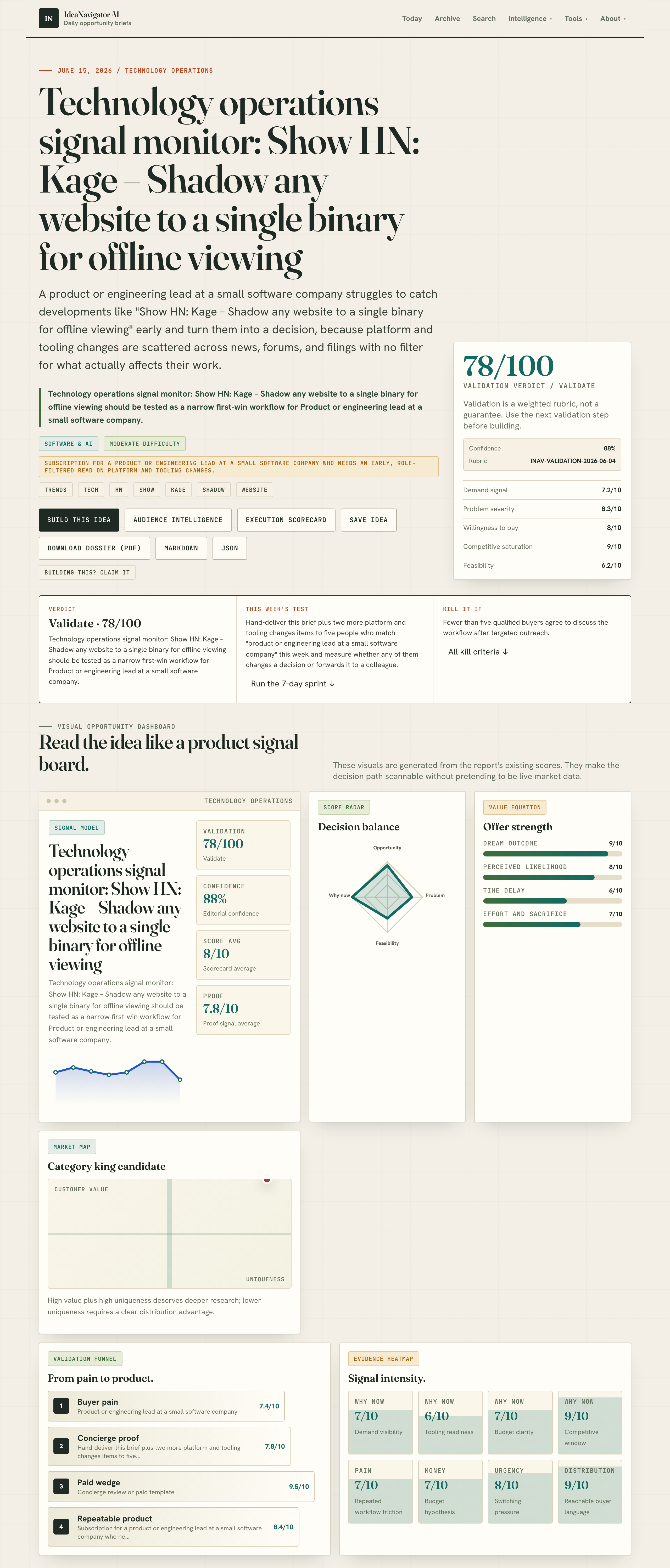
Kage is a newly introduced tool enabling users to convert websites into offline-ready binaries. It aims to help small software company leads stay updated on platform changes quickly. The development was highlighted on Show HN and is currently in early testing.
A new tool called Kage has been introduced on Show HN, enabling users to shadow any website into a single binary for offline viewing. This development is aimed at product and engineering leads at small software companies who need quick, role-specific updates on platform and tooling changes, which are often scattered across various sources.
Kage is designed to monitor websites and online feeds such as Hacker News, filtering for updates relevant to small software teams. It converts these updates into concise briefs that highlight what has changed, why it matters, and recommended actions. The tool is currently in a testing phase, with early feedback focusing on its potential to streamline decision-making for technical leads.
The concept was showcased as a minimal viable product (MVP), emphasizing role-specific filtering and offline accessibility. The aim is to provide a faster, more targeted information stream compared to traditional weekly summaries or broad news aggregators. The initial focus is on platform and tooling updates, which are critical for small teams to adapt quickly.
Implications for Small Software Teams’ Decision-Making
Kage addresses a key challenge for small software companies: staying ahead of rapid platform and tooling changes without sifting through scattered sources. By providing role-specific, offline-ready summaries, it could enable teams to respond faster, reduce decision delays, and improve agility. Its success could influence how technical updates are consumed in small organizations, emphasizing immediacy and relevance.
As an affiliate, we earn on qualifying purchases.
Rapid Growth of Role-Filtered Monitoring Tools
The idea of role-specific monitoring tools has gained traction as platforms like Hacker News surface critical updates at high speed. Currently, small teams rely on manual filtering or broad news feeds, which can delay response times. The introduction of Kage reflects a broader trend toward automation and customization in technology operations monitoring, especially for small firms needing quick insights.
This development follows an increasing demand for tools that filter relevant information efficiently, as platform changes accelerate and impact decision timelines. Early testing and feedback will determine its viability for wider adoption.
“Kage aims to be a role-specific filter that turns scattered platform updates into actionable briefs for small teams.”
— an anonymous developer
Unconfirmed Aspects of Kage’s Deployment
It is not yet clear how widely Kage will be adopted beyond the initial testing phase. The effectiveness of its filtering capabilities and offline functionality in diverse real-world scenarios remain to be validated. User feedback and further development will determine its future scope and integration options.
Next Steps for Kage’s Development and Adoption
Developers plan to expand testing by delivering the brief to small groups of product and engineering leads and measuring whether it influences decision-making or is forwarded within teams. Further iterations will focus on refining filtering accuracy and enhancing offline capabilities. Broader rollout and integration with existing tools are expected if initial feedback is positive.
Key Questions
How does Kage differ from existing monitoring tools?
Kage specifically shadows websites and online feeds into a single offline binary, focusing on role-specific filtering of platform and tooling updates, unlike broader monitoring or news aggregation tools.
Is Kage available for public use?
Currently, Kage is in a testing phase and not yet publicly available. It is being tested with select users to refine its features.
What platforms or feeds does Kage monitor?
Initial focus is on sources like Hacker News, with potential expansion to other developer and platform update channels based on user needs.
Can Kage operate offline permanently?
Yes, one of its key features is converting updates into a single binary that can be accessed offline, enabling quick reference without internet access.
What is the primary benefit for small software teams?
Kage aims to reduce decision latency by delivering role-filtered, relevant updates quickly and offline, helping teams respond faster to platform changes.
Source: IdeaNavigator AI
NFL season / tailgating Picks
team gear
As an affiliate, we earn on qualifying purchases.