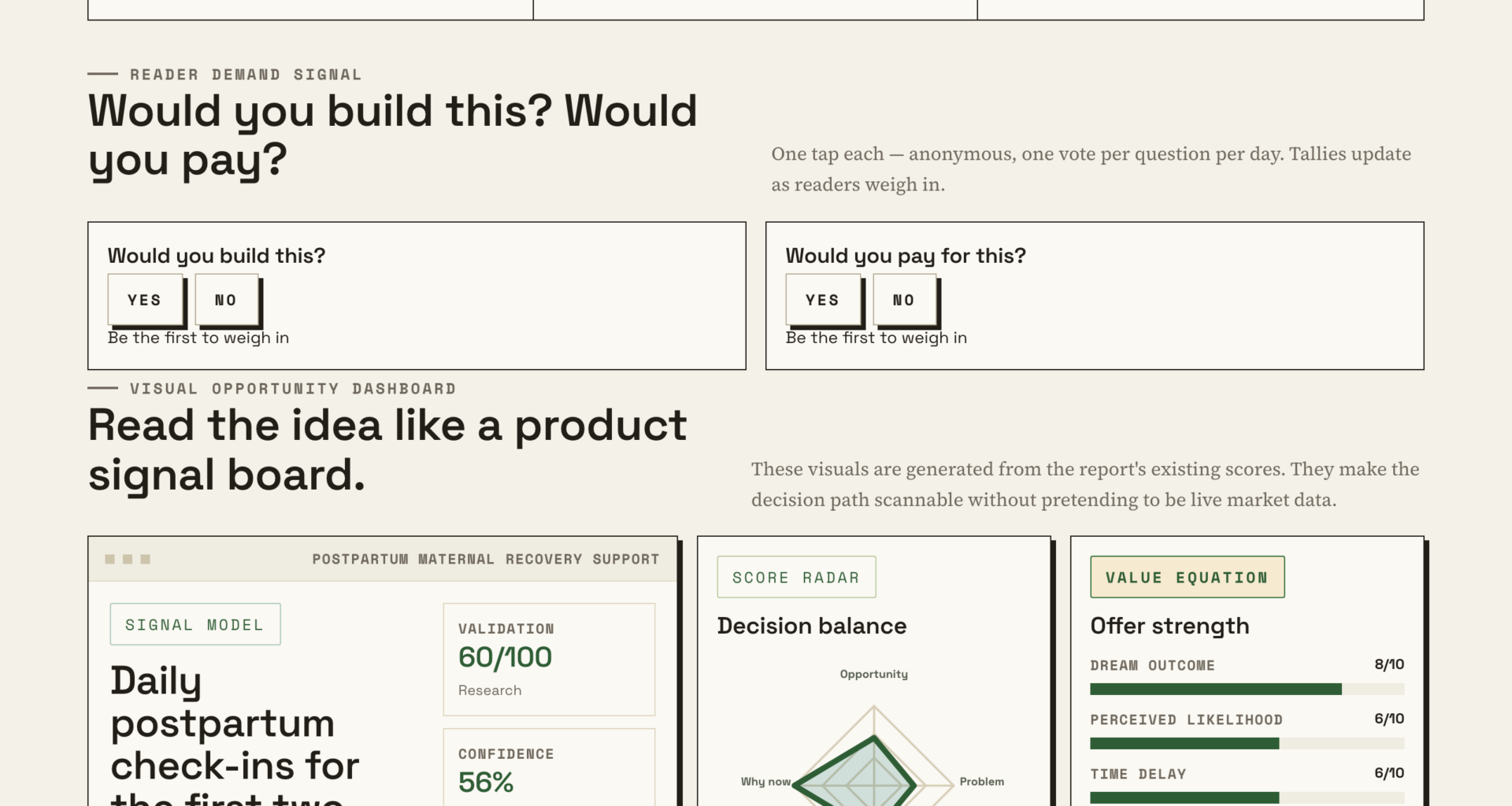

📊 Full opportunity report: Postpartum Recovery Simplified: Daily Check-ins At Home on IdeaNavigator AI — validation score, market gap, and execution plan.
TL;DR
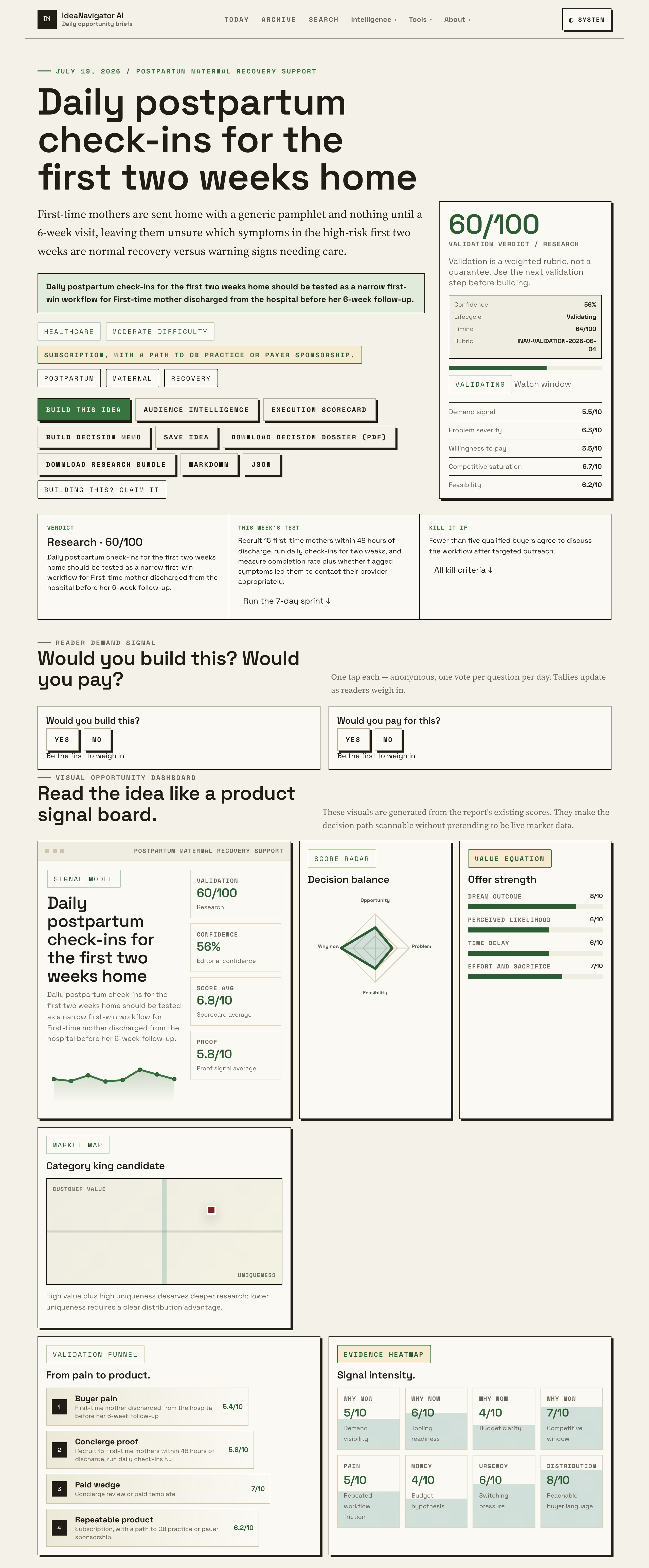
A pilot program is evaluating daily at-home postpartum check-ins for first-time mothers discharged early. The goal is to identify recovery issues sooner and improve outcomes. The initiative is currently in testing with 15 participants.
A new pilot program is testing daily postpartum check-ins at home for first-time mothers discharged before their 6-week follow-up. The initiative aims to address gaps in postpartum care and improve early detection of complications, which can be life-threatening or lead to long-term health issues.
The program involves onboarding new mothers with a recovery profile built from delivery details, feeding method, and mental health baseline. During the first two weeks postpartum, mothers receive daily targeted check-ins via their smartphones, which surface personalized recovery tips and prompt them to contact healthcare providers if specific symptoms are flagged.
This approach was developed in response to concerns raised by maternal health campaigns about the high-risk period immediately after birth, during which many women receive minimal guidance beyond a generic pamphlet. The current standard practice often leaves mothers uncertain about which symptoms warrant medical attention.
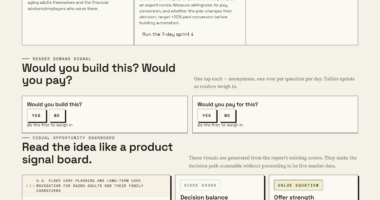
Participants in the pilot are first-time mothers discharged early, with the goal of validating whether daily check-ins increase appropriate contact with healthcare providers and improve recovery outcomes. The program is designed to be a subscription service, potentially sponsored by OB practices or health payers, and aims to demonstrate its effectiveness through measures such as completion rates and symptom-triggered provider contact.
Potential Impact on Postpartum Care Quality
This initiative could significantly improve postpartum care by providing personalized, timely support during the critical first two weeks after discharge. Early detection of warning signs could reduce emergency visits, prevent complications, and support maternal mental health. If successful, it may lead to a shift in standard postpartum follow-up practices, especially for mothers discharged early.

Frida Mom Belly Binder, Postpartum Essentials for Natural and C-Section Recovery, Adjustable Compression Wrap, After Birth Brace, Abdominal Band, 9" High
- Postpartum recovery support: Adjustable 3-point compression technology
- Supports C-section and vaginal recovery: Stabilizes muscles and reduces swelling
- Customizable compression fit: Triple-strap design for personalized support
As an affiliate, we earn on qualifying purchases.
As an affiliate, we earn on qualifying purchases.
Addressing the Postpartum Care Gap
Current postpartum care often involves minimal contact until the 6-week check-up, leaving a high-risk period unmonitored. Maternal health campaigns have highlighted this gap, emphasizing the need for more immediate support. Smartphones and digital health tools now make daily check-ins feasible, offering a practical solution to bridge this care gap. Prior efforts have focused on in-person visits or telehealth, but continuous daily engagement remains relatively unexplored.
The pilot builds on emerging trends toward personalized digital health interventions and aims to validate their effectiveness specifically in postpartum recovery support.
“Daily check-ins could transform postpartum recovery by catching warning signs early and reducing unnecessary hospital visits.”
— an anonymous researcher
Uncertainties About Implementation and Outcomes
It is not yet clear how effective daily check-ins will be in prompting appropriate provider contact or improving recovery outcomes. The pilot is still in early stages, with only 15 participants recruited, and results are pending. There are also questions about user engagement, adherence, and the scalability of the approach across diverse populations.
Further data is needed to confirm whether this model can be integrated into standard postpartum care practices and whether it will be cost-effective for providers and payers.
Next Steps for Validation and Scaling
The pilot will run for two weeks with the initial cohort, measuring completion rates, symptom alerts, and subsequent provider contacts. Results from this trial will inform adjustments to the check-in protocol and platform usability. If positive, plans include expanding the program to larger groups and conducting randomized controlled trials to evaluate its impact on maternal health outcomes. Long-term, the initiative aims to establish a new standard for postpartum follow-up that leverages digital health tools.
Key Questions
How does the daily check-in system work?
Participants receive daily prompts via their smartphones that ask about specific recovery symptoms and mental health status. Based on their responses, the system provides tailored advice and alerts healthcare providers if concerning symptoms are reported.
Who is eligible to participate in this pilot?
First-time mothers who are discharged from the hospital before their 6-week postpartum visit are eligible. The program targets those at higher risk during the early recovery period.
Will this be available to all new mothers?
Not yet. The program is currently in a testing phase with a small sample. Future expansion depends on pilot results, cost-effectiveness, and integration feasibility.
What are the benefits of daily check-ins over traditional postpartum care?
Daily check-ins aim to catch warning signs early, reduce emergency visits, and provide personalized support, addressing the gap between hospital discharge and the 6-week follow-up.
How will this program be funded?
The initial model proposes a subscription fee, with potential sponsorship from OB practices or health payers, to sustain ongoing support and scale-up.
Source: IdeaNavigator AI