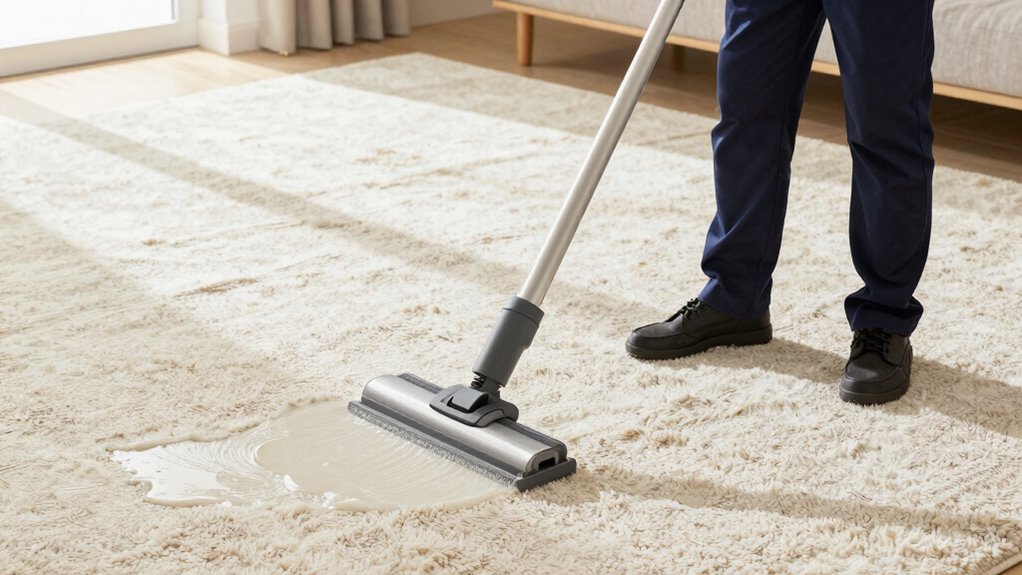

To speed up dry times like pros, focus on efficient vacuuming to remove as much moisture as possible, then improve airflow with fans or open windows. Use environmental controls like lowering humidity and keeping the room warm, but avoid excess heat. Proper equipment and techniques matter—don’t over-wet, and guarantee furniture isn’t trapping moisture. Stay tuned for more tips to cut drying time even further and keep your carpet in top shape.

Get the little things that make your day delivered free — and shop member deals
- Fast, free delivery on millions of items
- Access to Prime Big Deal Days deals on October 6–7
- Prime Video, Amazon Music and more included
Key Takeaways
- Use high-powered vacuums with strong suction to remove maximum moisture and speed up drying.
- Increase airflow with strategically placed fans and open windows to accelerate evaporation.
- Maintain low indoor humidity levels (below 50%) for faster moisture release.
- Employ moisture meters to monitor drying progress and prevent over-wetting.
- Minimize furniture and objects on the carpet to allow unobstructed airflow and quicker drying.
Why Quick Carpet Drying Matters
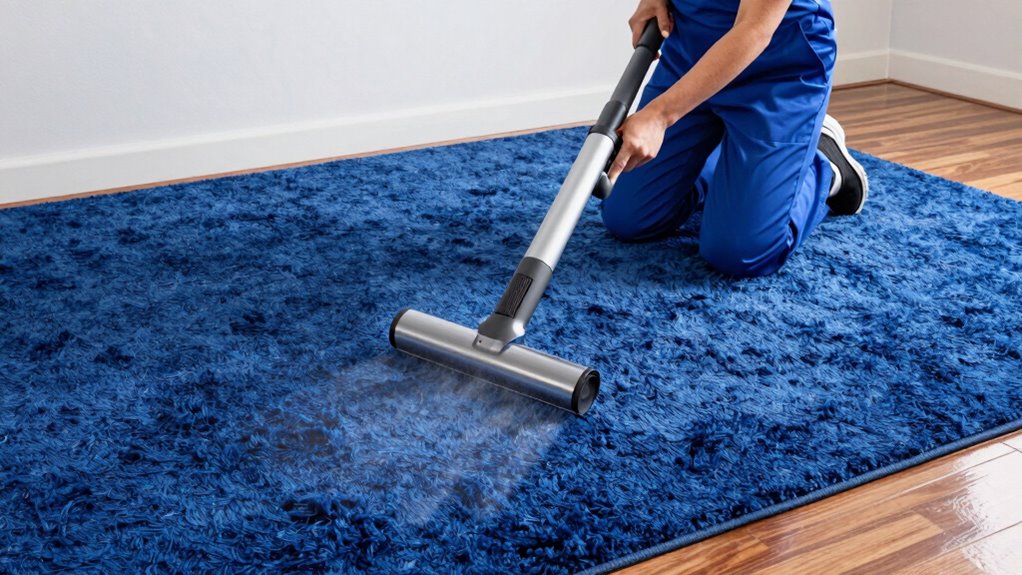
Quick carpet drying is essential because it prevents mold and mildew growth that can develop within 24 to 48 hours of excess moisture. When your carpet stays damp, it risks damaging the fiber texture, leading to a rougher feel and reduced comfort. Additionally, slow drying can compromise stain resistance, making it easier for stains to set permanently. By drying your carpet quickly, you help preserve the carpet’s original fiber quality, maintaining its softness and appearance longer. Speedy drying also minimizes the chance of odors and discoloration, keeping your space fresh. Furthermore, proper drying techniques can help prevent moisture-related issues that may compromise indoor air quality. Using advanced drying equipment can significantly improve drying times and efficiency. Proper drying techniques also help prevent dampness problems, which can lead to long-term damage if left unaddressed. Employing proper ventilation during the drying process can help circulate air and speed up moisture removal. Overall, swift drying not only protects your carpet’s look and feel but also extends its lifespan, ensuring you get the most out of your investment.
What Affects How Fast Your Carpet Dries
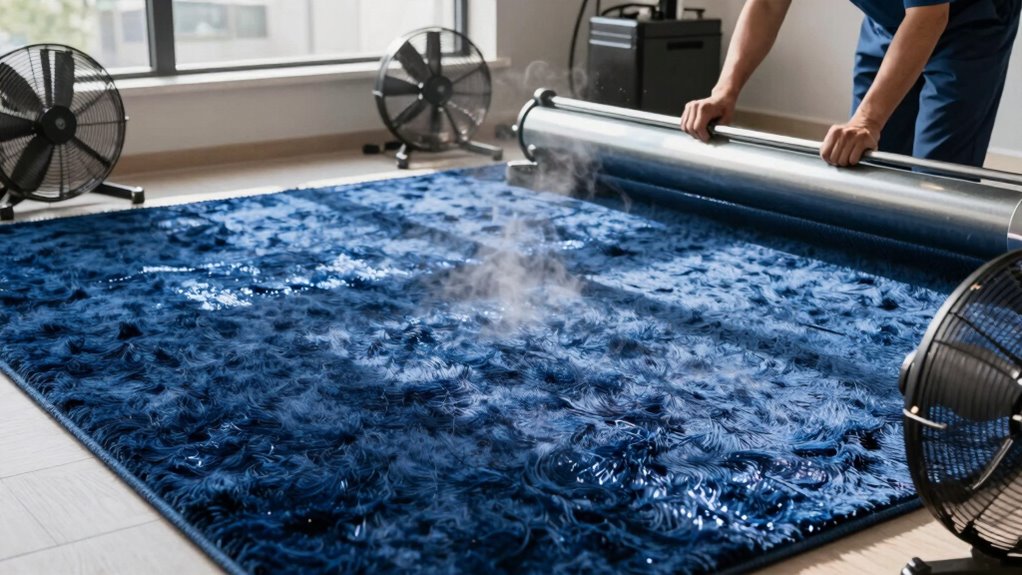
The speed at which your carpet dries depends on several factors you can influence. The type of carpet material, how well you vacuum beforehand, and the room’s humidity and temperature all play a role. Understanding these elements helps you get faster drying times and better results. Additionally, digital content formats can offer useful tips and tutorials to optimize your carpet drying process. Being aware of carpet material properties allows you to choose the best cleaning and drying methods for your specific carpet type. Monitoring air circulation can further enhance drying speed by reducing moisture buildup, especially when using proper ventilation techniques. Recognizing climate conditions can also help you plan your cleaning routine for optimal drying times and prevent issues like mold growth.
Carpet Material Impact
Different carpet materials can markedly influence how quickly your carpet dries after cleaning. High fiber resilience means the fibers bounce back quickly, allowing moisture to evaporate faster. For example, wool carpets typically dry faster because of their natural resilience. Stain-resistant carpets often contain treatments that repel water and dirt, reducing moisture retention and speeding up drying times. Additionally, incorporating advanced drying techniques can further decrease your carpet’s dry time. The use of airflow optimization can significantly improve moisture evaporation rates. Conversely, plush or dense carpets with low resilience trap more water within their fibers, prolonging drying. The material’s density also affects airflow and moisture evaporation. Additionally, eco-friendly disposal methods can help reduce environmental impact once your carpet cleaning is complete. Recognizing the fiber type and stain resistance properties of your carpet helps you anticipate drying times more accurately. Choosing the right material can make a significant difference in how quickly you can walk on your carpet after a thorough cleaning. Being aware of the fiber resilience can help you select a carpet that dries faster and minimizes downtime.
Vacuuming Effectiveness Level
Vacuuming effectiveness plays a crucial role in how fast your carpet dries after cleaning. When you maximize vacuum efficiency, you remove more moisture and loosen debris that can trap water. Strong suction power is essential because it pulls out excess water from deep within the fibers, reducing the overall drying time. If your vacuum has weak suction, residual moisture stays trapped, prolonging the drying process. To improve results, ensure your vacuum is well-maintained, with clean filters and no blockages. Using a vacuum with high suction power will help extract as much water as possible during pre-cleaning, setting the stage for faster drying after the deep clean. Additionally, understanding the importance of contrast ratio can help you evaluate how well your projector displays dark scenes, making your home cinema experience more immersive. Moreover, selecting the right vacuum attachments can further enhance water extraction efficiency, leading to quicker drying times. Ensuring proper vacuum technique by overlapping passes and applying consistent pressure can also significantly impact how effectively water is removed, ultimately leading to quicker, more efficient drying. Incorporating appropriate airflow adjustments can further accelerate the drying process by promoting better evaporation of residual moisture. Recognizing the role of air purifier maintenance can also contribute to cleaner air in your space, supporting a healthier environment during the drying process.
Humidity and Temperature
Humidity and temperature levels considerably influence how quickly your carpet dries after cleaning. High humidity slows evaporation, making your carpet stay damp longer, so humidity control is essential. Keep indoor humidity below 50% by using dehumidifiers or improving ventilation. Temperature regulation also plays a key role; warmer air promotes faster drying, but avoid excessive heat that could damage fibers. Maintain a consistent, moderate temperature to optimize drying time. Using fans to circulate air helps remove moisture efficiently. If the environment is too humid or too cold, your carpet will take longer to dry. Proper humidity management and temperature regulation ensure a faster, more efficient drying process, reducing the risk of mold or mildew and restoring your carpet’s fresh, clean feel quickly. Additionally, monitoring air circulation can significantly enhance drying speed and prevent stagnation of moist air. Understanding how climate conditions impact evaporation can help you better control the environment for optimal drying, especially by adjusting indoor humidity levels. Controlling environmental factors is crucial for achieving the best drying results efficiently.
Top Tips for Speeding Up Carpet Drying

To speed up your carpet drying process, focus on increasing air circulation and airflow in the room. Open windows and doors, and use fans to push air across the surface. If pet stains are involved, ensure you’ve thoroughly extracted moisture from the affected area, as pet stains often seep into the carpet padding, prolonging drying time. Removing excess moisture from the padding helps prevent mold growth and reduces overall drying time. Use a combination of fans and dehumidifiers to pull moisture out of the air and carpet fibers. Elevate furniture to allow better airflow underneath. Keep the room well-ventilated, and avoid walking on the damp carpet to prevent re-soaking. Additionally, selecting carpets with low comogenic ratings can help reduce residue buildup that traps moisture and extends drying times. Paying attention to moisture content levels in the carpet can further optimize drying efficiency. Regularly monitoring moisture levels with a moisture meter ensures your carpet is sufficiently dry before use, further improving drying results. These tips help you achieve faster, more efficient drying results.
Best Cleaning Products for Faster Drying
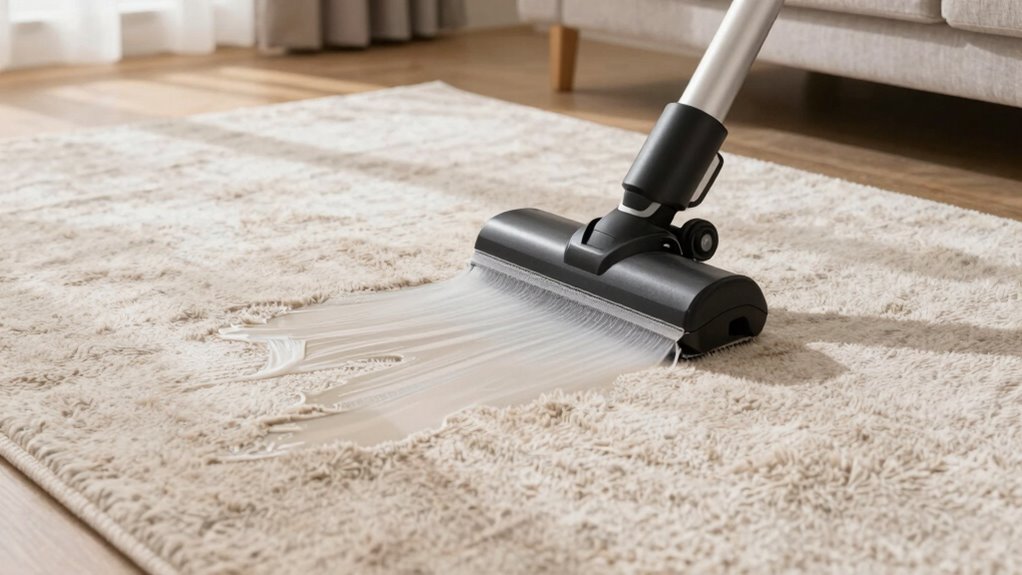
Choosing the right cleaning products can markedly speed up your carpet’s drying time. Look for fast-acting formulas that break down dirt quickly and reduce moisture retention. Eco-friendly solutions also help, as they clean effectively without leaving behind residues that can delay drying.
Fast-Acting Formulas
Fast-acting carpet cleaning formulas are designed to cut down drying time considerably, so you can enjoy fresh, clean carpets sooner. These formulas work quickly to lift stains and dirt, reducing the moisture left behind. They often contain specialized ingredients that enhance stain removal without harming your carpet’s color or causing fading. This means you get effective cleaning results without sacrificing vibrancy. Plus, their rapid evaporation helps prevent mold and mildew growth, further speeding up the drying process. When choosing a fast-acting formula, look for products that balance quick drying with powerful stain removal. This way, you’ll enjoy spotless carpets without long wait times, and your colors stay vibrant, ensuring your carpets look fresh and new in less time.
Eco-Friendly Solutions
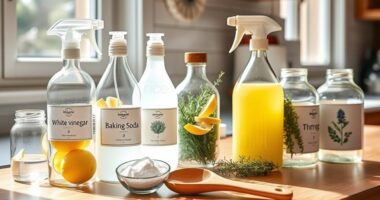
Eco-friendly solutions are gaining popularity because they effectively clean your carpets while minimizing environmental impact. Using eco-friendly detergents ensures your cleaning process is safe for your family and the planet. These products are often biodegradable solutions that break down quickly, reducing pollution and residue left behind. When you choose biodegradable solutions, you help preserve natural resources and avoid harsh chemicals commonly found in traditional cleaners. Plus, eco-friendly options tend to dry faster because they don’t leave behind sticky residues that trap moisture. By opting for these sustainable products, you promote healthier indoor air quality and a cleaner environment. Incorporating eco-friendly detergents into your carpet cleaning routine not only delivers excellent results but also supports eco-conscious practices for faster dry times and a greener footprint.
How Airflow and Ventilation Help Dry Carpets Quickly
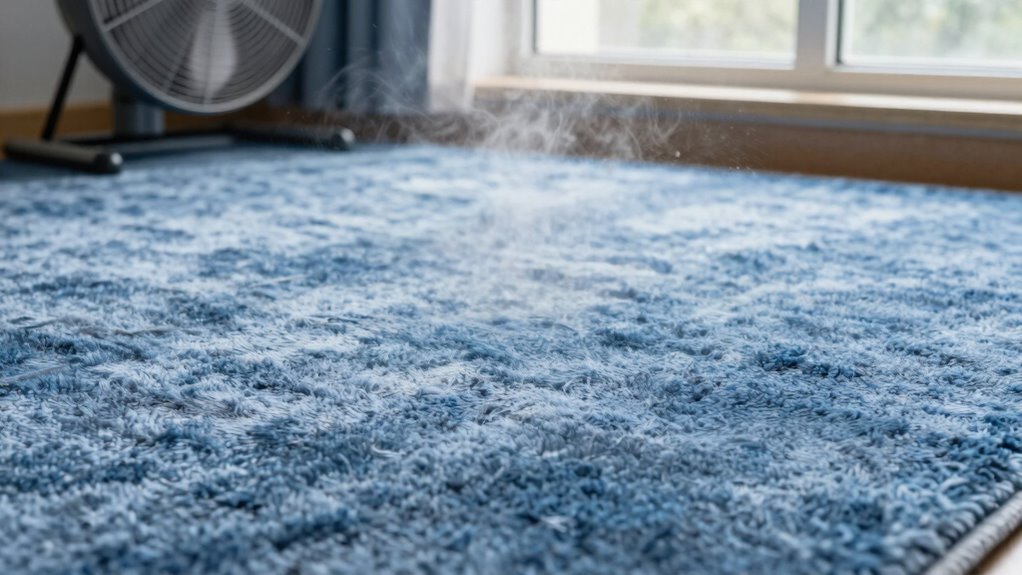
Proper airflow and ventilation are essential for drying carpets quickly after cleaning. You can achieve this through effective airflow optimization, which involves increasing air circulation to speed up evaporation. Using fans strategically directs airflow across the carpet surface, helping moisture escape faster. Ventilation strategies, like opening windows and doors, allow fresh air to replace damp air, reducing humidity levels indoors. The key is to create a continuous flow of air that pulls moisture out of the fibers. Avoid blocking vents or covering the carpet with furniture, as these can trap dampness. By improving airflow and ensuring proper ventilation, you considerably reduce drying time, preventing mold growth and lingering odors. Implementing these simple steps makes your carpet dry faster and ensures a cleaner, fresher result.
Essential Equipment to Reduce Drying Time
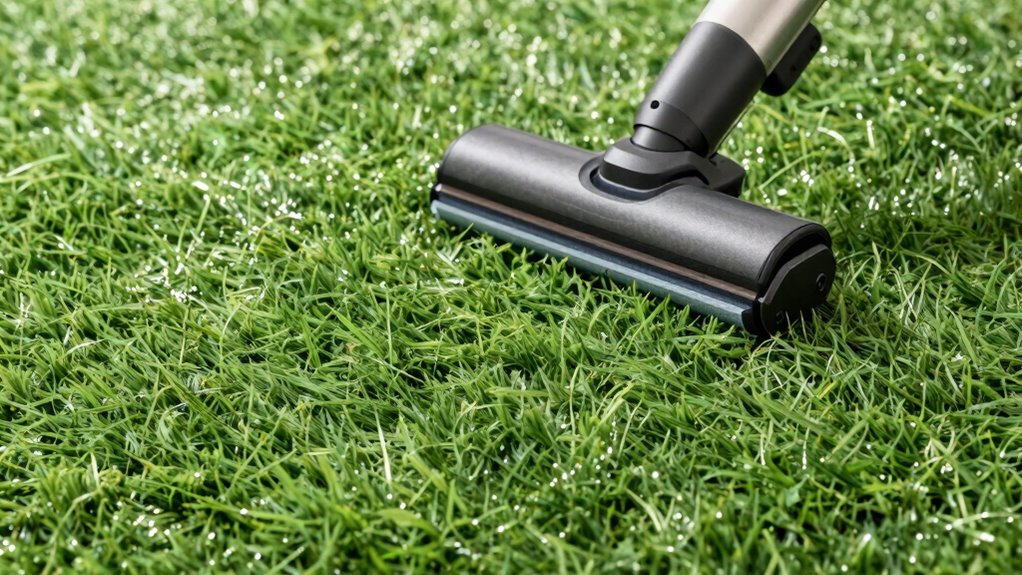
Using the right equipment can considerably cut down your carpet drying time. First, ensure your vacuum has strong vacuum power to remove as much moisture as possible during cleaning. This step prevents excess water from lingering, speeding up the drying process. Second, use drying mats strategically placed on high-traffic areas; these mats absorb residual moisture and promote faster drying. Third, consider investing in high-quality fans or air movers to increase airflow across the carpet surface. These devices help accelerate evaporation, especially when combined with proper ventilation. Combining powerful vacuums with effective drying mats and enhanced airflow guarantees your carpet dries quickly and evenly, reducing the wait and preventing mold or odor issues. Proper equipment is key to efficient, professional-quality results.
Common Mistakes That Slow Down Drying and How to Avoid Them
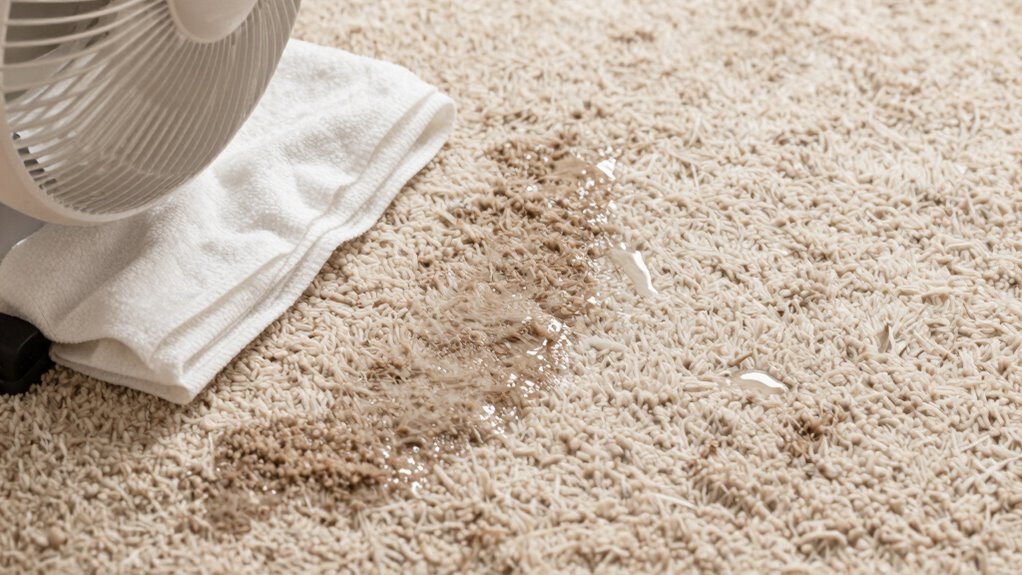
One common mistake that slows down carpet drying is leaving furniture or objects on the surface, which traps moisture and prevents even airflow. Over wetting during cleaning can also extend drying times, as excess water takes longer to evaporate. Additionally, clutter blocking airflow around the carpet creates barriers that hinder moisture from escaping. To avoid these issues, use the right amount of cleaning solution—avoid over wetting—and promptly remove furniture and objects after cleaning. Clear pathways help air circulate freely, speeding up drying. Remember, the key is to minimize moisture and maximize airflow. Ignoring these steps results in prolonged dampness, potential mold growth, and lingering odors. Staying mindful of clutter and over wetting ensures faster, more effective drying after cleaning.
Tips for Maintaining Fast Dry Times After Cleaning

After guaranteeing you’ve avoided common mistakes like over wetting and blocking airflow, maintaining quick-drying results becomes easier. To keep your carpet dry after cleaning, focus on these tips:
- Use fans or open windows to increase airflow, which speeds up evaporation and prevents pet stains from setting into the carpet padding.
- Remove excess moisture with a wet/dry vacuum, especially in heavily soiled areas, to reduce drying time.
- Avoid walking on the carpet until it’s fully dry to prevent re-soiling and damage to the underlying padding.
These steps help prevent pet stains from penetrating deeper and ensure your carpet dries quickly, preserving its appearance and longevity. Proper maintenance makes a significant difference in your cleaning results.
Frequently Asked Questions
Can Using Fans Damage Carpet Fibers or Cause Mold Growth?
Using fans for carpet drying is generally safe if you guarantee proper fan safety and ventilation. However, if fans blow excessive air and trap moisture, they could promote mold growth. To prevent mold, keep the room well-ventilated, avoid leaving the carpet damp for long periods, and use fans wisely. Proper airflow helps speed up drying without risking damage to your carpet fibers or mold issues.
How Do Humidity Levels Affect the Carpet Drying Process?
Humidity levels are like a sponge soaking up moisture; high humidity hinders your carpet’s drying efficiency, making it take longer. When humidity is low, water evaporates faster, so your carpet dries more quickly. To optimize drying, keep humidity levels balanced—use dehumidifiers or fans if needed. Proper humidity control helps prevent mold growth and keeps your carpet fresh, saving you time and effort in the long run.
Are There Specific Cleaning Products That Naturally Expedite Drying Times?
Yes, you can use natural deodorizers and eco-friendly agents to help expedite drying times. Products with ingredients like baking soda, essential oils, or plant-based enzymes absorb moisture and reduce odors efficiently. These eco-friendly options not only speed up drying but also guarantee your carpet remains safe and chemical-free. Incorporate them into your cleaning routine for quicker results, and enjoy a fresh, dry carpet sooner.
What Are the Signs That a Carpet Is Still Too Wet After Cleaning?
Imagine walking barefoot on your freshly cleaned carpet, only to feel dampness underfoot—that’s a clear moisture indicator. If the carpet feels heavy or sticky, or you notice lingering musty odors, it’s still too wet. Look for uneven patches or visible water spots. These drying time signs suggest moisture remains deep within the fibers, meaning you should give it more time or improve airflow to guarantee thorough drying.
How Long Should I Wait Before Walking on a Freshly Dried Carpet?
You should wait at least 4-6 hours before walking on a freshly dried carpet. This period helps prevent fiber damage and reduces mold risk caused by lingering moisture. If the carpet still feels damp or smells musty, give it more time to dry thoroughly. Avoid heavy foot traffic until you’re confident it’s completely dry, ensuring your carpet stays in good condition and mold doesn’t develop.
Conclusion
By following these pro tricks, you can cut down your carpet’s drying time considerably. For example, after using a high-quality cleaner and boosting airflow with fans, Sarah dried her living room carpet in just a couple of hours instead of half a day. Keep avoiding common mistakes and maintain good ventilation, and you’ll enjoy fresh, dry carpets faster every time. Quick drying isn’t just convenient—it’s the key to cleaner, healthier floors.
NFL season / tailgating Picks
team gear
As an affiliate, we earn on qualifying purchases.