To fix washed-out projector images quickly, start by adjusting your brightness and contrast settings to match ambient light. Make sure your projector and screen are properly aligned and clean the lens and surface to remove dust or smudges. Dimming room lights or closing curtains can help boost contrast. Fine-tune your color calibration for vibrant hues. For more tips on achieving sharper images in minutes, keep exploring solutions tailored to your setup.
Key Takeaways
- Increase projector brightness and contrast settings to enhance image vibrancy and reduce washed-out appearance.
- Minimize ambient light by dimming or turning off lights and closing curtains for better contrast.
- Clean the projector lens and screen with a soft, lint-free cloth to prevent light diffusion and blurriness.
- Properly position and level the projector to avoid keystone distortion and ensure sharp, even images.
- Calibrate color settings, adjusting red, green, and blue levels for accurate and vivid colors.
projector brightness and contrast adjustment
As an affiliate, we earn on qualifying purchases.
As an affiliate, we earn on qualifying purchases.
Why Is My Projector’s Image Washed Out?
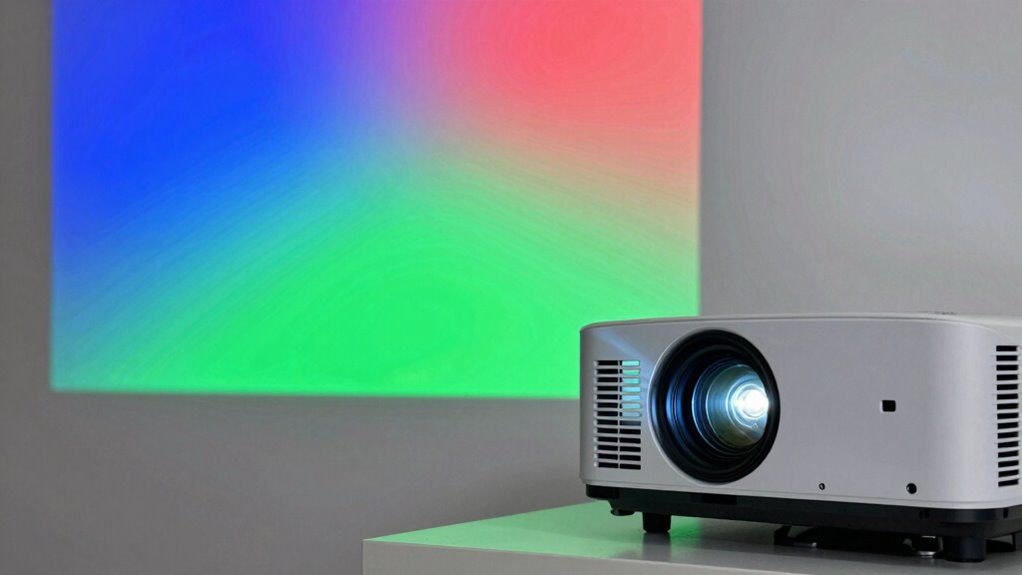
If your projector’s image appears washed out, it often means the brightness settings are too low or the ambient light in the room is too strong. The projection angle can also affect image clarity; if it’s off, light may scatter, reducing contrast and making colors look faded. Too much ambient light washes out the image because it diminishes the projector’s contrast, making details hard to see. Adjusting your projection angle ensures the light hits the screen directly, improving clarity. Additionally, increasing the projector’s brightness or reducing ambient light can help restore vividness. Remember, a well-placed projector with the correct projection angle minimizes light loss, and controlling ambient light management can help maintain consistent image quality in various room conditions. Proper calibration techniques can further optimize image quality for the best viewing experience, especially when adjusting color settings for accurate reproduction. Being aware of projection surface quality can also make a significant difference in image sharpness and vibrancy. Moreover, ensuring that your projector’s lens cleanliness is maintained helps prevent image degradation over time.
Position Your Projector and Screen Correctly
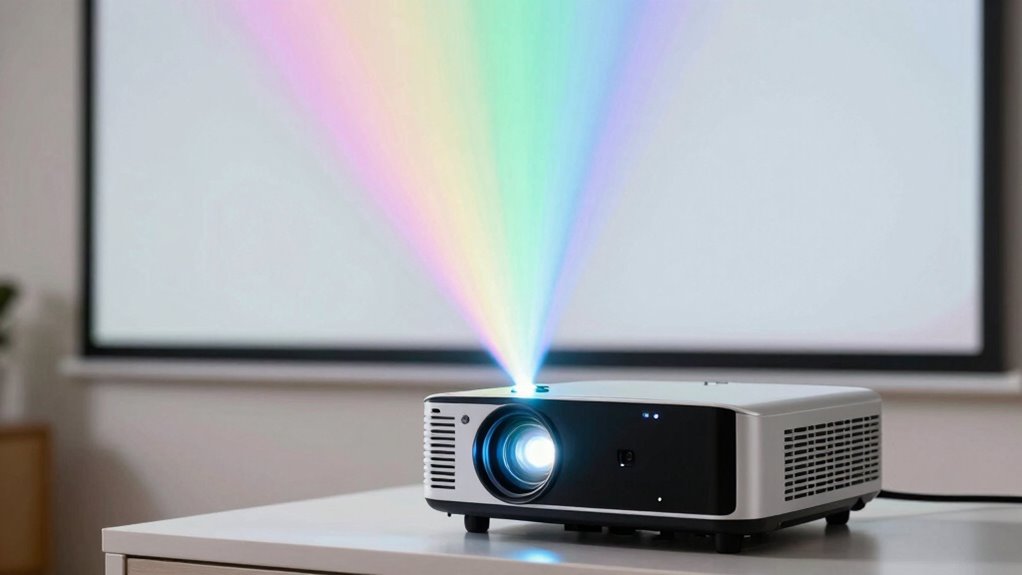
To get the best picture quality, you need to position your projector and screen correctly. Ensuring ideal projector placement and proper screen alignment helps avoid distorted or blurry images. Taking the time to set up these points properly makes a noticeable difference in your viewing experience. Additionally, understanding seasonal lighting conditions can help optimize your setup for different times of the year. Proper calibration and ambient light management further enhance image clarity and contrast during various lighting environments. Being aware of lighting variations throughout the year allows you to adjust your setup proactively for consistent picture quality, especially when considering lighting environment changes that affect image brightness and detail. Recognizing environmental factors such as room size and window placement can also contribute to a more stable and vibrant image.
Optimal Projector Placement
Proper projector placement is essential for achieving the best picture quality. Start by positioning your projector at the correct distance from the screen, following its throw ratio. Confirm the lens is level with the center of the screen to avoid keystone distortion. If you’re using ceiling mounting, securely install the projector at the optimal height and angle, reducing the need for digital keystone correction. Keep in mind speaker placement—placing speakers near the projector or screen can improve audio sync and clarity. Avoid placing the projector too close to walls or objects that could cast shadows or interfere with airflow. Additionally, using mount leveling kits can help ensure your projector remains perfectly aligned over time. Proper projector calibration can further enhance image quality and color accuracy. By carefully planning your projector’s position and considering speaker placement, you’ll enjoy sharp, bright images with minimal adjustments needed.
Proper Screen Alignment
Achieving a clear, undistorted image starts with aligning your projector and screen correctly. Proper screen positioning is essential for ideal picture quality. Begin by ensuring your projector is level and centered with your screen. Use a tape measure or leveling tool to set the projector at the right height and distance, following your device’s throw ratio. Adjust the projector alignment so the image is square and fills the screen evenly, avoiding keystone distortion. Check that the lens is perpendicular to the screen surface. Fine-tune the projector’s tilt and position until the image is straight and properly aligned. Correct projector alignment and precise screen positioning ensure sharp edges, consistent focus, and a professional-looking picture, making your viewing experience much more enjoyable. Understanding the impact of future economies and UBI can help you appreciate how technological advancements influence entertainment and content delivery methods.
Clean the Lens and Screen for Clearer Images

A clean lens and screen are vital for sharp, vibrant images from your projector. Regular lens cleaning removes dust, smudges, and fingerprints that can cause washed-out images. Use a soft, lint-free cloth and a gentle lens cleaner to avoid scratches. Screen maintenance is equally important; dust and dirt on the surface can diffuse light, reducing clarity. Gently wipe the screen with a microfiber cloth designed for electronics. Avoid harsh chemicals or abrasive materials that could damage the surface. Making these small but essential cleaning steps a routine ensures your projector delivers clear, bright images every time. Proper lens cleaning and screen maintenance prevent image quality issues and keep your viewing experience sharp and vivid. Additionally, maintaining your gear’s connectivity ensures consistent performance and minimizes disruptions during use. Regularly inspecting and calibrating your projector can also help optimize image quality and color accuracy over time. Incorporating routine cleaning practices can significantly extend the lifespan of your projector components and maintain optimal performance. Taking care of your projector’s maintenance not only improves image clarity but also preserves its overall longevity and value. Incorporating proper ventilation can also help prevent overheating and maintain consistent image quality during prolonged use.
Adjust Brightness and Contrast Settings

To improve your projector’s picture, start by locating the brightness control and adjusting it to suit your room’s lighting. Next, tweak the contrast levels to enhance image depth and detail. Finally, fine-tune the display settings for the best overall picture quality. Incorporating proper calibration techniques can further optimize your projector’s performance and image clarity, helping to prevent visual fatigue caused by washed-out images. Paying attention to optimal settings adjustment can make a significant difference in achieving clear, vibrant images. Additionally, understanding how ambient lighting affects projected images can help you select the right environment for optimal viewing. Being aware of projector placement can also reduce glare and improve overall picture quality.
Locate Brightness Control
Locating the brightness control on your projector is usually straightforward, as most models position it directly on the device or within the menu system. If it’s on the device, look for a labeled button or dial marked “Brightness” or an icon resembling a sun. For menu-based adjustments, access the settings menu, navigate to display or picture options, and find the brightness setting. Proper brightness calibration is essential for clear images, especially when performing display calibration to match ambient light conditions. Turning the brightness control adjusts the overall luminance of the image, helping prevent washed-out visuals. Once located, make small adjustments and observe the impact on picture quality. This simple step ensures you’re starting with accurate settings before fine-tuning contrast or other picture parameters.
Adjust Contrast Levels
Adjusting contrast levels is essential for achieving vivid and balanced images on your projector. Proper contrast enhancement improves image clarity, making details stand out without washing out. To fine-tune your settings, consider this visual guide:
| Bright Areas | Dark Areas |
|---|---|
| Bright whites pop with clarity | Deep blacks add depth and contrast |
| No washed-out highlights | No crushing shadows that hide details |
| Balanced highlights maintain detail | Shadows aren’t overly dark or muddy |
| Overall vibrant image | Clearer, more defined picture |
Adjust the contrast until whites are bright but not overpowering, and blacks are deep but retain detail. This balance ensures your projector displays images with enhanced contrast and improved image clarity. Additionally, humidity control can help maintain optimal projector performance by preventing dust buildup and overheating. Properly monitoring ambient light conditions can further improve your viewing experience by reducing glare and reflections. Regular calibration and contrast adjustments can also prevent washed-out images and keep your display sharp. Ensuring proper contrast settings can also extend the lifespan of your projector’s components by reducing strain on the internal optics.
Fine-Tune Display Settings
Fine-tuning your display settings involves carefully balancing brightness and contrast to achieve the best image quality. Start by adjusting the brightness so dark areas aren’t too dull or overly washed out. Then, tweak the contrast to enhance detail without causing color distortion. Proper color calibration is essential to guarantee colors appear natural and vibrant. While you’re at it, check audio synchronization, as poor alignment can distract from visual improvements. Don’t forget, accurate display settings can also improve the overall viewing experience, making images sharper and more lifelike. Take your time to test different settings and view various content types to find the most suitable balance. Small adjustments can make a significant difference in eliminating washed-out images and achieving a crisp, clear picture.
Calibrate Color Settings for Vivid Colors
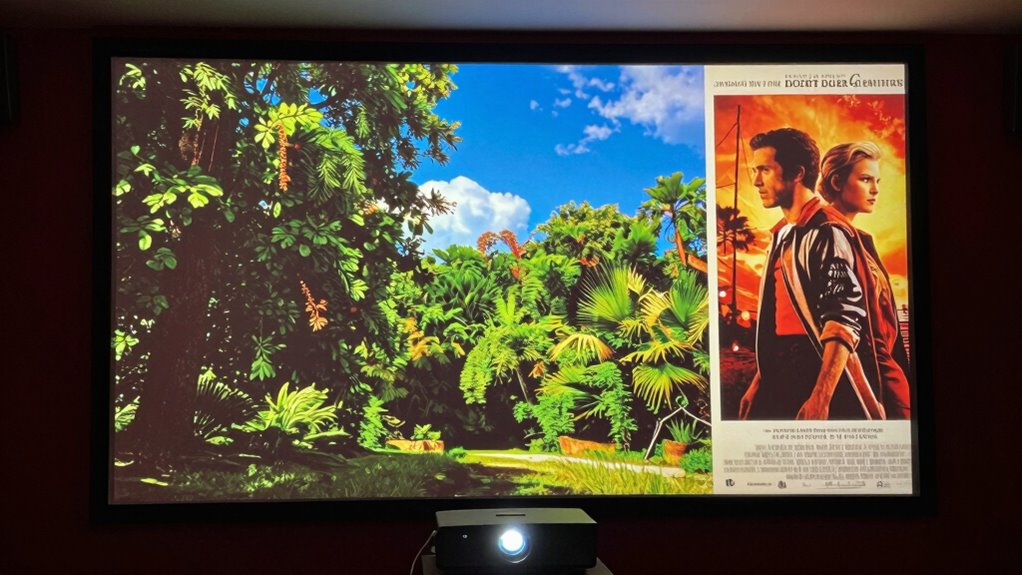
Ever wondered how to make your projector’s colors pop with vibrancy? The key is proper color calibration, which adjusts your projector’s color settings for ideal image enhancement. Start by accessing your projector’s menu and locate the color settings. Use a calibration tool or test image to fine-tune brightness, contrast, and color saturation. Aim for natural, balanced hues that aren’t oversaturated or dull. Adjust the red, green, and blue levels to achieve accurate skin tones and vivid visuals. Remember, small tweaks can make a big difference in overall picture quality. Regular calibration ensures your images stay vibrant over time, preventing washes-out or color fading. With these simple steps, you’ll enjoy richer, more dynamic visuals in just minutes.
Optimize Room Lighting for Better Picture Quality
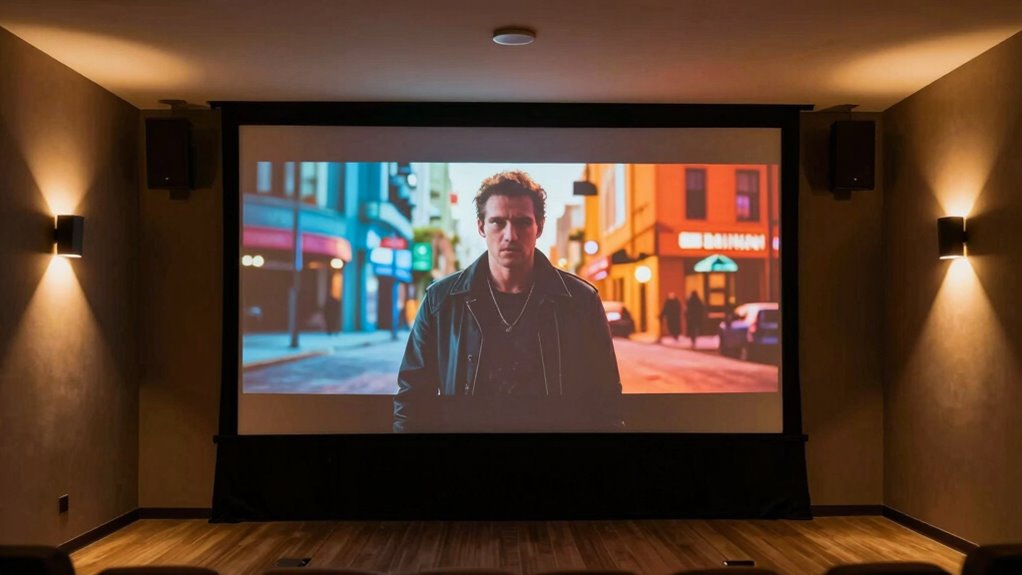
Optimizing your room lighting is essential for achieving the best possible picture quality from your projector. Reduce ambient lighting by dimming or turning off bright lights and closing curtains to minimize glare and washed-out images. Keep ambient noise to a minimum, as loud sounds can distract you and make it harder to focus on the picture. Use blackout shades or adjustable lighting to control the environment and enhance contrast. Avoid placing lights behind or near the screen, which can cause reflections and reduce clarity. If you can’t eliminate all ambient light, consider adding a neutral-colored wall or screen surface to improve contrast. Proper lighting control guarantees your projector’s colors and details appear sharp and vibrant, delivering a more immersive viewing experience.
Set the Correct Mode and Resolution
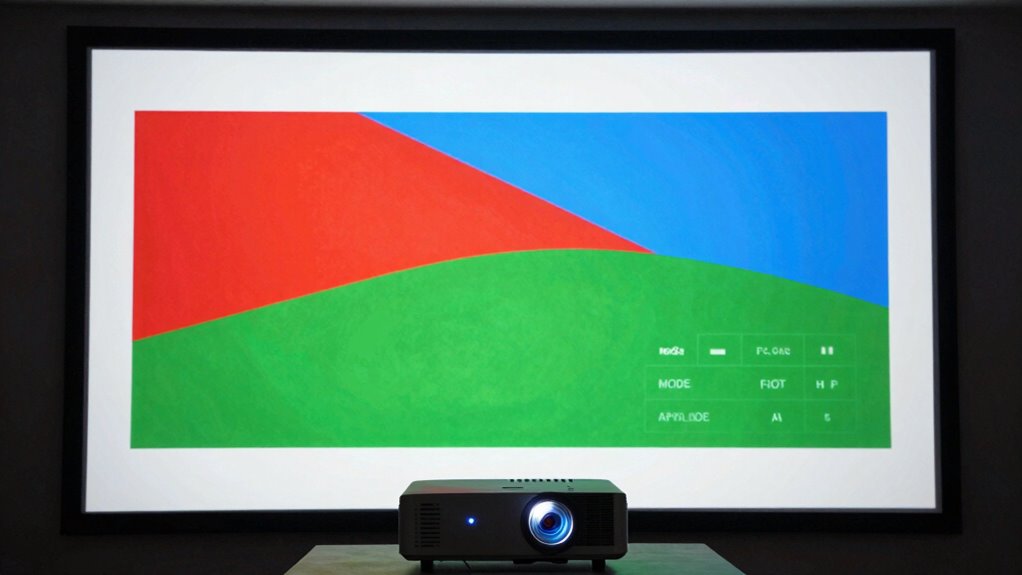
Setting the correct mode and resolution on your projector is essential for sharp, vibrant images. Start by selecting the appropriate input mode, such as HDMI, VGA, or USB, to guarantee compatibility with your device. Next, adjust the resolution settings to match your content’s native resolution or the projector’s native resolution. Using the correct resolution prevents blurriness and washed-out images. Most projectors have multiple input modes designed for different sources; choose the one that best suits your setup. If your projector supports resolution adjustment, set it to the highest supported resolution for the clearest picture. Properly configuring input modes and resolution settings ensures your images are crisp, colorful, and true to life, eliminating the washed-out appearance and enhancing your viewing experience.
Test Your Settings and Make Final Adjustments
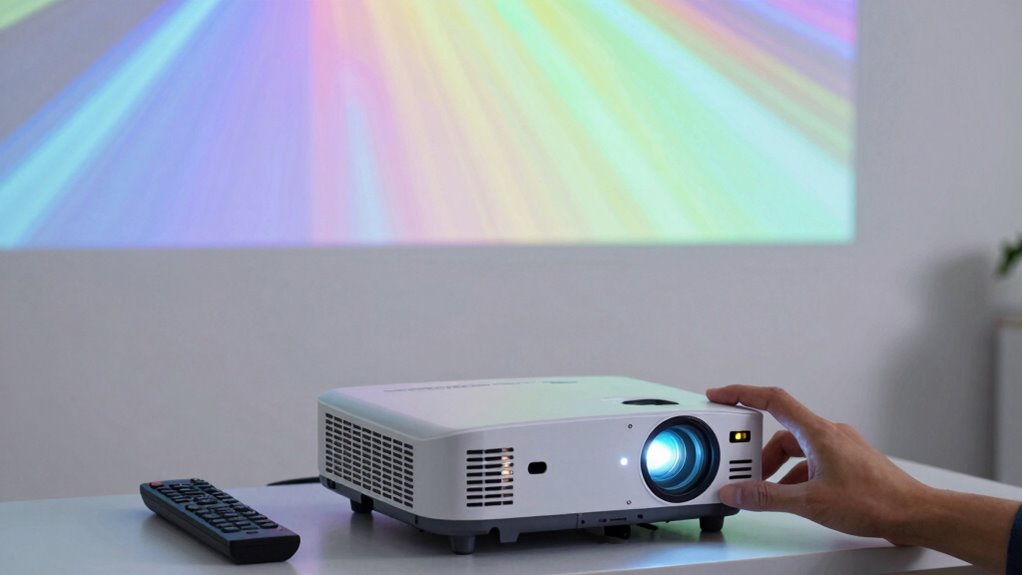
Once you’ve adjusted your projector’s settings, it’s important to test them to guarantee ideal picture quality. Use calibration tools like test patterns or color charts to check color accuracy, contrast, and sharpness. Observe your image from different viewing angles to ensure clarity and brightness remain consistent across the room. Adjust the keystone, focus, and brightness as needed based on your test results. Confirm that the image isn’t washed out or distorted, especially when viewed from various positions. Making these final tweaks ensures you get the best picture quality possible. Take a few minutes to review your settings, and don’t hesitate to re-calibrate if necessary. Proper testing guarantees a vibrant, clear image, maximizing your projector’s performance in any environment.
Frequently Asked Questions
How Often Should I Clean My Projector’s Lens and Screen?
You should clean your projector’s lens and screen every 1 to 3 months, depending on usage and environment. Regular lens maintenance helps prevent dust buildup that causes washed-out images. Make sure to gently wipe the lens with a microfiber cloth and use screen cleaning solutions for the display. Frequent cleaning keeps your projector producing sharp images and maintains ideal picture quality without risking damage.
What Is the Ideal Distance Between the Projector and Screen?
Think of your projector as a camera lens—distance matters. You should position the projector about 1.5 to 2.5 times the width of your screen for ideal image clarity. Proper projector placement and screen positioning ensure sharp, vibrant visuals. If you place it too close or too far, images become washed out or blurry. Adjust the distance to match your projector’s specifications and keep your viewing experience crisp and clear.
Can Ambient Light Affect My Projector’s Picture Quality?
Ambient light interference can considerably affect your projector’s picture quality, making images look washed out. To improve clarity, you should control room lighting by dimming or turning off excess lights during viewing. Using blackout curtains or shades helps reduce ambient light interference, ensuring your projector’s images stay bright and sharp. Proper room lighting control creates a ideal viewing environment, so you enjoy clear, vibrant visuals without unwanted glare or washed-out colors.
Which Resolution Settings Are Best for Different Content Types?
For ideal picture quality, you should adjust resolution settings based on content type. Use resolution optimization for presentations and documents to guarantee sharpness, while lowering resolution for streaming videos to improve smoothness and reduce lag. For gaming or high-definition movies, select the highest resolution your projector supports. Content-specific settings help you achieve the best image clarity and performance, making your viewing experience more enjoyable and tailored to each activity.
How Do I Know if My Projector Needs Professional Calibration?
Your projector’s so dull, it’s like watching through fog—a sign you might need professional calibration. Check calibration indicators such as color accuracy, focus sharpness, and uniform brightness. If images look washed out or inconsistent despite proper maintenance, it’s time to call in experts. Regular projector maintenance can prevent this, but if issues persist, professional calibration guarantees your visuals stay vivid and sharp. Don’t ignore the signs—calibrate for peak performance.
Conclusion
Now that you’ve fixed your projector’s washed-out images, you can enjoy vibrant visuals instead of dull, lifeless screens. It’s like switching from a blurry photo to a sharp, colorful masterpiece. With a few simple tweaks, you turn frustration into satisfaction, transforming a cluttered room into your personal theater. So, don’t settle for less—bring clarity and color back, and watch your movie nights become sharper and more immersive than ever before.