
Indoor gardening lets you grow fresh herbs and microgreens all year using hydroponic systems and controlled environments. By positioning your setup near good light sources or using quality grow lights, you’ll promote healthy growth. Keeping humidity and temperature in the ideal range, along with regular watering and pest management, helps prevent issues. With proper care, you can enjoy continuous harvests—something you’ll discover more about as you explore how to optimize your indoor garden.
Key Takeaways
- Use hydroponic systems to cultivate herbs and microgreens indoors year-round without soil.
- Ensure proper lighting with grow lights and optimal placement for healthy growth.
- Maintain consistent temperatures (65-75°F) and humidity levels to support plant health.
- Regularly monitor and prevent pests with natural methods and proper hygiene.
- Adjust environmental conditions and provide nutrients to promote lush, continuous harvests.
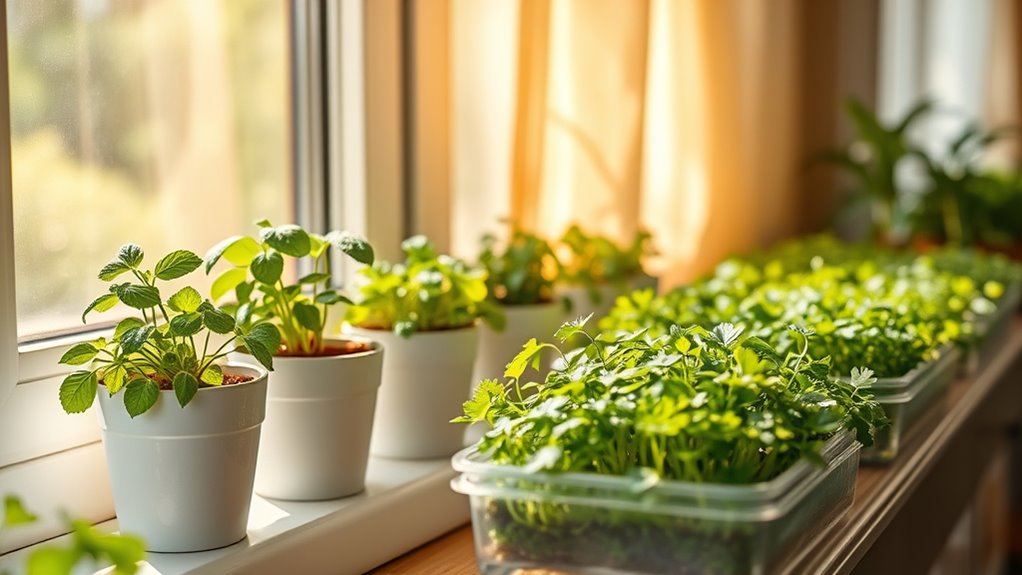
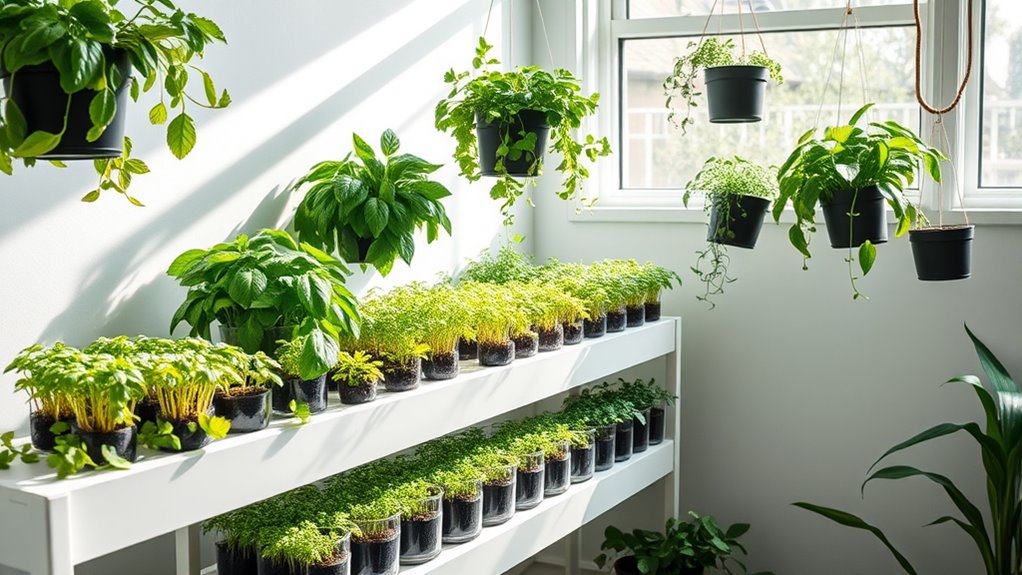
Having fresh greenery right inside your home is easier than you might think. With a few simple setups, you can enjoy herbs and microgreens year-round, regardless of the season outside. One popular method is using hydroponic systems, which allow you to grow plants without soil. These systems use nutrient-rich water solutions that deliver everything your plants need directly to their roots. They’re especially beneficial for indoor gardening because they take up less space, reduce mess, and often result in faster growth. Plus, hydroponic systems are typically low-maintenance, making them perfect for beginners or busy enthusiasts.
When you choose to grow herbs and microgreens indoors, controlling pests becomes a crucial part of your success. Unlike outdoor gardens, indoor environments are less prone to common pests, but that doesn’t mean you’re completely free from trouble. Proper indoor pest control involves keeping your growing area clean, monitoring plants regularly, and avoiding overwatering, which can attract pests like fungus gnats. If pests do appear, you can take swift action with natural remedies or targeted treatments that won’t harm your plants or compromise your indoor air quality. Using integrated pest management strategies ensures your plants stay healthy without the need for harsh chemicals.
To keep your indoor garden thriving, you should also consider the placement of your hydroponic systems. Position them near a good light source—preferably a grow light if natural sunlight isn’t sufficient—to promote healthy growth. Make sure your growing area is well-ventilated to prevent mold and mildew, which can sometimes develop in humid indoor conditions. Regularly inspecting your plants for signs of pests or disease helps catch issues early before they spread. Maintaining a consistent watering schedule and using high-quality nutrient solutions will also keep your herbs and microgreens lush and flavorful.
In addition, managing humidity and temperature is essential for indoor gardening success. Many herbs and microgreens prefer moderate humidity and temperatures around 65-75°F. If your home tends to be dry, especially in winter, consider using a humidifier nearby or misting your plants lightly. Conversely, if it’s too humid, increase ventilation to prevent mold growth. Proper lighting with high-quality grow lights can significantly improve plant health and growth rates, especially in areas with limited natural sunlight. When combined with proper pest control and an efficient hydroponic setup, these practices create a suitable environment for your indoor garden to flourish all year long. With patience and attention to detail, you’ll enjoy fresh herbs and microgreens anytime, right from the comfort of your home.
Frequently Asked Questions
What Are the Best Lighting Options for Indoor Herb Gardens?
You should use LED grow lights or fluorescent bulbs for your indoor herb garden. LED grow lights are energy-efficient, produce less heat, and offer customizable spectrums to promote healthy growth. Fluorescent bulbs are affordable and work well for small setups, providing bright, even light. Position the lights about 12-18 inches above your herbs, and keep them on for 12-16 hours daily to mimic natural sunlight and guarantee vibrant growth.
How Often Should I Water My Indoor Microgreens?
Imagine tiny green blades reaching for light, thirsty for just the right amount of water. You should water your microgreens when the soil moisture feels slightly dry, usually every 2-3 days. Keep a gentle eye on the soil, avoiding overwatering that can drown roots. Consistent watering frequency helps your microgreens stay vibrant and healthy, giving you a lush, thriving indoor garden you can enjoy year-round.
Can I Grow Herbs Indoors Without Natural Sunlight?
Yes, you can grow herbs indoors without natural sunlight by using artificial lighting. Make sure to provide your herbs with grow lights that mimic sunlight, such as LED or fluorescent bulbs, for about 12-16 hours daily. Also, monitor indoor humidity levels, keeping them around 40-60%, to prevent mold and guarantee healthy growth. Proper lighting and humidity are key to thriving indoor herbs without natural sunlight.
What Are Common Pests for Indoor Herbs and Microgreens?
Did you know that pests like aphids, fungus gnats, and spider mites affect up to 30% of indoor herbs? You should regularly check your plants for pest identification. When you find pests, try organic pest control methods like neem oil or insecticidal soap to keep your herbs safe. Staying vigilant helps prevent infestations and keeps your microgreens healthy and thriving indoors.
How Do I Prevent Mold and Fungus in Indoor Gardening Setups?
To prevent mold and fungus in your indoor garden, make certain proper mold prevention and fungus control by maintaining good airflow around your plants and avoiding overwatering. Use breathable containers and water only when the soil feels dry. Keep humidity levels in check and clean your setup regularly to eliminate any mold spores or fungal growth. Proper ventilation and monitoring humidity are key to healthy, mold-free herbs and microgreens.
Conclusion
Now that you’ve embraced indoor gardening, you hold the power to nourish your senses and your health year-round. With just a few herbs and microgreens, you turn your space into a lush oasis, proving that growth is always within reach. Remember, as nature whispers, “Where there’s a will, there’s a way”—and in your hands, that way becomes a vibrant, edible masterpiece. Keep cultivating hope; your green thumb is your greatest gift.