
To find your ideal mattress firmness, try simple at-home tests: lie on your back to check support, press firmly with your hand to gauge contouring, and sit on the edge to see how your weight is supported. Remember, testing should be done on the bed you plan to buy, not on incompatible frames. Continue exploring to discover how these quick tests can help you choose the perfect feel for your sleep needs.
Key Takeaways
- Lie on your back to evaluate how well the mattress supports and contours to your body.
- Press firmly with your hand on different areas to test pressure relief and firmness levels.
- Sit on the edge to observe how the mattress supports your weight and maintains support.
- Avoid testing on incompatible frames and ensure proper support from your bed setup.
- Use test results to match firmness with your sleep position and personal comfort preferences.
Why Mattress Firmness Matters for Your Sleep

The firmness of your mattress directly impacts how well you sleep each night. Your sleep environment, including firmness level, influences your comfort and rest quality. A mattress that’s too soft or too firm can cause tossing and turning, disrupting your sleep cycle. Proper firmness supports your body evenly, reducing pressure points and minimizing aches. Additionally, choosing the right firmness can extend your mattress’s longevity, preventing uneven wear and sagging. When your mattress aligns with your preferences and needs, it maintains its supportive qualities longer. This means you won’t need to replace it as often, saving you money. Moreover, understanding mattress scams can help you make informed purchases and avoid costly mistakes. Knowing how to evaluate content formats and research topics can empower you to select the best mattress for your unique needs. Proper mattress maintenance can also prolong its lifespan and ensure consistent comfort over time. Ensuring your mattress has the appropriate firmness level can make a significant difference in your sleep quality. Ultimately, the right firmness ensures a stable sleep environment, promotes restful nights, and enhances your overall sleep health.
What Do Mattress Firmness Levels Mean? Soft, Medium, and Firm Explained

Understanding mattress firmness levels helps you find the right balance of softness and support for your sleep preferences. Soft mattresses offer more comfort and pressure relief, while firm ones provide better support and stability. By knowing how firmness is measured on the scale, you can choose a mattress that matches your comfort needs and sleeping style. Additionally, high-quality materials can influence the firmness and durability of a mattress, ensuring long-lasting comfort.
Softness and Comfort Level
Have you ever wondered what mattress firmness levels really mean for your sleep comfort? Softness and comfort levels influence how well your mattress suits your pillow preferences and bedroom temperature. Soft mattresses feel plush and contour to your body, ideal if you like sinking in. Medium firmness offers a balanced feel, providing support without sacrificing comfort. Firm mattresses are sturdy, perfect for those who prefer a more solid surface. Here’s a quick overview:
| Softness Level | Feel Description | Ideal For |
|---|---|---|
| Soft | Plush, contouring | Side sleepers, pillow lovers |
| Medium | Balanced support and comfort | Combination sleepers, adjustable preferences |
| Firm | Solid, supportive | Back/stomach sleepers, cooler bedroom temps |
Choosing the right level depends on your sleeping style and comfort preferences. Additionally, understanding the home life tips can help you create a more comfortable and organized sleeping environment.
Support and Pressure Relief
Choosing the right mattress firmness directly affects how well your bed supports your body and relieves pressure points. Proper support ensures ideal pressure distribution, reducing aches and discomfort. It also promotes spinal alignment, which prevents pain and maintains healthy posture. Additionally, understanding destinations and travel tips can help you select the best environment for restful sleep and recovery when traveling. Knowing your sleep position can further refine your mattress choice to improve comfort and support.
- Softer mattresses contour to your body, easing pressure on hips and shoulders but may risk inadequate support.
- Medium firmness offers a balance, providing support while still relieving pressure points effectively.
- Firmer options deliver strong support, ideal for proper spinal alignment but might feel less pressure-relieving for some sleepers.
Your goal is to find a level that supports your natural curves, evenly distributes pressure, and keeps your spine aligned through the night.
Firmness Scale Understanding
Mattress firmness levels are typically rated on a scale from soft to firm, helping you identify the support and feel each option provides. Soft mattresses, often made with memory foam, contour closely to your body, offering pressure relief but can feel less supportive. Medium firmness strikes a balance, providing support while maintaining a plush feel, suitable for many sleep positions. Firm mattresses deliver a solid surface, ideal for those who prefer minimal sinkage. Keep in mind that memory foam’s temperature sensitivity can affect firmness perception; it softens with body heat, making the mattress feel different throughout the night. Understanding these levels helps you choose based on your comfort preferences and sleep needs, ensuring you get the right support and feel for a restful night. Incorporating Free Floating concepts can further enhance your understanding of mattress support and comfort preferences.
How to Test Your Mattress Firmness at Home Quickly and Easily

Testing your mattress firmness at home is quick and straightforward, allowing you to determine how supportive your bed truly is without any special tools. Start by lying on your back and evaluating how your body feels—do you sink in or feel supported? Consider your usual sleep position and comfort preferences. To get a better sense, try these simple tests:
Test your mattress support at home with simple, quick checks—no tools needed—to find your perfect sleep comfort.
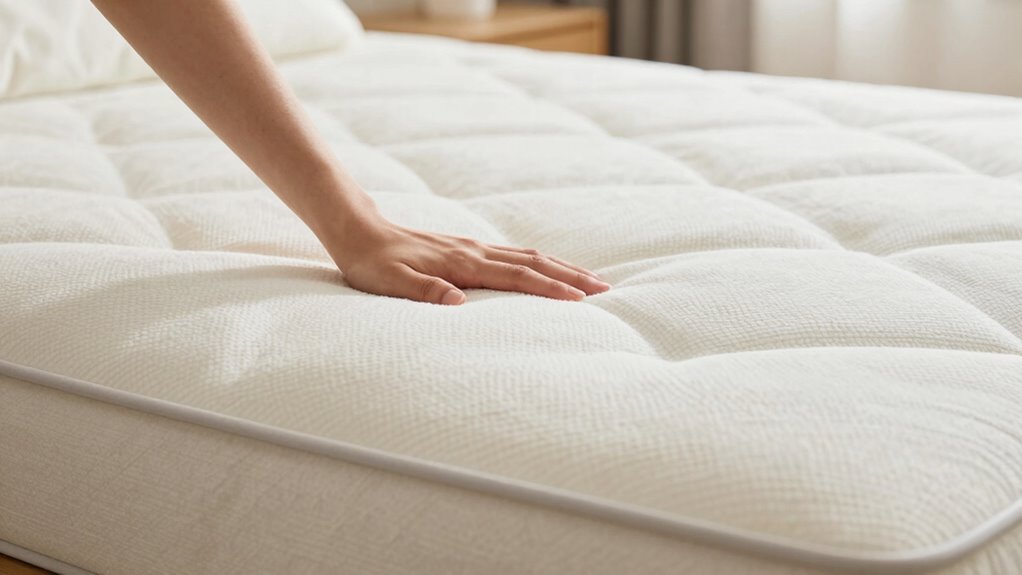
- Press firmly with your hand on different areas to gauge how much the mattress compresses
- Sit on the edge and see how your weight affects the support
- Assess how your mattress complements your bedroom decor and mattress technology for visual and functional harmony
- Being aware of consumer preferences and how they influence mattress choice can help you select the right firmness for your needs.
- Recognizing sleep comfort factors can further guide you in choosing a mattress that promotes restful sleep and reduces the risk of discomfort.
- Additionally, understanding mattress support levels can assist in aligning your sleep environment with your health and comfort goals.
- Paying attention to shape and symbolism of mattress features can also provide insights into the overall design and comfort philosophy behind your bedding choices.
These quick checks help you understand your mattress’s feel and support level, ensuring it matches your sleep needs and bedroom style.
How to Interpret Your Test Results and Find the Perfect Feel for You

Once you’ve completed your at-home firmness test, it’s time to interpret what the results mean for your sleep comfort. Your firmness preferences reveal whether you need a softer, more plush feel or a firmer surface that provides more support. If your test indicates a medium or slightly soft feel, you might prefer a mattress that contours closely to your body, offering pressure relief. Conversely, if you favor a firmer feel, look for mattresses that provide solid support without sacrificing comfort. Keep in mind that mattress durability plays a role too—higher-quality mattresses maintain their feel and support over time, ensuring long-term satisfaction. Understanding mattress materials can help you select a durable option that sustains its feel for years. Additionally, considering the construction quality can give you insights into how well a mattress will hold up over time. Evaluating sleep surface materials can further inform your choice, as different materials impact both feel and longevity. Recognizing the importance of material composition can help you choose a mattress that maintains its firmness and comfort over the years. When selecting a mattress, it’s also helpful to consider personal sleep preferences, as they influence the ideal firmness level for your individual needs. Use your test results as a guide, balancing your preferred firmness with durability to find a mattress that feels just right and lasts for years.
Which Mattress Firmness Is Best for Your Sleep Position? Side, Back, and Stomach Sleepers

Choosing the right firmness depends largely on your sleep position, as different stances require different support levels to guarantee comfort and spinal alignment. Side sleepers benefit from a softer mattress that cushions the shoulders and hips, aligning the spine naturally. Back sleepers often prefer a medium firmness that supports the lower back without sacrificing comfort. Stomach sleepers need a firmer surface to prevent excessive sinking, which could cause strain. Your pillow preferences and bedroom temperature also influence comfort: softer pillows complement softer mattresses, while a cooler room can help prevent overheating on warmer beds. Keep in mind these tips:
Choosing the right mattress firmness depends on your sleep position for optimal support and comfort.
- Side sleepers should opt for soft to medium firmness.
- Back sleepers find medium firmness ideal.
- Stomach sleepers need a firmer feel for proper support.
Additionally, understanding battery inverter generators can help you select the right power source for your needs, especially if you require reliable energy in your sleep environment or for other household needs. Being aware of mattress materials can also influence your choice, as different fabrics and fills impact comfort and longevity. For example, choosing a mattress with suitable foam density can enhance support and durability, ensuring better sleep quality over time. Recognizing the importance of support zones in mattresses can also help target areas that need additional reinforcement for optimal spinal alignment. Furthermore, considering mattress durability can ensure your investment remains comfortable and supportive for years to come.
Common Mistakes When Testing Mattress Firmness and How to Avoid Them

Many people make common mistakes when evaluating mattress firmness, which can lead to choosing a surface that doesn’t support their sleep position properly. One mistake is testing firmness on an incompatible bed frame, such as a box spring or platform that alters the mattress’s feel. Another error is ignoring mattress material differences; memory foam, latex, and innerspring respond differently to pressure, affecting your perception of firmness. Additionally, testing the mattress briefly or without applying enough pressure can give misleading results. To avoid these pitfalls, verify your bed frame supports the mattress correctly, test for at least 10-15 minutes, and consider how mattress materials influence firmness perception. For example, understanding piercing care and hygiene can help you maintain the mattress and prevent infections that might impact your sleep quality. Proper cleaning and maintenance practices also play a crucial role in preserving the mattress’s true feel over time. These steps help you accurately gauge the true feel before making a commitment.
Tips to Choose the Right Mattress Based on Your Test and Preferences
To find the perfect mattress, start by evaluating your personal comfort needs and how different firmness levels feel to you. Match your test results with your preferred sleep sensations, and consider your usual sleeping position for better support. Keeping these factors in mind will help you choose a mattress that truly fits your unique preferences. Additionally, understanding mattress firmness levels can guide you in selecting the right feel.
Assess Personal Comfort Needs
How do you determine which mattress feels right for you? First, consider your personal comfort needs by reflecting on your sleep habits and preferences. Think about your preferred sleeping position, whether you tend to toss and turn, and if you need more support or softness. Your mattress choice can also influence your sleep hygiene and overall bedroom decor, creating a relaxing environment. To assess your needs:
- Prioritize support if you suffer from back pain or need alignment.
- Choose softness if you prefer a plush feel and pressure relief.
- Factor in your sleeping position to find the balance between firmness and comfort.
- Remember that mattress testing methods can help you make a more informed decision before purchasing, especially when understanding how different mattress firmness levels impact your sleep quality.
Match Test Results to Feel
When reviewing your mattress test results, it’s essential to compare the feedback you provided about feel and support with the options available. Your personal preferences and sleep environment play pivotal roles in this decision. Use the following table to match your test results with the ideal feel:
| Feel/Support Preference | Recommended Mattress Type |
|---|---|
| Soft and plush | Memory foam or pillow-top mattress |
| Firm and supportive | Innerspring or hybrid mattress |
| Balanced feel | Latex or medium-firm options |
| Pressure relief needed | Memory foam or latex |
| Cool sleep environment | Gel-infused or breathable materials |
Aligning your preferences with these options helps you find a mattress that feels right and supports restful sleep.
Consider Sleeping Position
Your sleeping position substantially influences which mattress feels most comfortable and supportive. If you sleep on your side, opt for a mattress with a softer feel, like memory foam, to cushion your shoulders and hips. Back sleepers benefit from a medium-firm mattress that supports spinal alignment, possibly enhanced with cooling gels for breathability. Stomach sleepers should choose firmer options to prevent sinking and neck strain. Consider these tips:
- For side sleepers, memory foam with cooling gels keeps pressure points comfortable.
- Back sleepers may prefer medium-firm mattresses with cooling features for all-night support.
- Stomach sleepers should look for firmer beds that prevent excessive sinking and maintain proper posture.
Matching your sleeping position with the right mattress ensures better rest and reduces discomfort.
Frequently Asked Questions
How Often Should I Re-Test My Mattress Firmness?
You should re-test your mattress firmness every few months, especially if you notice discomfort or changes in sleep quality. During your sleep trial, evaluate how the mattress feels and whether it needs a firmness adjustment. Regular testing helps guarantee your mattress continues to support your sleep needs. If your mattress feels different over time, don’t hesitate to adjust or consider a replacement to maintain ideal comfort and support.
Can Mattress Firmness Affect Allergy Symptoms?
Yes, mattress firmness can influence your allergy symptoms, especially if you’re sensitive to certain allergens or firmness levels. A too-soft or too-hard mattress may trap dust mites or allergens, worsening your allergy triggers. Your firmness sensitivity plays a role—finding the right balance helps minimize exposure and improves sleep quality. Don’t overlook how your mattress’s firmness impacts your allergy symptoms; choosing the right feel might just offer relief you need.
Does Mattress Age Influence Firmness Perception?
Your mattress age definitely influences firmness perception. Over time, its lifespan shortens due to regular use, leading to firmness deterioration. As the mattress ages, it might feel softer or less supportive, even if it initially had the right firmness. So, if your mattress is several years old, consider testing its firmness again or replacing it to maintain ideal comfort and support for your sleep quality.
Are There Specific Firmness Levels for Sleep Apnea Sufferers?
If you have sleep apnea, medium-firm mattresses often work best because they provide good support and comfort. You should also consider pillow compatibility, ensuring your pillow supports your neck and keeps your airways open. Temperature regulation is essential, too, so pick a mattress with breathable materials to keep you cool. Finding the right firmness helps reduce discomfort and improves your sleep quality, making your sleep apnea treatment more effective.
How Does Mattress Firmness Impact Overall Sleep Quality?
Your mattress firmness substantially impacts sleep quality by supporting your sleep posture and maintaining firmness consistency. If it’s too soft, you might sink too much, causing misalignment and discomfort. Too firm, and it can create pressure points. Finding the right firmness helps keep your spine aligned, reduces tossing and turning, and ensures restful sleep. Prioritize a feel that supports your sleeping position for the best overall sleep quality.
Conclusion
Now that you know how to test and interpret mattress firmness, you’re well on your way to perfect sleep. Just remember, don’t be tempted to rely solely on ancient wisdom like the “sleeper’s stone” myth—trust your test and preferences instead. With a little patience, you’ll find that ideal feel, making every night as cozy as a cozy carriage ride through a moonlit forest. Sweet dreams await!