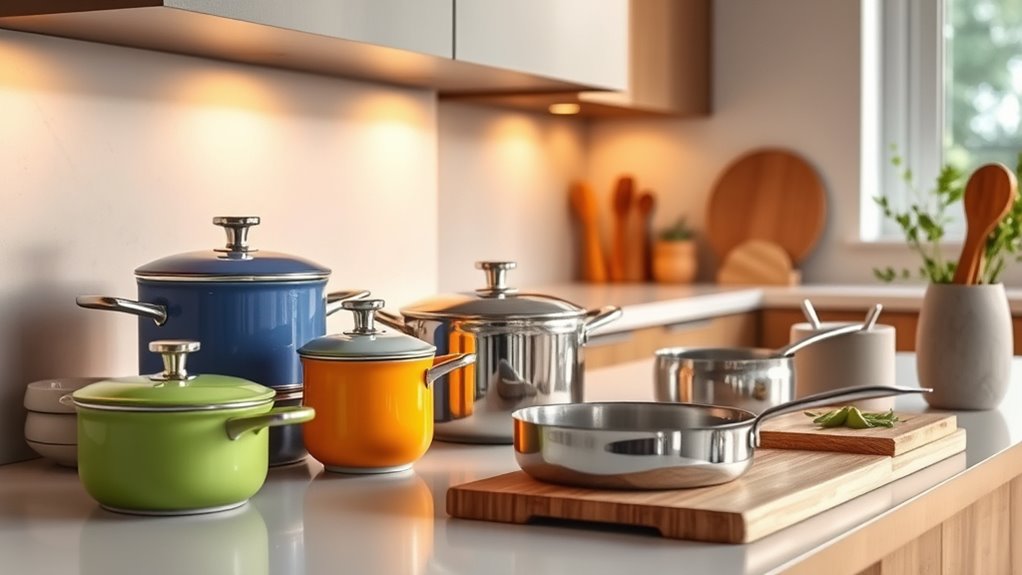

To choose non-toxic cookware, focus on materials like high-quality ceramics, stainless steel, or cast iron, which are generally safe and free from harmful chemicals. Avoid non-stick options with questionable coatings or low-quality ceramics that can leach metals over time. Always select reputable brands, inspect for cracks or chips, and replace damaged pieces promptly. Staying informed about safe materials and proper use helps protect your health — keep exploring these options to make the best choice.

Get the little things that make your day delivered free with Prime
- Fast, free delivery on millions of items
- Prime Video, Amazon Music and more included
- Member-only deals all year
Key Takeaways
- Select ceramic cookware from reputable brands that guarantee lead- and cadmium-free coatings.
- Prioritize high-quality, non-toxic ceramic coatings to prevent chemical leaching during cooking.
- Regularly inspect cookware for cracks or chips and replace damaged pieces promptly.
- Avoid low-quality or imported ceramic pots that may contain unsafe materials or degraded coatings.
- Consider alternative non-toxic materials like stainless steel or cast iron for added safety.
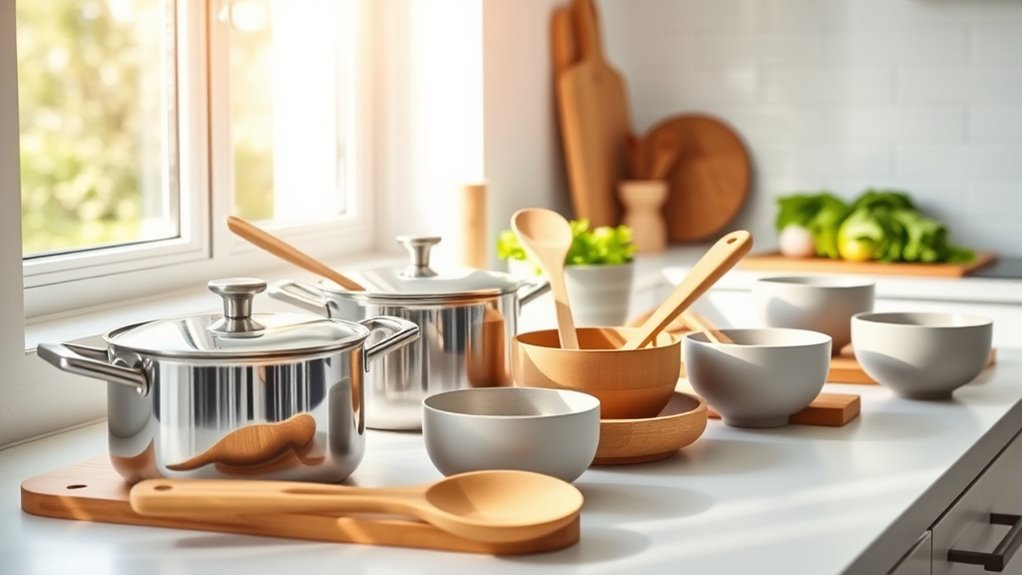
When selecting cookware, prioritizing safety and health by choosing non-toxic options is essential. You want cookware that cooks your food evenly without introducing harmful chemicals into your meals. Ceramic coatings have become popular because they’re generally free of many toxic substances found in traditional non-stick options. Unlike older non-stick coatings that often contain perfluorochemicals, ceramic coatings are made from natural materials and don’t emit fumes or leach chemicals when heated. This makes them a safer choice for everyday cooking. However, not all ceramic-coated cookware is created equal. Some cheaper brands may use subpar coatings that can degrade over time, potentially exposing you to particles or substances that aren’t entirely safe. Always look for high-quality ceramic coatings from reputable manufacturers, and check if they’re free from PTFE, PFOA, and other hazardous chemicals.
Another concern with some types of cookware, especially those with older or lower-quality ceramic coatings, is heavy metal leaching. Certain materials used in cookware, such as older ceramic glazes or poorly manufactured coatings, can contain heavy metals like lead or cadmium. When these metals leach into your food, especially at high temperatures or with acidic ingredients, they pose serious health risks. Heavy metal leaching isn’t always obvious, which is why it’s critical to choose cookware tested for safety and free from these contaminants. Opting for products labeled as food-safe, lead-free, and cadmium-free ensures you’re reducing exposure to these dangerous metals. Also, be cautious with very old ceramic cookware, as wear and tear can increase the likelihood of heavy metal leaching. Regularly inspecting your cookware and replacing any that shows cracks or chips helps keep your food safe. Additionally, understanding the process of myelination and neural development highlights how exposure to toxins during early childhood can impact brain growth, underscoring the importance of choosing safe, non-toxic cookware for families.
As an affiliate, we earn on qualifying purchases.
Frequently Asked Questions
Are Non-Toxic Pots Suitable for Every Type of Stove?
Non-toxic pots are generally suitable for most stoves, but you need to check if they’re induction compatible. Some materials like cast iron and certain stainless steels work well with induction, thanks to their high thermal conductivity. Non-toxic options like ceramic or glass may not be compatible with induction stoves. Always verify the cookware’s specifications to confirm it matches your stove type for safe and efficient cooking.
How Long Does Non-Toxic Cookware Typically Last?
Non-toxic cookware typically lasts 5 to 10 years, depending on durability expectations and usage. With proper maintenance tips like avoiding metal utensils, hand washing, and storing carefully, you can prolong its lifespan. Regularly inspecting for signs of wear ensures you catch issues early. While some materials like cast iron and stainless steel are very durable, ceramic and non-stick coatings may need replacing sooner to keep your kitchen safe and functional.
Can Non-Toxic Materials Withstand High Oven Temperatures?
Like a knight in shining armor, non-toxic materials can withstand high oven temperatures if you choose wisely. Many are designed for oven safety and boast excellent material durability, making them suitable for roasting or baking at high heat. However, always check the manufacturer’s guidelines to guarantee your cookware can handle the specific temperatures you plan to use. Properly selected, your non-toxic cookware will serve you well in the oven’s heat.
Is Non-Toxic Cookware Dishwasher Safe?
Yes, non-toxic cookware is generally dishwasher safe, but you should always verify dishwasher compatibility before cleaning. Many non-toxic materials like stainless steel and ceramic are durable and withstand regular dishwasher cleaning. For best results, use gentle cleaning methods and avoid harsh detergents that could damage the finish. Always follow manufacturer instructions to ensure your cookware remains safe and in good condition after dishwasher cleaning.
Are There Any Health Risks Associated With Non-Toxic Cookware?
While non-toxic cookware is generally safe, some worry about chemical leaching and long-term safety. You might think it’s completely risk-free, but certain materials can release trace amounts of chemicals over time, especially with high heat or acidic foods. To minimize risks, choose reputable brands, avoid scratched surfaces, and follow usage instructions. Overall, non-toxic cookware reduces health concerns, but staying informed helps make sure your kitchen remains a safe environment.
Conclusion
Choosing non-toxic cookware isn’t just about safety; it’s about peace of mind. When you opt for safe materials, you naturally create a healthier kitchen environment — and sometimes, that choice feels like a lucky coincidence. After all, the simple act of selecting non-toxic pots and pans can unexpectedly lead to fewer worries and better health for you and your family. It’s a small decision that can make a big difference, almost as if fate was guiding you.
NFL season / tailgating Picks
team gear
As an affiliate, we earn on qualifying purchases.