
To prevent your patio umbrella from tipping over, make certain you use a heavy, weather-resistant base or anchor like a concrete weight, sandbag, or ground sleeve. Secure straps or tie-downs offer extra stability, especially in windy conditions. Opt for umbrellas with vented canopies and reinforced frames for wind resistance. Regularly inspect and adjust setup or weights to maintain safety. Want to learn more about specific tips and tricks? Keep exploring for all the essential details.
Key Takeaways
- Use heavy-duty, weather-resistant bases and anchors to provide stability and prevent tipping in strong winds.
- Secure umbrellas with straps or tie-downs, especially before storms or gusty weather.
- Choose umbrellas with vented canopies and reinforced ribs for better wind resistance.
- Properly install ground sleeves or clamps and regularly inspect for stability and safety.
- Add wind barriers or side weights to enhance stability and protect outdoor space during gusts.
As an affiliate, we earn on qualifying purchases.
How Wind and Weather Impact Your Patio Umbrella’s Stability
Wind and weather conditions can considerably affect your patio umbrella’s stability, especially during storms or strong gusts. To improve storm preparedness, choose umbrellas made from weatherproof materials like corrosion-resistant metals and durable fabrics. These materials can withstand heavy rain, wind, and UV exposure, reducing the risk of damage or tipping over. Keep an eye on weather forecasts and always close or secure your umbrella when a storm is approaching. Strong winds can lift or destabilize even the sturdiest umbrellas if they aren’t designed for harsh conditions. Using weatherproof materials helps your umbrella resist wear and tear, but it’s essential to also consider proper anchoring techniques and timely adjustments to prevent accidents during unpredictable weather. Additionally, selecting umbrellas with robust support structures can greatly enhance their ability to withstand severe weather conditions. Incorporating stability features like vented canopies can further reduce the risk of tipping during gusty winds. Proper umbrella positioning and regular inspections can also contribute to maintaining stability and safety during adverse weather. Regularly checking your umbrella’s joints and connections ensures that all parts remain secure and functional.
Choosing the Right Base or Anchor to Keep Your Umbrella Upright
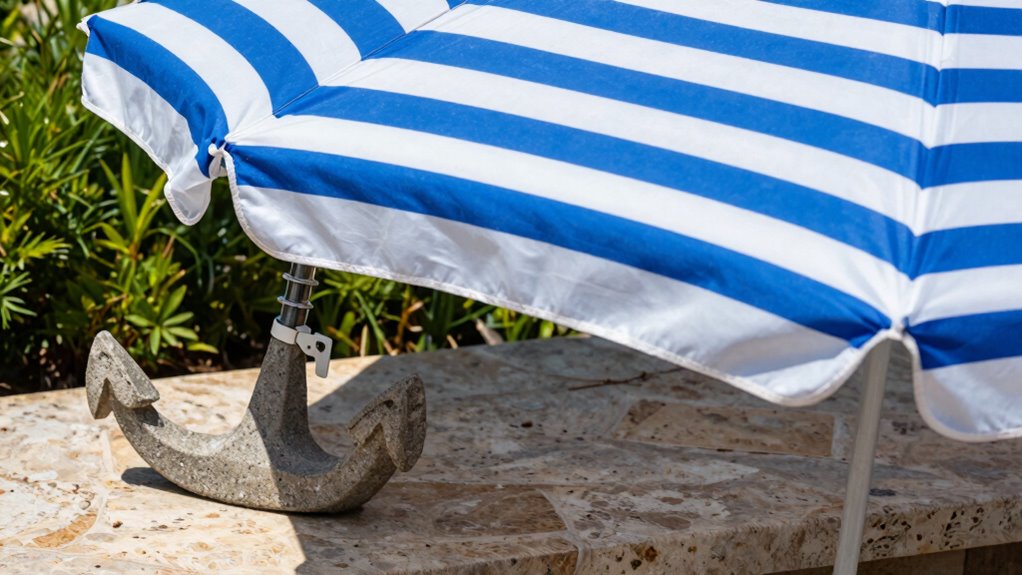
Choosing the right base or anchor is key to keeping your patio umbrella stable, especially during windy days or storms. To guarantee stability, consider these options:
- Heavy-duty concrete or weighted bases that can support your umbrella’s size and umbrella fabric, preventing tipping. These bases are often designed with material durability in mind to withstand outdoor weather conditions. Additionally, selecting a base with sufficient weight ensures better stability against strong gusts. Using bases with weather-resistant coatings can also extend their lifespan and maintain appearance over time. Incorporating proper weight distribution in your base selection can further enhance stability and prevent tipping during gusty conditions.
- Adjustable bases that let you fine-tune stability based on wind conditions.
- Anchors or bags that can be filled with sand or water for added weight, matching your outdoor decor’s color options.
- Ensure that the stability factors of your base are suitable for your specific outdoor environment to prevent accidents.
Picking a sturdy base not only keeps your umbrella upright but also wind resistance and complements your outdoor style, with color options that match your umbrella fabric. Remember, a solid foundation is essential to enjoy your outdoor space without worry.
How to Secure Your Umbrella in the Ground or on a Deck
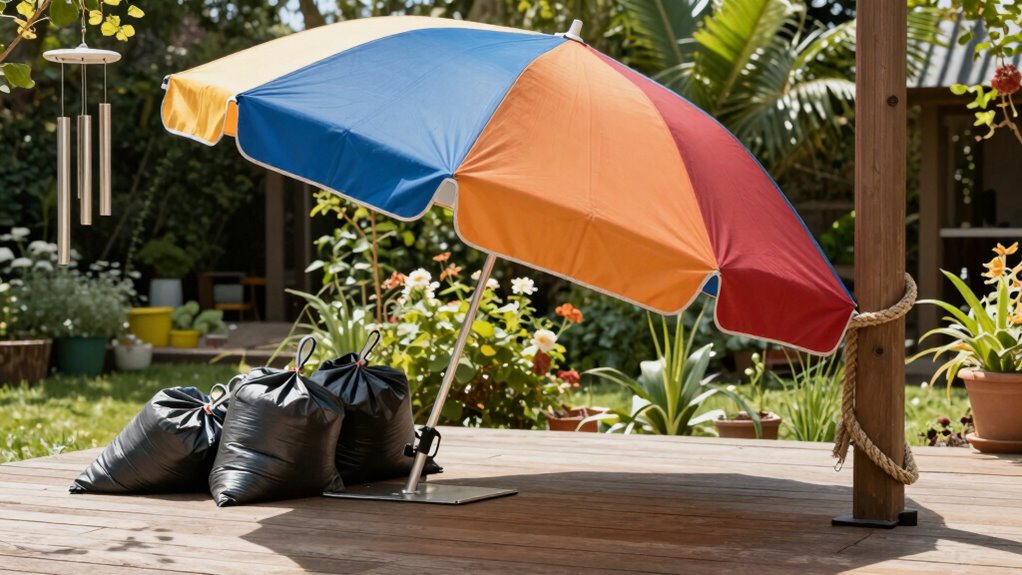
Securing your umbrella in the ground or on a deck is essential for stability and safety. Start by choosing a base that suits your setup, whether it’s a ground sleeve or a deck clamp. When installing in the ground, select a location where the umbrella’s umbrella color complements your patio furniture for a cohesive look. Use a sturdy ground sleeve or anchor that fits your umbrella pole’s diameter, ensuring it’s deep enough for stability. On a deck, attach a clamp or mounting plate securely to prevent wobbling. Always check that your umbrella is centered and straight, especially if you have colorful or patterned patio furniture nearby. Properly securing your umbrella keeps it steady even in windy conditions, protecting your outdoor space. Additionally, considering stability factors can help prevent tipping accidents. Incorporating work-life harmony principles can also help you enjoy your outdoor area more peacefully and prevent stress caused by unstable setups. Paying attention to weather conditions can further enhance the safety and longevity of your umbrella setup. Regularly inspecting your setup and making adjustments as needed can also contribute to its overall safety and durability.
Heavy-Duty Solutions: Using Weight Bags and Sandbags
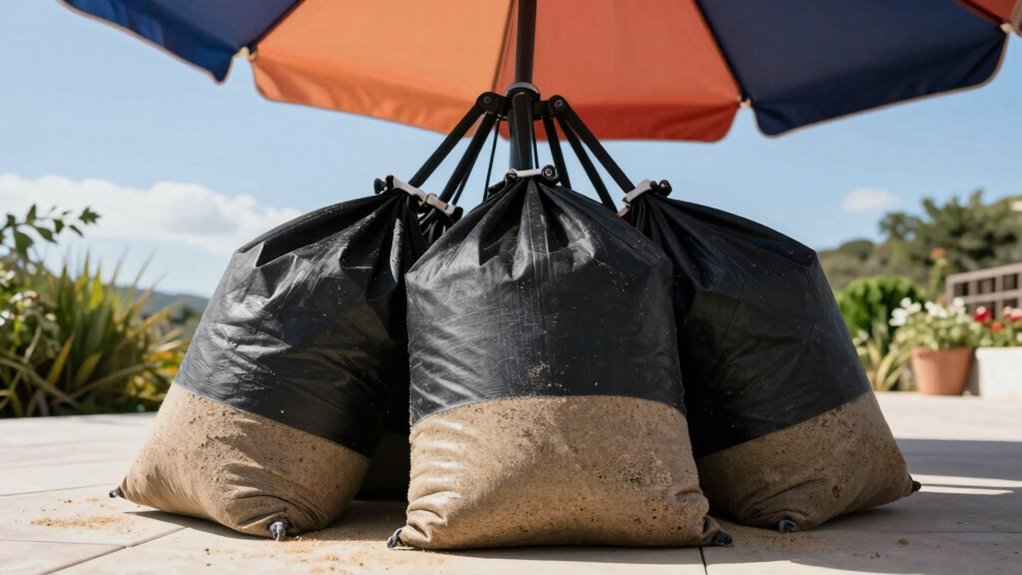
Heavy-duty solutions like weight bags and sandbags provide a reliable way to keep your patio umbrella stable during gusty days. They work by adding extra weight directly to the umbrella base, preventing tipping. To maximize effectiveness, consider these options:
- Use large, waterproof weight bags filled with sand or gravel to anchor your umbrella firmly.
- Attach sandbags around the pole, ensuring they don’t interfere with the umbrella fabric or canopy color.
- Place these weights evenly to distribute pressure, especially if your umbrella has a delicate fabric or vibrant canopy color that you want to protect.
- Additionally, material properties like waterproofing and weight capacity can impact how well your weights perform in different weather conditions. Selecting weights with high durability ensures they remain effective over time, even in harsh weather.
- For added stability, consider using anchoring systems designed specifically for patio umbrellas, which can provide a more secure hold in windy conditions.
- Using proper placement of the weights ensures maximum stabilization and reduces the risk of tipping or shifting during strong winds. Proper weight distribution not only enhances stability but also reduces strain on any individual weight.
These solutions are quick to set up and adaptable. They help maintain stability without compromising the umbrella’s aesthetic or the fabric’s integrity.
Picking a Wind-Resistant Patio Umbrella Design
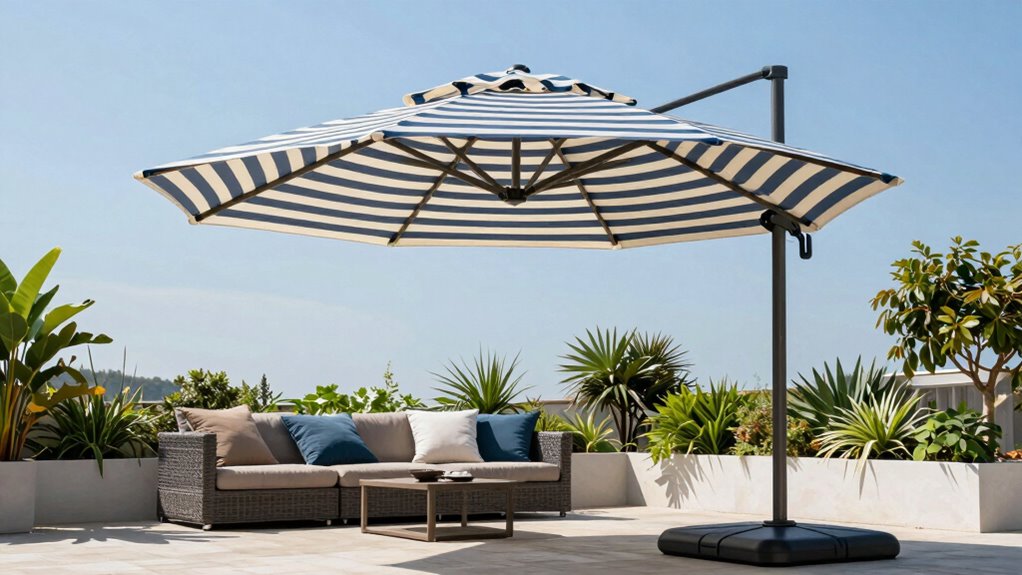
Ever wondered how to guarantee your patio umbrella stays put during strong winds? Picking a wind-resistant umbrella design is vital. Look for models with a vented canopy, which allows wind to pass through, reducing pressure. Consider fabric choices like polyester or acrylic, which are durable and less likely to catch gusts. Darker color options often absorb more heat, but bright or light shades reflect sunlight, helping keep the fabric cooler and less prone to damage. Some umbrellas feature reinforced ribs and sturdy frames designed for stability in gusty conditions. A well-designed wind-resistant umbrella balances lightweight features for portability with robust construction to withstand breezes. Choosing the right design ensures your outdoor space remains inviting, even when the wind picks up.
Accessories That Help Keep Your Umbrella Stable
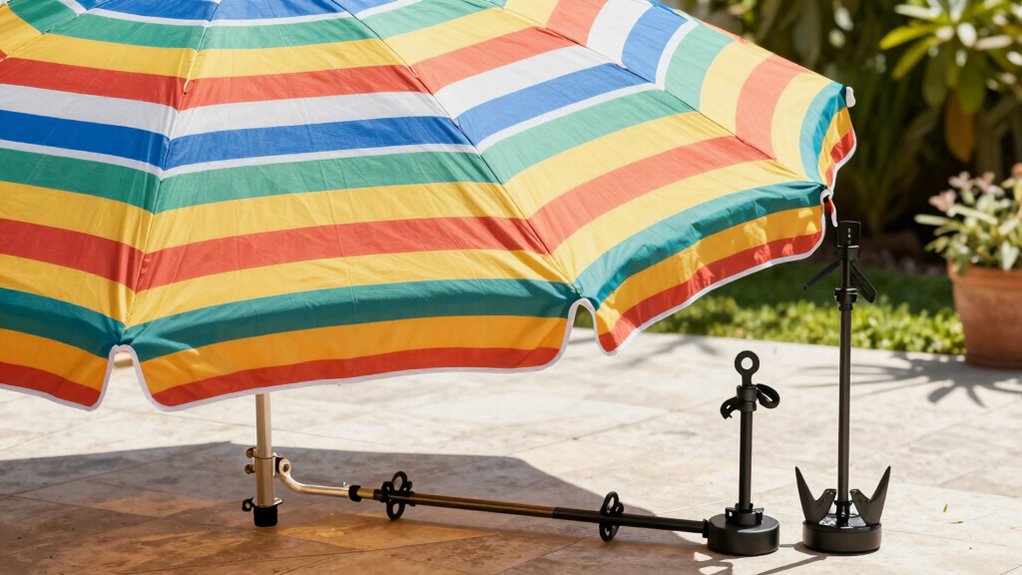
To keep your patio umbrella steady during gusts, consider using weight bags or weighted base options. These accessories add extra stability, preventing your umbrella from tipping over or flying away. Investing in the right stability aids guarantees you can enjoy your outdoor space worry-free. Additionally, ensuring your umbrella is properly secured to the surface can further enhance its stability during windy conditions. Incorporating stability techniques can significantly reduce the risk of accidents caused by windy weather, especially when combined with high-quality accessories designed for outdoor use. Implementing proper anchoring methods can provide even greater peace of mind during storms or strong winds.
Weight Bags For Stability
Looking for a simple way to keep your patio umbrella steady even on windy days? Weight bags for stability are a practical solution you should consider. They’re easy to use and versatile, fitting around the umbrella pole securely. Here are three benefits:
- Made from durable fabric materials like polyester or nylon, ensuring longevity.
- Available in a variety of color options to match your outdoor décor.
- Easily fillable with sand, gravel, or water for customizable weight. Additionally, their weather-resistant design helps withstand outdoor elements, extending their lifespan. Proper stability features can further enhance the safety and effectiveness of your umbrella in gusty conditions. Using quality materials can also contribute to the overall durability of these bags, making them a reliable choice for outdoor use. Incorporating secure attachment methods ensures the bags stay firmly in place during strong winds.
These bags are portable and attach quickly, giving your umbrella extra stability without bulky bases. Plus, their fabric options come in neutral or vibrant shades, so you can select the style that best fits your space. Proper child safety in outdoor furniture and accessories, such as weight bags, can help prevent accidents and ensure a safe environment for everyone. Keep your umbrella upright and your outdoor gatherings worry-free with weight bags designed for convenience and durability.
Weighted Base Options
Weighted base options are essential accessories that provide reliable stability for your patio umbrella. They come in various designs made from durable fabric materials like polyester, vinyl, or resin, guaranteeing long-lasting support. These bases often feature a sturdy fillable core—such as water, sand, or concrete—that adds weight and keeps the umbrella upright during windy conditions. You can choose from different color options to match your outdoor decor, from neutral tones like black, gray, and beige to vibrant hues that add a pop of color. Some weighted bases also have fabric covers or decorative casings, offering an attractive look while hiding the fill material. Selecting the right weighted base ensures your umbrella stays put, providing safety and comfort during outdoor gatherings.
Common Mistakes That Cause Umbrella Tipping and How to Avoid Them
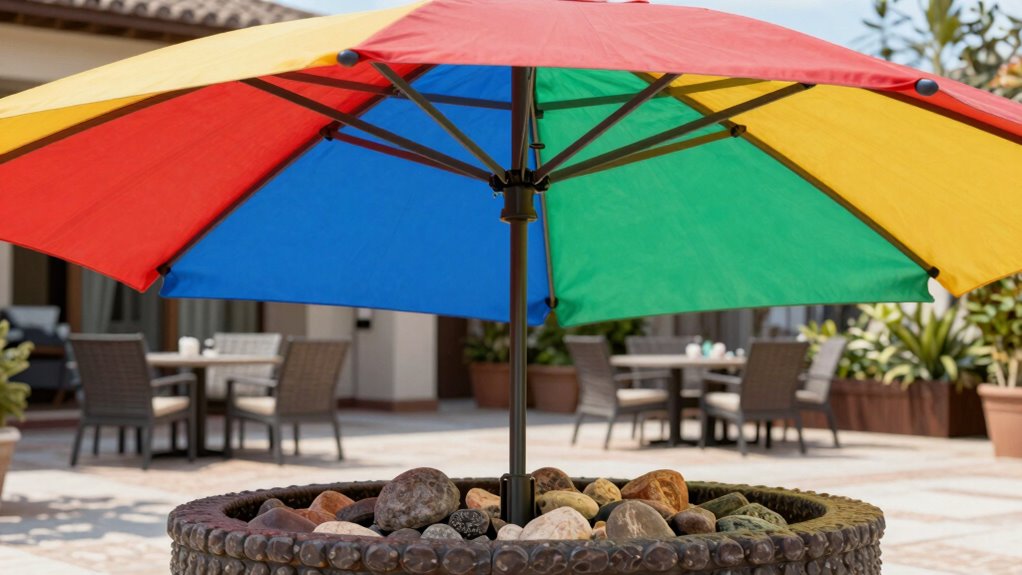
Have you ever wondered why your patio umbrella tips over unexpectedly? One common mistake is choosing the wrong base or not securing it properly. Here are three mistakes to avoid:
Avoid common patio umbrella mistakes: choose a heavy base, secure the fabric, and monitor tilt for stability.
- Using a lightweight or unstable base that can’t handle wind or uneven weight distribution.
- Ignoring the umbrella fabric’s exposure to wind, especially if it has decorative patterns that catch the breeze.
- Overlooking the umbrella’s tilt, which can cause uneven pressure and tip the umbrella over.
To prevent tipping, ensure your base is heavy enough, especially if your umbrella has vibrant or large decorative patterns that catch the wind. Properly securing and maintaining your umbrella fabric can make all the difference in keeping it upright.
When and How to Use Tie-Downs or Wind Straps Effectively
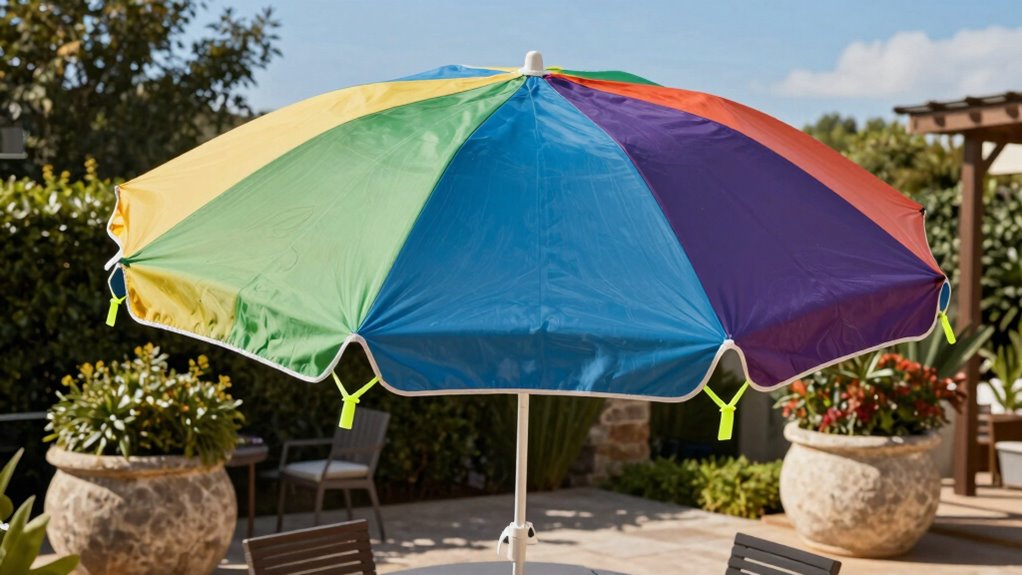
Knowing when to use tie-downs or wind straps can keep your umbrella secure during gusty weather. Make sure you select the right type and size of tie-downs for your umbrella’s weight and design. Proper attachment and strategic placement are key to ensuring they hold firmly in strong winds.
Selecting Suitable Tie-Downs
Choosing the right tie-downs is essential to keep your patio umbrella secure during windy days. To select suitable tie-downs, focus on tie down materials that are durable and weather-resistant, such as nylon straps, bungee cords, or ratchet straps. Next, consider securing techniques that maximize stability:
- Use heavy-duty straps that can withstand strong gusts without snapping.
- Ensure anchors are firmly embedded in the ground or attached to heavy objects.
- Regularly check and tighten tie-downs to maintain tension.
Proper Attachment Techniques
To guarantee your patio umbrella stays secure, it’s important to attach tie-downs and wind straps correctly at the right times. Always secure them before a storm or strong gusts, ensuring they’re tight enough to hold without damaging the umbrella fabric. When attaching, check that the straps are evenly distributed and fastened to sturdy anchor points. Keep in mind that the umbrella fabric’s color options can influence visibility; brighter colors make it easier to spot loose straps. Proper attachment techniques prevent the umbrella from tipping or flying away, especially during windy conditions. Regularly inspect the straps for wear or damage, replacing them as needed. Correctly using tie-downs and wind straps is essential for safety and prolonging your umbrella’s lifespan.
Optimal Placement Strategies
Timing is essential when applying tie-downs or wind straps to your patio umbrella. Proper placement guarantees you maintain inviting shade patterns and enhance your space’s aesthetics. To optimize effectiveness:
- Use straps during windy days or storm forecasts to secure the umbrella firmly.
- Position the umbrella in a sheltered spot, such as near walls or fences, to reduce wind exposure.
- Adjust the umbrella’s angle to minimize wind catch and prevent tipping.
Maintaining Your Umbrella for Long-Term Stability
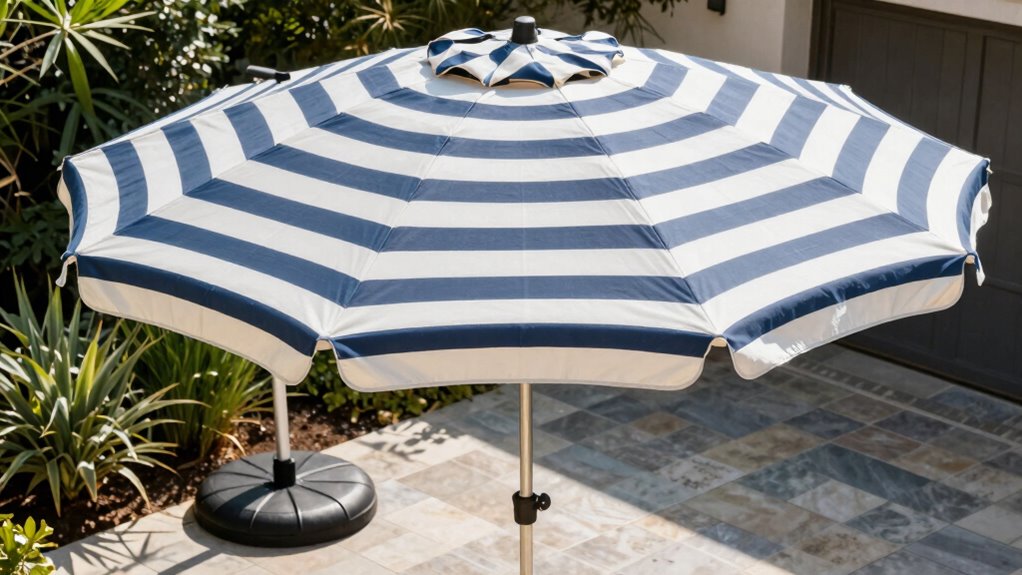
Regular maintenance is essential to keep your patio umbrella stable and functional over time. To guarantee its longevity, regularly inspect the fabric for signs of wear, which impacts fabric durability and overall stability. Clean the fabric with gentle soap and water to prevent mold and fading, helping maintain the umbrella’s vibrant color. When cleaning, avoid harsh chemicals that can weaken the material, leading to tears or fraying. Check the canopy’s stitching and seams, repairing any damage promptly. Additionally, store the umbrella in a shaded, dry area during off-season months to protect the fabric and preserve its color. Proper upkeep not only extends the lifespan of your umbrella but also keeps it looking attractive and stable for years to come.
Troubleshooting Wind-Related Umbrella Problems

Wind can quickly turn your outdoor space into a chaos zone if your umbrella isn’t properly secured. To keep it in place, consider using secure anchor methods or adding wind barriers around your setup. Choosing wind-resistant umbrellas also helps prevent damage and keeps your patio safe during gusty days.
Secure Anchor Methods
Securing your patio umbrella against gusts is essential to prevent it from tipping or flying away during windy conditions. To guarantee stability, consider these anchor methods:
- Use weighted base options like sandbags or water-filled stands that can hold umbrella fabric securely while preventing tipping.
- Attach heavy-duty straps or b clamps directly to the pole, anchoring it to sturdy surfaces or furniture.
- Opt for umbrellas with vented canopies, which allow wind to pass through, reducing pressure on the fabric and frame.
When choosing your umbrella, pick a fabric that’s durable and resistant to wind stress, and consider color options that blend seamlessly with your outdoor decor. Proper anchoring keeps your umbrella safe and looking great longer.
Use Wind Barriers
When gusts threaten to destabilize your patio umbrella, installing wind barriers can be an effective solution. You can choose fabric materials like mesh, burlap, or weather-resistant polyester to create barriers that block or redirect wind flow. These materials are durable and can be easily attached to nearby structures or set up as standalone screens. When selecting fabric, consider color options that blend with your outdoor decor or provide visibility, such as neutral tones or light shades. Bright or dark colors can also absorb heat, so choose wisely based on your climate. Properly installed wind barriers not only reduce airflow but also add a decorative touch to your patio. They help keep your umbrella stable and protect your outdoor space from sudden gusts.
Choose Wind-Resistant Umbrellas
Choosing wind-resistant umbrellas can considerably reduce the hassle of dealing with gusts that threaten to topple or damage your outdoor setup. When selecting one, focus on fabric durability and sturdier frames to withstand strong winds. Look for umbrellas with features like vented canopies to allow airflow and reduce wind pressure. Consider these options:
- Opt for high-quality, weather-resistant fabrics that resist color fading over time.
- Choose umbrellas with reinforced ribs and sturdy frames designed for wind resistance.
- Ensure the canopy design includes vents for better airflow and stability.
These features help prevent tipping and prolong the umbrella’s lifespan, especially in windy conditions. Investing in a wind-resistant umbrella means fewer replacements and less worry about fabric damage or faded colors after storms.
Frequently Asked Questions
Can a Patio Umbrella Withstand Hurricane-Force Winds?
No, your patio umbrella can’t withstand hurricane-force winds. These winds are too strong, risking tipping or damaging your umbrella. To improve durability, choose one with high-quality umbrella fabric durability and UV protection coatings, but even the best won’t hold in such extreme conditions. Always close and secure your umbrella during storms, and avoid using it in hurricane-force winds to prevent injury or damage.
What Materials Are Best for Wind-Resistant Umbrella Frames?
Imagine a sturdy tree bending but not breaking in a storm—that’s the power of wind-resistant frame materials. For durability, you want aluminum or fiberglass, as they’re lightweight, flexible, and resistant to corrosion. These frame options, combined with strong umbrella fabric durability, help your umbrella withstand gusts. So, choose frames made from these materials for a resilient, wind-taming umbrella that stays put even when the wind howls.
How Often Should I Check and Tighten Umbrella Fittings?
You should check and tighten your umbrella fittings at least once a month to guarantee safe umbrella maintenance. Regular fitting inspection helps prevent loosening caused by wind or frequent use. Before each outdoor gathering, do a quick visual check to spot any loose screws or fittings. Keeping fittings tight not only prolongs your umbrella’s lifespan but also keeps it stable, reducing the risk of tipping over during windy conditions.
Are There Umbrella Designs Suitable for Snowy Climates?
Did you know that only 15% of patio umbrellas are designed for snowy climates? For winter, look for umbrellas with snow resistant fabrics and sturdy frames. An insulated umbrella cover can help safeguard it from snow buildup and ice damage. Choose models with reinforced ribs and a stable base to prevent tipping over. These features ensure your umbrella stays secure and functional, even in harsh winter conditions.
How Do I Prevent Rust and Corrosion on Outdoor Umbrellas?
To prevent rust and corrosion on outdoor umbrellas, you should prioritize cleaning maintenance regularly to remove dirt and moisture. Apply protective coatings like sealants or rust-resistant paint to shield metal parts from harsh weather. Store your umbrella in a dry, covered area during winter or storms. These steps help prolong your umbrella’s lifespan, keeping it looking great and functioning well despite exposure to the elements.
Conclusion
By following these tips, you’ll keep your patio umbrella standing tall like a sturdy oak, no matter how fierce the wind blows. Always choose the right base, secure it properly, and stay vigilant with maintenance. Think of your umbrella as a trusted friend—when properly cared for, it’ll stand by you and weather any storm. With a little effort, your outdoor oasis remains safe and inviting, no matter what Mother Nature throws your way.