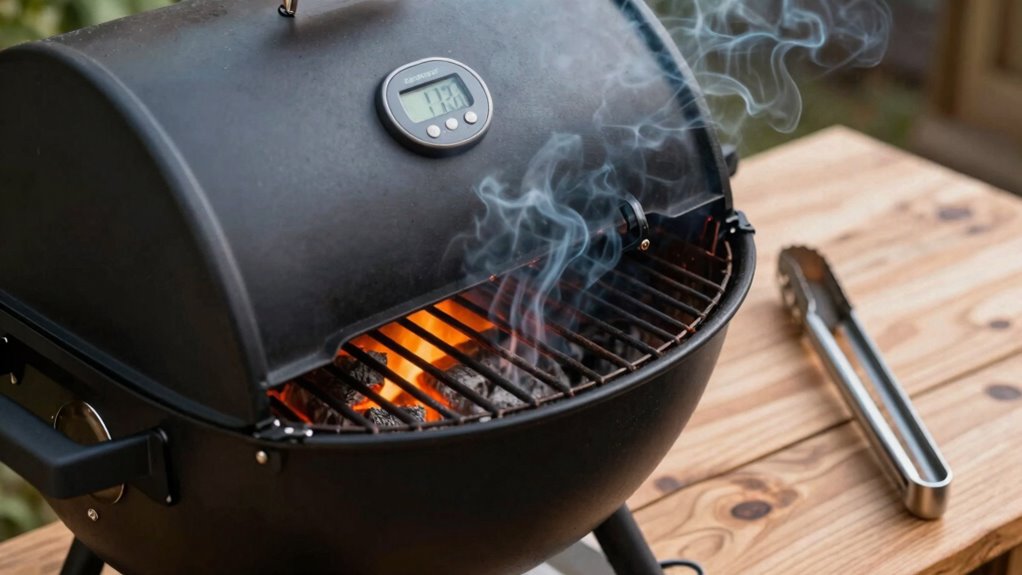

Temperature swings in your pellet grill happen due to issues like poor pellet quality, build-up in parts, environmental factors, or incorrect setup. Wind, humidity, and moisture can disrupt airflow and burn consistency, causing uneven heat. Regular maintenance, proper calibration, and using quality pellets help stabilize temperatures. Ensuring good airflow and correct placement also matter. For smooth, steady cooks, understanding these causes is key—keep going to discover more ways to keep your fire steady.
Key Takeaways
- Temperature swings are caused by fuel moisture, grill component issues, and external weather conditions affecting airflow and combustion.
- Regular cleaning, calibration, and using high-quality pellets help maintain stable temperatures during cooking.
- Proper grill placement and unobstructed vents improve airflow, reducing fluctuations and ensuring even heat distribution.
- Monitoring internal temperatures with reliable thermometers allows quick detection and correction of temperature deviations.
- Addressing worn components and storing pellets properly prevents burn inconsistencies and maintains consistent grill performance.
Why Do Pellet Grills Experience Temperature Fluctuations?
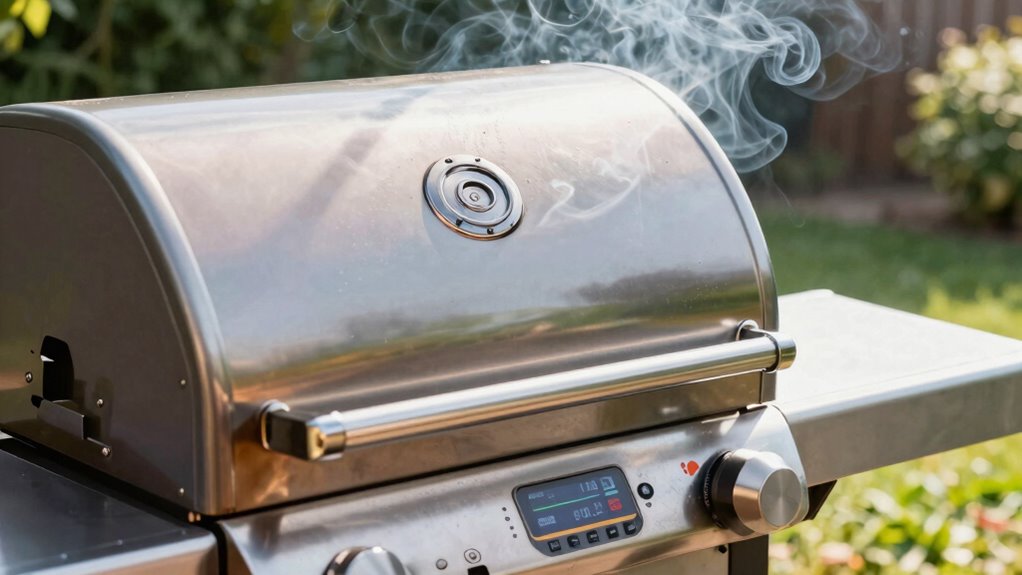
Pellet grills can experience temperature fluctuations because their cooking process depends on a variety of factors that can change during use. One key factor is fuel types; different wood pellets burn differently, affecting heat consistency. Some pellets may produce more smoke or burn hotter, leading to temperature swings. Ambient conditions also play a significant role—wind, humidity, and outdoor temperature can impact how well your grill maintains its set temperature. For example, cold or windy conditions make it harder for the grill’s fan and auger system to regulate heat properly. As these conditions fluctuate, so does the internal temperature. Additionally, the combustion process within the pellets can vary depending on pellet quality and moisture content, influencing temperature stability. Proper pellet storage can help maintain consistent moisture levels and improve overall burn quality. Monitoring fuel quality and understanding how external factors influence your grill can help you anticipate and manage temperature swings more effectively.
How Do Temperature Swings Affect Your Cooking Results?

When your pellet grill’s temperature swings, it can lead to inconsistent cooking results. You might notice certain parts of your food are undercooked or overcooked, or that smoke isn’t evenly distributed. These fluctuations can make it tough to achieve the perfect, evenly smoked meal you’re aiming for.
Inconsistent Cooking Temperatures
Inconsistent cooking temperatures can substantially impact your results, often leading to unevenly cooked food or surprise flare-ups. When your pellet grill’s temperature calibration is off, it struggles to maintain steady heat. Ambient factors like wind, outdoor temperature, and humidity further influence temperature stability, causing swings. These fluctuations can result in undercooked or burnt spots, ruining your meal. To visualize, consider this table:
| Factor | Effect |
|---|---|
| Temperature calibration | Causes inaccurate readings |
| Wind | Lowers grill temperature |
| Humidity | Affects pellet burn rate |
| Outdoor temperature | Alters internal heat levels |
| Pellet quality | Impacts consistent fuel delivery |
Addressing these issues involves regular calibration and controlling ambient factors, ensuring consistent, predictable results. Additionally, understanding how air quality can influence your grilling environment may help optimize performance, especially since poor air quality can affect combustion efficiency in pellet grills.
Uneven Smoke Distribution
As temperature swings occur, they directly disrupt the even distribution of smoke throughout your cooking chamber. When this happens, smoke circulation becomes inconsistent, leading to uneven flavor infusion. Proper grill placement is essential; placing your pellet grill in a spot with good airflow helps maintain steady temperatures and promotes even smoke flow. If your grill is tucked into a corner or near walls, it can restrict smoke circulation, causing some areas to receive more smoke than others. This proper grill placement is vital for achieving consistent results and enhancing flavor quality. Additionally, airflow management plays a crucial role in maintaining steady temperatures and even smoke distribution, so ensuring unobstructed airflow around your grill is highly recommended. Ensuring your pellet grill is positioned in an open, ventilated area can significantly improve smoke flow and temperature stability. Poor ventilation can cause heat buildup and uneven smoke, further impacting your cooking results. To fix this, make certain your grill is positioned in an open, well-ventilated area, and regularly check the placement to keep smoke flowing smoothly and evenly throughout your cooking chamber. Proper air circulation is also important for preventing temperature swings and ensuring consistent cooking performance.
Common Causes of Pellet Grill Temperature Fluctuations
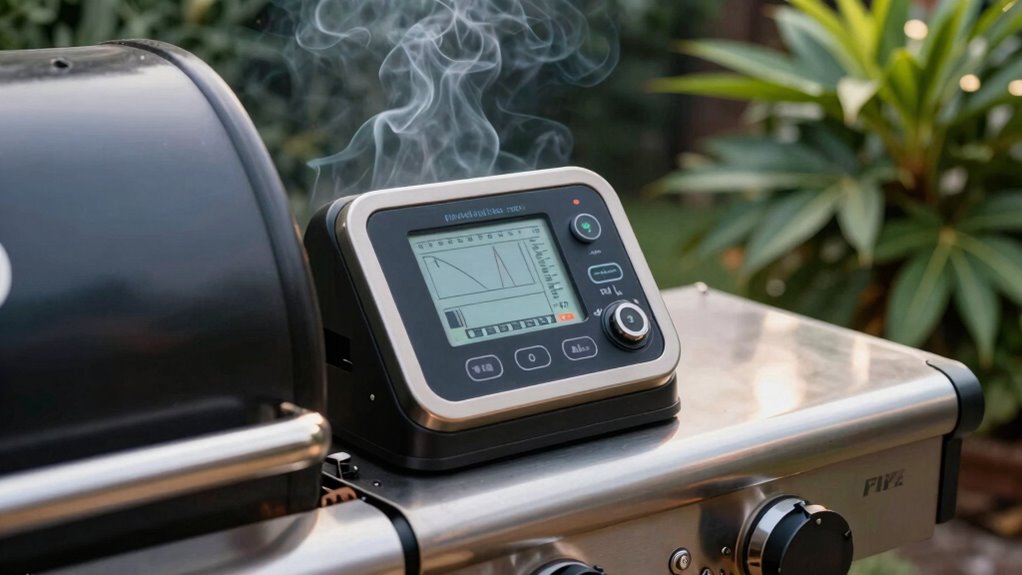
Your grill’s temperature can fluctuate due to issues with pellet quality and moisture, which affect how consistently they burn. Malfunctions in the auger or fan can also cause uneven heat distribution, making it harder to maintain a steady temperature. Identifying these common causes helps you keep your grill performing at its best. Additionally, understanding regional flavors and blends can help you select the right pellets to enhance your cooking experience. Being aware of firebox construction and its impact on airflow can also contribute to more stable temperatures, especially when considering pellet storage and how it influences pellet moisture levels. Proper airflow management within the firebox is crucial for maintaining consistent heat, as it directly impacts pellet combustion and temperature stability.
Pellet Quality and Moisture
Pellet quality and moisture levels play a crucial role in maintaining stable temperatures on your pellet grill. Poor-quality pellets or those with high moisture content can cause inconsistent feeding and uneven burning, leading to temperature swings. Proper pellet storage is essential; keep pellets in a dry, airtight container to prevent moisture absorption. When pellets absorb moisture, they tend to burn less efficiently, producing inconsistent heat and smoke. Using damp or low-quality pellets can cause the grill to struggle with maintaining a steady temperature, as the moisture interrupts proper combustion. Always check your pellets before use, ensuring they are dry and stored correctly. Proper pellet storage is vital for consistent performance and avoiding temperature fluctuations. High-quality, properly stored pellets help your grill burn evenly, resulting in more consistent temperatures and better cooking results. Additionally, pellet composition can help you troubleshoot and optimize your grill’s performance for safer, more reliable use. Proper airflow and ventilation are also key factors in preventing temperature fluctuations and ensuring optimal combustion. Ensuring correct airflow management can significantly improve temperature stability during grilling.
Auger and Fan Malfunctions
Malfunctions in the auger or fan are common causes of temperature fluctuations on a pellet grill. An auger misalignment can prevent pellets from feeding smoothly into the firepot, causing inconsistent heat levels. If the auger is jammed or misaligned, it won’t deliver a steady pellet supply, leading to sudden temperature drops or spikes. Fan failure is another frequent issue; if the fan isn’t working properly, it won’t circulate air effectively, which can cause uneven combustion and temperature swings. Check for obstructions or damage to the fan blades, and ensure the auger is properly aligned and free of debris. Regular maintenance and calibration help improve color accuracy and temperature stability. Addressing these issues promptly helps maintain consistent temperatures and ensures your grill performs reliably.
How to Set Up Your Pellet Grill for Steady Heat
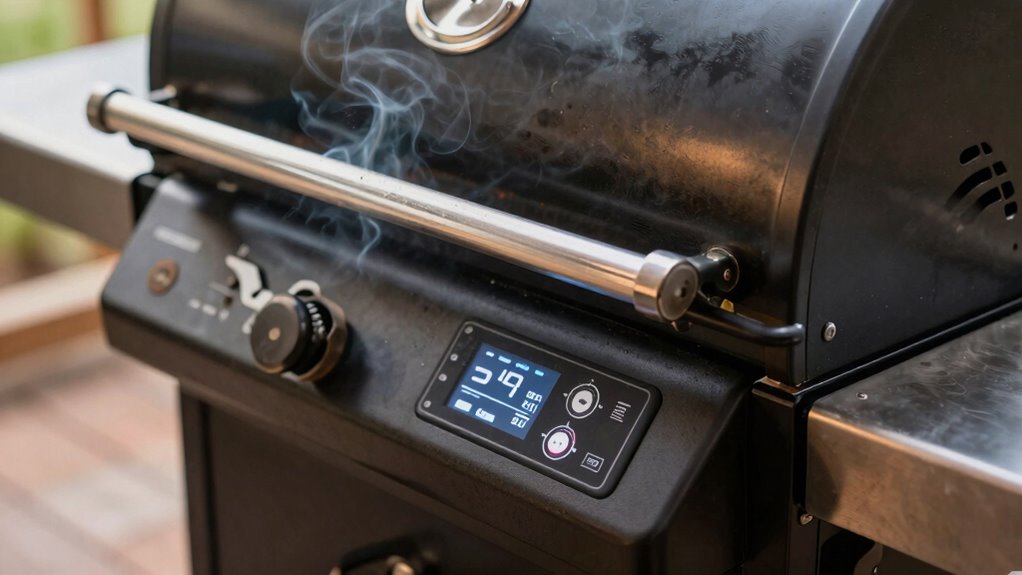
Achieving steady heat on your pellet grill starts with proper setup. Begin by selecting the right fuel types; different pellets can affect burn consistency and temperature stability. Always use high-quality pellets recommended for your grill to guarantee uniform combustion. Next, perform a thorough grill calibration—consult your user manual to adjust the temperature settings accurately. Proper calibration helps your grill maintain consistent heat throughout the cooking process. Keep the hopper filled with the appropriate fuel type, avoiding overfilling or underfilling, which can cause temperature fluctuations. Regularly clean and inspect the auger and burn pot to prevent blockages or buildup that might disrupt airflow. With these steps, your pellet grill will be better prepared to deliver steady, reliable heat.
Troubleshooting Pellet Grill Temperature Fluctuations Step-by-Step
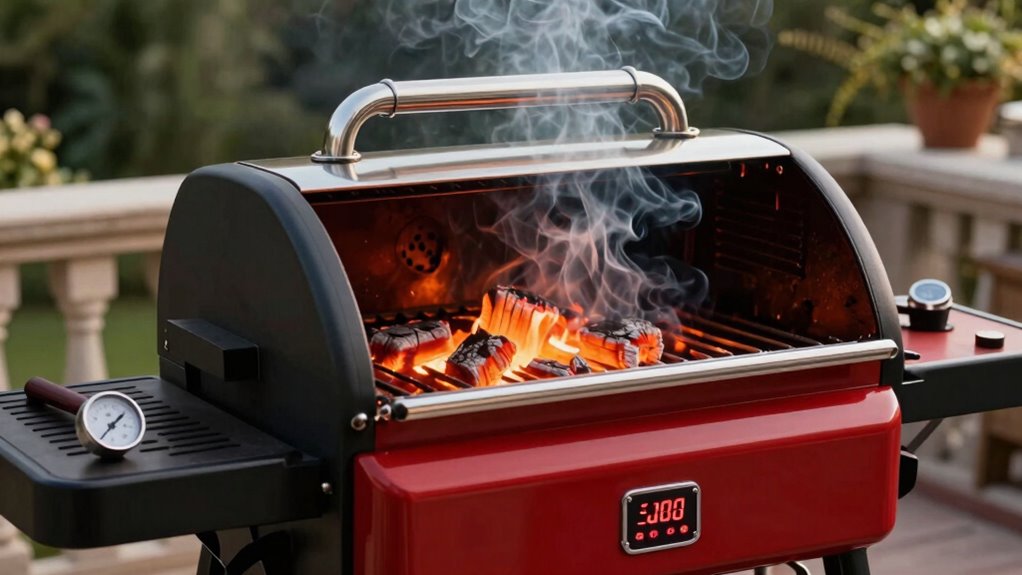
Temperature fluctuations on your pellet grill can be frustrating, but you can troubleshoot them effectively by following a systematic approach. First, review your fuel selection—using the right quality and type of pellets guarantees consistent combustion and heat. Next, check your grill calibration; inaccurate temperature readings can lead you to make incorrect adjustments. Use a reliable probe thermometer to verify your grill’s actual temperature and recalibrate if needed. Ensure your pellets are stored properly to prevent moisture absorption, which can cause inconsistent burns. Also, clean your grill’s firepot and ensure the auger is feeding pellets smoothly. Proper maintenance is essential for consistent performance and minimizing temperature swings. Additionally, ensure your grill’s airflow is unobstructed, as poor airflow can also lead to temperature inconsistencies. Maintaining proper air quality considerations, such as ensuring clean and unobstructed vents, can also help stabilize temperature fluctuations. By adjusting your fuel choices and confirming your grill’s calibration, you’ll minimize temperature swings and achieve more stable, predictable cooking results.
Tips for Maintaining Consistent Temperature During Long Cooks
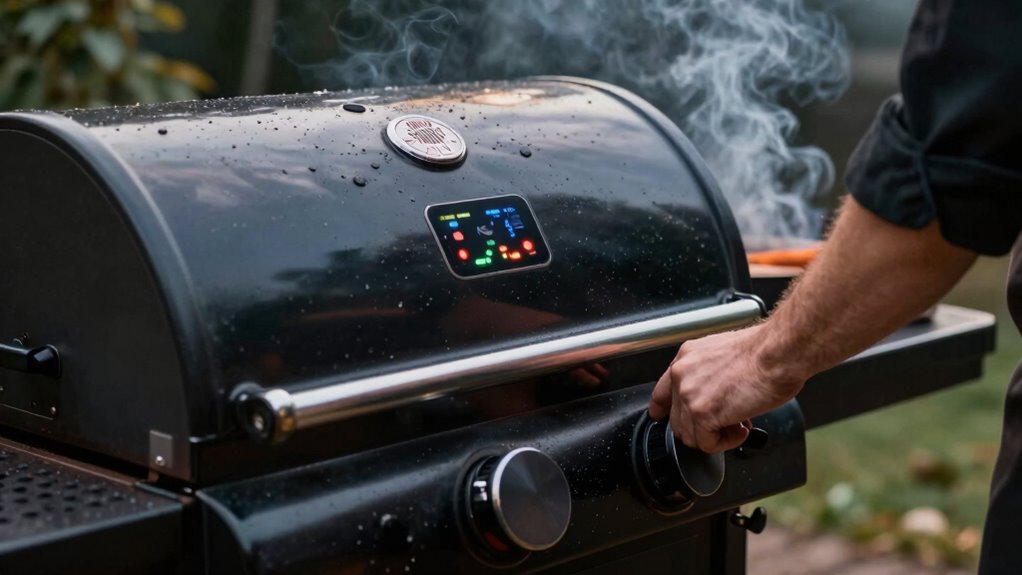
Maintaining a steady temperature during long cooks requires careful planning and attention to your grill’s performance. Start by ensuring proper temperature calibration, regularly checking that your thermostat displays accurate readings. This helps you set precise targets and avoid unexpected fluctuations. Additionally, consider insulation improvements around your pellet grill to minimize heat loss, especially during extended cooking sessions. Better insulation retains consistent heat and reduces the workload on your pellet feed system. Keep the lid closed as much as possible to maintain a stable environment. Using a reliable meat thermometer can also help you monitor internal temperatures without opening the grill. These steps work together to stabilize your cook, prevent temperature swings, and produce consistently excellent results. Paying attention to effective temperature regulation techniques can further enhance your ability to maintain consistent heat during long cooking sessions. Regularly checking pellet feed system performance can help identify issues early and ensure your grill maintains the desired temperature.
Additionally, understanding heat retention principles can aid in optimizing your grill’s ability to hold steady heat over extended periods.
When Should You Upgrade or Replace Pellet Grill Parts?
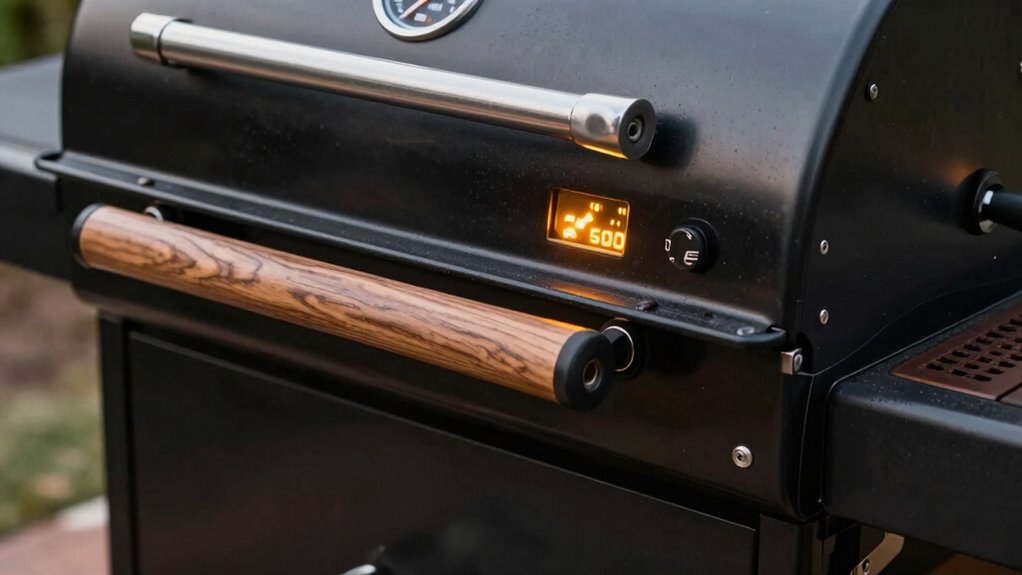
Knowing when to upgrade or replace parts on your pellet grill is essential for ensuring peak performance and safety. Over time, component wear can compromise your grill’s ability to maintain consistent temperatures, leading to uneven cooking or temperature swings. Pay attention to pellet quality, as poor-quality pellets can accelerate wear on parts like the auger, burn pot, and sensors. If you notice persistent ignition issues, uneven heat, or excessive smoke, it’s a sign that key components may need replacing. Regular inspections of the auger motor, temperature probes, and gaskets help identify early signs of deterioration. Additionally, understanding the importance of proper maintenance can help extend the lifespan of your grill and prevent unnecessary part replacements. Being aware of component lifespan can guide you in knowing when parts are nearing the end of their functional life. When parts become worn or damaged beyond simple fixes, upgrading ensures your grill functions efficiently, keeps cooking temperatures steady, and extends the lifespan of your equipment.
Pro Tips to Prevent Future Temperature Fluctuations
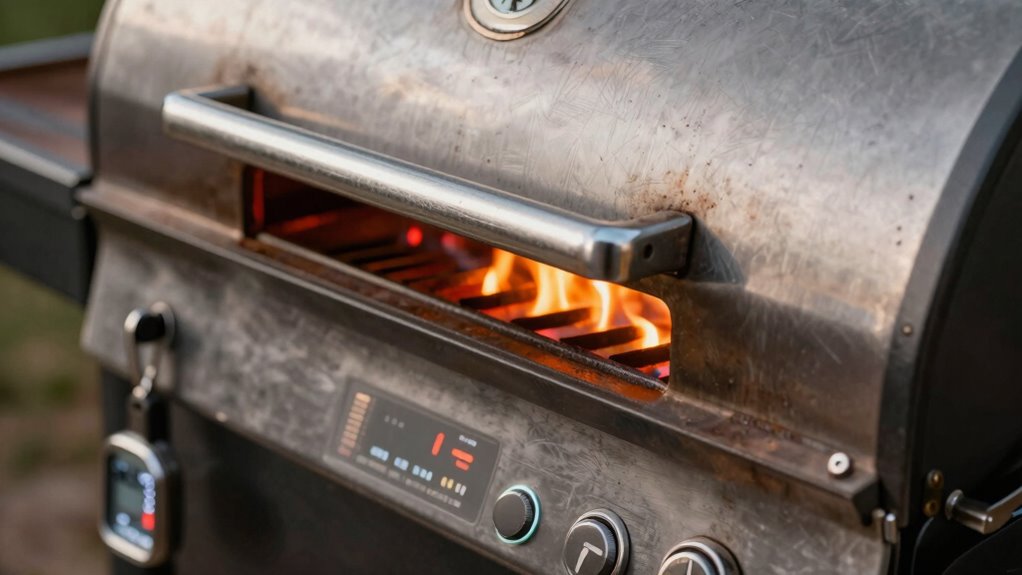
To keep your pellet grill running consistently, it’s essential to take proactive steps that minimize temperature fluctuations. Regular grill maintenance ensures all components function properly, preventing issues that cause uneven heat. Clean out ash and grease buildup, inspect the auger and fan, and replace worn parts promptly. Additionally, monitor ambient conditions, as extreme weather or sudden temperature changes can impact your grill’s performance. Position your grill in a shaded, sheltered spot when possible, and consider using a grill cover to protect it from wind and rain. Maintaining stable ambient conditions and performing routine grill maintenance help your pellet grill stay steady at your desired temperature, making your cooks more predictable and enjoyable.
Frequently Asked Questions
How Do Ambient Outdoor Conditions Influence Pellet Grill Temperature Stability?
Outdoor conditions directly impact your pellet grill’s temperature stability. Weather impact, like high humidity or sudden rain, can cause temperature fluctuations. Wind effects are especially significant, as gusts can cool down or heat up the grill rapidly, making it harder to maintain consistent temps. To minimize these issues, set up your grill in a sheltered area or use a windbreak, and monitor weather changes to adjust your settings accordingly.
Can Different Types of Wood Pellets Cause Temperature Fluctuations?
While subtle differences in wood pellet varieties can influence temperature stability, it’s mostly about pellet composition. Some pellets burn more consistently, providing steadier heat, while others might cause gentle fluctuations. You’ll notice that choosing high-quality, well-manufactured pellets helps maintain even temperatures. Experimenting with different wood pellet varieties allows you to find the perfect balance, ensuring your grill performs reliably without unexpected temperature shifts.
What Role Does Pellet Hopper Design Play in Maintaining Consistent Heat?
Your pellet hopper design plays a vital role in maintaining consistent heat. A larger hopper capacity guarantees a steady pellet supply, reducing temperature fluctuations. Proper auger alignment prevents jams and uneven pellet feed, which can cause temperature swings. When the hopper is well-designed with these factors in mind, your grill delivers more stable heat, making it easier to cook precisely and enjoy consistent results every time.
Are Digital Controller Settings Sufficient to Prevent Temperature Swings?
Digital controller settings can help, but they aren’t enough alone to prevent temperature swings. Limitations in digital controllers mean you still need to monitor pellet feed consistency and make manual adjustments when needed. Precise programming helps, but persistent pellet feed fluctuations can cause unpredictable temperature pops. To keep your grill steady, you must combine digital settings with vigilant pellet feeding, ensuring consistent combustion and controlled cooking conditions.
How Often Should I Calibrate My Pellet Grill’s Temperature Sensor?
You should calibrate your pellet grill’s temperature sensor at least once a season or after any noticeable inconsistencies. Regular calibration guarantees sensor accuracy, helping you maintain steady temperatures. If you notice temperature fluctuations or your grill’s readings seem off, it’s time for a calibration. Keeping up with calibration frequency prevents inaccurate readings, so your grill performs at its best and minimizes unwanted temperature swings.
Conclusion
Now that you know the common causes and fixes for temperature swings, imagine mastering your pellet grill to achieve perfect, consistent results every time. But what if the next cook surprises you with an unexpected fluctuation? Will you be ready with your troubleshooting skills? Stay vigilant, keep your grill well-maintained, and you’ll turn those unpredictable swings into a thing of the past. The next great meal is just a temperature adjustment away—are you prepared to make it happen?