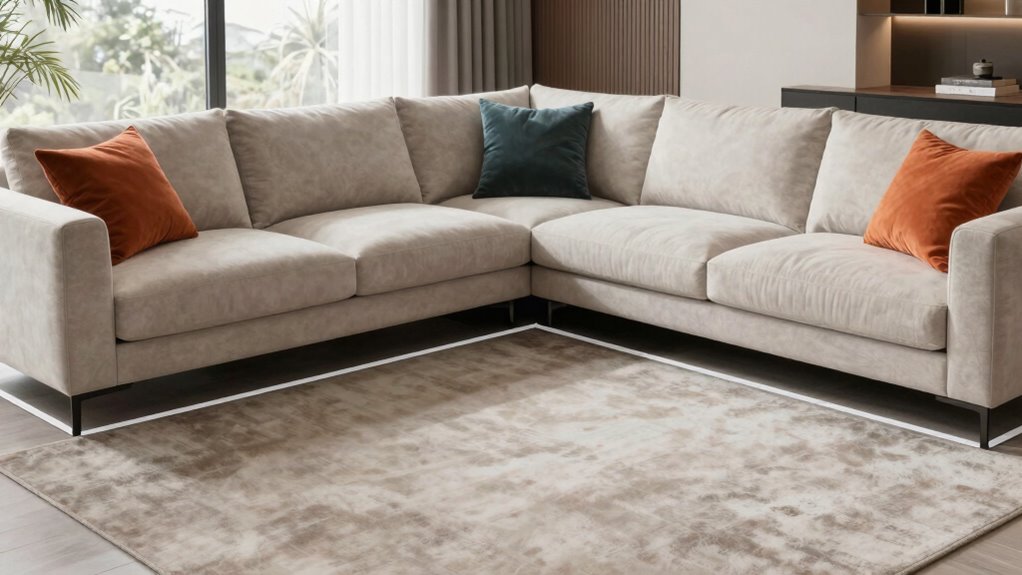

Using painter’s tape on the floor is a simple way to visualize your sectional sofa layout before moving furniture. Measure your room carefully, note key features, and mark the space with tape to outline different configurations like L-shape or modular styles. This helps you see traffic flow, avoid overcrowding, and experiment with arrangements easily. Keep adjusting the tape until you find the perfect layout – the next steps will guide you through making it real.
Key Takeaways
- Use painter’s tape to outline sectional sofa configurations directly on the floor for accurate spatial visualization.
- Measure sofa dimensions and replicate them with tape to test fit and layout options before moving furniture.
- Mark pathways and clearance zones with contrasting tape to ensure comfortable movement and optimal space utilization.
- Experiment with different sectional arrangements—L-shape, modular, corner—by adjusting tape outlines for best fit and flow.
- Incorporate visual cues with tape to balance style, comfort, and space efficiency, preventing overcrowding and awkward angles.
What’s the Problem With Visualizing Your Sofa Layout?

Have you ever struggled to picture how a sectional sofa will fit into your space? It’s a common challenge, especially when you’re unsure about color coordination and fabric selection. Visualizing the layout without seeing it in person can lead to doubts about whether the sofa will complement your room’s style or clash with existing decor. Choosing the right fabric and colors can influence how well the sofa blends in or stands out. Without a clear plan, you might worry about overcrowding or awkward angles. This uncertainty makes it hard to imagine the final look. Using tape on the floor helps you see the actual size and shape, easing the guesswork and giving you confidence in your color and fabric choices before making a purchase. Exploring digital content methods also offer innovative ways to plan your space virtually, similar to how contrast ratio impacts the visual quality of projectors by enhancing depth and clarity.
How Do I Measure and Prepare My Room for Tape Planning?
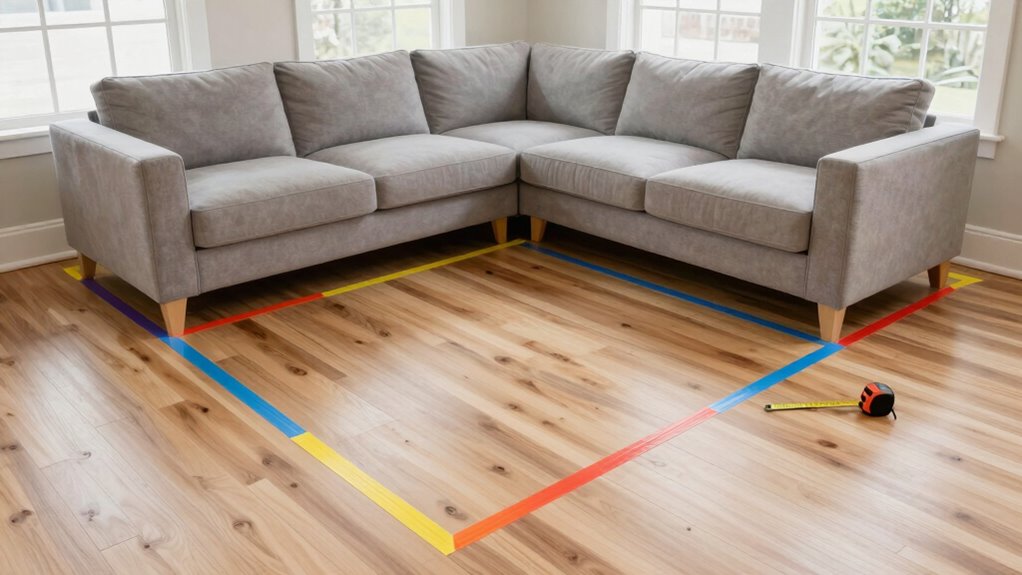
Before you start taping out your sofa layout, it’s important to measure your room accurately. Use a tape measure to record the length and width of each wall, noting doorways and windows. Decide on a color scheme that complements your furniture fabrics, which helps visualize the overall look. Mark key measurements on the floor with painter’s tape, creating a scaled outline of your space. Understanding media literacy can also help you interpret design ideas and trends you find online. Being aware of astrological compatibility might even influence the vibe you aim for in your space, aligning with your personal energy. Incorporate innovative planter designs to add artistic elements that enhance your home’s decor, creating a more inviting environment. Additionally, considering best vacuums for dust removal in 2024 can keep your space clean and allergen-free, supporting a healthier living environment. Gaining space planning skills can further improve your ability to visualize and optimize your room layout. Here’s a simple plan:
| Step | What to Do | Notes |
|---|---|---|
| Measure walls | Record length and width | Include door/window space |
| Decide on color schemes | Choose wall and furniture colors | Complement fabrics |
| Mark furniture placement | Tape out sofa and tables | Check flow and space |
| Clear the area | Remove unnecessary items | Keep it clean |
| Confirm measurements | Double-check tape outlines | Adjust as needed |
How Can I Create Accurate Tape Outlines for Different Sofa Styles?
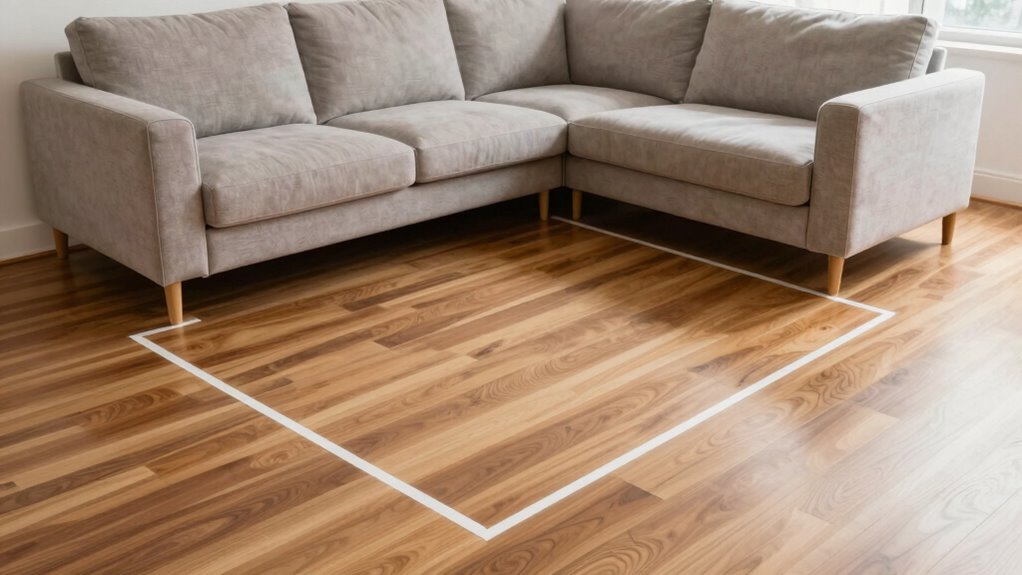
Creating accurate tape outlines for different sofa styles requires understanding their unique shapes and dimensions. Start by measuring the length, width, and depth of each piece, noting details like curved arms or modular sections. Use painter’s tape to mark these measurements directly on the floor, ensuring the lines reflect the actual furniture shape. Consider fabric patterns and color coordination when choosing tape colors; contrasting or patterned tapes can help differentiate sections during planning. For example, a sectional with a bold fabric pattern might need a different tape color to highlight its orientation. Double-check measurements and compare them to your room’s layout. This precise approach helps you visualize the sofa’s footprint accurately, making it easier to plan space and ensure the final arrangement looks balanced and cohesive. Additionally, understanding the design principles of furniture layout can assist in creating more functional and aesthetically pleasing arrangements.
How Do I Visualize Traffic Flow and Accessibility With Tape?
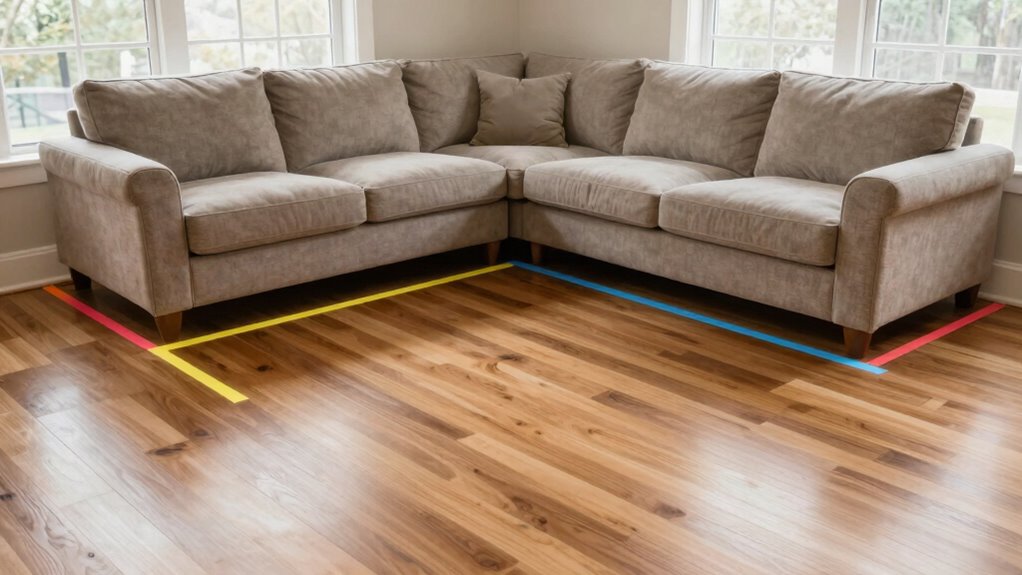
Start by marking clear pathways with tape to see how people will move through the space. Test room accessibility by walking through the taped areas and noting any obstructions or tight spots. Adjust the tape as needed to improve traffic flow and guarantee easy access to all seating areas. Incorporating traffic flow principles can help optimize your layout and create a more functional living area. Using tape can also help you visualize ergonomic considerations, ensuring comfortable and natural movement within the space.
Marking Pathways Clearly
Have you ever struggled to see how people will move through a space with furniture in place? Using tape to mark pathways helps clarify traffic flow and accessibility. Choose tape that complements your flooring options—neutral colors for a seamless look or bold hues to create visual boundaries. This method allows you to visualize how furniture placement impacts movement without permanent changes. Keep aesthetic considerations in mind: clear, well-defined pathways make your space feel open and inviting. By visually mapping routes, you can easily identify potential bottlenecks or obstructions before committing to a layout. This simple step ensures smooth traffic flow and makes rearranging furniture more efficient, saving you time and effort. Tape-marked pathways are an affordable, flexible way to perfect your sectional sofa setup. Additionally, understanding cabling solutions can help you plan for electronic device placement without clutter. Incorporating traffic flow visualization techniques can further enhance your space’s functionality and comfort. Being mindful of space planning ensures your living area remains both practical and aesthetically pleasing. Moreover, considering flexible furniture arrangements enables you to adapt your layout as needed for different occasions or preferences.
Testing Room Accessibility
Once you’ve marked out pathways with tape, the next step is to evaluate how accessible and navigable your room truly is. Check that there’s enough door clearance, so doors can open fully without obstruction. Verify the pathways allow smooth movement between furniture pieces and entry points. Lighting considerations are also vital—make sure natural light can reach key areas and that artificial lighting doesn’t create shadows or glare along traffic routes. Stand in different spots to see if the pathways feel open and inviting, not cramped or blocked. Adjust tape positions if needed to improve flow or visibility. This process helps you identify potential bottlenecks or tight spaces before finalizing your layout, ensuring your room remains functional and comfortable for everyday use. Additionally, traffic flow analysis can be enhanced by considering how essential oils for respiratory health, such as eucalyptus and peppermint, can promote a fresher, more inviting atmosphere during your space planning. Incorporating space optimization techniques can further streamline the layout and maximize usability. To better visualize traffic patterns, you might also explore digital tools or apps that simulate movement and help refine your design.
Adjusting for Traffic Flow
To effectively visualize traffic flow with tape, begin by placing strips along the designated pathways to mimic the movement routes you want to prioritize. Use different color coordination for each route to clearly distinguish between foot traffic, seating access, and entry points. This helps you quickly identify potential bottlenecks or obstructions. When selecting fabric for your sofa and surrounding furniture, consider how accessibility impacts comfort and usability; opt for fabrics that won’t hinder movement or cause hazards if traffic patterns shift. Tape placement should be flexible enough to change as you test different arrangements, ensuring maximum accessibility. Incorporating traffic flow visualization techniques can further enhance your understanding of movement patterns within the space. By visualizing these pathways clearly, you can optimize your sectional sofa layout, making the space more functional and inviting for everyone. Additionally, observing how people naturally navigate the space can provide insights that improve overall space planning and comfort, especially when combined with accessibility considerations.
How Can I Experiment With Corner, L-Shape, and Modular Layouts?
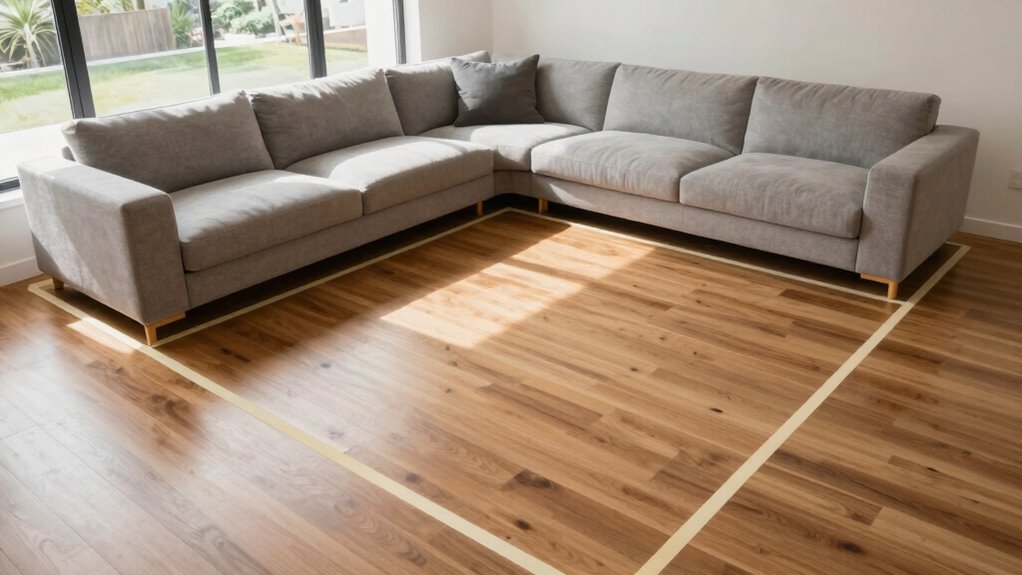
Start by using tape to outline different corner, L-shape, and modular arrangements in your space, so you can see how each fits. Try adjusting the configurations to find the most comfortable and functional setup. Visualizing these options helps you make confident decisions before committing to any furniture changes.
Using Tape for Layouts
Wondering how to visualize different sectional sofa arrangements before committing? Tape on the floor is your best friend. It allows you to experiment with corner, L-shape, and modular layouts easily. Here’s how to do it:
- Map out the shape you want, considering color coordination and fabric choices for each section. Use painter’s tape to outline the perimeter and visualize the flow.
- Adjust the tape to test different configurations, such as adding a chaise or reorienting sections, without moving furniture.
- Step back and evaluate how the layout feels in your space, ensuring it maximizes comfort and style. This simple trick helps you see how various arrangements suit your room’s size and your design preferences.
- Remember that understanding spatial perception can help you better judge how the layout will function in real life, making your decision easier.
Adjusting Corner Configurations
Once you’ve outlined your sofa layout with tape, experimenting with different corner configurations becomes straightforward. You can easily switch between various arrangements like corner, L-shape, or modular setups by adjusting the tape. Consider fabric selection when choosing cushions or upholstery—opting for durable, comfortable materials that match your room’s style. Color coordination is also key; use contrasting or complementary colors to highlight corners or create visual flow. If a corner feels cramped, try repositioning sections to open up space or redefine the flow. Modular options allow you to add or remove pieces as needed, so don’t hesitate to test different configurations until you find the perfect fit. Incorporating electric bike insights can inspire innovative space-saving solutions or add a modern touch to your decor. This flexible approach helps optimize your space and ensures your sectional sofa complements your overall decor.
Visualizing Modular Options
Visualizing modular options can make it easier to find the perfect layout for your space. Start by using tape on the floor to outline different configurations, helping you see how corner, L-shape, or modular setups fit your room. Consider experimenting with:
- Color coordination – match cushions or throws with your existing decor to visualize cohesive styles.
- Material choices – combine different textures or fabrics to see what complements your room’s aesthetic.
- Layout flexibility – use tape to test various arrangements, such as adding a chaise or creating separate seating zones.
This approach allows you to assess space, flow, and style before committing to a specific design, ensuring your modular sofa setup is both functional and visually appealing.
What Are the Best Tips to Adjust Tape Outlines for Space and Comfort?
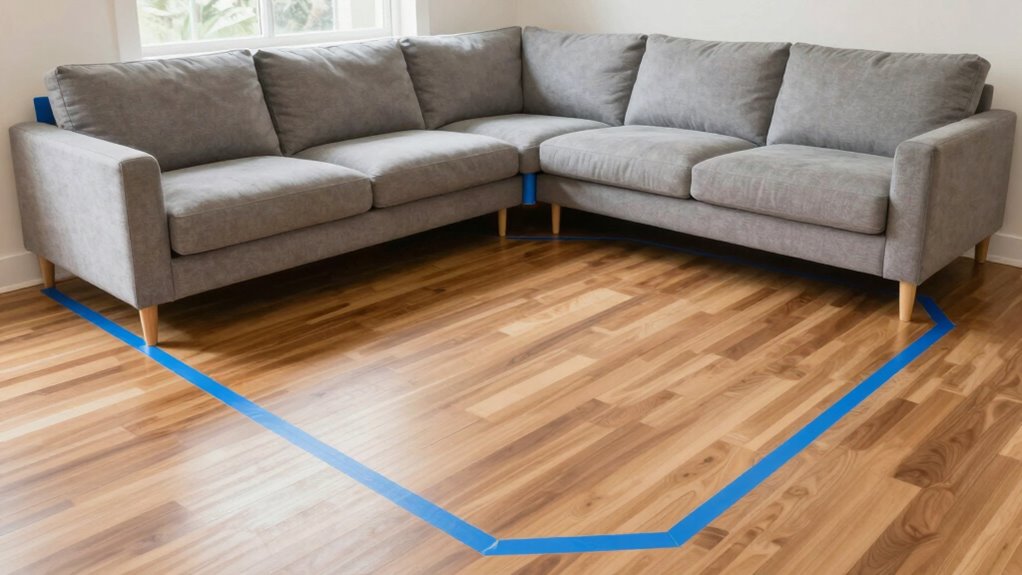
To guarantee your sectional sofa fits perfectly and provides ideal comfort, start by carefully evaluating your tape outlines. Adjust the tape to optimize space, ensuring there’s enough room for movement and other furniture. Use decorating tips like placing the tape closer to walls or windows to maximize open space, but leave enough clearance for easy access. When refining your layout, consider color coordination—using contrasting tape colors can help distinguish different sections or zones, making adjustments clearer. Take your time to test different configurations by stepping back and visualizing how each feels. Remember, small tweaks can notably improve comfort and flow. Keep your tape outlines flexible until you’re satisfied with the overall balance between space, accessibility, and visual harmony. Additionally, experimenting with visual cues can help you better understand how the layout will function in your specific room. Paying attention to spatial awareness ensures that your setup promotes both practicality and aesthetic appeal. Incorporating knowledge about room dimensions can further refine your arrangement for optimal use. Being mindful of furniture placement can help prevent overcrowding and improve overall room functionality. Considering layout flexibility is also essential to adapt your space as needs change over time.
What Common Mistakes Should I Avoid When Planning With Tape?
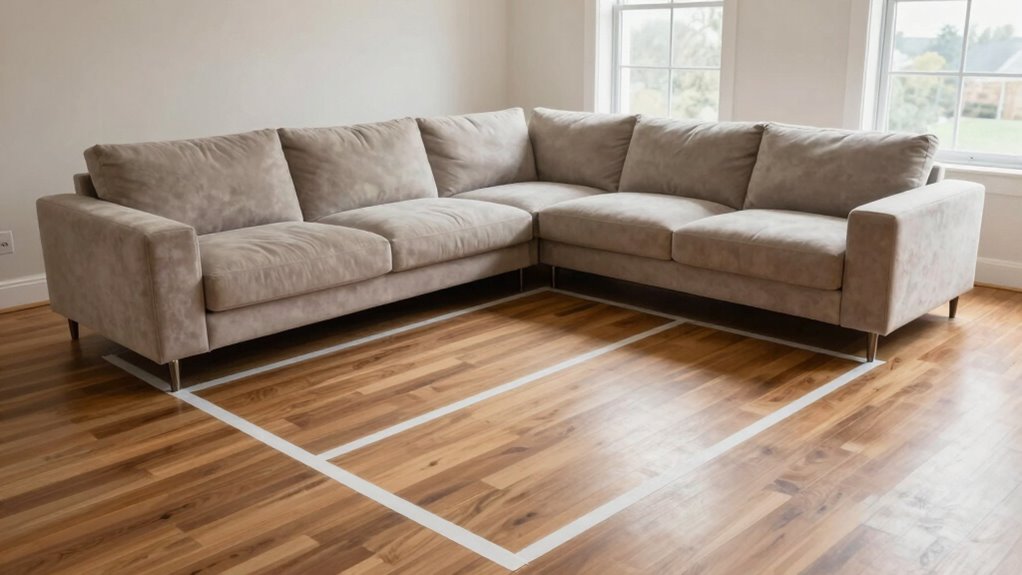
Avoid placing tape inaccurately, as it can lead to a misleading layout. Don’t overlook the importance of keeping enough space for traffic flow around your furniture. Also, always verify furniture dimensions to ensure your plan will actually fit in the space. Incorporating seasonal variations can also help you plan for changes in lighting and flow throughout the year.
Inaccurate Tape Placement
When planning your sectional sofa layout with tape, one common mistake is placing the tape too loosely or inaccurately, which can lead to misjudging the actual space. This error hampers your ability to achieve an accurate measurement and precise placement. To avoid this, keep these tips in mind:
- Always pull the tape tight and secure it firmly on the floor to prevent slack.
- Double-check measurements before placing the tape to ensure accuracy.
- Use painter’s tape or masking tape for easy adjustments, avoiding permanent marks.
Overlooking Space Flow
One common mistake when planning your sectional sofa layout with tape is neglecting the natural flow of movement within the room. You might focus too much on aesthetics, like matching your decorating themes or color schemes, without considering how people will move around the space. Blocking pathways or creating awkward traffic patterns can make the room feel cramped and uncomfortable. When placing tape, make certain there’s enough space for easy navigation, especially around doorways and high-traffic areas. Keep in mind how your furniture arrangement affects daily use, not just visual appeal. Balancing your chosen decorating themes with practical flow helps create a harmonious, functional space. Avoid cluttering pathways; prioritize comfort and accessibility while maintaining your room’s style.
Ignoring Furniture Dimensions
Failing to account for furniture dimensions when planning your sectional layout can lead to a cramped and impractical space. To avoid this, consider these key points:
- Measure decor dimensions carefully, including height, width, and depth, to ensure furniture fits comfortably without overcrowding.
- Remember material considerations—some materials may add bulk or require extra space for clearance, affecting your layout.
- Use tape to mark actual furniture footprints, not just estimated sizes, to visualize real-world fit and avoid surprises.
Ignoring these details often results in tight spots or awkward gaps. Always double-check measurements and material considerations so your sectional fits perfectly, enhancing both function and aesthetics. Proper planning conserves space and ensures a comfortable, balanced room layout.
How Does the Tape Method Compare to Digital Room Planners?
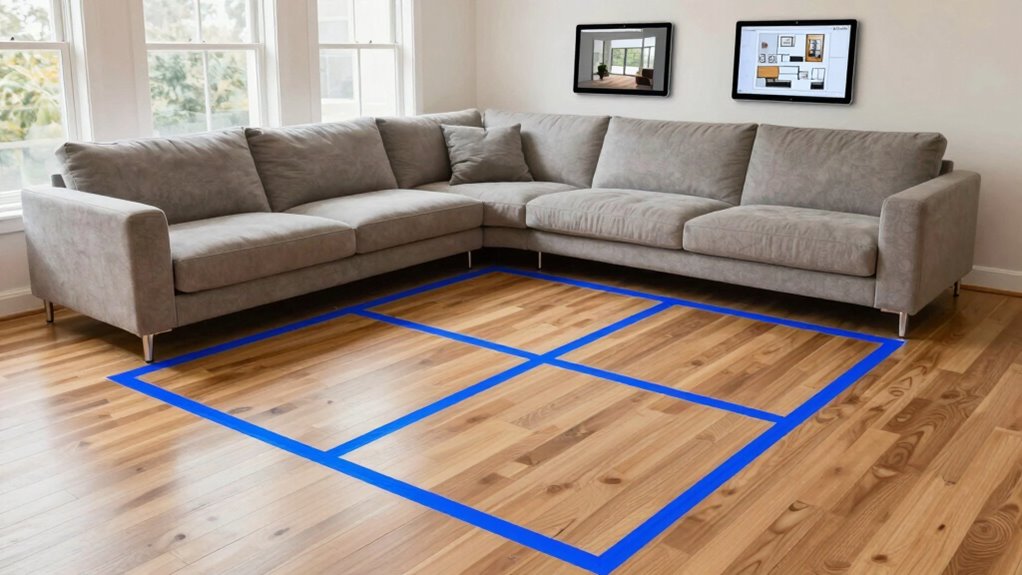
Digital room planners offer quick, precise layouts, but the tape method still has its advantages. With tape, you get a tactile feel for space, allowing you to test different configurations easily. It’s especially useful when considering color coordination and fabric choices, as you can visualize how various fabrics will look together in your actual room. Plus, you can incorporate furniture dimensions directly on the floor, ensuring accurate placement without relying on digital measurements. While digital tools excel at detailed planning, the tape method keeps your decisions flexible and immediate. Here’s a quick comparison:
| Tape Method | Digital Room Planners |
|---|---|
| Tactile, real-world testing | Precise measurements digitally |
| Immediate physical adjustments | Virtual preview with color options |
| Useful for fabric and color visualization | Best for complex, detailed layouts |
| Cost-effective | Can be more time-consuming |
How Do I Choose the Right Sectional Style to Fit My Space?

Choosing the right sectional style begins with understanding how your space flows and how you plan to use your seating. To pick the best fit, consider these factors:
- Room size and layout – Measure your space accurately and decide if you want a compact or spacious sectional.
- Fabric choices – Opt for durable fabrics that match your lifestyle, whether it’s pet-friendly microfiber or luxurious velvet.
- Color coordination – Choose colors that complement your existing decor, creating a cohesive look and enhancing the room’s vibe.
Matching your fabric choices and color coordination with your space’s style guarantees your sectional feels intentional and comfortable. This careful selection makes your furniture both functional and visually appealing.
How Do I Transition From Tape Outlines to Moving Actual Furniture?
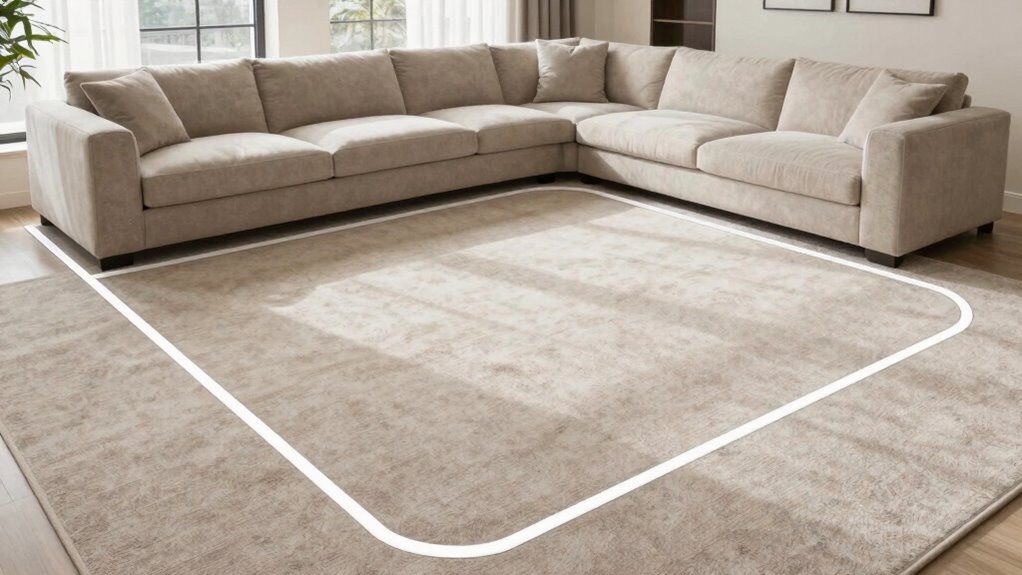
Once you’ve finalized your tape outlines, it’s time to move your plans into action by bringing the furniture into your space. Start by selecting pieces that match your color coordination and fabric selection plans. Place the main sofa section first, then add the adjoining pieces, adjusting for space and flow. Use the following table to keep your plan clear:
| Step | Action |
|---|---|
| 1 | Choose furniture that matches your color scheme |
| 2 | Verify fabric complements your decor |
| 3 | Position pieces according to tape outlines |
This method helps you visualize the final layout, making adjustments easier before moving heavy furniture. Transitioning from tape to reality becomes seamless when your furniture aligns with your initial design, ensuring a cohesive and space-efficient setup.
Frequently Asked Questions
Can the Tape Method Help Visualize Storage Options Within the Sectional?
Yes, the tape method can help you visualize storage options within your sectional. By outlining different areas with tape, you see how space is allocated, making it easier to plan for storage solutions. This simple trick also highlights furniture flexibility, allowing you to experiment with arrangements before committing. It guarantees you maximize every inch, creating a functional, organized space tailored to your storage needs.
How Long Does It Typically Take to Plan a Layout With Tape?
You’ll probably finish planning your layout with tape in about 15 to 30 minutes. Ironically, measuring furniture dimensions and space measurement takes longer—usually because you want everything just right. You’ll spend a few extra minutes adjusting the tape to match the exact size of your sectional, ensuring it fits perfectly. It’s a quick process, but a little patience makes sure your space feels just right.
Is the Tape Method Suitable for Multi-Room or Open-Plan Spaces?
Yes, the tape method works well for multi-room planning and open plan challenges. You can easily visualize how furniture flows between spaces, ensuring everything fits without clutter. By using tape, you can experiment with different configurations across multiple areas, making adjustments as needed. This hands-on approach helps you see how your sectional sofa and other furniture will interact, leading to a more functional, cohesive layout in your open-plan or multi-room space.
Can Tape Outlines Be Reused for Different Furniture Arrangements?
You’ll be glad to know that tape outlines are reusable and can adapt to different furniture arrangements, saving you time and effort. Studies show that durable tape can last for weeks without peeling, making it perfect for multiple uses. You can easily reposition or change your layouts by removing and reapplying these outlines, giving you flexibility for various room setups without damaging your flooring or losing your initial planning.
What Tools or Materials Are Best for Creating Durable Tape Outlines?
You should use painter’s tape or masking tape with strong adhesive strength for creating durable outlines. Opt for bright or contrasting tape colors like blue or green so you can easily see the layout on your floor. These tapes stick well yet are gentle enough to remove without leaving residue, making them perfect for reusing or adjusting your furniture arrangements as needed.
Conclusion
Using the tape-on-the-floor trick can boost your confidence in planning the perfect sectional sofa layout. Did you know that 78% of homeowners who visualize their space beforehand report greater satisfaction with their furniture placement? By avoiding common mistakes and experimenting with different configurations, you’ll create a functional, inviting room. So, take the time to tape out your ideas—you’ll be amazed at how much easier it becomes to bring your vision to life and make confident decisions.