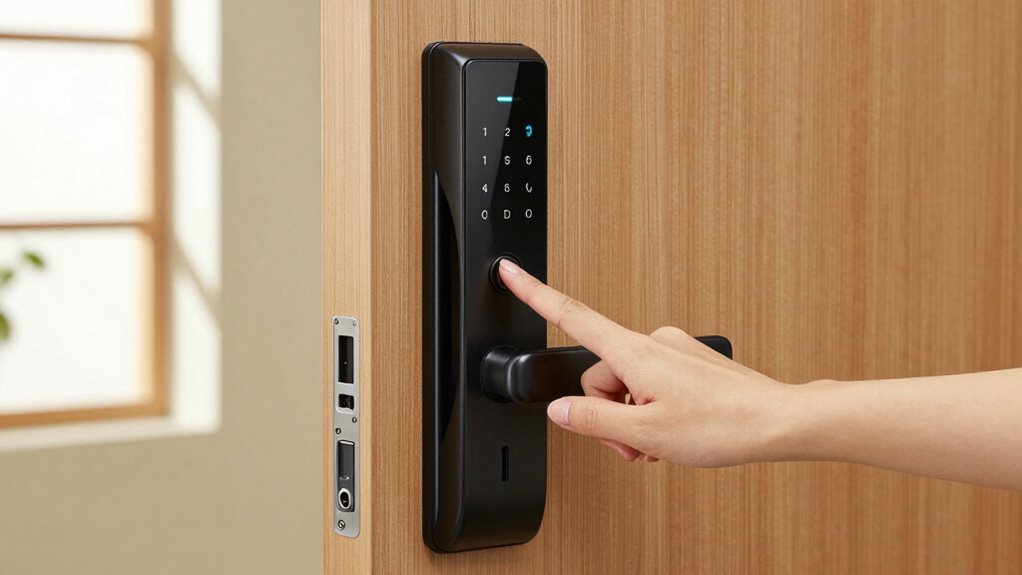
To prevent lockouts, guarantee your smart lock has a strong battery plan. Choose models with large capacity batteries and energy-saving features like low-battery alerts. Regularly monitor battery levels through apps or indicators and replace batteries proactively before they die. Keep spare batteries on hand and enable backup options like manual keys or backup power. Maintaining good battery health and following best practices can keep your lock reliable. Learn more about creating a foolproof battery strategy to stay secure.
Key Takeaways
- Regularly monitor battery levels via app or indicator lights to prevent unexpected power failures.
- Use high-quality, reputable batteries to ensure consistent performance and reduce leakage risks.
- Enable low-battery alerts and set reminders for timely replacements before complete depletion.
- Keep spare batteries and backup power options accessible to avoid lockouts during power issues.
- Maintain firmware updates and proper installation to enhance energy efficiency and device reliability.
Why Battery Life Matters for Your Smart Lock
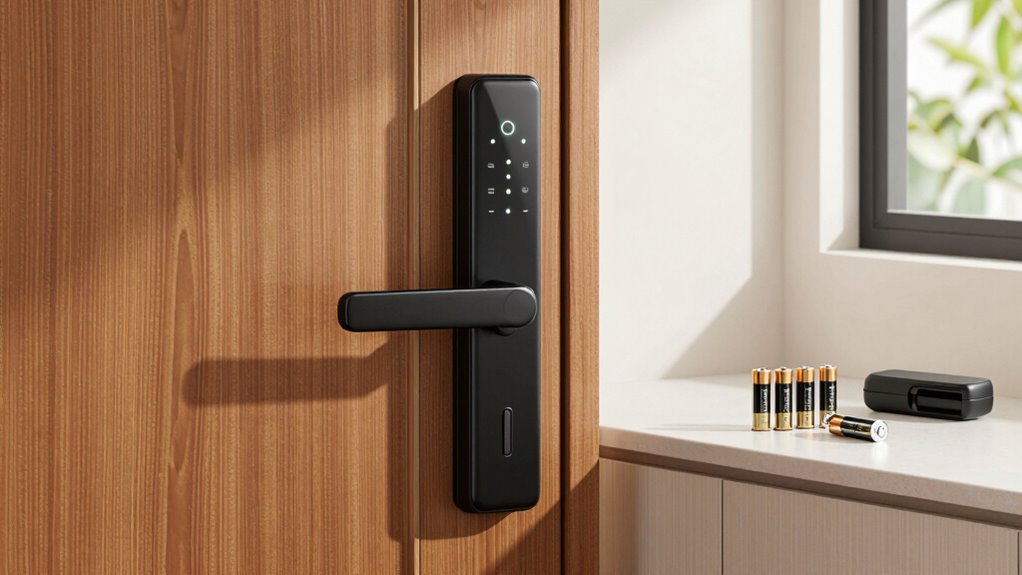
Since smart locks rely on batteries to function, their battery life directly impacts your security and convenience. A higher battery capacity means your lock can operate longer without needing a replacement or recharge, reducing the risk of lockouts. Power consumption varies depending on the lock’s features, such as keypad use, Bluetooth connections, or Wi-Fi activity. If your smart lock has high power consumption, it’ll drain batteries faster, increasing the chances of unexpected failures. Conversely, low power consumption helps extend battery life, ensuring your lock remains reliable when you need it most. Monitoring battery capacity and understanding power demands help you plan timely replacements or recharges, so you avoid being locked out or compromised. Proper management of these factors keeps your smart lock functioning smoothly. Additionally, the role of contrast ratio in electronic devices can influence the efficiency of display-based lock controls, further supporting overall device performance. Recognizing battery management strategies can also significantly improve your lock’s reliability over time. Being aware of battery derating effects at different temperatures and altitudes can help you optimize performance and avoid sudden power failures. Regularly checking battery health can give early warnings before failure occurs, adding an extra layer of reliability.
Key Features That Help Monitor and Extend Battery Life
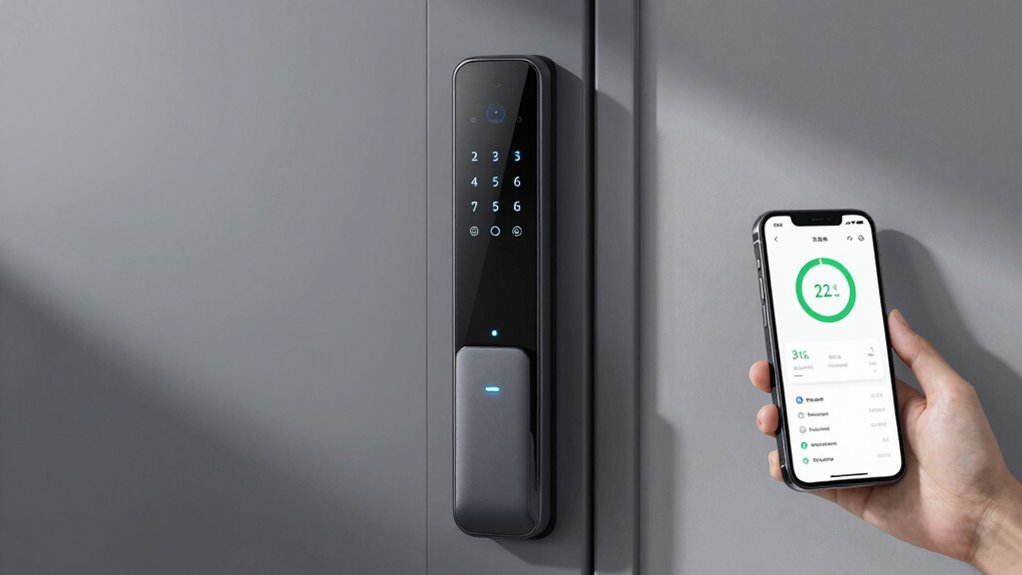
Many smart locks come equipped with built-in features that help you keep an eye on battery health and extend their lifespan. A battery indicator provides real-time updates on your lock’s current power level, so you know when it’s running low. Automatic alerts notify you proactively, alerting you before the battery fully depletes, allowing ample time to replace or recharge it. These features eliminate surprises and reduce the risk of lockouts caused by dead batteries. By monitoring battery status regularly, you can plan maintenance more effectively. Some locks also offer energy-efficient modes or firmware updates that optimize power consumption. Implementing power management strategies can further enhance battery efficiency and longevity. Additionally, Indonesian decor masks can be used to add cultural charm to your smart lock area, creating a more personalized and aesthetically pleasing space. Understanding battery lifespan can help you anticipate when replacements are necessary, and some models even include power-saving features to further extend battery life. Overall, these key features give you peace of mind, ensuring your smart lock remains reliable and functional at all times.
How to Choose a Smart Lock With Long-Lasting Batteries

When selecting a smart lock with long-lasting batteries, prioritize models that emphasize energy efficiency and robust power management features. Check the smart lock compatibility to ensure it works seamlessly with your existing smart home system. Look for options with larger battery capacity options, which typically last longer between replacements or charges. A high-capacity battery can prevent unexpected lockouts caused by dead batteries. Additionally, choose a lock with smart power-saving modes or low-battery alerts to help you stay ahead of potential issues. While features like Bluetooth or Wi-Fi are convenient, they can drain batteries faster, so consider how these functionalities impact battery life. Ultimately, selecting a smart lock with efficient energy use and ample battery capacity ensures reliable performance over time.
Best Practices for Maintaining Your Smart Lock’s Battery Health

To keep your smart lock running smoothly, you should regularly check the battery level and replace or recharge as needed. Using high-quality batteries helps guarantee consistent performance and longer life. Additionally, enabling power-saving features can extend battery life and reduce the frequency of replacements. Staying informed about your lock’s cycling skills and gear can also help you troubleshoot potential issues early. Regular maintenance, such as inspecting the air purifier filters, can prevent unexpected malfunctions and ensure your lock’s reliability. Incorporating performance upgrades like smart lock enhancements can further improve overall durability and efficiency, especially in varying environmental conditions. Paying attention to indoor air quality and controlling factors like dust and microplastics can also contribute to reducing environmental stress on your device, thereby enhancing its longevity. Incorporating Free Floating landscape elements around your smart lock area can also enhance durability by reducing environmental stress on the device.
Regular Battery Checks
Regularly checking your smart lock’s batteries is essential to guarantee it functions smoothly and reliably. By staying proactive, you prevent unexpected lockouts due to power loss. Here are four key tips:
- Set reminders for periodic battery checks to avoid surprises.
- Inspect battery levels using the lock’s app or indicator lights.
- Replace batteries before they fully drain to maintain consistent power management.
- Keep spare batteries on hand for quick battery replacement when needed. Maintaining proper battery health ensures your lock remains dependable over time. A battery plan helps you maintain your lock’s performance and avoid inconvenient failures. Regular checks also help you recognize signs of low light office plants that might affect your workspace environment and distract from routine maintenance.
Consistent checks help you identify weak batteries early, ensuring your lock remains operational. Proper power management through timely battery replacement minimizes downtime and extends your device’s lifespan. Regular maintenance, including understanding battery capacity, keeps your smart lock dependable and ready for use at all times. Additionally, understanding battery lifespan can further optimize your replacement schedule.
Use Quality Batteries
Using high-quality batteries is vital for maintaining your smart lock’s peak performance and longevity. Quality batteries typically have better battery capacity, meaning they can hold a charge longer and deliver consistent power when needed. Choosing batteries with proper battery compatibility ensures your lock functions reliably without risking damage or malfunction. Avoid cheap or incompatible options, as they may drain quickly or cause connection issues. Always check the manufacturer’s recommendations for battery types and specifications. Investing in reputable batteries helps prevent unexpected power failures, keeps your smart lock operating smoothly, and extends its overall lifespan. Proper battery selection is essential for ensuring your smart lock remains dependable and secure over time. Additionally, selecting batteries with adequate power capacity can further enhance your lock’s reliability during extended use. Regularly inspecting and replacing batteries when necessary also helps maintain optimal performance and prevents power failure issues that could compromise your security. Using batteries with good quality can also reduce the risk of corrosion and leakage, which might damage your device. Remember, using the right batteries isn’t just about convenience—it’s a key step in ensuring your smart lock remains dependable and secure over time.
Enable Power Saving
Enabling power-saving features on your smart lock can considerably extend its battery life. To maximize efficiency, consider these best practices:
- Adjust the lock’s settings to reduce screen brightness and disable unnecessary notifications.
- Enable auto-lock and timeout features to prevent unnecessary power drain.
- Use solar charging when possible—placing your lock where it receives sunlight can support battery longevity.
- Practice battery recycling by replacing old batteries with eco-friendly options, ensuring prime performance.
- Regularly monitor and update your lock’s firmware to benefit from energy-saving protocols that optimize battery use.
- Being aware of regional power supply variations, such as in the Northeast, can help you plan for more reliable urban power solutions to keep your smart lock functioning optimally.
- Understanding the significance of battery health maintenance can further enhance your device’s longevity and performance. Additionally, staying informed about DIY troubleshooting tips can help you address minor issues promptly and prevent unexpected lockouts.
What to Do When Your Battery Is Low or Dead
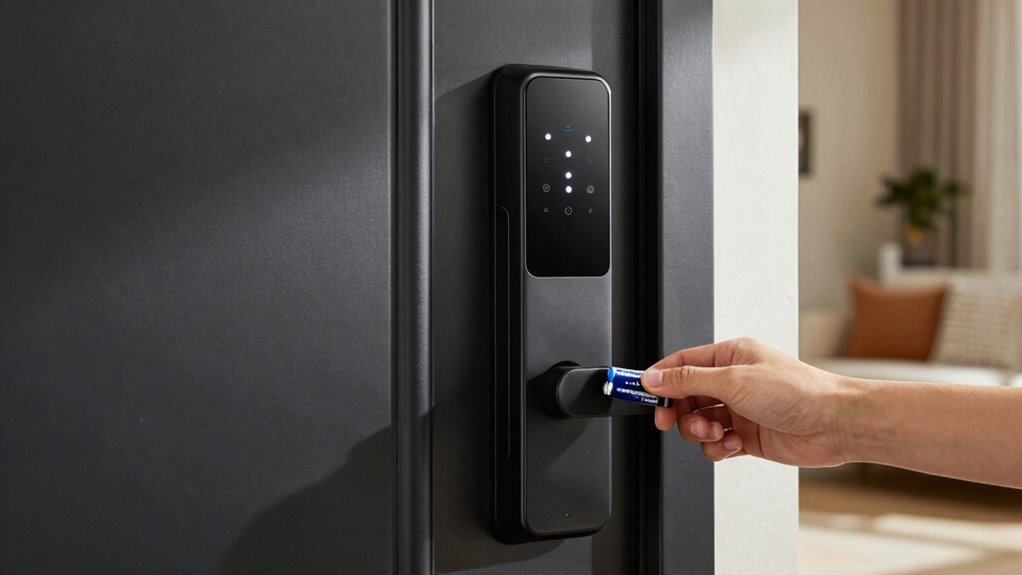
When your smart lock’s battery is low or dead, it’s important to act quickly to regain access. First, check if your lock has a backup power option, like a low-battery indicator or a manual key override. Many smart locks are designed for easy access, so you can use a physical key if available. If not, consult your smart lock installation instructions to locate the battery compartment or backup port. Keep in mind that replacing batteries shouldn’t compromise the smart lock aesthetics, which often blend seamlessly with your door’s design. To prevent future lockouts, consider carrying spare batteries or setting up a low-battery alert. Acting swiftly ensures your smart lock maintains its reliability without sacrificing style or convenience.
Common Mistakes That Cause Lockouts and How to Avoid Them
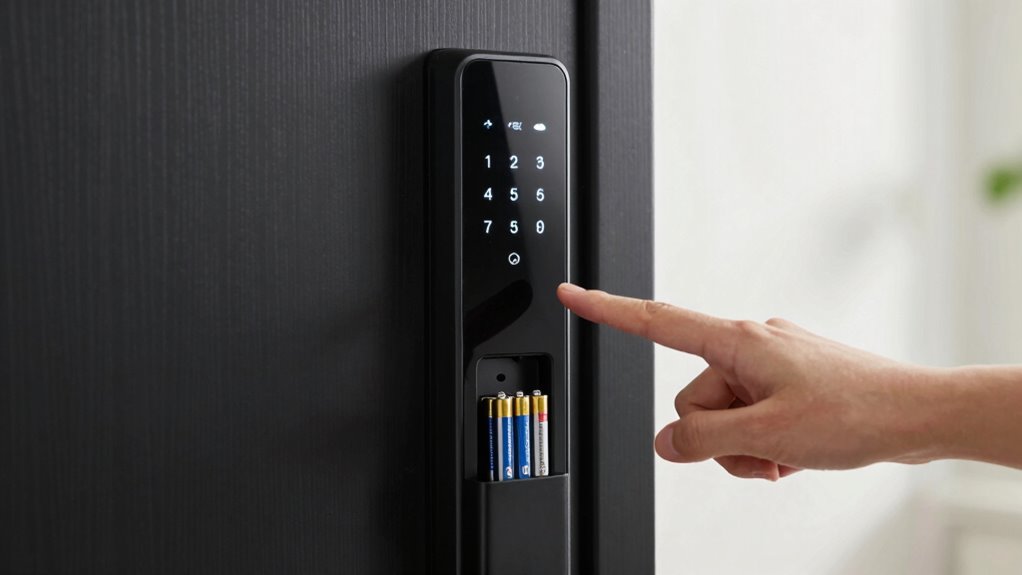
One of the most common reasons for lockouts is neglecting to keep your smart lock’s firmware updated, which can cause glitches or compatibility issues. Additionally, poor battery installation can lead to power failures, so always check that batteries are correctly placed. Incorrect lock placement may also cause problems; if the lock isn’t installed level or aligned, it might not respond correctly. To avoid lockouts, follow these tips:
- Double-check your battery installation for proper contact.
- Ensure your lock is securely mounted and level.
- Keep firmware updated to prevent software glitches.
- Test the lock periodically to confirm it functions smoothly.
Avoid these mistakes, and you’ll reduce the risk of being locked out unexpectedly.
Regular Tips to Check and Improve Your Smart Lock’s Battery Life

To keep your smart lock working smoothly, you should regularly check its battery levels. Enabling power-saving settings can extend battery life, so explore your lock’s options. When batteries run low, replace them promptly to avoid any lockout surprises.
Check Battery Levels Regularly
Regularly checking your smart lock’s battery levels guarantees you stay ahead of unexpected power failures. This simple habit helps you avoid lockouts and ensures smooth access. To do this effectively:
- Monitor the battery indicator on your app or lock device regularly.
- Know your battery type—whether lithium, alkaline, or rechargeable—and understand its lifespan.
- Keep track of your preferred charging methods, like USB or dedicated chargers, to recharge before levels get critical.
- Schedule routine checks, especially if your lock uses rechargeable batteries, to maintain ideal power.
Use Power-Saving Settings
Maximizing your smart lock’s battery life becomes easier when you take advantage of built-in power-saving features. Many locks offer settings that reduce wireless connectivity activity when not in use, conserving energy. Adjust these settings to limit how often your lock communicates with your smartphone or home network, especially during periods of low activity. You can also optimize user authentication methods by enabling more efficient options, like fingerprint scans or PIN codes, instead of frequent Bluetooth or Wi-Fi connections. Turning on power-saving modes helps minimize energy drain without compromising security or accessibility. Regularly reviewing and customizing these settings ensures your smart lock stays operational longer, reducing the need for battery replacements and preventing unexpected lockouts.
Replace Batteries Promptly
Since batteries naturally lose their charge over time, it’s important to check them regularly to guarantee your smart lock functions properly. Don’t wait until the lock fails—prompt battery replacement extends your device’s battery lifespan and prevents lockouts. Here are four tips to ensure timely battery changes:
- Monitor battery level alerts from your smart lock’s app.
- Replace batteries before they reach critical low levels.
- Keep spare batteries on hand for quick replacement.
- Regularly check for signs of weak performance, like slow response times.
Frequently Asked Questions
Can External Power Sources Be Used to Recharge or Power My Smart Lock?
Yes, you can use external power sources like wired power or solar charging to recharge or power your smart lock. Wired power options, such as connecting to a backup battery or external charger, guarantee continuous operation during battery depletion. Solar charging is an eco-friendly alternative, using sunlight to keep your lock powered. These solutions help prevent lockouts by maintaining your lock’s power supply even when the batteries run low.
How Do Temperature Fluctuations Affect Smart Lock Battery Performance?
Think of your smart lock’s battery like a delicate dance partner, sensitive to temperature swings. Cold snaps can slow down the energy flow, shortening battery lifespan, while scorching heat accelerates wear and tear. Temperature sensitivity means your lock’s battery performance dips when temps fluctuate wildly, so keeping your device in a stable environment helps maintain reliable power. Stay mindful of these changes to keep your lock humming smoothly.
Are There Specific Battery Brands Recommended for Optimal Smart Lock Longevity?
You should choose batteries known for their long battery lifespan and brand compatibility with your smart lock. Popular brands like Duracell or Energizer often provide reliable performance, ensuring your lock stays powered longer. Always check your lock’s manual for recommended battery types, as using incompatible brands can shorten lifespan and compromise security. Regularly replacing batteries with trusted brands helps prevent lockouts and maintains peak smart lock functionality.
What Security Risks Are Associated With Replacing Batteries Myself?
When you do a DIY replacement, security risks can arise if you don’t follow proper procedures. Using incompatible batteries can damage your lock or cause malfunction, so always check for correct battery compatibility. Also, improper handling during DIY replacement might leave your lock vulnerable to tampering or compromise your security. To stay safe, follow the manufacturer’s instructions carefully and guarantee you use recommended batteries to prevent issues.
How Does Battery Capacity Impact the Overall Security Features of the Lock?
Did you know that a smart lock’s battery capacity can influence its security? Larger battery life guarantees consistent power, reducing chances of lockouts and vulnerabilities. Good power management keeps the lock functioning smoothly, preventing downtime during critical moments. When your lock has ample battery capacity, it maintains reliable security features, like alarm responses and remote access, so you stay protected without interruptions or worries about losing control due to power failure.
Conclusion
By balancing battery basics with proactive practices, you’ll keep your smart lock secure and stress-free. Stay vigilant, check regularly, and follow simple steps to prevent pitfalls and power problems. With a little care, your smart lock remains steadfast, safeguarding your space without a second thought. Remember, a proactive plan prevents potential lockouts, letting you confidently control your home’s security, day after day. Keep your batteries bright and your worries out of sight.