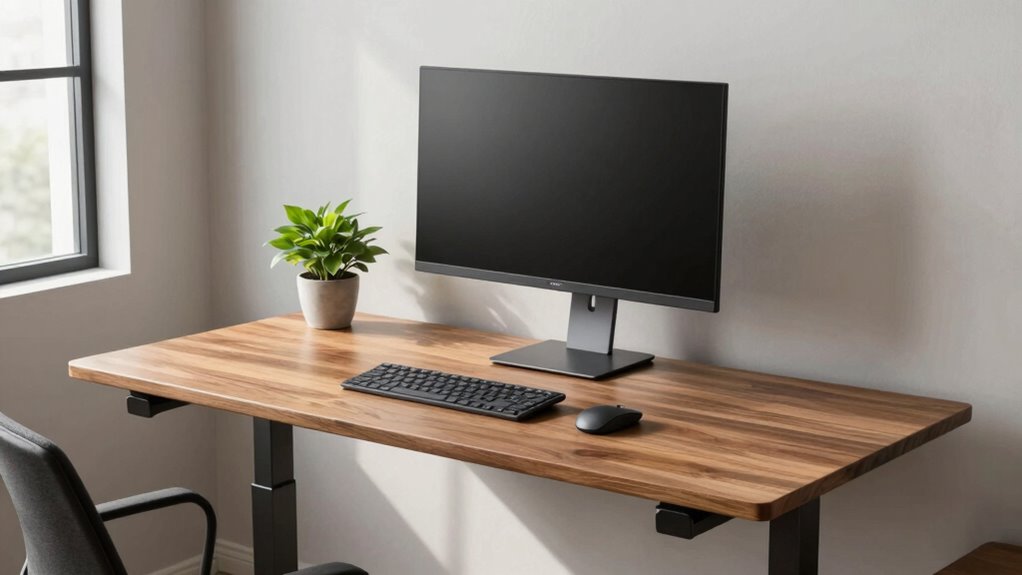
Many people set up their standing desks incorrectly, often ignoring proper height and ergonomic principles. They might not measure carefully or keep elbows at a 90-degree angle, leading to discomfort, strain, or long-term health issues. Using the right tools and accessories can make adjustments easier and more precise. If you want to guarantee your setup promotes comfort and productivity, keep exploring how to optimize your standing desk height and avoid common mistakes.

Get the little things that make your day delivered free — and shop member deals
- Fast, free delivery on millions of items
- Access to Prime Big Deal Days deals on October 6–7
- Prime Video, Amazon Music and more included
Key Takeaways
- Many people set their desk height too high or low, causing discomfort and strain; proper measurement ensures ergonomic alignment.
- Failing to position monitors at eye level leads to neck and shoulder tension, often overlooked in setup.
- Not maintaining a 90-degree elbow angle during adjustments results in wrist and arm strain over time.
- Using inadequate tools or guesswork instead of precise measurement tools causes incorrect height settings.
- Ignoring regular posture checks and adjustments can lead to long-term discomfort and ergonomic issues.
adjustable standing desk height measurement tools
As an affiliate, we earn on qualifying purchases.
As an affiliate, we earn on qualifying purchases.
Why Your Standing Desk Height Matters for Comfort and Health
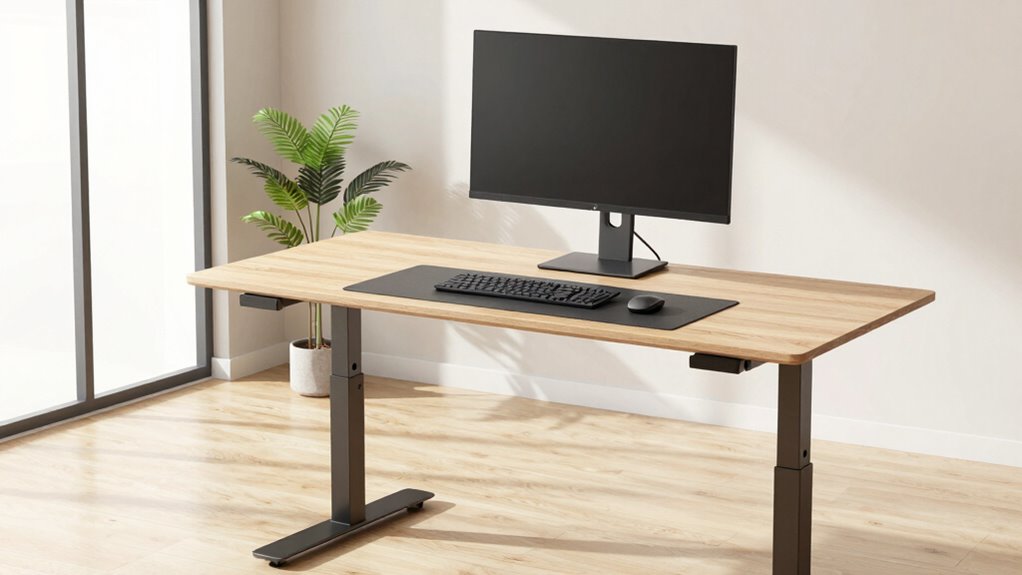
Your standing desk height directly impacts both your comfort and your health. When you set it too high or too low, you risk poor posture awareness, which can lead to aches and long-term strain. Proper height guarantees your elbows are at a 90-degree angle and your monitor is at eye level, minimizing neck and shoulder tension. Using desk accessories like adjustable keyboard trays or monitor risers can help optimize your setup. These tools allow you to customize your workspace, promoting better ergonomics. Incorporating ergonomic principles into your workspace setup encourages better posture habits. For example, understanding how proper ergonomics can influence long-term comfort helps you make informed adjustments. Remember, a correctly adjusted standing desk encourages active posture shifts and reduces fatigue. Prioritizing the right height helps you stay comfortable longer, prevents musculoskeletal issues, and boosts overall productivity. Small adjustments with desk accessories make a significant difference in your long-term health. Ergonomic setup is essential for maintaining proper posture and preventing discomfort over time.
How to Measure and Set Your Standing Desk for the Perfect Fit

To find the right height for your standing desk, you’ll need reliable measurement tools like a tape measure or a smartphone app. Once you have your tools, stand upright with your elbows bent at about 90 degrees, and adjust the desk so your forearms are parallel to the floor. Keep testing and adjusting until the desk feels comfortable and supports proper posture. Remember to consider support vs boundaries to create a comfortable and sustainable workspace. Additionally, ensuring your desk height promotes ergonomic alignment can help prevent strain and injury over time. A properly set desk can also enhance visual comfort by reducing glare and accommodating your viewing angle, contributing to overall well-being during long working hours. Incorporating air quality benefits can also contribute to a healthier work environment and overall well-being.
Proper Height Measurement Tools
Ever wondered how to guarantee your standing desk is set to the perfect height? Using the right ergonomic tools for height measurement assures accuracy and comfort. Here are four essential tools:
- Measuring tape or ruler – To get precise height data from your elbow to the floor.
- Digital height gauge – Offers exact measurements, especially useful for fine adjustments.
- Posture app or smartphone sensors – Some apps help assess your ergonomic setup via height analysis.
- Adjustable work surface or desk height gauge – Allows you to set and verify the correct height directly. Incorporating proper measurement techniques can further enhance your ergonomic setup and ensure optimal comfort.
Adjusting Desk to Ideal Height
Setting your standing desk to the correct height is essential for comfort and ergonomics, and it starts with accurate measurement. To achieve proper desk ergonomics, adjust your desk so that your elbows are at a 90-degree angle when your arms rest naturally on the surface. Your wrists should remain straight, avoiding strain. When standing, your monitor should be at eye level to promote good posture correction, preventing neck strain. Use a measuring tape or height-adjustment tools to set your desk precisely, ensuring it aligns with your elbow height. Take time to test your setup by standing comfortably for a few minutes, making adjustments as needed. Remember that understanding the fundamentals—such as ergonomics, layout, light, sound, connectivity, and workflow—helps you make smarter decisions and feel better while you work. Properly adjusted height helps prevent discomfort and supports healthy posture, making your standing desk a beneficial workspace upgrade. Additionally, considering the workspace environment can enhance your overall comfort and productivity. Being mindful of ergonomic principles can lead to long-term health benefits and improved focus during work sessions. Incorporating sound healing science principles, like minimizing noise distractions, can further improve your concentration and overall well-being while working. Ensuring your workspace is properly arranged can also reduce unnecessary strain and create a more efficient work setting.
Common Mistakes to Avoid When Adjusting Your Standing Desk

Make sure your desk height is set correctly; otherwise, you’ll strain your neck and shoulders. Overlooking ergonomic alignment can lead to discomfort and long-term injury. Pay attention to these details to get the most benefit from your standing desk. For optimal comfort, consider consulting best gear and knife roundups for smart shopping to find the right accessories that support proper ergonomics. Additionally, understanding ergonomic principles can help you make better adjustments and prevent postural issues.
Incorrect Desk Height
Adjusting your standing desk to the wrong height can lead to discomfort and strain. To avoid this, verify your desk is set correctly. First, your elbows should be at a 90-degree angle when typing. Second, your monitor should be eye level to prevent neck strain. Third, use ergonomic cushions or supportive desk accessories to improve comfort if needed. Fourth, avoid lowering or raising the desk excessively, which can cause poor posture. Remember, an improper height can lead to shoulder, back, and wrist pain. Take the time to fine-tune your setup, paying attention to these details. Proper adjustments will help you stay comfortable and productive throughout your workday. Small changes make a significant difference in maintaining ergonomic alignment. Additionally, understanding the importance of ergonomic workspace setup can help you create a healthier and more efficient work environment. Being mindful of your desk height adjustments ensures you maintain proper posture and prevent long-term discomfort. Ensuring your workspace promotes proper supportive accessories can further enhance your comfort during long hours of work. Investing in adjustable furniture allows for better customization and supports overall ergonomic health.
Overlooking Ergonomic Alignment
Even when you think your standing desk is properly adjusted, overlooking key aspects of ergonomic alignment can cause discomfort and long-term strain. Posture awareness is essential; if you neglect it, you might find yourself leaning forward or slouching, which stresses your neck and back. Pay close attention to desk ergonomics—your monitor should be at eye level, and your elbows should form roughly a 90-degree angle. Avoid hunching or reaching too far for your keyboard and mouse. Regularly check your stance and make small adjustments to distribute your weight evenly. Proper ergonomic alignment keeps your body supported and reduces fatigue, so don’t disregard these details. Incorporating ergonomic design principles into your setup can further enhance comfort and reduce strain. Additionally, adjusting your workstation setup regularly helps prevent repetitive stress injuries and maintains proper posture throughout your workday. Being mindful of body positioning is crucial for maintaining long-term comfort and health. Recognizing the importance of body mechanics during setup can significantly improve your overall ergonomic experience. Remember that maintaining awareness of correct posture can help you avoid common mistakes and promote better health over time.
Tools and Accessories to Help Keep Your Standing Desk at the Right Height
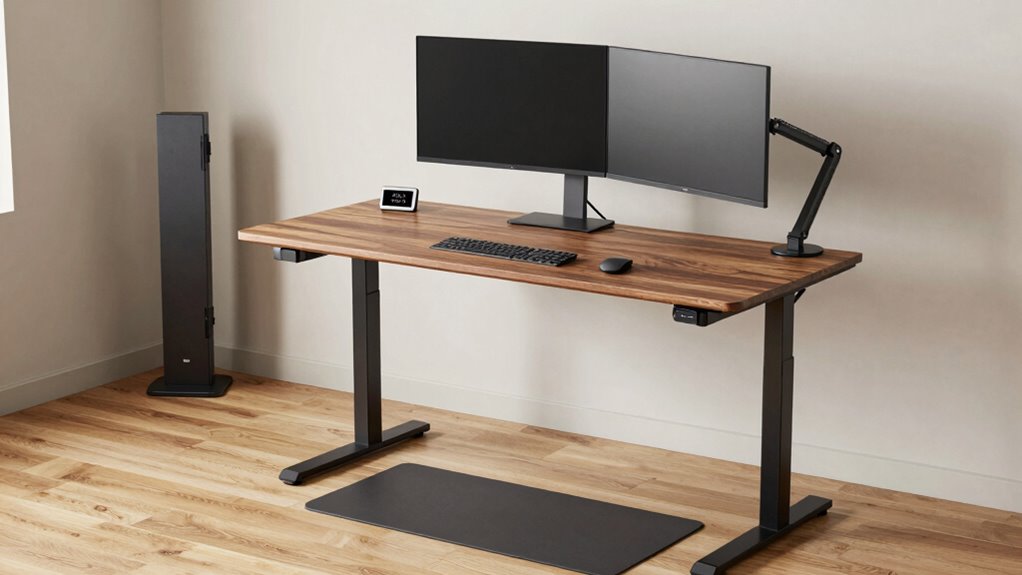
To guarantee your standing desk stays at the perfect height, you can rely on a variety of tools and accessories designed for quick and accurate adjustments. First, adjustable desk mats provide cushioning and can subtly raise your standing level, ensuring comfort. Second, footrests help distribute your weight evenly and prevent fatigue, making long periods of standing more sustainable. Third, portable height meters or digital gauges offer precise measurements, so you know exactly when to make adjustments. Fourth, desk clamps or quick-release mechanisms allow effortless height changes without hassle. These accessories work together to maintain proper ergonomics, reduce strain, and improve your overall standing desk experience. Additionally, ergonomic considerations play a crucial role in optimizing your standing desk setup for health and productivity. Incorporating proper posture techniques is essential to avoid discomfort and ensure the benefits of a standing desk are fully realized. To further enhance your setup, understanding the importance of adjustable components can help you customize your workspace for maximum comfort. Moreover, selecting quality accessories can ensure durability and consistent performance over time.
Tips to Adjust Your Standing Desk for Comfort and Productivity
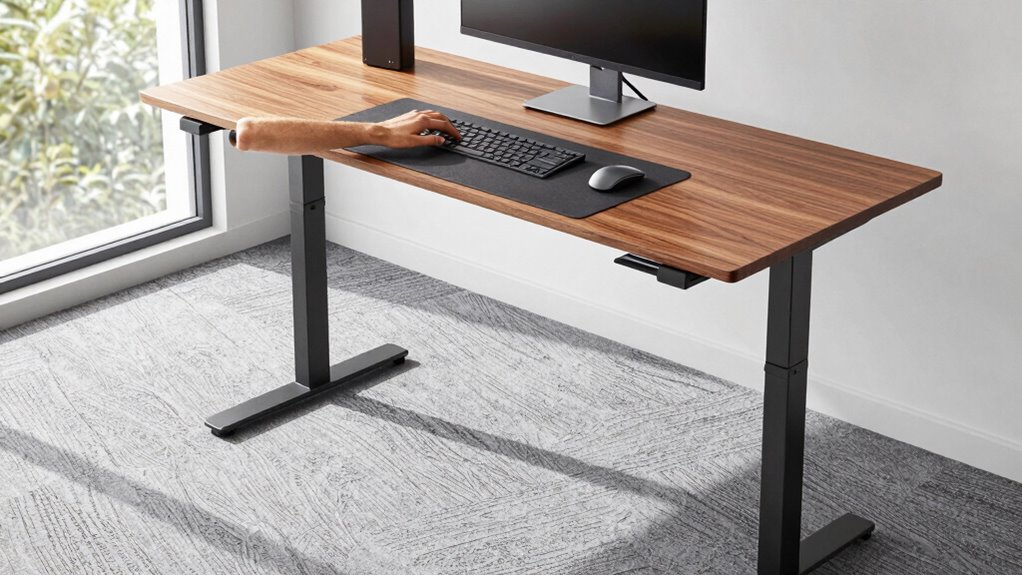
Maintaining proper ergonomics while using your standing desk can substantially boost comfort and productivity. To achieve this, start by adjusting your desk so your elbows are at a 90-degree angle and your monitor is at eye level. Use desk accessories like anti-fatigue mats to reduce strain and improve comfort during long periods of standing. Incorporate posture exercises into your routine, such as shoulder rolls or neck stretches, to prevent stiffness and promote circulation. Regularly shift your weight and change positions to avoid fatigue. Keep your feet flat on the ground or on a footrest, and ensure your wrists are straight while typing. These simple adjustments, combined with mindful posture habits, can make your standing desk setup more effective and comfortable throughout the day.
What to Do When Your Standing Desk Feels Uncomfortable or Unhealthy
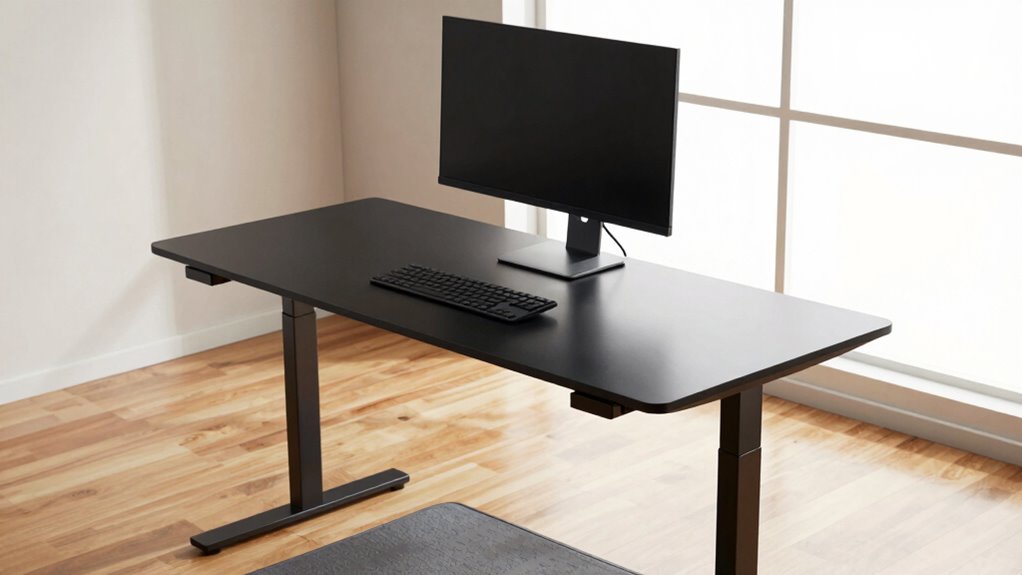
When your standing desk causes discomfort or feels unhealthy, it’s important to listen to your body and make immediate adjustments. First, check your footwear choices—opt for supportive shoes that cushion your feet and reduce fatigue. Second, consider using a desk mat to provide extra comfort and reduce pressure on your legs and feet. Third, adjust your desk height slightly to ensure your elbows are at a 90-degree angle and your monitor is at eye level. Fourth, take regular breaks to move and stretch, preventing stiffness and strain. If discomfort persists, reassess your setup, focusing on ergonomic support and footwear. These simple steps help prevent injuries and promote better posture, making your standing desk a healthier workspace.
Frequently Asked Questions
How Often Should I Switch Between Sitting and Standing at My Desk?
You should switch between sitting and standing every 30 to 60 minutes to avoid strain. Use ergonomic accessories like adjustable standing desk mats to stay comfortable and maintain proper posture. Regularly changing your position helps reduce fatigue and improves circulation. Remember to listen to your body, and if you feel discomfort, adjust your standing or sitting time accordingly. Incorporating these habits keeps you energized and prevents long-term health issues.
Can Incorrect Desk Height Cause Long-Term Health Issues?
Incorrect desk height can indeed cause long-term health issues. Studies show that up to 80% of office workers experience ergonomic misalignments, leading to chronic pain and posture problems. If your desk isn’t at the right height, you risk straining your neck, shoulders, and back. Proper posture correction is key; adjusting your desk to the correct height helps prevent these issues and supports better long-term musculoskeletal health.
What Are Signs My Standing Desk Is Set up Improperly?
You’ll notice signs your standing desk is set up improperly if you experience neck or shoulder strain, frequent back pain, or if your wrists feel sore after use. Check if your desk height adjustment aligns your elbows at a 90-degree angle and ensures your monitor is at eye level. Using ergonomic accessories, like an adjustable keyboard tray, can help attain the perfect setup and prevent discomfort.
Are There Specific Exercises to Reduce Discomfort From Standing?
To reduce discomfort from standing, you should do ergonomic stretches like calf raises, hamstring stretches, and ankle circles regularly. Incorporate seated exercises such as seated leg lifts or gentle torso twists to give your muscles a break. These movements improve circulation, relieve tension, and prevent stiffness. Remember to move frequently, switch between sitting and standing, and maintain proper posture to stay comfortable and reduce strain throughout your workday.
How Do I Maintain Proper Posture Throughout the Day?
To maintain proper posture throughout the day, you should regularly check your ergonomic accessories, like your chair and monitor height, to make certain they’re correctly adjusted. Sit with your feet flat on the floor, keep your back straight, and shoulders relaxed. Incorporate posture correction exercises into your routine, and take frequent breaks. Staying mindful of your posture helps reduce discomfort, especially if you use ergonomic accessories designed for support and alignment.
Conclusion
Remember, a proper standing desk height is the foundation of comfort and health—think of it as the key to revealing your productivity. Don’t settle for a setup that feels off; adjust until it’s just right. Like a well-tuned instrument, your workspace should harmonize with your body. When in doubt, take the time to fine-tune your desk. After all, a little effort now prevents a lot of discomfort later.
NFL season / tailgating Picks
team gear
As an affiliate, we earn on qualifying purchases.