
TL;DR

Get the little things that make your day delivered free with Prime
- Fast, free delivery on millions of items
- Prime Video, Amazon Music and more included
- Member-only deals all year
A new smartphone technology using camera-guided lighting can objectively measure teeth whitening progress at home. This innovation addresses the current guesswork in consumer dental care and could reshape the market. Validation against dentist standards is underway, with promising early results.
Smartphone camera technology is being adapted to objectively measure teeth whitening progress at home, offering a potential breakthrough for consumers who currently rely on visual estimates. This development, aimed at improving accuracy and reducing product churn, is supported by recent efforts to validate the technology against professional dental shade readings. The innovation could significantly impact the consumer oral-care market by providing reliable, accessible measurement tools for whitening treatments.
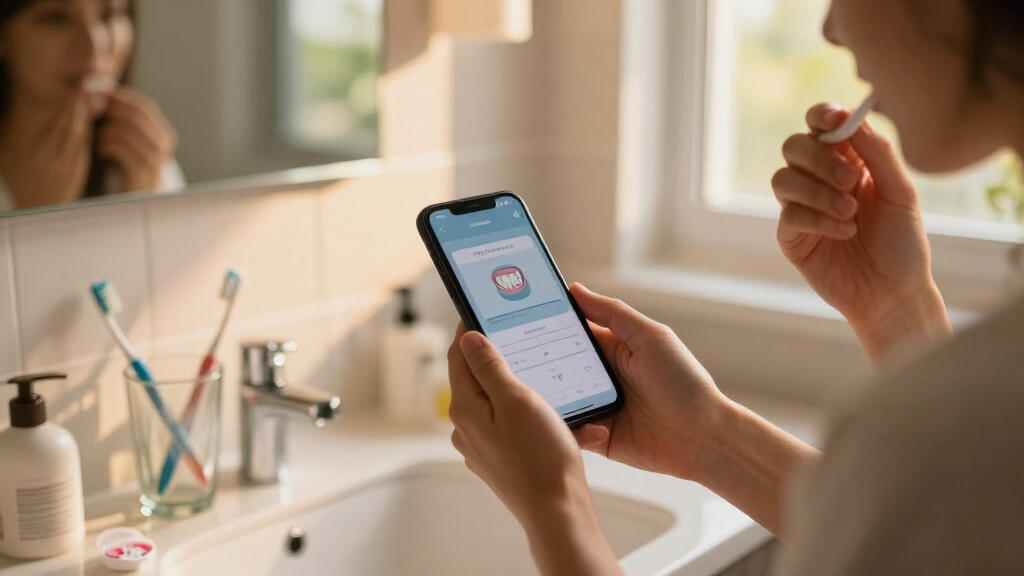
Recent initiatives have focused on creating a guided-lighting photo flow within smartphone apps that can compare tooth color against the dental shade scale, a standard used by dentists. The app captures images, scores the shade, and tracks changes over weeks, providing users with objective data on their whitening progress. Early testing involves benchmarking the app’s shade scores against dentist-calibrated VITA readings for fifty users, with initial results showing a strong correlation.
This technology aims to address a key challenge in home whitening: the reliance on subjective visual assessment in bathroom mirrors. Consumers often purchase multiple whitening products, spending hundreds of dollars, without knowing which treatments are effective. An objective measurement system could reduce guesswork, improve satisfaction, and guide users toward more effective products based on data rather than visual estimates.
Developers envision a subscription model combined with affiliate revenue, where users receive ongoing shade tracking, product recommendations, and access to proven whitening solutions. The approach also opens avenues for brands to demonstrate product efficacy through measurable results, potentially transforming marketing strategies in the consumer oral-care space.
Implications for Consumer Teeth Whitening Accuracy
This innovation could dramatically improve the accuracy of at-home teeth whitening, reducing consumer frustration and product waste. By providing objective, quantifiable feedback, users can better understand which products are effective for their unique needs, leading to more satisfying outcomes. The technology also offers brands a new way to validate their products’ efficacy, potentially reshaping marketing and product development in the consumer dental care industry.
teeth whitening shade measurement app
As an affiliate, we earn on qualifying purchases.
As an affiliate, we earn on qualifying purchases.
Growing Market and Need for Objective Measurement Tools
The global market for consumer oral-care and beauty tech continues to expand, driven by increasing consumer interest in personal wellness and aesthetic enhancement. However, the lack of objective tools for measuring whitening progress has remained a significant gap. Traditionally, consumers rely on visual cues, which can be unreliable due to lighting conditions and subjective perception. Recent advances in smartphone camera technology and guided lighting have created an opportunity to fill this gap with accessible, low-cost solutions.
Previous efforts to develop home shade measurement tools have faced challenges in accuracy and user-friendliness. The current focus on leveraging smartphone cameras with calibrated lighting aims to overcome these hurdles, making shade scoring more reliable and widely accessible. Validation studies comparing app scores with dentist measurements are crucial to establishing credibility and adoption.
This development aligns with broader trends toward digital health and personalized care, where consumers seek more control and data-driven insights into their health and beauty routines.
“The potential for smartphone-guided shade scoring to match professional dental readings is promising, but validation is key before widespread adoption.”
— an anonymous researcher
Validation and Adoption Challenges for Smartphone Shade Scoring
While early testing shows a strong correlation between app scores and dentist VITA readings, comprehensive validation results are still pending. It remains unclear how consistently the technology will perform across diverse lighting conditions, skin tones, and tooth shades. Additionally, regulatory approval and industry acceptance are yet to be secured, which could influence the timeline for commercial deployment.
Next Steps for Technology Validation and Market Entry
Developers plan to complete larger-scale validation studies to confirm the app’s accuracy and reliability. If successful, they will seek regulatory approval and initiate pilot programs with dental professionals and early adopters. Concurrently, efforts will focus on refining user experience and integrating product recommendations. Widespread availability could occur within the next 12 to 24 months, contingent on validation outcomes and market readiness.
Key Questions
How accurate is the smartphone shade scoring compared to professional dental readings?
Initial studies indicate a strong correlation, but full validation results are still pending. The technology aims to reliably match dentist-calibrated shade measurements.
Can this technology help me choose the best whitening product?
Yes, once validated, the app could track your tooth shade over time and recommend products proven to improve your specific shade, reducing trial-and-error.
Will this technology be available for all smartphones?
The initial focus is on devices with high-quality cameras and guided-lighting capabilities. Compatibility and accessibility will expand as the technology matures.
Are there any privacy concerns with using smartphone cameras for shade scoring?
Developers are expected to implement privacy safeguards, but users should review data policies before use. The primary focus is on secure, anonymous data handling.
When can consumers expect to start using this technology?
Early validation results are expected within the next year, with potential market availability within 12 to 24 months, depending on validation success and regulatory processes.
Source: IdeaNavigator AI
Halloween Picks
halloween
As an affiliate, we earn on qualifying purchases.