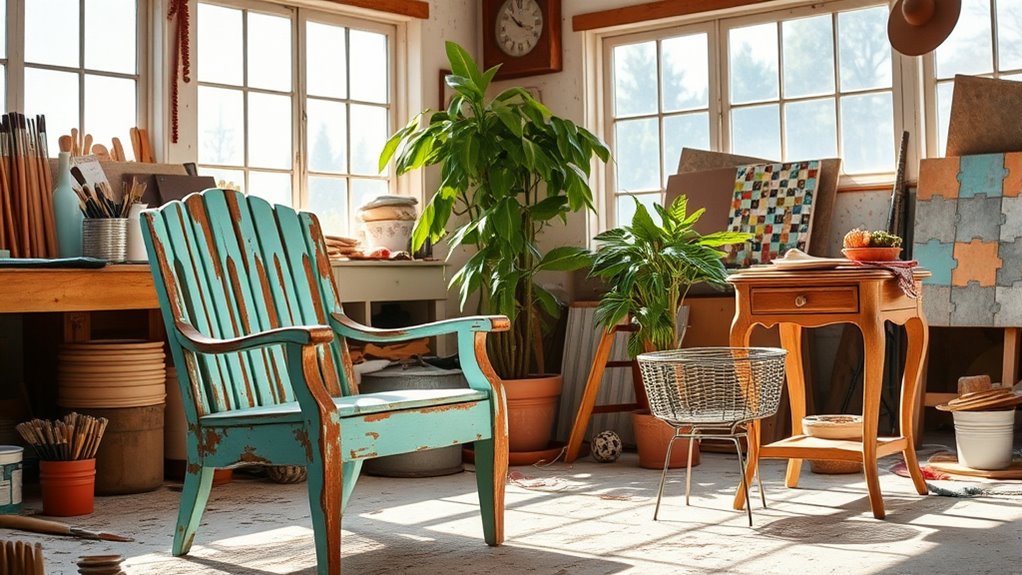

Upcycling old furniture is a fantastic way to create unique, stylish pieces that reflect your personality while keeping waste out of landfills. By applying DIY paint techniques like dry brushing, sponging, or stenciling with eco-friendly materials, you can transform tired furniture into eye-catching accents. Proper preparation, including cleaning and sanding, guarantees a professional look and longevity. Keep exploring different methods to open up even more creative reuse ideas for your home.

Get the little things that make your day delivered free with Prime
- Fast, free delivery on millions of items
- Prime Video, Amazon Music and more included
- Member-only deals all year
Key Takeaways
- Transform tired furniture into stylish, personalized pieces using DIY paint techniques like shabby chic, sponging, or stenciling.
- Use eco friendly paints, natural stains, and plant-based dyes for sustainable and non-toxic upcycling projects.
- Prepare surfaces thoroughly with cleaning and light sanding to ensure a smooth, professional finish.
- Add creative touches such as geometric patterns or layered coatings to enhance visual interest and uniqueness.
- Seal and protect finished pieces with eco friendly sealants to boost durability and maintain their aesthetic appeal.

Have you ever wondered how you can give new life to old furniture instead of throwing it away? Upcycling offers a fantastic way to transform tired pieces into stunning, unique items while reducing waste. One of the most satisfying methods is exploring DIY paint techniques, which allow you to customize furniture with your personal style. Whether you prefer a shabby chic look, a sleek modern finish, or something in between, mastering these techniques empowers you to create a piece that truly reflects your taste. Plus, by choosing eco friendly materials, you’re not just making your furniture beautiful—you’re also making an environmentally conscious decision. Eco friendly paints and sealants are formulated to be low in volatile organic compounds (VOCs), so they’re safer for your home and the planet. Many brands now offer water-based paints, natural stains, and plant-based dyes that work perfectly for furniture projects. Using these materials ensures that your upcycling process stays green from start to finish.
When applying DIY paint techniques, preparation is key. Start by cleaning the furniture thoroughly to remove dirt, grease, and old finishes. Sanding lightly will create a smooth surface for your paint to adhere to and help achieve a more professional look. Once prepped, you can experiment with various techniques, such as dry brushing to add a distressed, vintage vibe or sponging to create soft, textured effects. Stencils and painter’s tape give you the opportunity to add patterns or geometric designs, turning an ordinary piece into a statement piece. Don’t be afraid to mix colors or layer multiple coats for depth and richness. Using eco friendly materials not only benefits the environment but also gives you peace of mind knowing your project is safer for your home and family. Additionally, understanding toxicity to pets is important when selecting your paints and sealants to ensure a safe environment.
Sealing your work with an eco friendly topcoat ensures durability and protects your design from daily wear. Choose a non-toxic, water-based sealant that complements your paint choice. Applying a protective layer also helps preserve the eco friendly finishes, keeping your upcycled furniture looking fresh for years to come. Remember, the beauty of upcycling lies in your creativity—don’t hesitate to experiment with different techniques and materials until you find what works best for you. Whether you’re revamping a worn-out coffee table, an old dresser, or a neglected chair, these DIY paint techniques combined with eco friendly materials will help you craft a piece that’s not only beautiful but eco-conscious too. Your upcycled furniture can become a treasured centerpiece in your home, showcasing your style and your commitment to sustainability.
As an affiliate, we earn on qualifying purchases.
Frequently Asked Questions
What Tools Are Essential for Furniture Upcycling Projects?
To start your furniture upcycling projects, you’ll need essential tools like a good sander for sanding techniques to smooth surfaces and remove old paint or stain. You should also have a screwdriver or drill for hardware selection, allowing you to replace or upgrade handles and hinges. A paintbrush or roller is useful for applying finishes, and clamps help hold pieces in place. These tools make your project more efficient and professional-looking.
How Do I Choose the Right Paint or Finish?
When choosing paint types, consider the furniture’s use and the desired look. For durability, opt for latex or oil-based paints, and for a matte or glossy finish, explore different finish options like matte, satin, or high gloss. Test small areas first to see how the paint and finish options work together. Ultimately, select a paint that matches your style and provides the durability needed for your project.
What Safety Precautions Should I Take?
You should always wear safety gear like gloves, goggles, and a mask to protect yourself from fumes and dust. Make certain you work in a well-ventilated area by opening windows or using fans, and take ventilation tips seriously. Keep your workspace clean, avoid inhaling paint fumes, and wash your hands afterward. These precautions help guarantee your safety while upcycling old furniture.
How Can I Prevent Mold or Pests in Old Furniture?
To prevent mold and pests in old furniture, you should thoroughly clean and dry it before upcycling. Use mold prevention treatments like a vinegar solution or commercial mold inhibitors, especially in humid areas. Apply pest control measures such as borate solutions or insect-repellent sprays to deter pests. Keep the furniture in a well-ventilated, dry space, and regularly inspect it for signs of mold or pests to maintain its condition.
Are There Eco-Friendly or Non-Toxic Materials Available?
They say, “You are what you eat,” and the same goes for your furniture. Yes, eco-friendly finishes and non-toxic adhesives are available, making your project safer and greener. Look for natural oils, water-based paints, and plant-based sealants. These options reduce harmful chemicals and support sustainability. By choosing eco-friendly materials, you protect your health and the environment while giving old furniture new life.
Conclusion
By transforming old furniture into something new, you breathe life into forgotten pieces, blending history with innovation. It’s a reminder that aging doesn’t mean obsolete, just waiting for a creative touch. As you craft and customize, you create more than furniture—you craft stories and sustainability. In this dance of repurposing, the past and present meet, proving that even the most worn-out items can find new purpose and beauty, transforming your space with a touch of your unique vision.
NFL season / tailgating Picks
team gear
As an affiliate, we earn on qualifying purchases.