
To know when to change your whole-house filter cartridges, watch for a decrease in water flow or pressure, as clogged filters restrict flow. Also, pay attention to changes in water taste, smell, or clarity—metallic or musty flavors and cloudy water signal it’s time for a replacement. Regularly inspecting the filter and tracking usage helps you stay ahead. If you want more tips to keep your system running smoothly, keep exploring further.
Key Takeaways
- Watch for a noticeable decrease in water pressure from taps or showers.
- Listen for unusual noises like banging or hissing indicating increased resistance.
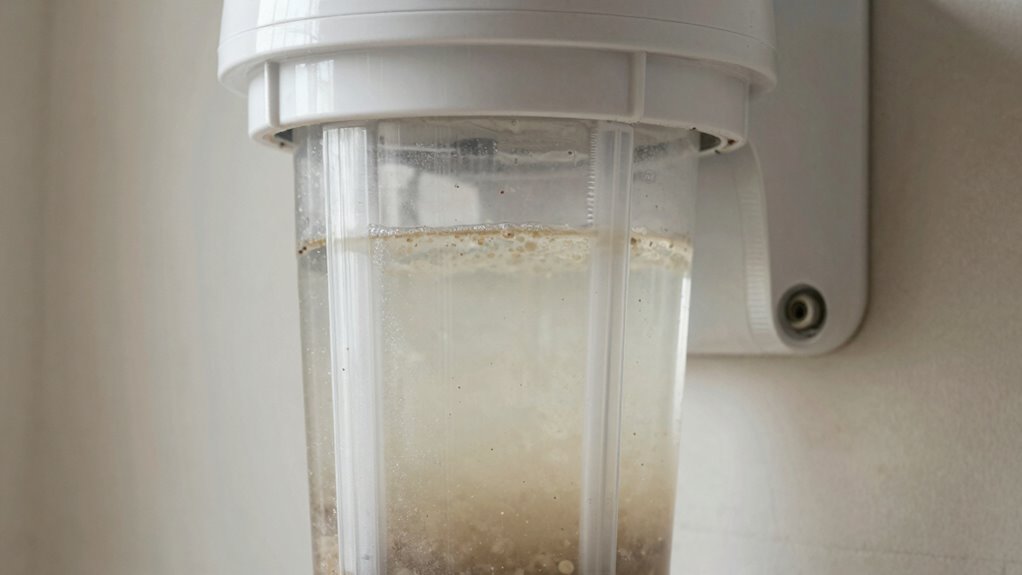
- Inspect the filter material regularly for saturation, clogging, or discoloration.
- Detect changes in water taste, smell, or clarity such as metallic or musty flavors.
- Follow a scheduled replacement based on manufacturer guidelines, typically every 3-6 months.
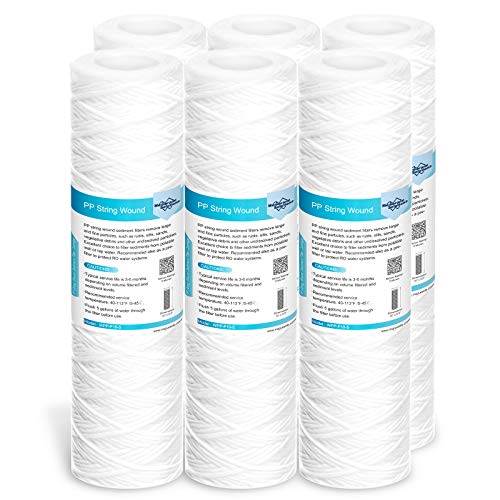
Membrane Solutions 5 Micron 10"x2.5" String Wound Whole House Water Filter Replacement Cartridge Universal Sediment Filters for Well Water – 6 Pack
- Material: Food-grade, BPA-Free Polypropylene
- Durability: Four times dirt capacity, double flow rate
- Compatibility: Universal 10×2.5-inch size
As an affiliate, we earn on qualifying purchases.
As an affiliate, we earn on qualifying purchases.
When Should I Replace My Whole-House Water Filter Cartridge?

Knowing when to replace your whole-house water filter cartridge is essential for maintaining clean, safe water. Over time, the filter material becomes clogged with contaminants, reducing its effectiveness. You should replace the cartridge based on manufacturer recommendations, typically every 3 to 6 months, or sooner if you notice installation indicators like decreased water pressure or a change in water taste or smell. Pay close attention to the filter material; as it becomes saturated, it can no longer properly filter impurities. Regularly inspecting the filter helps prevent buildup that could lead to system damage or compromised water quality. Additionally, understanding the role of contrast ratio in projectors can help you appreciate the importance of clear, high-quality visuals in your home environment. Staying vigilant about these signs ensures your filtration system continues to provide safe, clean water for your home. Proper maintenance also involves filter replacement schedules, which vary depending on water quality and usage, ensuring optimal performance over time. Monitoring water quality parameters like contaminant levels can also guide timely replacements. Being aware of system lifespan helps in planning for replacements before issues arise.
How Can I Tell If My Water Flow Is Slowing Down?
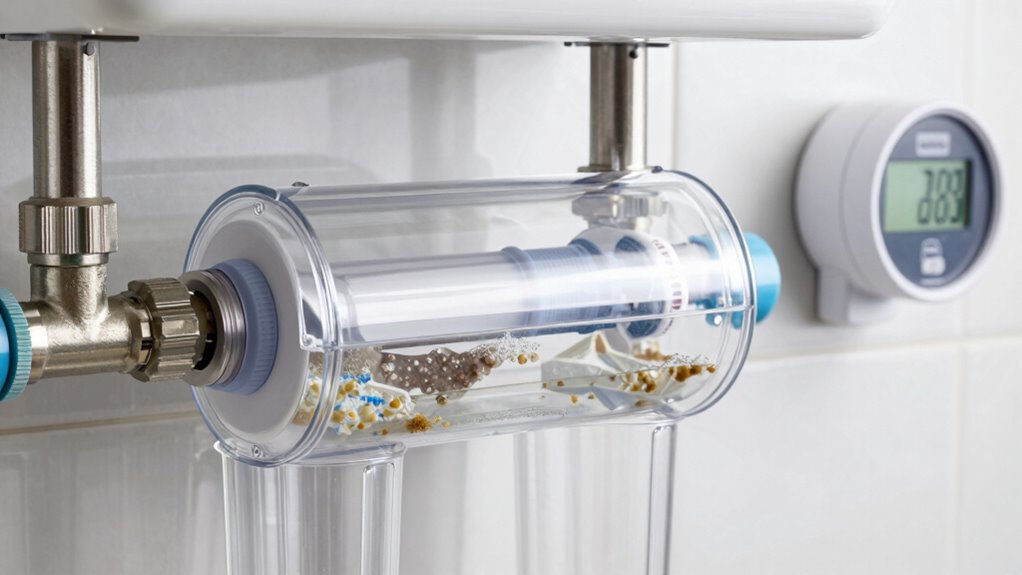
If you notice that your water flow from taps or showers seems weaker than usual, it’s a strong sign that your whole-house filter might be clogging. A sudden pressure drop is a clear indicator that the filter is becoming blocked and restricting flow. You might also hear unusual noises, such as banging or hissing, which can signal increased resistance within the system. These signs mean the filter is working overtime to push water through a clogged cartridge. Ignoring this can cause further damage or reduce water pressure throughout your home. Regularly monitoring your water flow and listening for any strange sounds can help you catch the need for a filter change early, ensuring consistent water pressure and ideal filter performance. Additionally, a decrease in water flow may indicate issues with water quality, prompting an inspection or replacement of the filter cartridges. Being aware of microplastics in dust and other contaminants can further inform your decision to replace filters proactively. Maintaining proper flow also helps prevent buildup of contaminants, which can compromise your water safety and system longevity. Furthermore, understanding private equity market trends can guide investments in related sectors to support sustainable infrastructure development.
To further protect your water system, consider regular maintenance schedules that include checking for signs of clogging and replacing cartridges as recommended by your system’s specifications.
Are There Changes in Water Taste or Quality I Should Notice?
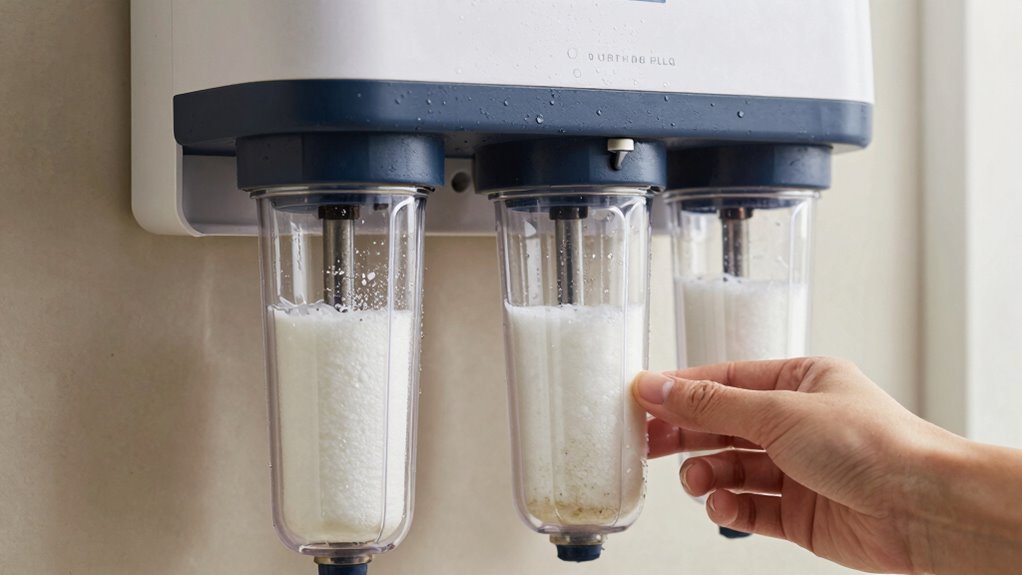
Changes in water taste or quality often indicate that your whole-house filter isn’t working properly. You might notice water taste changes, such as a metallic, chlorine, or musty flavor, which signal that contaminants aren’t being effectively filtered. Additionally, water quality alerts—like cloudiness, discoloration, or an unusual smell—can be signs that your cartridges need replacing. These sensory clues are important because they often appear before more serious issues develop. Regularly paying attention to how your water looks, smells, and tastes helps you catch filter problems early. If you notice any of these water taste changes or water quality alerts, it’s time to check your filter cartridges and replace them if necessary to maintain clean, safe water throughout your home. Monitoring filter efficiency and flow rates can also help identify when cartridges need replacement before issues become noticeable, ensuring ongoing water safety and optimal performance.
What Is the Typical Lifespan of Filter Cartridges?
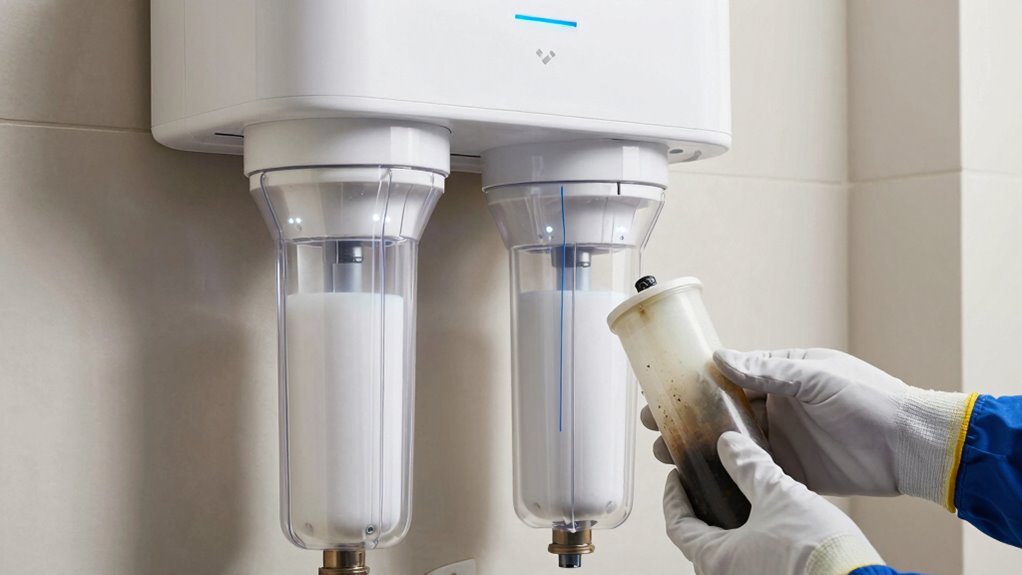
The lifespan of your filter cartridges directly impacts the quality of your water and the effectiveness of your whole-house filtration system. Typically, the filter material determines how often you need to replace cartridges. On average:
- Sediment filters last about 6 to 12 months.
- Carbon block filters usually need replacement every 6 to 12 months.
- Reverse osmosis membranes can last 2 to 3 years but may need more frequent changes if water quality declines.
- Specialty filters, like those for iron or sulfur, often require replacement every 3 to 6 months.
Your replacement frequency depends on water usage, contaminant levels, and the filter material’s capacity. Regularly monitoring water quality helps you determine the right interval for changing cartridges before performance drops. Additionally, observing the filter indicator lights on your system can provide helpful cues for timely replacements. Implementing routine maintenance can also extend the lifespan of your filters and ensure optimal water quality. Being aware of contaminant levels in your water can help you decide when a cartridge has reached its limit. Moreover, understanding filter capacity can guide you in selecting the appropriate replacement schedule for your specific needs.
Tips for Regular Maintenance and Remembering to Change Your Filter

Regular maintenance is essential to keep your whole-house filter system functioning effectively, so staying on top of filter changes prevents water quality from slipping. To do this, establish a maintenance schedule and adhere to it. Regular filter inspection helps you catch signs of clogging or deterioration early, avoiding surprises when water flow slows or quality drops. Mark your calendar or set reminders to check the filter every few months, depending on your water usage and filter type. Keep track of when you last replaced the cartridge, so you don’t forget. Consistent attention ensures your system runs smoothly, extending its lifespan and maintaining clean, safe water for your household. Staying proactive with your filter inspection and schedule makes regular maintenance simple and stress-free. Proper maintenance also helps ensure that your water remains safe and free from contaminants, supporting your household’s health and well-being. Regularly checking for filter deterioration can help prevent costly repairs or replacements down the line. Additionally, understanding water quality indicators can guide you in determining when a filter change is truly necessary. Monitoring water flow rate can also be an important indicator of when a filter needs replacing.
Frequently Asked Questions
Can I Use the Same Cartridge for Different Types of Contaminants?
You shouldn’t use the same cartridge for different types of contaminants because cartridge compatibility is key. Contaminant-specific filters are designed to target particular impurities, like chlorine, sediment, or bacteria. Using a general cartridge may not effectively filter out all pollutants, risking your water quality. Always choose a filter designed for your specific contaminants, and replace cartridges as recommended to guarantee peak performance and clean, safe water.
How Do Hardness Levels Affect Filter Lifespan?
Higher water hardness levels can shorten your filter’s lifespan because minerals like calcium and magnesium clog the cartridge faster. If you’re using water softening systems, it helps extend filter life, but always check cartridge compatibility to guarantee it’s designed to handle mineral levels. Regularly monitor your filter for reduced flow or pressure, which signals it’s time to change, especially in areas with hard water.
Are There Specific Signs of Bacterial Growth in Filters?
You’ll notice signs of bacterial growth in your filter if you detect a musty odor or see slimy, discolored buildup on the cartridge. Bacterial colonies and biofilm buildup often cause these issues, making your water taste or smell off. Regularly inspecting your filter for visible slime or changes in water quality helps catch these signs early. If you notice any of these, it’s time to replace or clean the filter to maintain water safety.
Is It Safe to Use Water During Filter Replacement?
It’s generally safe to use water during filter replacement, but you should turn off the water supply first. This pause helps prevent any unfiltered water from bypassing the filter. If your system includes UV sterilization, verify it’s turned off to avoid exposure. Always check filter compatibility before installing a new cartridge. Once replaced, turn everything back on slowly, and run water to flush out any debris, ensuring your system stays clean and safe.
What Impact Does Filter Neglect Have on Plumbing Systems?
Neglecting your filter causes plumbing corrosion and mineral buildup, leading to costly repairs. When filters aren’t replaced, sediments and minerals accumulate, narrowing pipes and increasing pressure. Over time, this can cause leaks or burst pipes. Regularly changing cartridges prevents these issues, protects your plumbing system, and maintains water flow. Don’t ignore your filter’s condition—timely replacements keep your pipes healthy and avoid expensive damage down the line.
Conclusion
Think of your whole-house filter as the heartbeat of your home’s water. When you notice a slowdown in flow or a change in taste, it’s like your home’s pulse weakening. Regularly changing the cartridge keeps that pulse strong, ensuring pure, invigorating water flows like a steady stream. Stay attentive, and your water will remain clear and vibrant, nourishing your home just as it should—fresh, pure, and full of life.