You’ll notice curved furniture with soft edges becoming more popular because it blends style with comfort. These designs feature flowing shapes that invite touch and create a calming atmosphere in your space. They also offer ergonomic benefits, supporting your body and reducing sharp corners for safety—especially if you have kids or pets. If you want to discover how rounded furniture can transform your environment, there’s more to explore below.
Key Takeaways
- Rounded furniture features organic shapes that enhance comfort, safety, and aesthetic appeal in modern interior design.
- The trend reflects a shift towards more inviting, harmonious spaces that prioritize ergonomic support and coziness.
- Curves and soft edges reduce injury risks and create a safer environment, especially for households with children and pets.
- These designs easily integrate with various decor styles, adding sophistication without overwhelming small or minimalist spaces.
- The popularity of rounded furniture indicates a growing preference for natural, flowing forms that blend beauty with functionality.
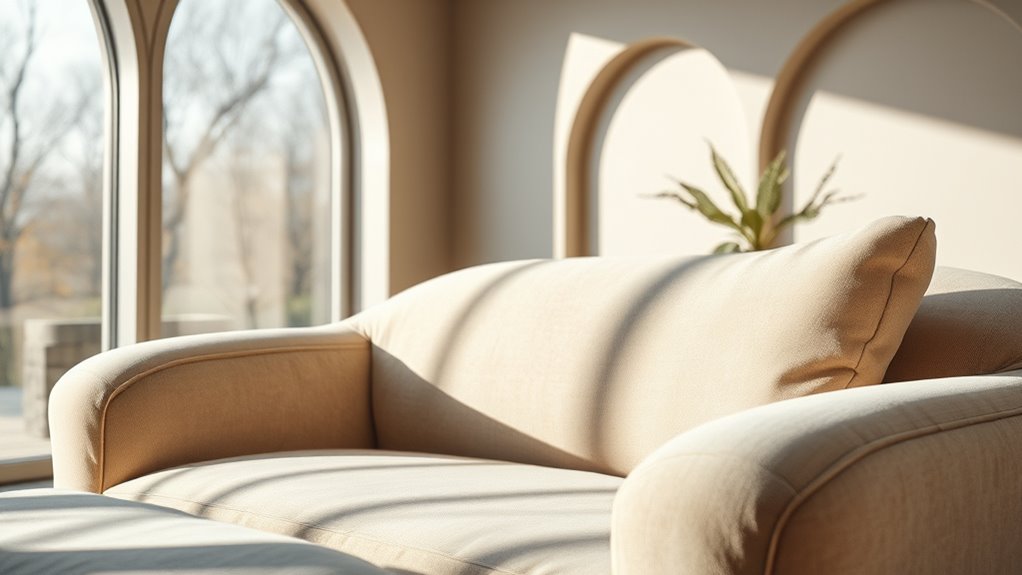
Rounded furniture designs are gaining popularity for their smooth, organic shapes that bring a sense of harmony and comfort to any space. You’ll notice that these pieces break away from traditional straight lines and sharp edges, instead offering flowing curves that invite touch and interaction. This shift isn’t just about aesthetics; it’s about creating environments that feel more welcoming and calming. When you incorporate rounded furniture into your home or office, you enhance the overall aesthetic appeal by adding a touch of modern elegance and softness that blends seamlessly with different decor styles. The gentle curves can soften a stark room, making it feel more inviting and balanced.
One of the key benefits of rounded furniture is its ergonomic comfort. Unlike hard-edged designs, these pieces contour naturally to your body, providing better support and reducing strain. Think about sitting on a rounded armchair or leaning against a curved sofa—your body naturally aligns with the shape, which can help improve posture and decrease discomfort over long periods. This focus on ergonomic comfort isn’t just a trend; it’s a thoughtful response to the way we use furniture daily. Rounded edges eliminate sharp corners that can cause injury or discomfort, making these designs especially appealing for households with children or pets. You instantly feel the difference when you sit or lean against a rounded surface—there’s a sense of security and coziness that straight-edged furniture can’t quite match.
Aesthetically, rounded furniture offers versatility that appeals to a wide range of tastes. Its organic shapes create visual interest and soften the overall look of a space. Whether your style is minimalist, bohemian, or contemporary, these pieces blend effortlessly, adding a layer of sophistication without overwhelming the rest of your decor. The smooth curves can serve as focal points or gentle complements to other design elements, enhancing the room’s harmony. Plus, rounded furniture tends to look less bulky than angular pieces, which can make even small spaces appear more open and airy.
Ultimately, the rise of rounded furniture designs reflects a desire for comfort, beauty, and a touch of nature-inspired elegance. You’re not only upgrading your space with visually appealing pieces but also investing in furniture that promotes better ergonomic comfort. The combination of aesthetic appeal and functional design makes rounded furniture a smart choice for creating environments that feel both stylish and cozy. As these designs continue gaining popularity, it’s clear that their organic shapes are here to stay, transforming interiors into more inviting, harmonious places to live and work. Additionally, the focus on safety and comfort in furniture design underscores the importance of rounded edges in reducing potential injuries.
Frequently Asked Questions
What Materials Are Commonly Used in Rounded Furniture?
You’ll find that materials like wood, upholstered fabrics, and molded plastics are commonly used in rounded furniture. These materials enhance ergonomic comfort and boost aesthetic appeal, making your space feel inviting and stylish. Wood offers natural warmth, while soft fabrics create cozy seating. Molded plastics allow for sleek, seamless curves. Using these materials, you get furniture that’s both functional and visually pleasing, perfectly blending comfort with modern design.
How Do Rounded Designs Affect Furniture Durability?
Rounded furniture designs can enhance durability by reducing stress points, which 60% of manufacturers report as a common cause of damage. You’ll benefit from improved ergonomic benefits since smooth edges prevent injuries and strain. Plus, the aesthetic appeal of rounded shapes adds a modern, inviting look to your space. Just keep in mind, with proper materials and craftsmanship, rounded furniture can be both durable and stylish, standing up to daily use.
Are Rounded Furniture Pieces Suitable for Small Spaces?
Yes, rounded furniture pieces are perfect for small spaces. They help with space optimization by eliminating sharp corners, making rooms feel more open and accessible. Plus, their smooth, flowing lines create visual harmony, making a compact area look less cluttered and more inviting. You’ll enjoy the cozy feel and improved functionality that rounded designs bring, making your small space both stylish and practical.
How Can Rounded Furniture Complement Modern Interior Styles?
Sure, rounded furniture effortlessly complements modern styles, making your space look sleek and inviting—who wouldn’t want that? It combines ergonomic comfort with aesthetic appeal, creating a cozy yet contemporary vibe. These soft-edged pieces break the harshness of sharp lines, adding a playful sophistication. You’ll find your room feels more harmonious and balanced, proving that a little curve can go a long way in elevating your modern interior.
What Maintenance Tips Are Recommended for Rounded Furniture?
To keep your rounded furniture looking its best, follow regular cleaning routines with a soft, damp cloth to prevent dust buildup. Avoid harsh chemicals that can damage protective finishes, and instead, use gentle cleaners recommended for your furniture material. Applying a protective finish periodically helps preserve its smooth curves and soft edges, ensuring your piece stays beautiful and durable for years to come.
Conclusion
As you explore the world of rounded furniture, you’ll notice how its soft edges create a welcoming, timeless feel in any space. Notably, a recent survey found that 67% of homeowners prefer rounded designs for their comfort and aesthetic appeal. Embracing these curves not only enhances your environment but also taps into a growing trend that combines style with functionality. So, next time you choose furniture, consider the warm, inviting vibe that rounded pieces can bring to your home.