To design a calming yoga room or meditation corner at home, focus on creating a serene environment with soft ambient lighting, natural elements like plants, and earthy tones. Keep the space clutter-free and open to allow comfortable movement and mindfulness. Use natural materials such as wood and bamboo to enhance the calming vibe. Pay attention to lighting and plant choices to foster tranquility. Continue exploring tips to turn your space into a true sanctuary for wellness.

Get the little things that make your day delivered free with Prime
- Fast, free delivery on millions of items
- Prime Video, Amazon Music and more included
- Member-only deals all year
Key Takeaways
- Incorporate soft, adjustable lighting and natural light to create a calming ambiance.
- Use earthy tones, natural materials, and minimal decor to promote tranquility and focus.
- Add easy-care indoor plants to enhance serenity and connect with nature.
- Maximize open space for free movement, ensuring comfortable yoga and meditation postures.
- Minimize electronic distractions to foster mindfulness and mental clarity.
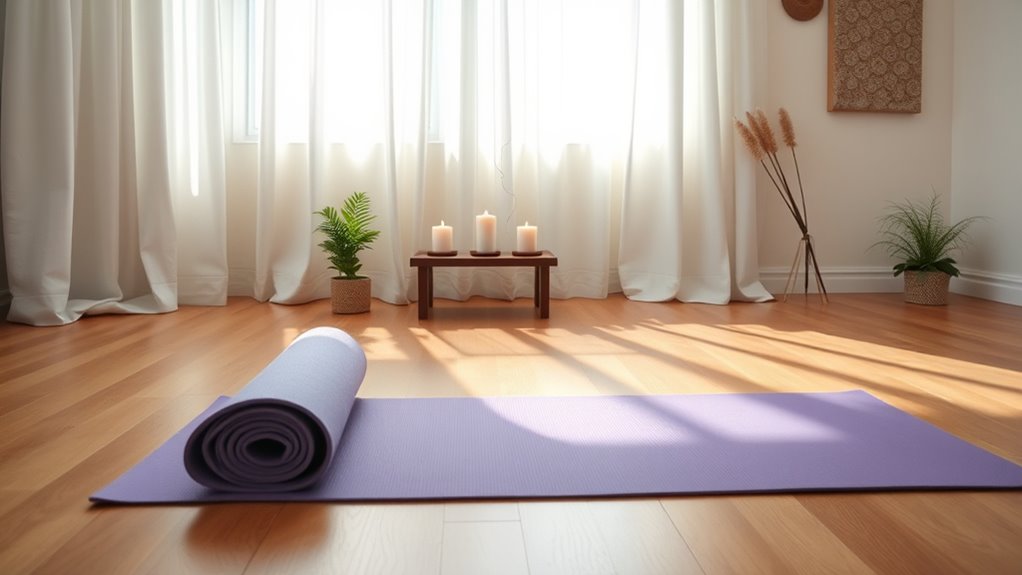
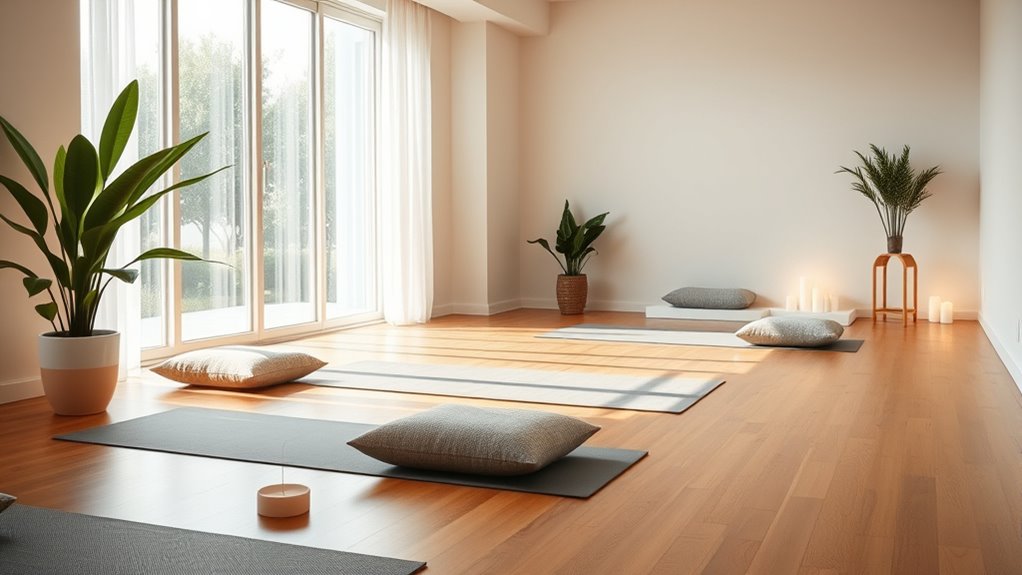
Have you ever considered how your home can become a sanctuary for your well-being? Creating dedicated wellness spaces, like yoga rooms or meditation corners, transforms your environment into a haven for relaxation and mental clarity. The key is designing these areas thoughtfully, making them inviting and calming. One of the most effective ways to do this is by paying attention to ambient lighting. Soft, warm lighting creates a soothing atmosphere, helping you unwind and focus. Instead of harsh overhead lights, opt for dimmable lamps, candles, or LED strips that can be adjusted to suit your mood. Natural light is equally important; large windows or skylights allow sunlight to flood the space, boosting your mood and energy levels. During cloudy days, supplement with gentle artificial lighting to maintain a consistent, calming glow that supports your practice.
Create a calming wellness space with soft lighting and natural elements for relaxation and mental clarity.
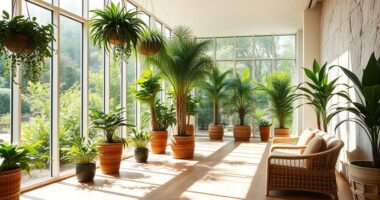
Another essential element is plant selection. Incorporating greenery into your wellness space not only enhances the aesthetic but also promotes a sense of tranquility and connection to nature. Choose plants that are easy to care for and known for their air-purifying qualities, such as snake plants, pothos, or peace lilies. These plants thrive indoors and require minimal maintenance, making them perfect for creating a peaceful environment. The presence of plants has been shown to reduce stress and improve concentration, making them ideal companions during meditation or yoga sessions. Place them strategically around the space—on shelves, in corners, or hanging from the ceiling—to soften the environment and introduce natural textures. Additionally, understanding vegetable juices and incorporating natural elements like herbs can further elevate your wellness space.
The combination of ambient lighting and plant selection helps you craft a space that feels both cozy and invigorating. Keep the color palette in mind; earthy tones and muted shades can enhance the calming effect, while minimal clutter allows your mind to relax fully. Incorporate natural materials like wood or bamboo in furniture and decor to further emphasize the connection to nature. When selecting the layout, prioritize open space that allows free movement and comfortable positioning for your practice. Keep distractions at bay by reducing electronic devices and opting for simple, clean decor.
In essence, designing your yoga or meditation space with thoughtful lighting and greenery transforms it into a true sanctuary. These elements work together to foster serenity, helping you cultivate mindfulness and physical well-being within your home. By intentionally curating your environment, you ensure that every session becomes a restorative experience, turning your home into a personal retreat for health and harmony.
dimmable ambient lighting for yoga room
As an affiliate, we earn on qualifying purchases.
As an affiliate, we earn on qualifying purchases.
Frequently Asked Questions
What Are the Best Plants for a Wellness Space?
You should choose plants like snake plants, pothos, or peace lilies for your wellness space. These plants improve indoor air quality and are easy to maintain, making them perfect for a calming environment. They require minimal plant maintenance and thrive in low light, so you can enjoy cleaner air and a peaceful vibe without hassle. Incorporate these greenery options to boost your wellness space effortlessly.
How Can I Soundproof My Yoga or Meditation Room?
Imagine a tranquil space where silence envelops you, free from outside noise. To achieve this, you should use soundproof materials like mass-loaded vinyl or acoustic panels, which absorb and block sound. Incorporate acoustic treatments such as bass traps and diffusers to enhance the effect. Seal gaps around doors and windows tightly, and consider double-glazing. These steps will create a serene environment perfect for yoga and meditation.
What Lighting Options Create a Calming Atmosphere?
You should opt for dim lighting to create a soothing atmosphere, avoiding harsh overhead lights. Incorporate natural light by using sheer curtains or skylights to let in soft daylight, which promotes relaxation. Add warm-toned lamps or candles for gentle illumination during evening sessions. Combining dim lighting with natural light helps you feel more centered and calm, making your yoga or meditation space truly peaceful and inviting.
How Often Should I Refresh My Wellness Space Decor?
You should refresh your wellness space decor every 6 to 12 months to keep things inspiring. Studies show changing decor can boost motivation and reduce stress. When updating, explore different decor style options like minimalist, bohemian, or nature-inspired themes. To maintain your space, follow decor maintenance tips such as dusting regularly, swapping out accessories, and keeping colors fresh. This keeps your sanctuary inviting and aligned with your evolving wellness journey.
Are There Specific Colors That Enhance Relaxation?
You should choose calming wall hues like soft blues, gentle greens, or warm neutrals, as color psychology shows these shades promote relaxation. These colors help create a tranquil atmosphere, allowing your mind to unwind. Avoid overly bright or intense colors that might stimulate rather than soothe. Incorporate these relaxing hues into your wellness space to enhance your meditation or yoga practice, fostering a peaceful environment where you can truly relax.
Conclusion
Creating a wellness space at home is like planting a seed—you nurture it, and it blossoms into peace and clarity. I once transformed a tiny corner into a meditation nook, and each day I found myself more centered. Remember, your space is a sanctuary where even small changes can grow into big calm. With intention and care, your yoga or meditation corner becomes a haven—an oasis of serenity amid busy days.
NFL season / tailgating Picks
team gear
As an affiliate, we earn on qualifying purchases.