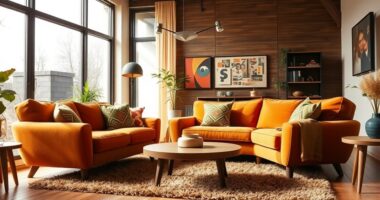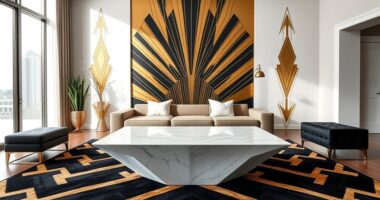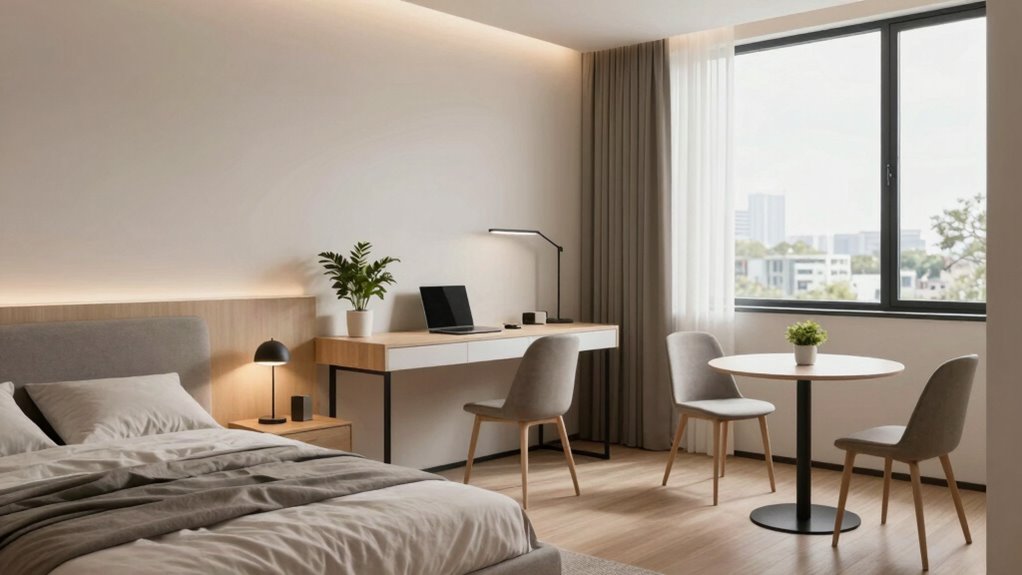

The ‘Hybrid Space’ trend is all about transforming a single room to serve three functions—like work, relaxation, and entertainment—by emphasizing versatility and smart design. It involves using multifunctional furniture, strategic layout, and thoughtful lighting to create seamless progressions between zones. This setup maximizes space, saves money, and adapts to your changing needs. Keep exploring to discover how to design a balanced, stylish, and practical hybrid room that works for you.
Key Takeaways
- Effective hybrid spaces seamlessly combine three functions in one room through strategic layout and multifunctional furniture.
- Proper zoning, lighting, and decor create distinct yet harmonious zones for work, relaxation, and entertainment.
- Soundproofing and privacy solutions ensure each function operates independently without disruption.
- Smart technology automates and enhances room adaptability, optimizing comfort and functionality across multiple uses.
- Cohesive design elements unify diverse functions, making the space versatile, efficient, and visually appealing.

Convertible Sleeper Chair-Fabric Futon Sofa Bed, Single Sleeper Sofa, Small Couch Bed with USB Port, Foldable Table, Pillow, Adjustable Backrest for Dorm/Bedroom/College Darkgrey
- 3-in-1 Convertible Design: Transforms into sofa, lounge, or bed
- Adjustable Backrest: Three positions for optimal comfort
- Built-in USB Port: Charge devices conveniently
As an affiliate, we earn on qualifying purchases.
As an affiliate, we earn on qualifying purchases.
What Are Hybrid Spaces and Why Are They Popular?
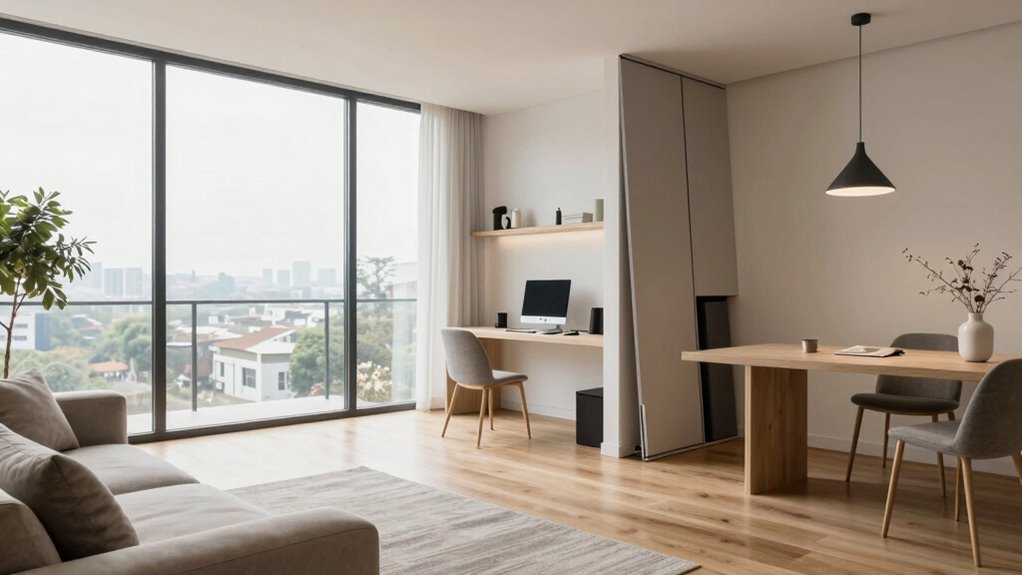
Have you noticed how more spaces are blending functions to maximize efficiency and adapt to modern lifestyles? Hybrid spaces combine different purposes in one area, making your home more versatile. They often use artificial lighting to set the right mood and highlight different zones. For example, warm lighting can create a cozy atmosphere for relaxing, while brighter lights boost productivity during work tasks. Color psychology also plays a role, helping you choose hues that promote focus or calmness depending on the room’s function. Incorporating thoughtful lighting design can further enhance the functionality and ambiance of hybrid spaces. This approach saves space and enhances usability without sacrificing comfort. Additionally, understanding multi-functionality in interior design helps create environments that cater to multiple needs seamlessly. Recognizing how space optimization improves layout efficiency is key to designing successful hybrid environments. As a result, hybrid spaces appeal to busy individuals who want a multi-functional environment that’s both stylish and practical. It’s all about transforming a single room into a flexible, efficient living area, making the most of available space planning techniques and integrating elements such as outdoor features or versatile furniture to maximize utility and aesthetic appeal.
Benefits of Multi-Functional Rooms in Your Home

Multi-functional rooms help you maximize your space and keep your home organized. They offer cost-effective solutions by reducing the need for extra rooms or furniture. Plus, their flexibility allows you to easily adapt your space for work, relaxation, or guests as needed. Incorporating future-oriented design principles can further enhance how these spaces accommodate evolving societal needs. Employing home organization techniques can also make multi-purpose areas more efficient and inviting. Additionally, considering color accuracy and optimal lighting conditions in your room design can help prevent burnout by creating intentional zones that support relaxation and productivity. Integrating natural light and wellness touches can further enhance the comfort and functionality of these adaptable spaces.
Space Optimization Advantages
By combining several functions into a single space, you can maximize your home’s efficiency and reduce the need for extra rooms. Multi-functional rooms make better use of natural and artificial lighting, allowing you to adjust the ambiance for different activities. This flexibility means you can seamlessly shift between work, relaxation, and entertainment without rearranging furniture or moving to another room. Incorporating decorative accents helps define each zone, making the space feel organized and inviting. Smart layout choices optimize square footage, creating a balanced environment that serves multiple purposes. Utilizing smart home devices can further enhance the adaptability and convenience of these versatile spaces. Understanding digital safety and how to manage technology effectively can help you create a secure and functional environment. This approach not only conserves space but also enhances your home’s overall functionality, giving you a versatile living area that adapts to your changing needs without sacrificing style.
Cost-Effective Solutions
Are you looking for ways to save money while maximizing your living space? Multi-functional rooms offer a smart solution by combining different functions into one area. With careful budget planning, you can allocate funds efficiently, focusing on versatile furniture and adaptable decor. Material selection plays a vital role—opt for durable, budget-friendly options that stand up to daily use without breaking the bank. For example, choose multi-purpose furniture like fold-away beds or extendable tables, which reduce the need for extra rooms and furniture. By investing wisely in materials and planning your layout, you can create a flexible space that serves multiple needs without costly renovations. Effective space utilization is key to making the most of your home’s potential. Incorporating environmentally friendly materials can further enhance your space by reducing environmental impact and promoting sustainability. This approach not only saves money but also simplifies your home, making it more cost-effective and affordable. Additionally, understanding performance upgrades like lightweight flywheels and engine modifications can inspire innovative ways to optimize your home projects with advanced, cost-efficient solutions. Moreover, implementing smart design principles can help you maximize functionality while maintaining aesthetic appeal.
Enhanced Flexibility and Use
Maximizing your living space becomes easier when you design rooms that adapt to your changing needs. Multi-functional rooms offer enhanced flexibility and use, allowing you to switch between activities seamlessly. For example, a space can serve as a home office by day and a relaxation zone by night, encouraging artistic expression through creative setups. You can also incorporate outdoor integration by connecting indoor areas with patios or gardens, expanding your living environment. This versatility means you make the most of limited space while maintaining style and functionality. By blending different functions in one room, you create a dynamic environment that evolves with your lifestyle, making your home more efficient and engaging. Additionally, thoughtful cabling solutions ensure your devices and entertainment systems stay organized and reliable, supporting your room’s multiple functions effectively.
How to Plan a Flexible Hybrid Room Layout

Designing a flexible hybrid room starts with thoughtful planning to seamlessly balance multiple functions within a single space. Begin by choosing a cohesive color scheme that can adapt to different uses, such as calming neutrals for work and vibrant tones for leisure. Use decorative accents like rugs, artwork, or plants to define zones without creating clutter, helping the space feel intentional and versatile. Consider how furniture placement impacts flow, ensuring pathways remain open and functional. Modular furniture pieces can easily transform the room’s purpose, so plan layouts that can adapt quickly. Keep storage discreet yet accessible to maintain a tidy environment. Incorporate space planning principles to optimize the layout and maximize functionality. Applying creative storytelling techniques to your design can inspire innovative ideas and make the space more engaging. Additionally, embracing multifunctional furniture can further enhance adaptability and efficiency. Being mindful of digital distractions can also help you stay focused and maintain a balanced environment. Incorporating water features or calming aquatic elements can add a soothing ambiance that transitions seamlessly between different activities. With careful planning around color schemes and decorative accents, you’ll create a space that effortlessly shifts between work, relaxation, and other activities.
Choosing the Best Furniture and Storage for Hybrid Spaces
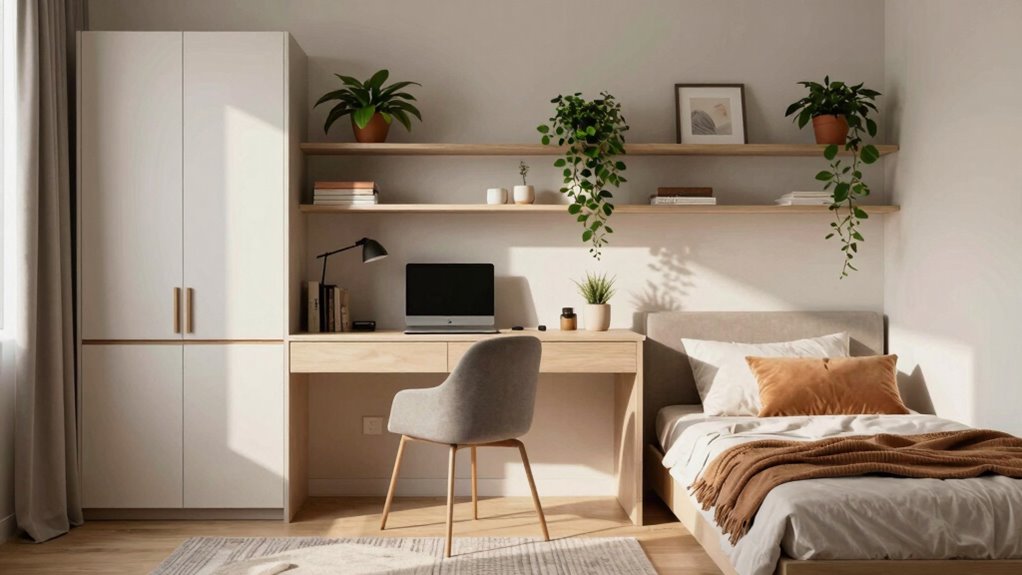
To make your hybrid space functional and stylish, you need the right furniture and storage solutions. Multifunctional pieces, smart storage options, and space-saving techniques can maximize your room’s potential. Choosing wisely guarantees your space works seamlessly for all three functions. Incorporating smart furniture such as ladder racks or smart beds can further enhance versatility and organization. Additionally, integrating modular designs allows for adaptable configurations that can evolve with your needs over time. Being aware of battery capacity and energy needs can also help you select furniture with integrated charging stations or energy-efficient features to support your devices and appliances.
Multifunctional Furniture Options
Choosing the right multifunctional furniture is essential for creating a seamless hybrid space. It helps maximize functionality without clutter. When selecting pieces, focus on furniture customization to suit your needs and style. Here are three options to contemplate:
- Sofa beds – perfect for transforming your living area into a guest bedroom, saving space and providing comfort.
- Fold-away desks – ideal for work zones, these can be tucked away when not in use, maintaining an open feel.
- Storage ottomans – combine seating with hidden storage, reducing clutter while adding versatility. Understanding the importance of device and network security can help protect your smart furniture and connected devices from hacking attempts. Incorporating soundproofing solutions into your hybrid space can further enhance privacy and reduce noise disruptions. Using space saving tips like these ensures your room stays organized and adaptable, making your hybrid space both practical and stylish.
Smart Storage Solutions
Since maximizing space is essential in hybrid rooms, selecting the right furniture and storage solutions can make all the difference. Opt for multi-purpose pieces like beds with built-in drawers or desks with hidden compartments, helping you keep clutter at bay. Incorporate smart storage options that blend seamlessly with your decor, such as wall-mounted shelves or storage ottomans, to maintain a clean look. When choosing furniture, consider how it complements your color schemes and decorative accessories, creating a cohesive aesthetic. Use decorative accessories strategically to add personality without sacrificing storage efficiency. By prioritizing versatile furniture and discreet storage, you’ll optimize your space while enhancing the room’s style and functionality. The right solutions keep your room organized and visually appealing.
Space Optimization Techniques
Selecting the right furniture and storage solutions is essential for maximizing the functionality of hybrid spaces. To make the most of your room, focus on versatile pieces that serve multiple purposes.
- Opt for foldable or stackable furniture, like wall-mounted desks or beds with built-in storage, to save space when not in use.
- Incorporate decorative accents, such as artistic murals, to define zones without overwhelming the room, creating visual separation.
- Use vertical storage options, like tall shelves or wall-mounted cabinets, to keep clutter off the floor while adding aesthetic appeal.
Tips for Creating Seamless Transitions Between Room Functions

To create seamless passages between different room functions, focus on establishing visual harmony and logical flow. Use consistent color coordination across all areas to unify the space, even if each zone has a distinct purpose. Incorporate decorative accents that complement each other and tie the zones together, such as matching pillows, artwork, or rugs. Keep the transition points simple and uncluttered, avoiding abrupt changes in style or color that can disrupt flow. Consider using subtle design elements, like a shared color palette or recurring patterns, to connect the spaces naturally. This approach helps the room feel cohesive, inviting, and functional, making it easier to move between zones without feeling disjointed or overwhelmed.
Using Lighting and Color to Define Different Zones
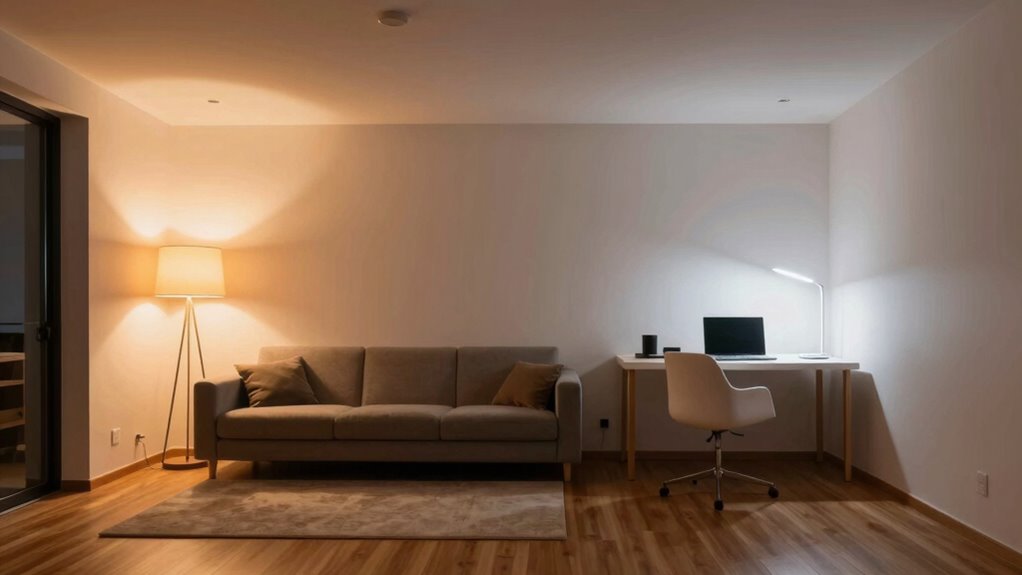
Lighting and color are powerful tools for defining distinct zones within a single room, especially when space needs to serve multiple functions. Good lighting design creates visual separation, while strategic color schemes set different moods. To effectively use these tools:
- Use brighter, focused lighting in work areas to enhance concentration, and softer, warmer lights in relaxation zones for comfort.
- Apply contrasting color schemes—such as bold accent walls or different wall colors—to visually differentiate spaces.
- Incorporate layered lighting options like pendant lights, floor lamps, and dimmers to adjust ambiance per zone.
Common Challenges in Hybrid Room Design and How to Overcome Them
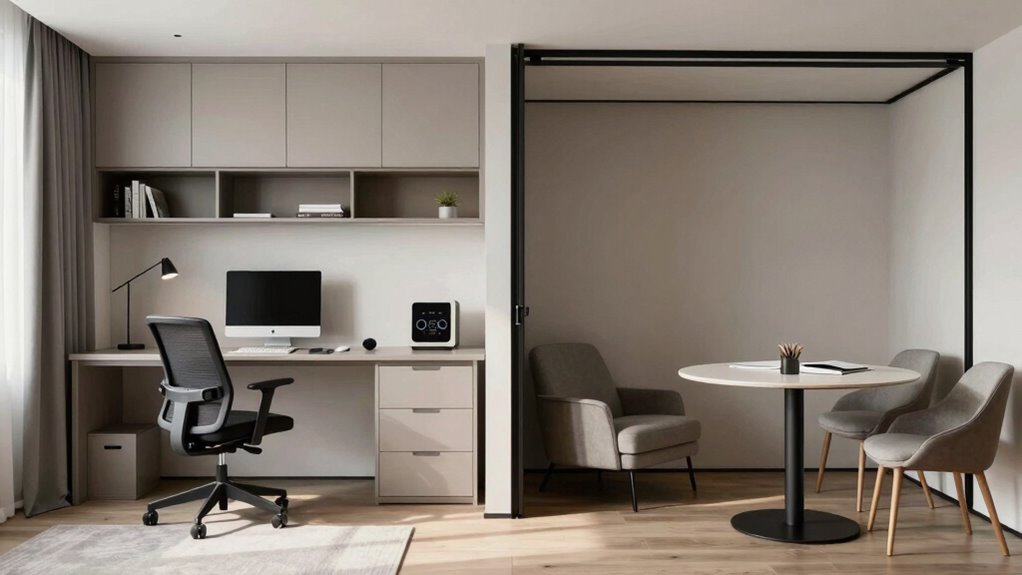
Balancing multiple functions in one room can be tricky, especially when it comes to clearly separating zones. Choosing flexible furniture helps adapt the space quickly, but you also need to take privacy measures to keep each function comfortable. Addressing these challenges ensures your hybrid room remains functional and inviting.
Clear Zone Separation
Achieving clear zone separation in a hybrid room can be challenging because overlapping functions often create visual and functional confusion. You need to contemplate privacy concerns and soundproofing strategies to define each area effectively. Here are three tips:
- Use visual barriers like shelves or curtains to create physical boundaries without cluttering the space.
- Incorporate soundproofing elements such as acoustic panels or rugs to minimize noise transfer between zones.
- Choose distinct color schemes or decor styles for each zone to enhance visual separation and reduce confusion.
Flexible Furniture Choices
Flexible furniture is essential for adapting a hybrid room to multiple functions, but it can also present challenges. Modular furniture allows you to reconfigure your space quickly, making it easier to switch between work, relaxation, and social areas. However, choosing pieces that blend seamlessly with your overall decor can be tricky; overly bulky or mismatched furniture disrupts the room’s cohesion. To overcome this, focus on adaptable decor that complements modular pieces, creating a unified look. Prioritize multi-purpose furniture that serves dual roles without sacrificing style or comfort. Keep the room clutter-free by selecting versatile items that fold, slide, or stack when not in use. With thoughtful furniture choices, you can maintain a flexible, functional, and visually appealing hybrid space.
Adequate Privacy Measures
Have you ever struggled to find privacy in a multi-use room? Privacy concerns can make hybrid spaces tricky, but soundproofing measures can help. To create adequate privacy, consider these steps:
- Install acoustic panels or soundproof partitions to block noise between zones.
- Use soft furnishings like rugs and curtains to absorb sound and reduce echo.
- Incorporate privacy screens or movable dividers that can be adjusted as needed.
These solutions help you maintain confidentiality and minimize distractions. Remember, effective soundproofing isn’t just about blocking noise; it’s about creating a sense of separation that respects each function’s needs. By implementing these measures, you ensure your hybrid space is functional, comfortable, and private.
Inspiring Examples of Successful Hybrid Room Setups

Looking at real-world examples, you’ll find that successful hybrid room setups seamlessly blend function and design to maximize space. These setups often feature clever interior aesthetics that unify different zones, making progression smooth and visually appealing. Color schemes play a crucial role, helping to differentiate areas while maintaining harmony. For instance, a neutral palette with bold accent walls can define a workspace within a living area without disrupting the overall vibe. Multifunctional furniture also contributes, providing flexibility without clutter. The best examples show how thoughtful layout and cohesive design create an environment where each function—work, relaxation, or entertainment—coexists effortlessly. These setups prove that with the right interior aesthetics, a single room can be both beautiful and highly functional.
Smart Technology Solutions for Hybrid Room Functionality
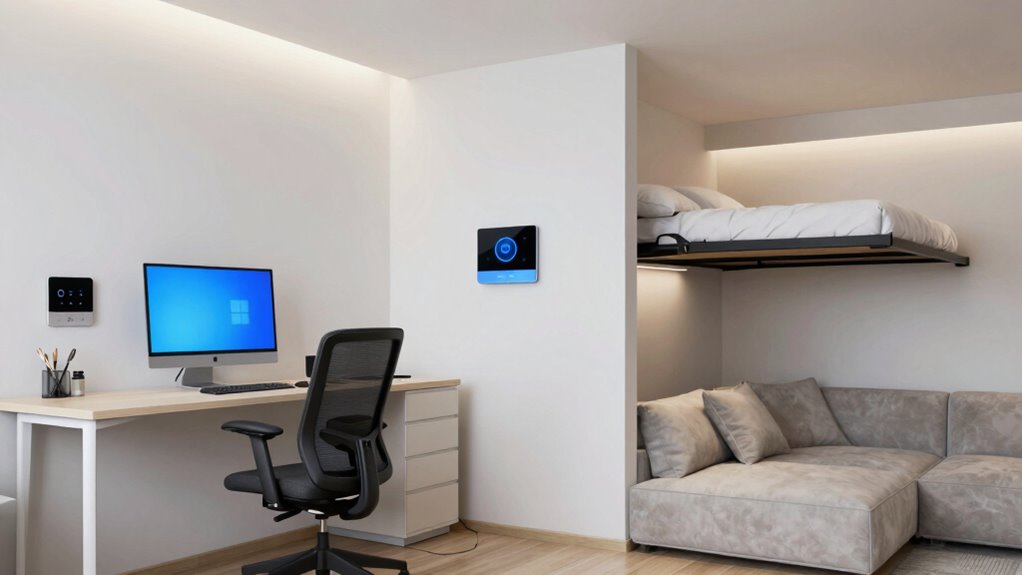
Smart technology plays a pivotal role in transforming a single room into a highly functional hybrid space by automating and streamlining daily tasks. With smart home integration, you can effortlessly switch between work, relaxation, and entertainment modes. Virtual reality adds an immersive experience for remote meetings or gaming, making your space versatile. To optimize your hybrid room, consider these solutions:
Transform your space with smart tech—seamless control, virtual reality, and versatile modes for work, relaxation, and entertainment.
- Use voice-controlled smart devices to adjust lighting, temperature, and multimedia without interrupting your flow.
- Integrate virtual reality systems for immersive meetings or entertainment, saving space and enhancing engagement.
- Connect all devices through a centralized smart home hub, ensuring seamless control across functions.
These innovations enable you to maximize space efficiency while maintaining flexibility in a single room.
Final Tips for Maintaining Balance in a Multi-Use Space
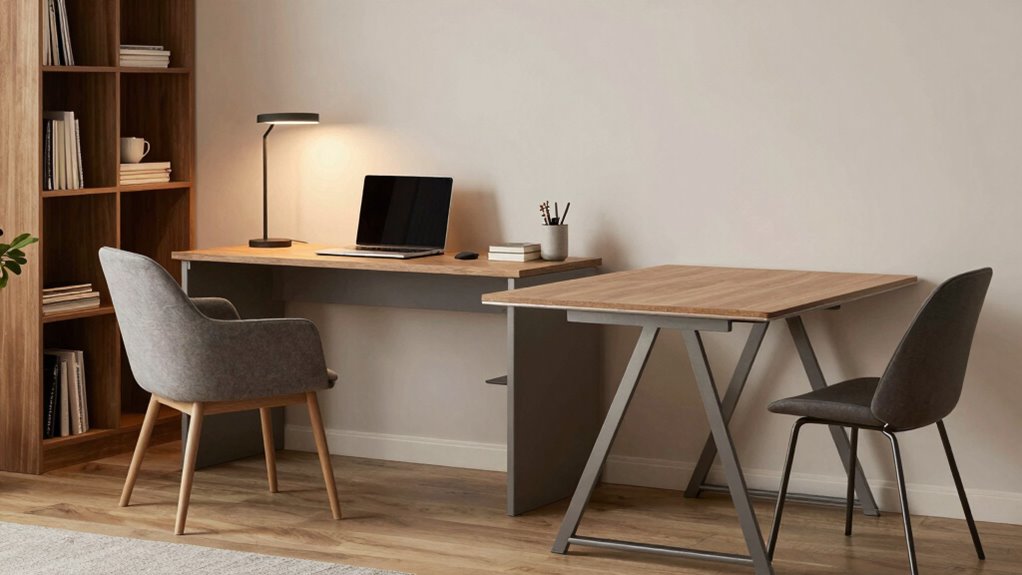
Maintaining balance in a multi-use space requires intentional organization and clear boundaries to prevent one function from overwhelming the others. Use decorative accents strategically to define zones without cluttering. Consistent color schemes help unify different areas, creating harmony and visual flow. Limit bold colors to accent pieces, keeping the overall palette calm and cohesive. To enhance balance, assign specific storage for each function, avoiding clutter. Visual cues like rugs or lighting can delineate zones subtly. Consider this layout:
| Zone | Decorative Accents | Color Scheme |
|---|---|---|
| Living Area | Artworks, cushions | Neutral tones with pops of color |
| Workspace | Plants, desk accessories | Cool tones for focus |
| Relaxation | Candles, soft textiles | Warm, soothing colors |
Stick to these tips, and your hybrid space will be functional, stylish, and balanced.
Frequently Asked Questions
How Can I Maximize Natural Light in a Hybrid Space?
To maximize natural light in a hybrid space, prioritize strategic window placements to let sunlight flood the room. Use large, unobstructed windows or glass doors to enhance brightness and create an open feel. Keep window treatments light and minimal to avoid blocking light, and consider mirrors or reflective surfaces to bounce natural light around. These steps will make your space brighter, more inviting, and functional for multiple uses.
What Are Cost-Effective Ways to Create Multi-Functional Zones?
You can create multi-functional zones cost-effectively by using multi-use furniture like fold-away beds or extendable tables, which save space and serve multiple purposes. Incorporate modular partitions to easily reconfigure your space based on your needs, allowing for quick separation or openness. These solutions are affordable, flexible, and practical, helping you maximize your room’s potential without spending a lot. Plus, they add a stylish touch to your hybrid space.
How Do I Maintain Privacy in a Shared Hybrid Room?
A picture is worth a thousand words, so start by creating privacy solutions that make your shared space feel separate. Use soundproofing tips like rugs, heavy curtains, and acoustic panels to dampen noise. Incorporate room dividers or furniture placement to visually and physically block shared areas. These strategies help maintain privacy, making each zone functional and comfortable without sacrificing style or openness in your hybrid space.
Are There Specific Color Schemes Suited for Hybrid Spaces?
You should choose color schemes that promote effective color coordination and mood enhancement in your hybrid space. Neutral tones like beige, gray, or soft pastels create a calming atmosphere, while bold accents add energy and focus. Consider using contrasting or harmonious colors to define different zones clearly. This approach helps you visually separate functions and fosters a balanced environment, making your hybrid space both functional and inviting.
How Often Should I Update or Change My Hybrid Room Layout?
You should update your hybrid room layout whenever you notice it becoming inefficient or uncomfortable. Regular room rearrangement helps adapt to changing needs, while seasonal updates keep the space fresh and functional. Aim to do a major overhaul every few months or when your routines change. Small tweaks, like swapping decor or adjusting furniture placement, can also enhance your space without major disruptions. Stay flexible to keep your hybrid room working for you.
Conclusion
By thoughtfully designing your hybrid space, you can effortlessly balance multiple functions without sacrificing style or comfort. For example, imagine transforming a small living room into a cozy workspace by adding foldable desks and smart storage, then seamlessly switching back for relaxation. With careful planning and smart solutions, your versatile room can adapt to your changing needs, making your home more functional, efficient, and inviting—truly a space that works as hard as you do.