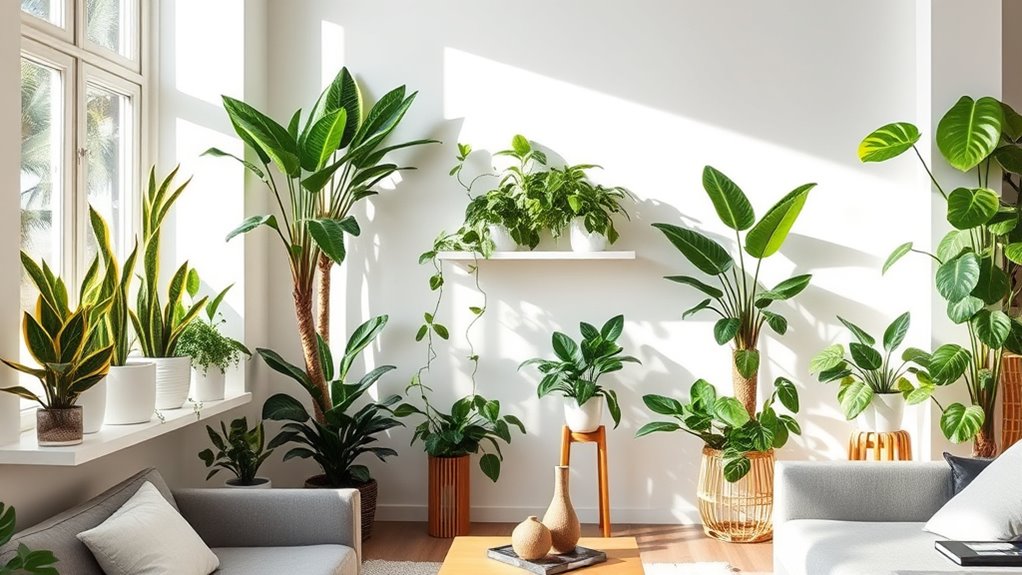

Indoor plants do more than just add decoration; they influence your space’s light, color, and overall ambiance. By strategically placing plants in corners, near windows, or on shelves, you can create visual balance and highlight your interior style. Using the right pots and coordinating colors enhances their impact, making your space feel lively and harmonious. To discover how to harness plants for maximum design effect, keep exploring the possibilities ahead.
Key Takeaways
- Use plant placement to highlight architectural features and create focal points in interior spaces.
- Select plants with diverse foliage and colors to add texture and visual interest beyond basic decoration.
- Coordinate pots and planters with room decor to reinforce style and unify design themes.
- Position plants strategically to balance light, shade, and space, enhancing overall room harmony.
- Incorporate plants as statement pieces that reflect personality, elevating interior design from mere decoration to art.

Indoor plants have become a popular way to enhance interior design, bringing life and freshness to any space. When you’re considering how to incorporate plants into your home, one of the most important aspects is plant placement. Thoughtful placement allows your plants to serve as focal points or subtle accents, depending on your style. For example, placing taller plants in corners can fill empty spaces and create a sense of height, while smaller plants on coffee tables or shelves add detail without cluttering the room. You want to think about natural light as well; some plants thrive in direct sunlight, so positioning them near windows makes sense. Others prefer shaded spots, so consider placing shade-loving plants away from direct rays. The goal is to find the perfect spot that supports each plant’s specific needs while complementing your interior layout. Additionally, proper light management ensures your plants thrive and enhances their role as design features.
Color coordination is equally crucial when integrating plants into your design scheme. You can use plants to enhance the color palette of your room or introduce new tones that create visual interest. For instance, a lush green fern can serve as a neutral backdrop, harmonizing with earthy tones or contrasting with bold, vibrant colors. You might choose plants with variegated leaves or unique foliage to add texture and visual variation. When selecting pots and planters, coordinate their colors with your existing decor. A sleek white pot can provide a modern look, while terracotta adds warmth and rustic charm. If your room features cool blues and greys, adding plants in shades of deep green or with purple undertones can create a striking contrast. Conversely, for rooms with warm palettes, lighter greens and soft-colored pots can maintain a cohesive and calming atmosphere.
The key is to balance the visual weight of your plants with the rest of your decor. Too many bold-colored plants or mismatched pots can overwhelm a space, while carefully chosen arrangements can elevate your interior style. Think about how each plant’s color and placement work together to guide the eye naturally through the room. Use plants not just as decoration but as dynamic elements that reflect your personality and aesthetic sensibility. When done intentionally, plant placement and color coordination transform your indoor garden from mere decoration into an integral part of your design narrative, creating a space that feels both lively and harmonious.
indoor plant pots with color coordination
As an affiliate, we earn on qualifying purchases.
As an affiliate, we earn on qualifying purchases.
Frequently Asked Questions
How Do Indoor Plants Improve Indoor Air Quality?
Indoor plants improve air quality by filtering out toxins and releasing oxygen through air purification benefits. To maximize these effects, you should select plants like snake plants or pothos, which are easy to maintain and highly effective. When choosing plants, consider their ability to remove common indoor pollutants, your space, and your care routine. Proper plant placement ensures you get the most air purification benefits for a healthier indoor environment.
Which Plants Are Best for Low-Light Spaces?
You should choose shade-tolerant varieties like snake plants, pothos, or ZZ plants for low-light spaces. These plants thrive with minimal light and are relatively easy to care for, making them perfect for darker areas. To guarantee healthy growth, focus on low-light plant care by avoiding overwatering and providing well-draining soil. With the right species and care, you can enjoy lush greenery even in the dimmest corners of your home.
How Often Should Indoor Plants Be Watered?
Like a gentle river flowing, your watering schedule keeps your indoor plants thriving. Typically, you should water them once a week, allowing the soil to dry out slightly between sessions. Proper plant hydration depends on factors like plant type, light, and humidity. Keep an eye on your plants for signs of thirst—wilting or dry leaves—and adjust your watering routine accordingly to make sure they stay healthy and vibrant.
Can Indoor Plants Help Reduce Stress?
Yes, indoor plants can help reduce stress through plant therapy, offering a calming effect that promotes stress relief. When you care for and spend time with your plants, you engage in a relaxing activity that boosts your mood and lowers anxiety. Incorporating greenery into your space creates a soothing environment, making it easier for you to unwind and feel more centered. So, your indoor plants aren’t just decoration—they’re your natural stress relievers.
What Are Common Pests Affecting Indoor Plants?
You might be surprised, but common pests like spider mites, aphids, and mealybugs are the biggest threats to your indoor plants. They love to sneak in and disrupt plant health, turning your lush greenery into a battleground. To keep them at bay, pest control is essential—regular inspection and prompt treatment help protect your plants. Ignoring pests only invites more trouble, so stay vigilant and nurture healthy, pest-free plants.
Conclusion
By incorporating indoor plants into your space, you’re not just sprucing up your surroundings—you’re creating a haven that breathes life into your home. These green companions do more than decorate; they boost your mood and connect you with nature. So, don’t wait for a sign to bring plants indoors—take the plunge now. Remember, a well-placed plant can turn your space around, proving that sometimes, the smallest changes make the biggest difference.