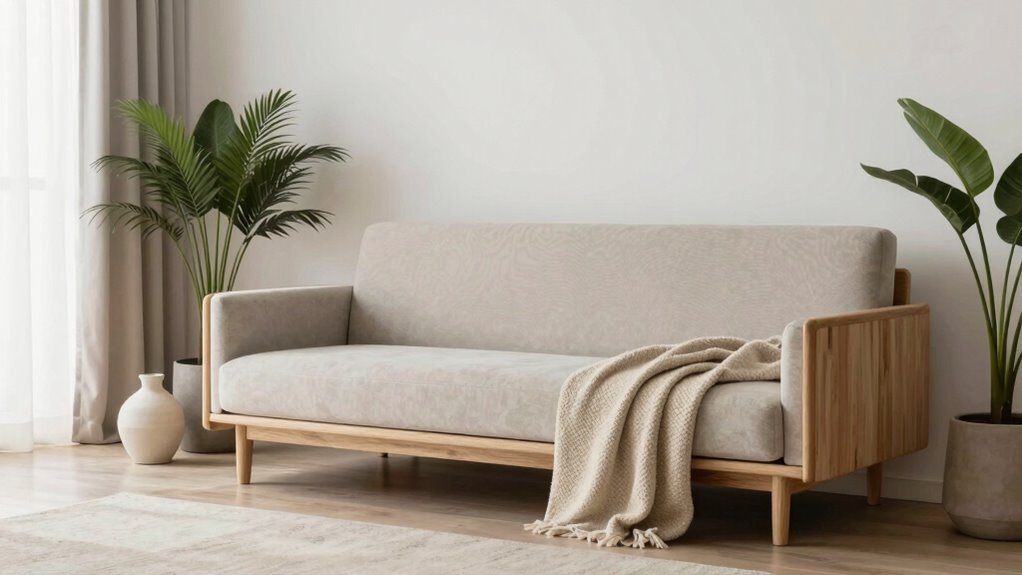
Japandi combines Scandinavian minimalism with Japanese craftsmanship to create a space that’s both clean and cozy. It emphasizes simple, functional design, natural materials, and neutral tones to promote calmness. Soft textiles, warm lighting, and thoughtful decor add warmth without clutter, making your space inviting yet serene. This timeless style balances modern and traditional elements, ensuring it never feels cold. Keep exploring to discover how you can bring this harmonious look into your home effortlessly.
Key Takeaways
- Japandi blends Scandinavian minimalism with Japanese craftsmanship, creating a serene, balanced environment that feels both clean and cozy.
- It emphasizes neutral colors, natural materials, and simple designs to foster warmth without clutter.
- Soft textiles, warm lighting, and thoughtful decor add coziness while maintaining a minimal, uncluttered aesthetic.
- Strategic space planning, natural light, and biophilic elements enhance a calming, functional atmosphere.
- Durable, high-quality materials ensure longevity, keeping the style timeless and inviting.
What Is Japandi and Why Is It Popular?
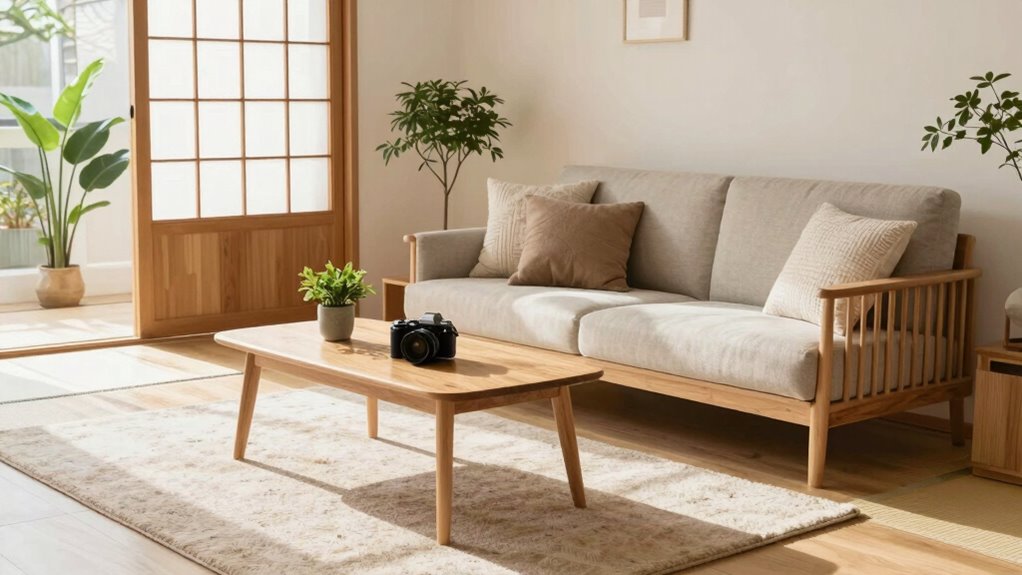
Have you ever wondered why Japandi has become such a sought-after design trend? It’s because this style combines simplicity, functionality, and a calming aesthetic. When choosing furniture, you focus on clean lines, natural materials, and minimal ornamentation, creating a balanced look that feels both modern and cozy. Lighting techniques also play a pivotal role; you opt for soft, warm light sources that enhance the tranquil atmosphere. Natural light is maximized through simple window treatments, while subtle lamps add warmth without cluttering the space. Japandi’s popularity stems from its ability to blend Scandinavian minimalism with Japanese craftsmanship, resulting in a serene environment that’s stylish yet inviting. Additionally, integrating interior design basics can assist in designing spaces by recommending optimal layouts and decor choices, making the process even easier. Incorporating cabling solutions ensures that your space remains uncluttered and functional as well. For example, wire management solutions help maintain the clean aesthetic intrinsic to Japandi interiors, creating a peaceful retreat in your home. Incorporating smart storage options can further enhance the minimalist appeal while keeping your belongings organized.
What Are the Key Elements of Japandi Style? (Colors, Materials, and Design Principles)

The key elements of Japandi style revolve around a careful selection of colors, materials, and design principles that work together to create a harmonious space. You’ll notice a strong Scandinavian influence, emphasizing simplicity, functionality, and clean lines. The color palette leans toward neutral tones like beige, soft grays, and warm woods, fostering a calming atmosphere. Materials are natural and understated, such as wood, rattan, and stone, which add warmth without clutter. Minimalist principles guide the overall design—less is more—focusing on uncluttered spaces and purposeful decor. The approach encourages balance between form and function—ensuring your space feels cozy yet uncluttered. Additionally, color accuracy plays a crucial role in achieving an authentic Japandi ambiance by ensuring the subtle tones and natural hues are rendered faithfully, enhancing the serene aesthetic. These key elements combine to create a serene environment that’s both modern and inviting.
How to Incorporate Japandi Colors and Materials Into Your Decor

To seamlessly incorporate Japandi colors and materials into your decor, start by choosing a neutral color palette that includes shades like beige, soft gray, and warm wood tones. This foundation creates a calm, cohesive environment. When selecting materials, opt for natural finishes such as light wood, stone, and linen to evoke warmth and simplicity. The key is to balance minimalism with comfort through careful material selection and subdued color palettes. Paying attention to psychological well-being can enhance the tranquil atmosphere that Japandi style aims to achieve. Incorporating design harmony through consistent textures and tones helps create a unified, relaxing space. Additionally, integrating ergonomic furniture ensures that comfort is maintained without compromising the aesthetic. Emphasizing natural light can further enhance the soothing ambiance characteristic of Japandi interiors. Incorporating functional design can also improve practicality while maintaining the minimalist aesthetic.
How to Create a Calm, Functional Japandi Layout

Creating a calm, functional Japandi layout involves careful planning to balance simplicity with usability. Start by applying feng shui principles to promote harmony and positive energy flow. Arrange furniture to create open pathways, avoiding clutter and ensuring each piece has a purpose. Incorporate biophilic design by integrating natural elements like greenery, wood, and stone, which enhance tranquility and connection to nature. Keep surfaces clear and use minimal decor to maintain clean lines and visual calm. Prioritize functionality by selecting multipurpose furniture and thoughtful storage solutions. Use natural light to brighten the space and create a welcoming atmosphere. Consider adding outdoor cooling fans to maintain a comfortable environment during warm weather. Being mindful of spirituality principles can further enhance the peaceful energy of your space. Incorporating mindful space planning ensures that every element supports a peaceful and balanced environment. Additionally, paying attention to natural light can significantly influence the overall mood and serenity of your space. Incorporating aesthetic harmony and visual balance helps reinforce the tranquil aesthetic of Japandi. Remember, the goal is to craft a space that feels peaceful, balanced, and effortless to navigate, embodying the essence of Japandi’s serene aesthetic.
How to Add Coziness With Textures and Accessories

Adding coziness to your Japandi space involves thoughtfully incorporating textures and accessories that invite comfort without disrupting the minimalist aesthetic. Focus on careful textural layering and intentional accessory selection to create warmth and visual interest. Start with these tips:
- Use soft textiles like woven throws and plush cushions to add tactile depth, and consider incorporating crochet styles for locs to introduce subtle, handcrafted textures that complement the cozy atmosphere. Incorporating textural layering techniques can elevate the tactile experience and add visual richness. Additionally, selecting textiles that are recognized for their net worth or quality can further enhance the sense of luxury and durability.
- Incorporate natural materials such as wood, rattan, or linen for subtle warmth.
- Choose minimalist ceramics or vases as accent pieces that complement the clean lines.
- Add low, warm lighting, like paper lanterns or simple table lamps, to enhance the cozy atmosphere.
- Integrate performance parts like high-quality textiles and accessories that can also emphasize durability and style.
Common Decorating Mistakes in Japandi Style to Avoid
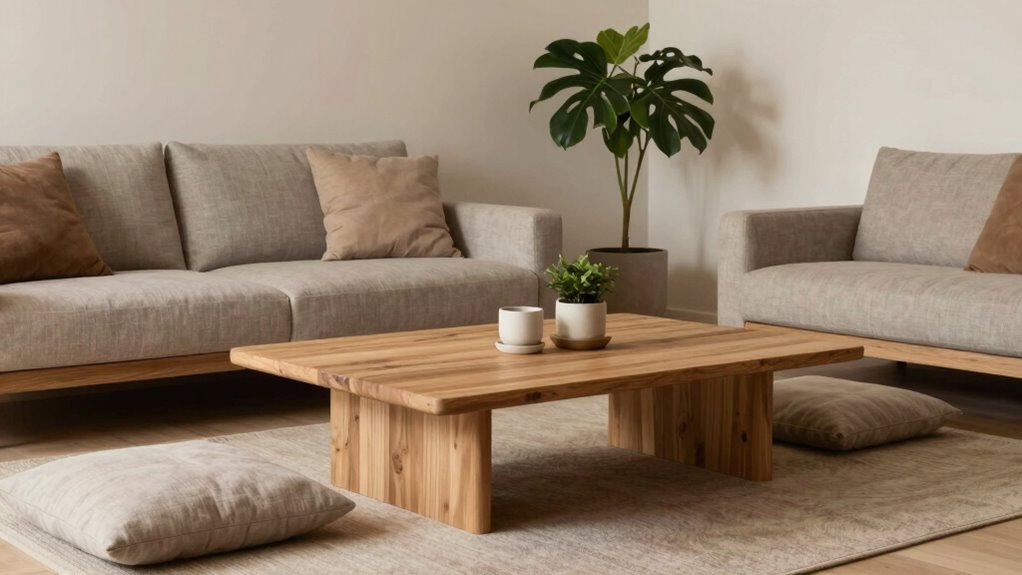
One common mistake in Japandi decorating is overloading the space with too many accessories or decorative objects, which can clutter the minimalist aesthetic. Avoid filling your room with artificial plants just for the sake of greenery; choose a few well-placed, simple pieces that enhance the calm vibe. Be cautious with bold patterns—too many or overly busy designs can disrupt the clean, serene look. Instead, opt for subtle textures and restrained accents. Remember, Japandi style thrives on balance and simplicity. Cluttering the space with excessive decor, artificial plants, or statement patterns diminishes the peaceful atmosphere. Incorporating well-chosen accessories can help maintain the aesthetic without overwhelming the space. Additionally, paying attention to proper space planning ensures that your decor remains harmonious and uncluttered, which is essential for creating a calm and inviting environment. Being mindful of visual weight can further enhance the sense of balance and tranquility in your space. To achieve this, consider the visual harmony of each element within your overall design.
Tips for Making Your Japandi Space Warm and Inviting
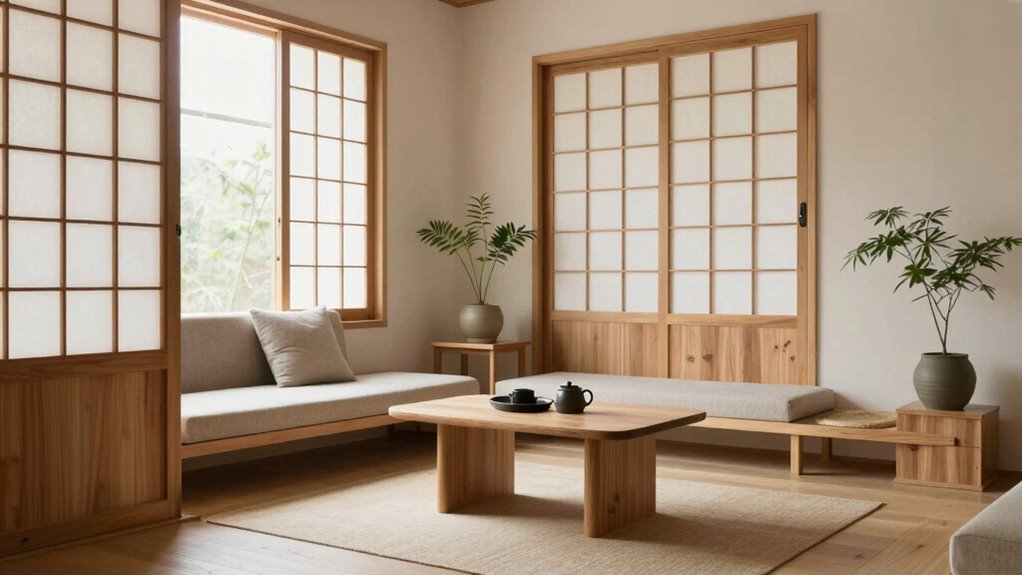
To make your Japandi space warm and inviting, focus on incorporating natural textures and soft, neutral tones that evoke comfort. Use botanical accents like potted plants or fresh flowers to add life and a touch of nature. Incorporate statement lighting, such as a bold pendant or warm-toned fixtures, to create a cozy ambiance. Here are some tips to enhance warmth in your space:
Incorporate natural textures, soft neutrals, botanical accents, and warm lighting to create a cozy, inviting Japandi space.
- Add textured textiles like woven throws or linen cushions.
- Use warm wood finishes for furniture and decor.
- Include botanical accents to bring nature indoors.
- Choose statement lighting with warm bulbs for a soft, inviting glow.
- Consider incorporating warm-toned fixtures, similar to traditional Italian gelato shops, which can enhance the cozy atmosphere. Additionally, selecting lighting that emphasizes warm lighting techniques can further amplify the inviting feel.
These elements work together to soften the minimalist aesthetic and foster a welcoming atmosphere in your Japandi design.
Best Rooms for Japandi Design: Living, Bedroom, and Kitchen Ideas
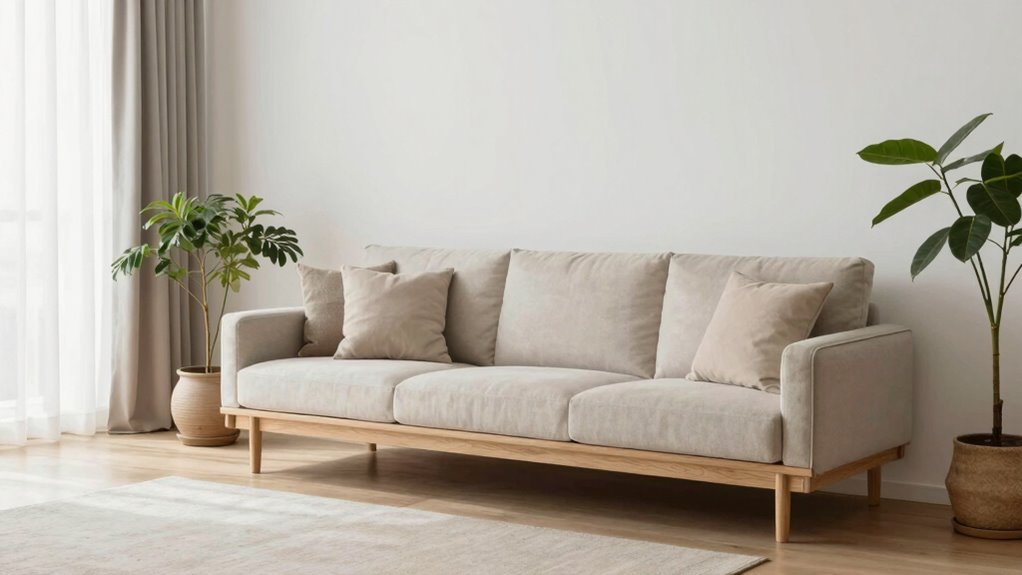
Japandi design works beautifully in living rooms, bedrooms, and kitchens, creating spaces that balance simplicity with warmth. In your living room, opt for soft artificial lighting to highlight clean lines and natural textures, while wall art in muted tones adds personality without clutter. For the bedroom, choose cozy bedding and minimalist furniture, complemented by warm lighting to foster relaxation. Incorporate subtle wall art to enhance the calm atmosphere. In the kitchen, prioritize open shelving and sleek surfaces, using warm-toned lighting to make the space inviting. Thoughtfully selected wall art can add visual interest without overwhelming the simplicity. These rooms thrive with a blend of functional design and cozy accents, making your home both stylish and comfortable.
How to Maintain the Clean, Minimal Look of Japandi Over Time
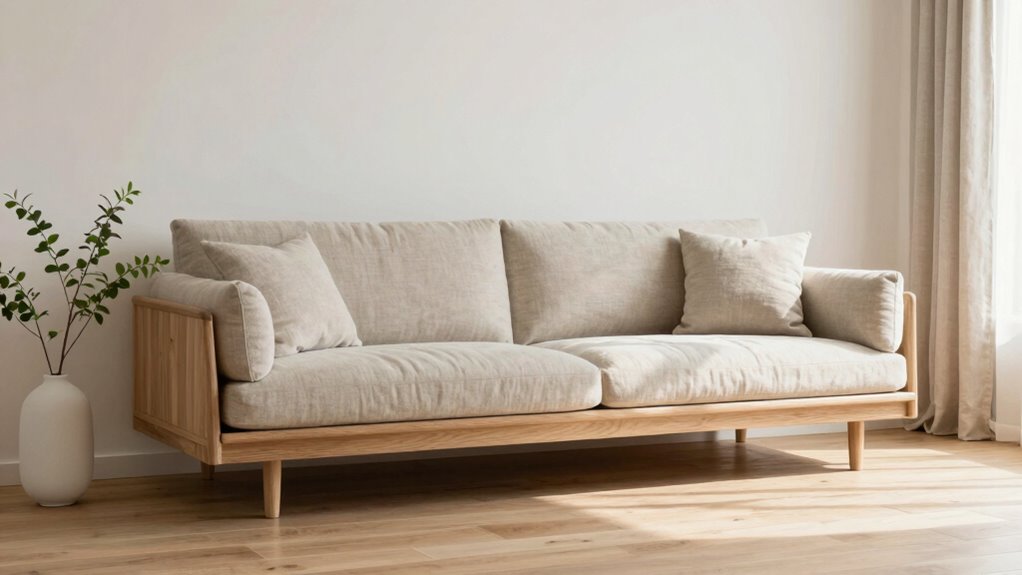
To keep your Japandi space looking invigorating and minimal, stick to regular cleaning routines that prevent dust and clutter. Consider revitalizing decor pieces thoughtfully to avoid overcrowding and maintain simplicity. Using high-quality materials for furniture and accessories also helps your space stay durable and easy to care for over time.
Regular Cleaning Practices
Maintaining the sleek and minimal aesthetic of Japandi requires regular cleaning to prevent clutter and dust from accumulating. Consistent upkeep keeps your space feeling fresh and inviting. To stay on top of it, consider these practices:
- Schedule seasonal cleaning to thoroughly dust, vacuum, and wipe surfaces, ensuring hidden corners stay clean.
- Practice clutter management daily by putting items in their designated spots, avoiding unnecessary buildup.
- Use gentle, natural cleaning products to preserve the calming ambiance and avoid harsh chemicals.
- Regularly wipe down furniture and decorative pieces to maintain their minimal elegance and prevent dust from settling.
These routines help sustain the clean, cozy vibe of Japandi and make it easier to enjoy its serene simplicity every day.
Thoughtful Decor Refreshes
As time passes, subtle updates to your decor can keep your space feeling fresh while preserving its clean, minimal aesthetic. Incorporate seasonal decor to refresh your environment without cluttering. Switch out textiles or accessories to reflect the seasons—think cozy throws in winter or light, airy accents in summer. Enhance outdoor spaces with simple, functional elements like low-profile furniture or bonsai plants, blending nature with Japandi’s minimalism. Regularly reassess your decor choices to guarantee they align with the style’s simplicity and warmth. Here’s a quick guide:
| Seasonal Decor | Outdoor Space Ideas |
|---|---|
| Soft, neutral textiles | Low-profile furniture |
| Natural, earthy accents | Minimalist planters |
| Warm lighting fixtures | Simple outdoor lanterns |
| Lightweight throws | Compact seating options |
| Fresh flowers or greenery | Zen-inspired features |
Quality Material Choices
Choosing the right materials plays a key role in preserving the sleek, minimal aesthetic of Japandi over time. To maintain its clean, cozy look, focus on quality textile combinations that balance texture and simplicity. Opt for natural fibers like linen or wool, which age well and add warmth. When selecting lighting options, choose fixtures with simple lines and neutral finishes to enhance the calm atmosphere. Keep your space feeling fresh by regularly inspecting and caring for textiles, avoiding clutter, and choosing durable materials that resist wear. Consider how your textiles and lighting work together, creating harmony without clutter. These choices ensure your Japandi space remains effortlessly elegant and inviting for years to come.
Why Japandi Is a Timeless Style That Never Feels Cold

Japandi seamlessly combines minimalism with warmth, making it a timeless style that avoids feeling cold or sterile. It balances Japanese minimalism’s clean lines and uncluttered spaces with Scandinavian warmth through cozy textures and inviting hues. This blend creates a space that feels calm yet welcoming, preventing the starkness often associated with pure minimalism. By focusing on quality materials and thoughtful design, Japandi emphasizes comfort without sacrificing simplicity. The style’s versatility allows it to adapt to changing trends while maintaining its core appeal. Its enduring popularity stems from its ability to evoke tranquility and elegance simultaneously. When you embrace Japandi, you create a space that’s both sophisticated and cozy, ensuring it never feels cold or detached.
Frequently Asked Questions
How Does Japandi Style Differ From Scandinavian or Japanese Design Individually?
You notice that Japandi blends minimalist aesthetics from both Scandinavian and Japanese design, but with a unique harmony rooted in cultural influences. Scandinavian style emphasizes functionality, light colors, and cozy textures, while Japanese design focuses on simplicity, natural materials, and Zen principles. Japandi combines these elements, creating a balanced, warm space that’s both sleek and inviting. It’s a fusion that respects tradition yet feels modern and calming.
What Are Some Budget-Friendly Ways to Achieve Japandi Decor?
Think of creating Japandi decor like assembling a puzzle—you can find beautiful pieces without overspending. For budget-friendly options, try DIY decor projects like painted vases or handmade cushions. Visit thrift stores or budget shopping outlets for minimalist furniture and accessories that fit the style’s clean lines and cozy vibe. Focus on neutral tones and natural materials, which are easy to find and add warmth without breaking the bank.
Can Japandi Style Work in Small or Urban Spaces Effectively?
Yes, japandi style works well in small or urban spaces. You can utilize multi-functional furniture to save space and keep things sleek. Maximize natural light by choosing light-colored walls and minimal window coverings, which makes the room feel larger and more inviting. Keep decor simple and uncluttered, focusing on quality pieces that blend functionality with aesthetic appeal. This approach helps create a cozy, serene japandi environment despite limited space.
How Do I Balance Simplicity and Coziness in Japandi Interiors?
To balance simplicity and coziness in Japandi interiors, focus on using warm neutrals like beiges and soft browns to create a inviting atmosphere. Incorporate texture contrast through plush textiles, woven baskets, and smooth wood surfaces to add depth without clutter. Keep furniture minimal and clean-lined, but introduce cozy elements like layered throws or cushions. This blend guarantees your space feels both serene and inviting, perfectly embodying Japandi’s warm, simple aesthetic.
What Are Eco-Friendly or Sustainable Options for Japandi Materials?
Did you know that using recycled materials and renewable sources can cut your home’s carbon footprint by up to 30%? For your Japandi interior, choose furniture made from recycled wood or bamboo, which is fast-growing and sustainable. Opt for natural, eco-friendly finishes like plant-based oils or waxes. These options help you create a stylish, cozy space that’s kind to the planet, perfectly balancing beauty and sustainability.
Conclusion
Think of Japandi as a cozy bridge between Scandinavian simplicity and Japanese elegance. When I first embraced this style, it felt like finally finding a calm harbor after a busy day. Its blend of clean lines and warm textures creates a space that’s both inviting and serene. With a few thoughtful touches, you can turn your home into a sanctuary that’s timeless, never cold, and always welcoming—making every moment spent there truly special.